
Importance of Bays and Peninsular in the Indo-Pacific Strategy| The Eastern Strategist
As it is understood that the Indo-Pacific chessboard is larger and more complex than the Pacific: its stakes are higher, and the consequences of misjudgement are enormous. It becomes even more difficult to manage with the change in the Command Structure adopted by the United States from Asia Pacific to Indo-Pacific.
To start with, the United States is the only power capable of exercising dominance across the Indo-Pacific realm. China and the other powers only have the capacity to assert dominance over parts of the Indo-Pacific: for instance, China in the South China Sea, and India in the Bay of Bengal.
Chinese influence down the Indo-Pacific Peninsula will further split ASEAN solidarity, allowing the continuing advance of Beijing’s claims in the South China Sea. Creeping Chinese control over the South China Sea brings it closer to its goals in the West Pacific Peninsula—what the Chinese strategists call the First Island Chain—including by ramping up the pressure on territorial disputes with Japan in the East China Sea.
The above may be of a direct security concern to Australia, Indonesia and even India.
Rethinking Force Projection in India’s Indo-Pacific Strategy
On the other hand, if India is able build influence in the Arabian Sea and Bay of Bengal. India’s growing presence in the Bay of Bengal and into the Malacca Straits can act as a counter to Chinese control over the Indo-Pacific Peninsula—and even into the South China Sea. China’s ability to establish a permanent presence in the Arabian Sea—perhaps at Gwadar may counter India’s influence in the South Asian peninsulas along with the String of Pearls strategy.
India’s maritime expansion in the wider Indo-Pacific is constrained because it happens to be a peninsular country. It is defined as the Peninsulas, by definition, lack strategic depth; they are the very opposite of a land-based salient into enemy territory.
Bays, on the other hand, offer a completely different set of advantages. As, in time of war, the frontier of that nation which enjoys the maritime control is the coastline of the enemy, it follows that when the coastline takes the shape of a giant gulf or bay, the army of the power dominating the sea can strike either to the left hand or to the right, while the adversary is compelled to divide his forces.
In the wider Indo-Pacific, from this perspective, there are six alluring possibilities for preponderance that offer themselves to Asia’s jostling powers. Conveniently, these divide into three bays and three peninsulas. The three Bays are the Arabian Sea, the Bay of Bengal, and the South China Sea.
The geography of the bays interacts with power as well as the strategic imagination of rising powers in peculiar ways: bays are enclosed bodies of water that engage the territorial imagination. One can imagine ‘owning’ a bay much more easily than one can imagine ‘owning’ a sea or an ocean.
On the above note, it is expected that each Bay is attended by complex politics and strategy around its egress and ingress points: does the control of a Bay confer or negate control of a choke point? Does the control of a choke point confer or negate the control of a Bay?
The three peninsulas are the South Asian Peninsula, the Indo-Pacific Peninsula, and the West Pacific Peninsula. Peninsular geography also interacts with power and the strategic imagination in peculiar ways: it constrains, concentrates, funnels and bundles power. Strategic shifts in one part of a peninsula are likely to cascade through to its other parts.
Conclusion
Three Peninsulas, three Bays—to find a Mackinderian formula, the Peninsulas hold the key to the Bays; the Bays hold the keys to the Peninsulas. This geo-strategic thought will opposite to the concept of controlling the maritime fringes in the rimlands of Eurasia which was a concept advocated by Nicholas Spkyman.
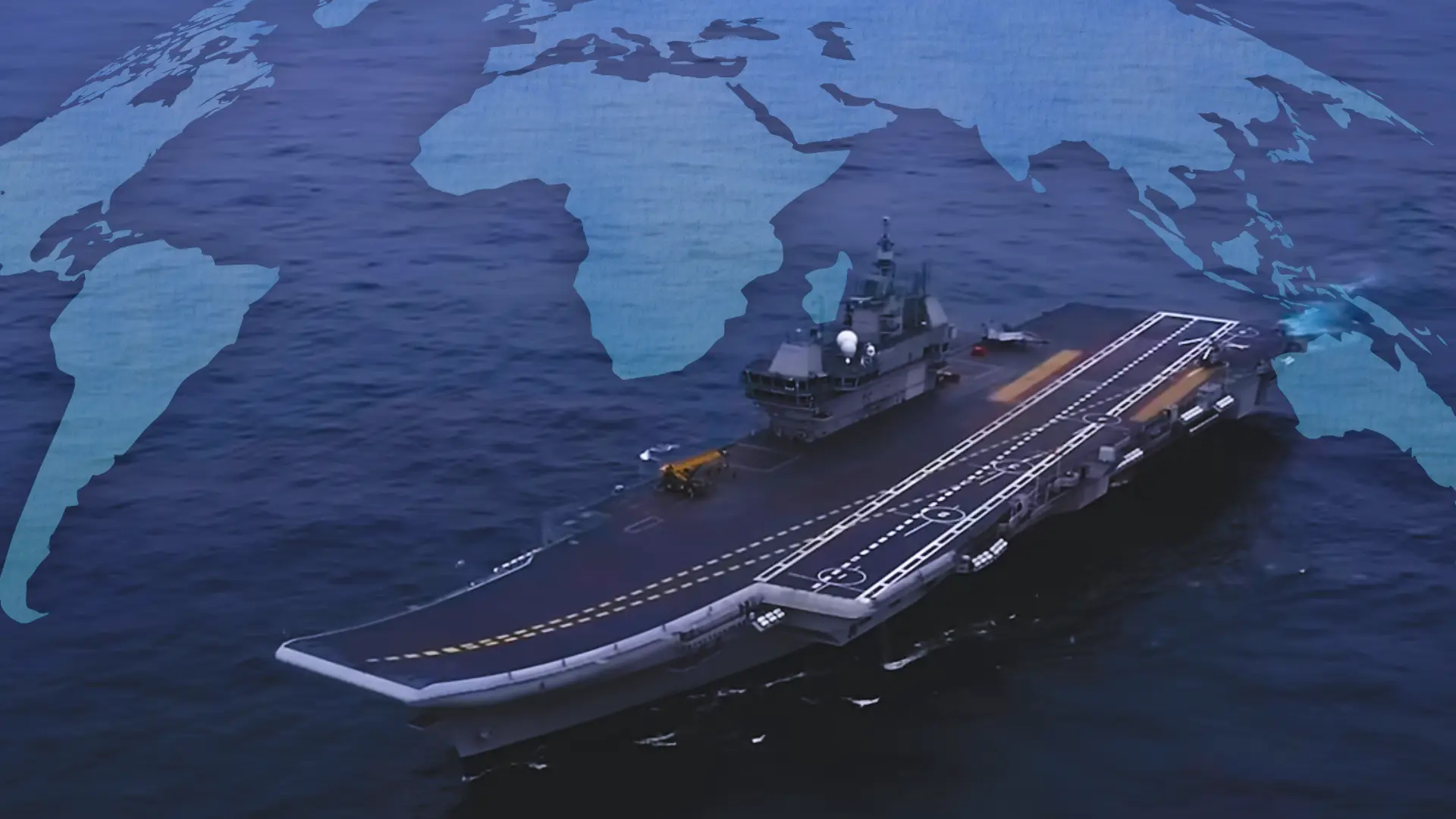
The change in the strategic thought will be reflected in the force structure. At present, India has two aircraft carriers and there are plans to develop a third aircraft carrier.
For example, India instead of developing the Aircraft Carriers for the Littoral Warfare in the wider Indo-Pacific and the Command of the Sea may convert the strategically located Andaman and Nicobar (A&N) Islands in the Bay of Bengal for force projection into the West Pacific and the South China Sea thereby reducing the cost of developing Air-Craft carriers which seems to be expensive.
The above aspect is the only way that India could achieve objectives in ensuring its capability as a net security provider in the wider Indo-Pacific region. Further, it also helps India to attain its strategic objectives as stated in the Maritime Security Strategy 2015 in the Primary and Secondary Area of Interest.
Further, if the importance is given to Bays and Peninsulas rather the coastal and choke points in an effort to get the Command the Sea, it will also help better maritime co-operation between India, Japan, United States, Australia and Indonesia.


1 thought on “Bays, Not Peninsulas: The Geography Reshaping India’s Indo-Pacific Strategy”