
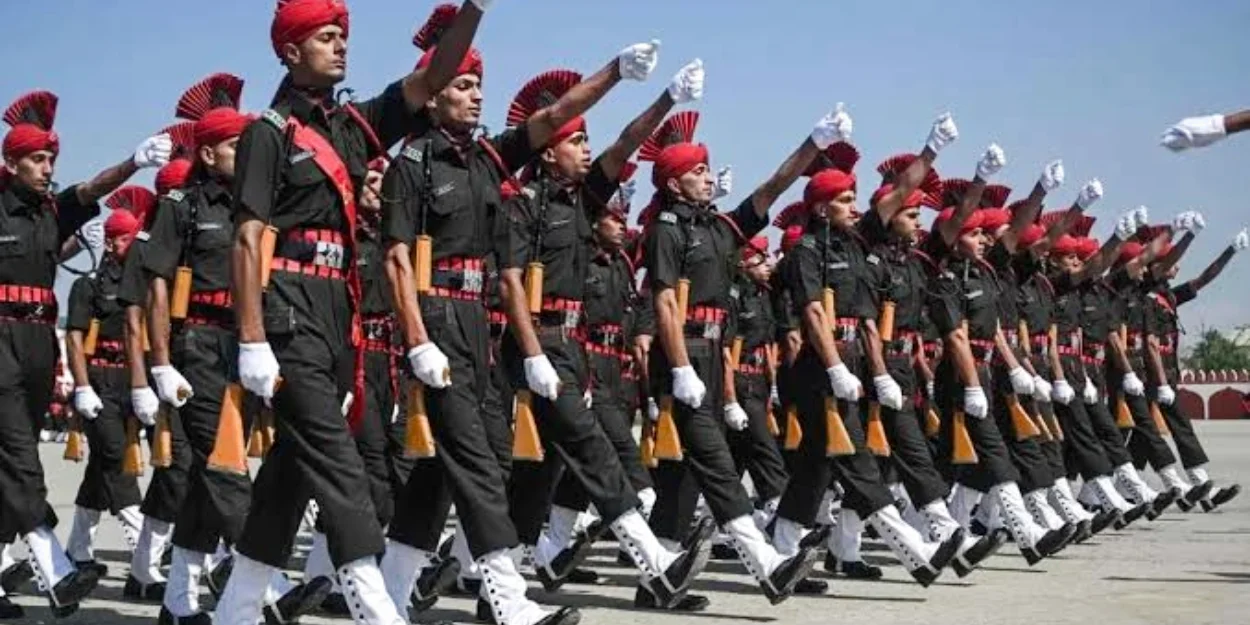
Analysis | Defence & National Security TES Intelligence Desk | 12 July 2026
With the announcement of the Agniveer CEE Result 2026, the Indian Army has moved one of the country’s largest annual military recruitment exercises into its next stage. Beyond the immediate concern of candidates checking roll numbers against Army Recruiting Office (ARO) merit lists, the result marks another data point in an experiment that has reshaped how India recruits, trains and retains soldiers since 2022.
Agniveer CEE Result 2026: What Has Been Released
The Army has published ARO-wise merit lists through its official recruitment portal, allowing candidates to verify selection using their roll numbers. Those who qualify move to physical and medical evaluation before a final merit list determines induction into training.
The Army has laid out the subsequent stages as follows:
- Physical Fitness Test (PFT), including a 1.6-kilometre run, pull-ups, a nine-foot ditch jump and a zig-zag balance test
- Physical Measurement Test (PMT)
- Medical examination
- Document verification
- Final merit list and induction
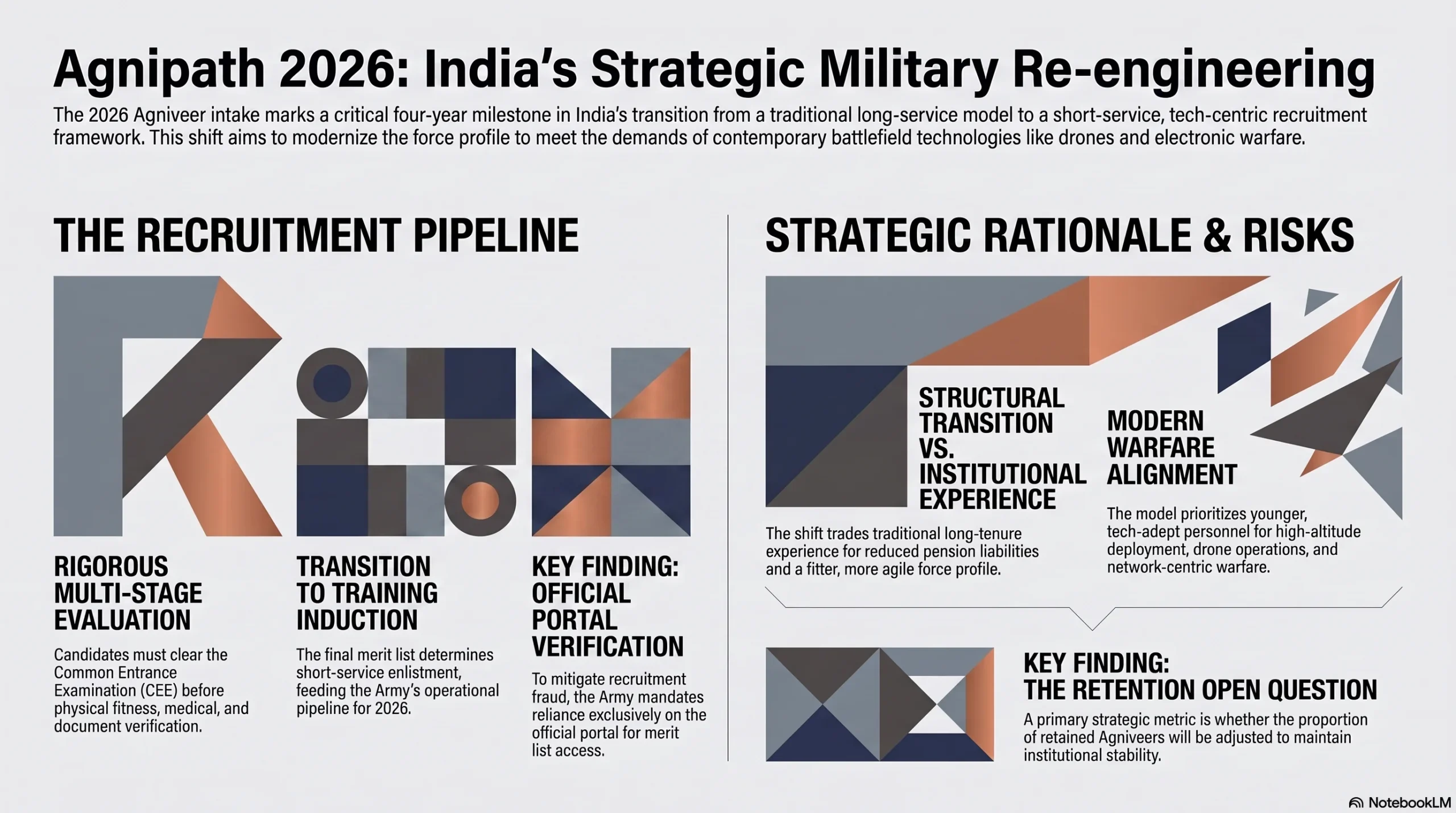
Candidates are advised to rely solely on the official portal to verify the Agniveer CEE Result 2026, given the recurring problem of fraudulent websites and social media accounts claiming to publish merit lists during these cycles.
The Agnipath Question, Four Years On
The CEE result is a routine administrative milestone. What makes it worth examining is the scheme it feeds into.Agnipath, introduced in 2022 under the broader Indian Army Agniveer Scheme, replaced the Army’s traditional long-service recruitment model with four-year short-service enlistment for the bulk of new soldiers, with a minority retained for full careers thereafter.
The government’s stated rationale has centred on building a younger force profile suited to an operational environment increasingly defined by drones, electronic warfare and network-centric operations. Each successive CEE cycle, including this one, tests whether that rationale is translating into recruitment outcomes on the ground — in terms of both the volume of applicants and the technical aptitude the Army is able to select for.
The scheme has remained contested since its introduction. Supporters point to a younger, fitter force and reduced pension liabilities as intended structural gains. Critics have continued to raise concerns about career stability for Agniveers after their four-year term, the loss of institutional experience that came with longer service tenures, and the employment prospects of those who are not retained. These debates have not been resolved by the passage of successive recruitment cycles, and this year’s intake is unlikely to settle them either.
Why the Cycle Matters Strategically
Recruitment numbers alone do not capture what is at stake. Each Agniveer cohort is also a test of whether the Army can align manpower policy with the demands of contemporary warfare — high-altitude deployment along the Line of Actual Control, greater reliance on drones and precision systems, and digitised battlefield communication.
Military analysts have argued that modern militaries increasingly need personnel capable of adapting quickly to new technology alongside conventional soldiering skills. Whether the intake managed via the Agniveer CEE Result 2026 — and whether it does so without eroding retention of experienced personnel — remains an open question that will only be answered through several more recruitment and retention cycles.
What to Watch Next
Three things will matter beyond this result:
- Whether attrition and retention data from earlier Agniveer batches, as they approach the end of their four-year terms, becomes more publicly available for independent assessment
- Whether the proportion of Agniveers retained for full service is adjusted from current levels
- Whether physical and technical selection standards evolve further to reflect the Army’s stated technology priorities
For now, the 2026 CEE result represents a procedural step for candidates and a continuity signal for defence planners: the Agnipath model remains the Army’s operating framework for personnel intake, four years after it replaced the system that preceded it.
What to Watch Next
The Indian Army Agniveer CEE 2026 recruitment cycle marks another milestone in the evolution of the Indian Army Agniveer Recruitment 2026 programme, but the broader impact of the Indian Army Agniveer Scheme will be measured over the coming years rather than through a single Indian Army Agniveer CEE Result 2026 announcement.
Three developments deserve close attention:
- Performance of early Agniveer batches: As the first cohorts complete their four-year tenure, analysts will look for greater public data on retention, operational effectiveness and post-service outcomes to evaluate the long-term impact of the Indian Army Agniveer Scheme.
- Future retention policy: Defence observers will monitor whether the proportion of Agniveers offered permanent service changes as the Indian Army Agniveer Recruitment 2026 model continues to evolve and operational requirements develop.
Future Agniveer CEE 2026 and India Army Recruitment cycles may place greater emphasis on technical aptitude alongside physical fitness as the Army expands its use of drones, electronic warfare, artificial intelligence and networked battlefield systems.