
India’s relationship with its monsoon has always been intimate and anxious. Too little rain and crops wither, prices climb, and rural distress ripples through the economy. Too much and floods destroy what drought has spared. But there is a newer dimension to this old anxiety. The monsoon is no longer just an agricultural variable. It has become a national security one.
That shift in thinking — still incomplete, still contested in some planning circles — reflects a growing recognition that climate variability does not stay in its lane. It crosses into energy supply, military logistics, water politics and economic resilience in ways that cannot be managed by weather forecasters and agriculture ministries alone.
What El Niño Actually Does
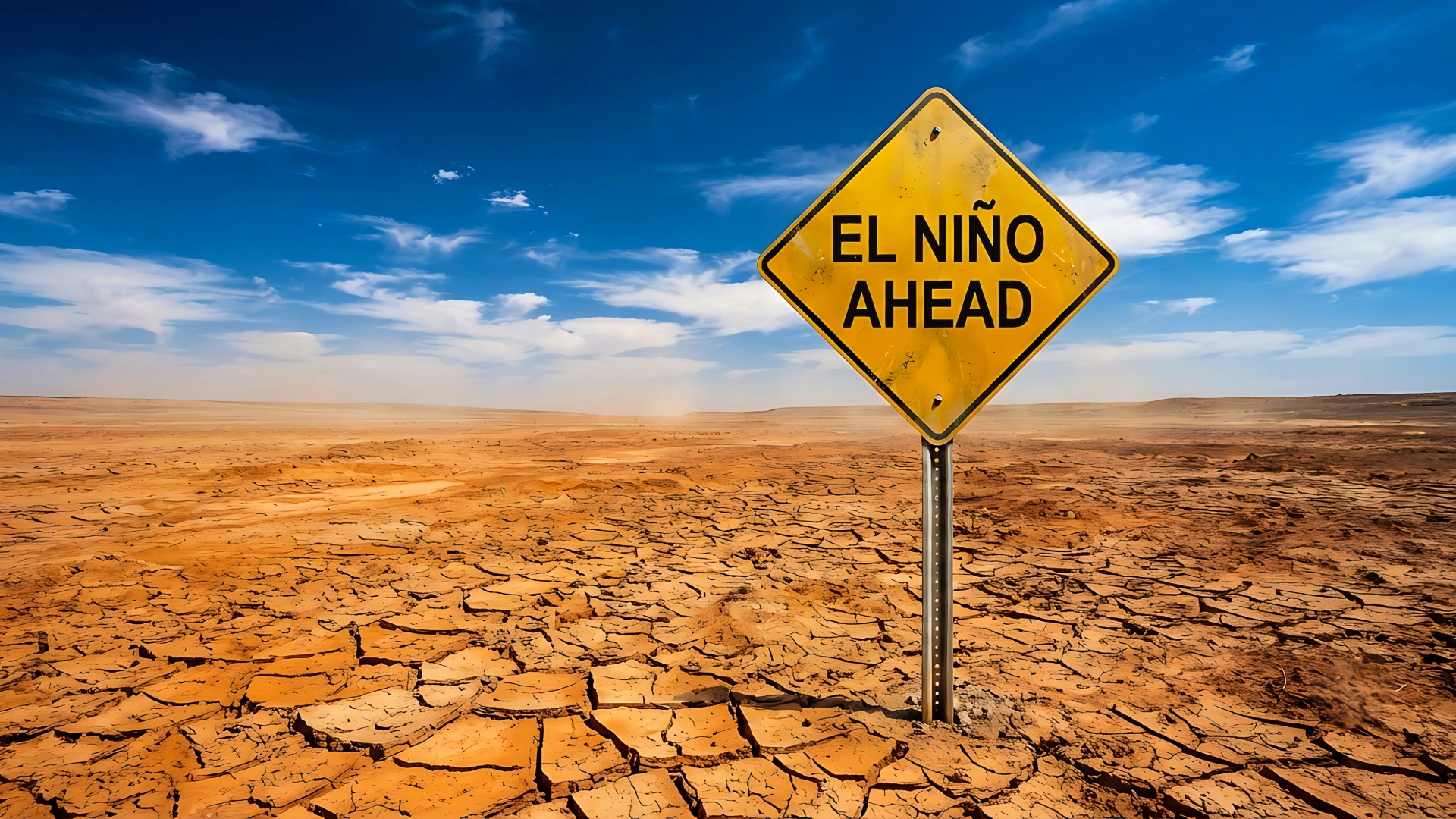
El Niño is a periodic warming of surface temperatures in the central and eastern Pacific Ocean that disrupts atmospheric circulation patterns across much of the globe. For India, the typical effect is a weakening of the southwest monsoon — the seasonal rains that arrive between June and September and, in a normal year, deposit the water that grows a significant share of the country’s food.
No two El Niño events are identical, and forecasters are appropriately cautious about predicting their precise effects on any given season. But the historical pattern is consistent enough that whenever an El Niño signal strengthens in Pacific monitoring data, alarm bells begin ringing from the Ministry of Agriculture to the Finance Ministry.
The reason is straightforward. Nearly half of India’s cultivated land remains rain-fed. When the monsoon underperforms, crop yields fall, food prices rise, and governments face difficult choices about procurement, subsidies and relief. In years of severe deficit, the fiscal consequences can be substantial.
Beyond the Harvest
The agricultural dimension, though important, is the most discussed and least surprising part of this story. What deserves more attention is how monsoon variability propagates through systems that are not immediately obvious.
Reservoir levels drive hydropower generation. When rainfall is poor across critical catchments, the dams that supply electricity to cities and industry operate below capacity. The shortfall is typically made up with coal and natural gas — options that are more expensive, more polluting and, in periods of global energy market stress, not always reliably available. Meanwhile, the extended heat that often accompanies El Niño conditions pushes electricity demand higher, creating a pinch at both ends of the supply chain.
The armed forces are not insulated from these pressures. India’s military operates across terrain that is among the most weather-sensitive on earth: the Himalayan frontier, the Thar Desert, the Andaman Islands, the Rann of Kutch. Extreme rainfall can wash out the very roads that military planners have spent years building in Ladakh and Arunachal Pradesh. Glacial melt and shifting snowfall patterns alter the hydrology of forward positions. Prolonged heat affects equipment reliability and personnel readiness in ways that operational planners have historically underestimated.
Water as a Political Variable
Perhaps the least visible but most consequential risk lies in water competition.
India’s river systems are already contested — between states, between agricultural and industrial users, between upstream and downstream communities. A succession of poor monsoon years tightens all these competitions simultaneously. Reservoirs that supply drinking water to cities, irrigation to farms and coolant to thermal power plants are drawn down, and the political friction that follows tends to exceed what official conflict-resolution mechanisms can comfortably absorb.
Across South Asia, India’s neighbours face similar pressures. Weakened monsoons stress food systems in Bangladesh, Nepal and Sri Lanka. The downstream effects — migration, price shocks, political instability — do not stop at borders. India’s foreign policy and disaster response architecture is already being tested by climate-driven crises in the region, and that test is likely to intensify.
India Monsoon National Security: When Rainfall Becomes Strategy
India has invested in early warning systems, climate-resilient crop varieties, water management infrastructure and renewable energy capacity. These investments are often described in developmental terms. They are also, accurately understood, security investments.
An early warning system that gives farmers a week’s advance notice of an approaching flood is also a system that gives military commanders notice of road washouts and logistical disruptions. Renewable energy capacity that reduces dependence on rainfall-sensitive hydropower is also strategic infrastructure that becomes more valuable precisely when the monsoon fails.
The planning challenge is that these connections are not yet consistently made. Meteorological agencies, disaster management authorities, military planners, state water boards and finance ministries operate with different time horizons, different mandates and imperfect communication with each other. Integrating climate risk into security planning — not as a marginal consideration but as a central variable — remains incomplete.
The Larger Point
India has spent two decades building military capability, infrastructure and diplomatic reach. Much of that effort presupposes a relatively stable physical environment: roads that stay where they were built, rivers that flow where they are mapped, temperatures that stay within ranges that equipment and people were designed for.
Climate variability is quietly eroding those presuppositions. That does not make the military investments wrong, or the infrastructure projects misguided. It means they need to be complemented by a parallel effort to understand and manage the environmental conditions on which they depend.
The monsoon will keep arriving — or not — on its own schedule. The question is whether India’s planning systems are sophisticated enough to treat that uncertainty as what it has increasingly become: not a weather problem, but a strategic one.
The Eastern Strategist covers climate security, strategic infrastructure and national resilience as part of its reporting on India’s long-term strategic environment.