
News Analysis · 3 November 2026 · Indonesia, Singapore, Malaysia
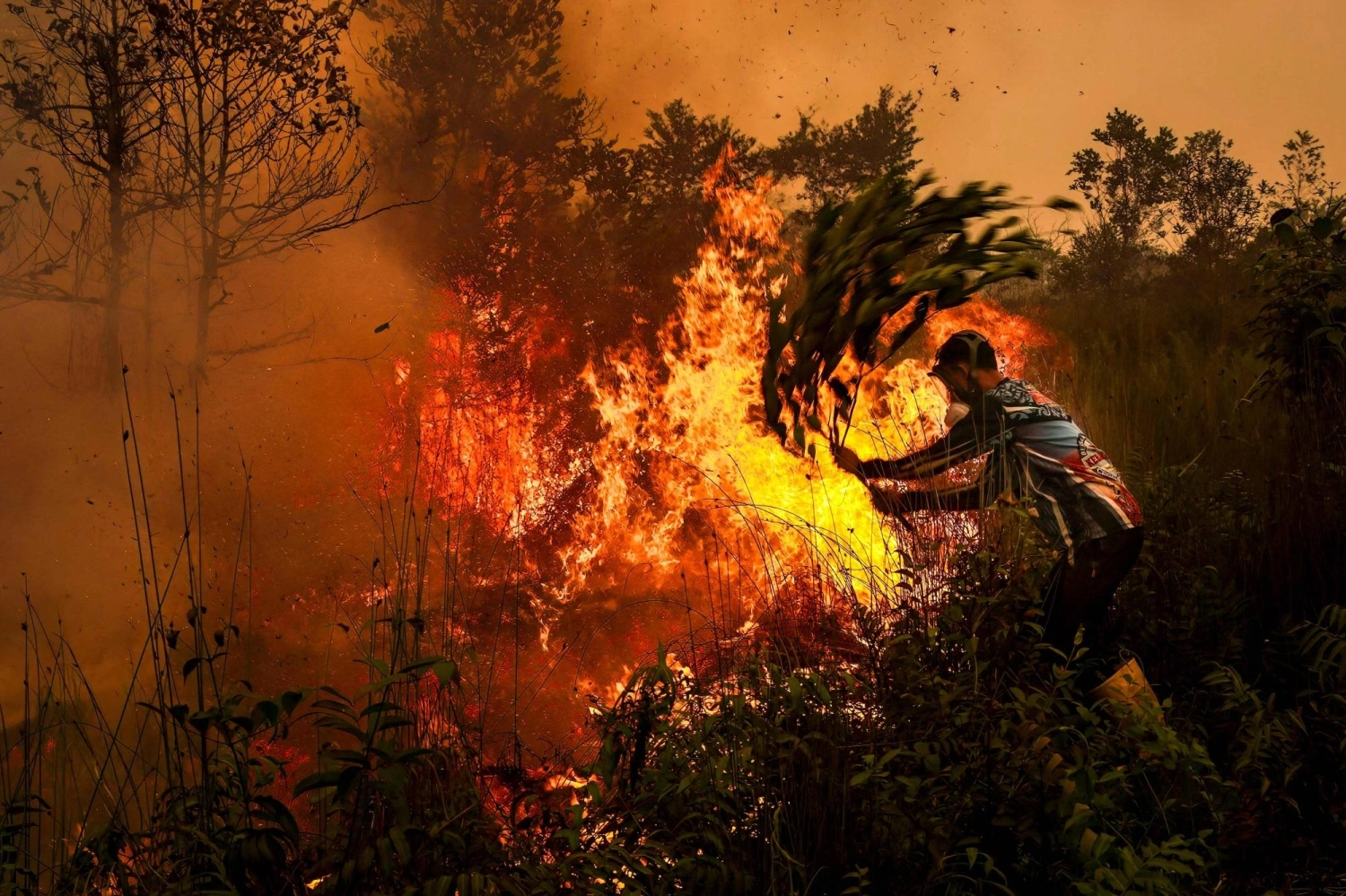
On 24 October 2026, Indonesia began cutting 31 million standard cubic feet a day from its pipeline gas exports to Singapore, a volume that Singapore’s Energy Market Authority puts at under 2 per cent of the city-state’s daily gas demand. The Indonesia haze gas cut is small in physical terms and large in political ones. It followed a warning from Jakarta’s energy minister about countries that “do not respect” Indonesia, and it arrived while smoke from the most intense Indonesian fires in 11 years, according to Reuters, still hung over Singapore and Malaysia.
Indonesia’s upstream regulator, SKK Migas, says the reduction protects domestic power supply. Jakarta has not linked it to the haze, though the timing has led observers to do so. The two foreign ministers met in Jakarta on 27 October to lower the temperature.
- The cut is 31 million standard cubic feet a day from 24 October: 15 million from Natuna, 16 million from Sumatra.
- Singapore’s National Environment Agency (NEA) has served notices on 10 Indonesian and 10 Singapore-registered companies. Notices are not findings of liability.
- A satellite monitor estimates 1.9 million hectares burned to September. Indonesia’s last official figure was 202,000 hectares to end-July.
- A joint task force was announced on 27 October. Singapore’s Indonesian gas contracts expire at the end of 2028.
Indonesia’s “oxygen” remark turned a haze dispute into a diplomatic row
Singapore’s Senior Minister K. Shanmugam said on 19 October that it was “disappointing” for an Indonesian official to say that Singapore’s oxygen comes from Indonesia’s forests. The official, Syahganda Nainggolan, heads Indonesia’s Government Communications Agency and had also called the fires beyond human error and a natural phenomenon. Shanmugam said the view did not reflect the wider Indonesian government or public, and that responsibility lay with companies breaching regulations.
Singapore has not directly criticised the Indonesian government and has offered firefighting help; Indonesia accepted Malaysian and Singapore assistance on 19 October. The oxygen argument has a history. At a June 2013 press conference, a reporter reminded Shanmugam, then foreign minister, that Indonesian ministers in earlier haze years had told Singaporeans to be thankful for the oxygen. In September 2015 he complained of “shocking statements” by senior Indonesian figures. The pattern is 13 years old, and the fires returned in 2019, 2023 and 2026.
The Indonesia haze gas cut is small for Singapore, but the signal is not
SKK Migas, Indonesia’s upstream oil and gas regulator, said the cut totals 31 million standard cubic feet a day and cited the reliability of domestic gas supply for electricity. Singapore’s Energy Market Authority said the volume is under 2 per cent of daily demand and that supplies remain adequate. Press accounts differ on its share of Indonesia’s pipeline exports to Singapore, from about 8 per cent to about 14 per cent.
Singapore’s Ministry of Trade and Industry told Parliament in September 2025 that its Indonesian gas contracts expire at the end of 2028 and that Indonesia’s growing domestic demand may limit exports. Liquefied natural gas (LNG) supplies close to 60 per cent of Singapore’s gas, and a second LNG terminal is being built.
Energy Minister Bahlil Lahadalia says the volume supplied meets the contractual minimum and told Singapore not to lecture Indonesia on honouring contracts. Prime Minister Lawrence Wong said on 25 October that he expects contracts to be honoured, and the Energy Market Authority said importers will pursue contractual recourse. After the 27 October talks, Foreign Minister Vivian Balakrishnan said both sides share a commitment to the sanctity of contract.
Both can be true. Domestic demand is a constraint that Singapore’s own ministry recognised in September 2025. Yet only Singapore was affected, which is why observers questioned the timing, and why Bilahari Kausikan, a veteran Singaporean diplomat, called the cut an “attempt at intimidation” that would prove ineffectual. That is a claim, not a finding.
TES’s reading is that diversification has limited what the Indonesia haze gas cut can do to Singapore, which makes it closer to a message than a squeeze. For Jakarta, gas is the lever that reaches a ministry and not only a headline, and it carries a cost in export revenue and in how reliable a supplier Indonesia looks before the 2028 renewal.
Indonesia haze gas cut timeline, 16–28 October 2026, from NEA, SKK Migas and government statements.
Singapore’s haze law has reached 20 companies, but enforcement across borders remains hard
NEA served preventive measure notices under section 9 of the Transboundary Haze Pollution Act on ten Indonesian companies, seven on 16 October and three on 19 October. On 23 October it served information notices under section 10 on ten Singapore-registered palm oil and forestry companies. The notices are not findings of liability. They allow prosecution if the legal requirements for an offence are met.
Offenders face fines of up to S$100,000 a day, capped at S$2 million. Singapore press reports link four of the ten Indonesian firms to Asia Pulp & Paper, whose units were also served in 2015, when three of six notices went to APP-linked firms. Sustainability and Environment Minister Grace Fu said on 27 October that cross-border enforcement meets two hurdles: serving a notice outside Singapore, and securing compliance from an overseas company whose officers never enter the country.
A regional framework already exists. The ASEAN Agreement on Transboundary Haze Pollution was signed on 10 June 2002 and entered into force on 25 November 2003. Indonesia deposited its instrument of ratification on 20 January 2015, after its parliament approved the treaty in 2014. The gap is enforcement, which depends on domestic action in each member state.
The fires burned an estimated 1.9 million hectares, but Jakarta has not confirmed the figure
Nusantara Atlas, an independent satellite monitor, estimates 1,916,588 hectares burned between January and September 2026, 38 per cent more than the same period of 2019. Indonesia’s Forestry Ministry says the figure cannot be readily confirmed, and its last official number was 202,000 hectares to the end of July. The monitor’s founder, David Gaveau, says his estimate is conservative.
Most of the burning came after drought took hold from June, worsened by a strong El Niño. TES has examined how a developing El Niño feeds into inflation risk. The “11 years” comparison points back to 2015, but Nusantara Atlas says it holds no comparable estimate for that season.
Indonesia’s Health Ministry has reported 333,470 cases of acute respiratory infection linked to the fires. The Centre for Research on Energy and Clean Air (CREA), a Helsinki-based think tank, estimates that fire-related fine particulate pollution (PM2.5) caused about 3,560 deaths in Indonesia in September. That is a modelled estimate, not a death count.
Malaysia’s anger is loud, but Kuala Lumpur has not moved to a diplomatic protest
Muar MP Syed Saddiq Syed Abdul Rahman told Malaysia’s Parliament during the Budget 2027 debate that ASEAN should lodge a coordinated diplomatic protest, restrict financing for companies linked to burning and mobilise consumers. The Malaysian government has said it has no plans for legal action or a diplomatic note to Indonesia. The boycott of Indonesian brands is a social media campaign, not government policy. Muhammad Lutfi, a former Indonesian trade minister, replied that Malaysian banks finance Malaysian plantation investments in Indonesia, which shows the problem any task force inherits: ownership and financing run through all three countries.
What the 27 October task force has to deliver
Foreign ministers Vivian Balakrishnan and Arrmanatha Nasir agreed on 27 October to form a joint task force to identify companies responsible for the fires. It is to share financial intelligence and run a hotline. Balakrishnan declined to give further details of how it will work. Three questions follow from the Indonesia haze gas cut row and the haze itself.
Will the Indonesia haze gas cut be reversed?
Jakarta presents the cut as a domestic-supply measure, and Bahlil says volumes meet the contractual minimum. Singapore’s importers say they will pursue recourse under their contracts. The test is the volume itself, which SKK Migas said it would monitor daily.
Will the task force produce a first enforcement case?
Its stated aim is to identify, deter and hold accountable companies linked to the fires. NEA’s notices have covered 20 companies, and Fu has said Singapore is looking at strengthening the Act. A named company facing action in either country would show the task force works.
When will the haze ease?
Fu said in mid-October that the inter-monsoon period, from late October or early November, should bring lighter and more variable winds that carry less haze from Sumatra and Kalimantan to Singapore. That would improve Singapore’s air. It would not by itself end the fires inside Indonesia, where CREA places most of the modelled deaths.
Why the 2028 contract expiry gives this dispute a deadline
Singapore’s gas import contracts with Indonesia expire at the end of 2028, according to its trade ministry, and a second LNG terminal is under construction. The Indonesia haze gas cut therefore has a context beyond this haze season. Each year of diversification reduces what a pipeline reduction can do, while Indonesia’s own domestic demand keeps rising.
Indonesia’s leverage also runs through geography, which TES has covered in its pieces on why Indonesia cannot simply shut the Lombok Strait and Thailand’s plan to bypass Malacca. Pipeline gas is a narrower lever than a sea lane, and one Jakarta can adjust far more quickly.
Three markers will show where this goes: the volume at the pipeline, the first company the task force names, and the terms offered for the 2028 renewal. If the cut stays a one-off, it will be remembered as a message. If it repeats, Singapore’s contract negotiators will treat Indonesian pipeline gas as supply that cannot be relied on, and plan accordingly.
Source note: official statements and data from Singapore’s NEA, Energy Market Authority and Ministry of Trade and Industry, Indonesia’s SKK Migas and Health Ministry, and the ASEAN Secretariat, with satellite estimates from Nusantara Atlas, modelled estimates from CREA, and reporting by major news agencies.