
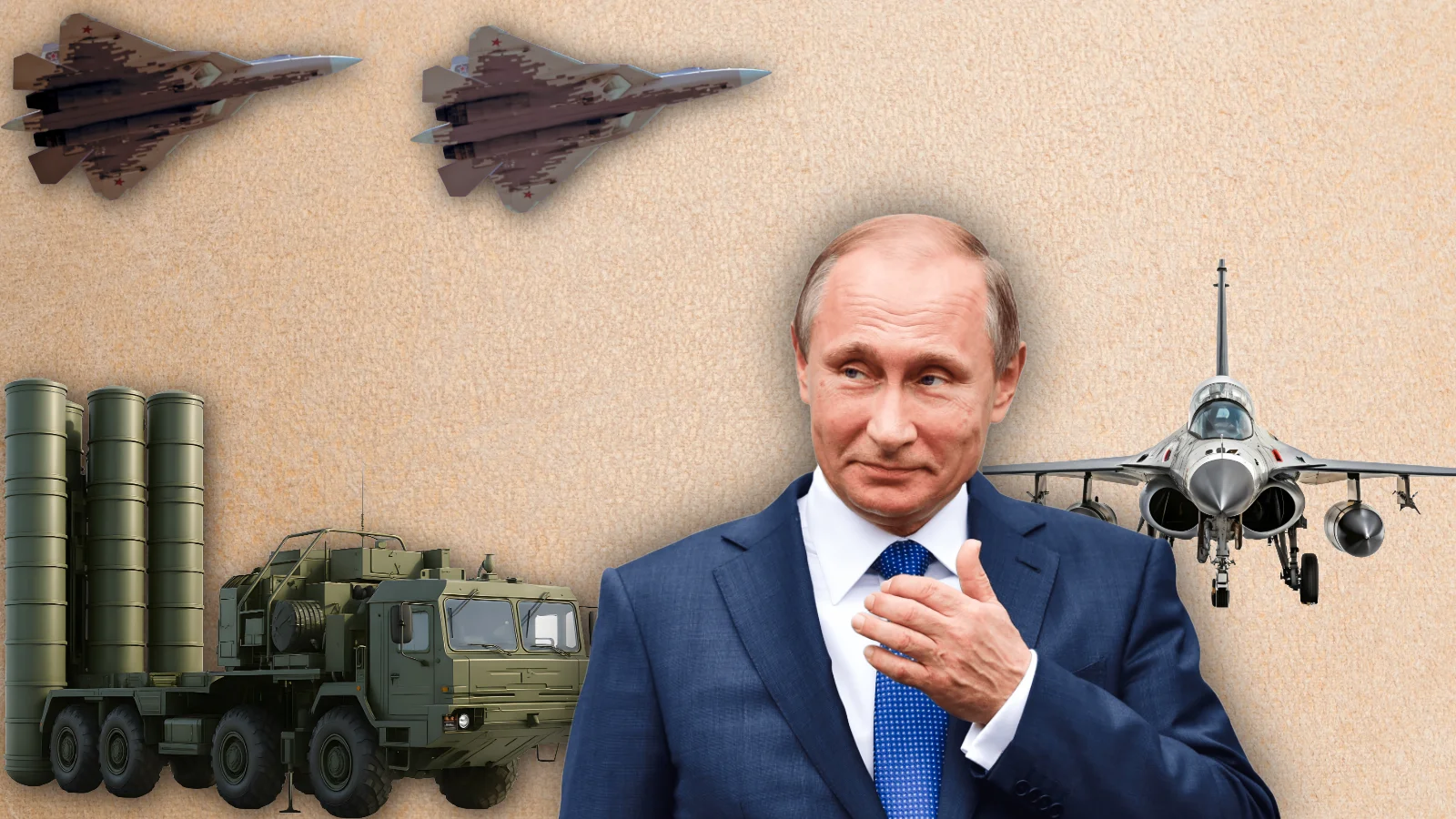
ST. PETERSBURG — Russian President Vladimir Putin this week offered India something Moscow rarely extends to foreign partners: the opportunity to acquire and potentially co-produce the fifth-generation Su-57 stealth fighter.
“We are ready not only to supply but also to jointly produce the aircraft in India,” Putin said during interactions with international media at the St. Petersburg International Economic Forum, signaling Russia’s willingness to expand aerospace cooperation beyond a traditional arms sale.
The timing was significant.
The proposal arrived just weeks after Operation Sindoor, a confrontation that may ultimately be remembered less for its immediate military outcomes and more for the strategic changes it triggered across South Asia. For military planners in New Delhi and Rawalpindi, the operation served as a real-world test of drones, precision weapons, air-defence systems, intelligence networks, and command structures.
The lessons are already reshaping procurement plans.
Pakistan is pursuing stealth fighters, advanced drones, submarines, missile systems, and electronic warfare capabilities designed to offset India’s conventional advantages. India, meanwhile, is investing across a much broader spectrum, combining satellites, stealth aircraft, drones, missiles, AWACS, air-defence systems, artificial intelligence, and domestic manufacturing into an increasingly integrated military ecosystem.
The result is a new phase in the India-Pakistan military competition. Yet this race is not simply about who acquires the next fighter jet or missile system. It is increasingly about who can build the stronger ecosystem capable of generating military power over the long term.
What Pakistan Learned From Operation Sindoor
Operation Sindoor likely reinforced several realities for Pakistan’s military planners. The vulnerability of fixed military infrastructure to precision strikes, the growing importance of intelligence and surveillance networks, and the increasing role of drones and electronic warfare all emerged as critical lessons.
Islamabad’s response appears focused on targeted modernization.
The Pakistan Air Force is expected to pursue the Chinese J-35 stealth fighter while continuing to strengthen its fleet through J-10CE fighters and JF-17 Block III aircraft. Drone warfare has become another major priority, with growing investments in armed UAVs, loitering munitions, electronic warfare systems, and counter-drone technologies.
Pakistan is also enhancing its maritime deterrent through Chinese-built Type 054A/P frigates and eight Hangor-class submarines. Precision-strike programs such as the Fatah missile family further reflect Islamabad’s effort to expand conventional deterrence below the nuclear threshold.
Collectively, these initiatives suggest a strategy focused on selectively narrowing military gaps rather than matching India platform-for-platform.
India’s Multi-Layered Response
India’s response is considerably broader. Rather than concentrating on a handful of weapons systems, New Delhi is investing across the entire defence technology chain.
One of the most ambitious initiatives is the planned deployment of 52 military surveillance satellites designed to provide persistent intelligence, surveillance, reconnaissance, and targeting support across multiple theatres.
The Indian Air Force is simultaneously expanding the Tejas programme, developing the Advanced Medium Combat Aircraft (AMCA), strengthening airborne command-and-control capabilities through the Netra Mk-II AWACS programme, and investing in next-generation aerospace technologies.
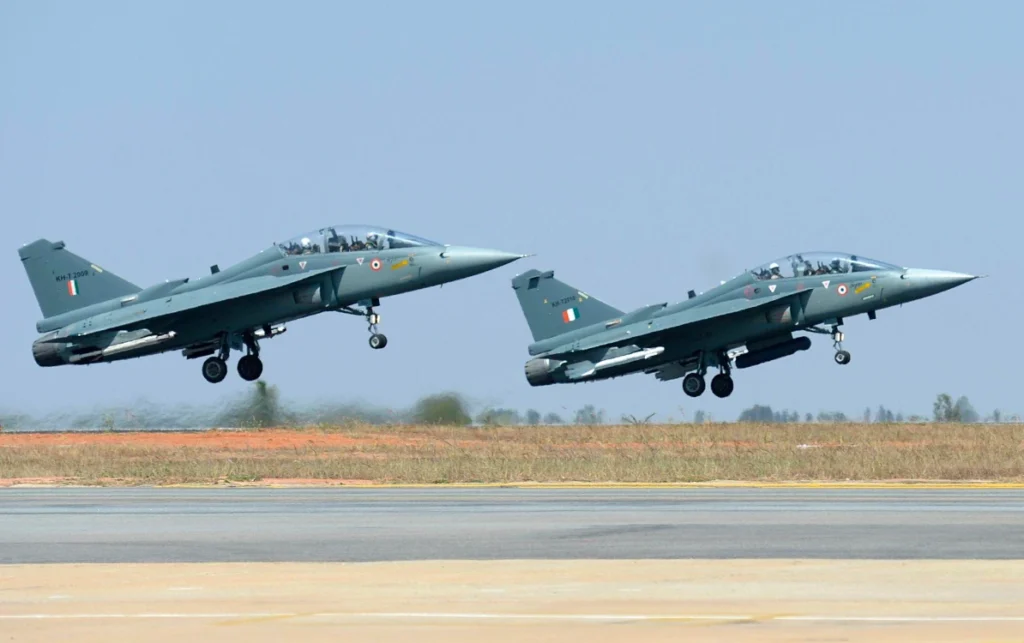
Existing and approved orders place the planned Tejas fleet at roughly 220 aircraft. Alongside it, AMCA is intended to become India’s first indigenous fifth-generation stealth fighter.
The government is also moving forward with local production of General Electric’s F414 engine, a critical technology that will power the Tejas Mk2 and strengthen India’s long-term aerospace manufacturing capabilities.
The unmanned domain may prove equally important. India is developing the Ghatak stealth unmanned combat aerial vehicle, pursuing one of its largest-ever military drone procurement programmes worth approximately ₹20,000 crore, and investing in laser-based directed-energy systems designed to counter future drone swarms.
As the Defence Minister recently noted, “Operation Sindoor is a glowing testimony to India’s growing indigenous prowess,” reflecting years of investment in building a self-reliant defence manufacturing ecosystem.
The $2 Billion Drone Bet
Perhaps the clearest sign of India’s post-Sindoor priorities is emerging in the drone sector.
India is preparing what could become its largest-ever military drone procurement programme, potentially worth more than $2 billion (approximately ₹20,000 crore). Industry estimates suggest deliveries could be completed within 18 to 24 months.
The scale is substantial. India now has more than 600 drone and component manufacturers, with over 100 firms focused specifically on defence applications. The sector includes major industrial groups alongside specialist companies developing reconnaissance drones, loitering munitions, autonomous systems, and precision-strike platforms.
If approved, the procurement programme would represent more than a defence purchase. It would signal that drones have moved from the margins of military planning to the centre of India’s future battlefield strategy.
Rafale, F414 and the Fifth-Generation Question
India’s modernization strategy is not built around a single platform. The Indian Air Force already operates 36 Rafale fighters, while the Indian Navy is set to receive 26 Rafale Marine aircraft, creating a combined fleet of 62 Rafales across both services.
At the same time, Putin’s renewed Su-57 offer has introduced a new strategic question.
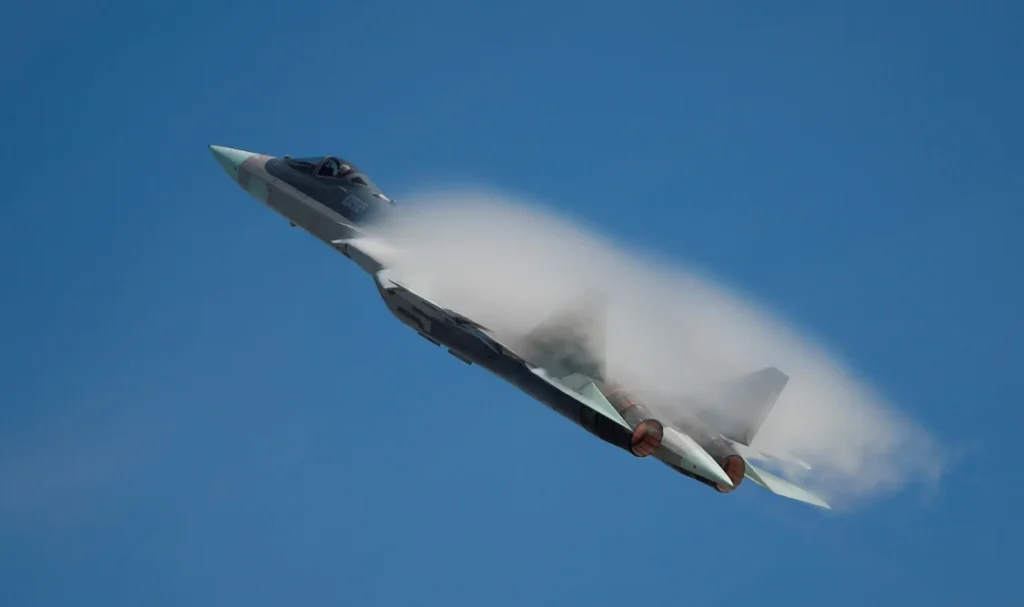
Pakistan’s expected pursuit of the J-35 and the long development timeline of AMCA create a potential fifth-generation capability gap. The Su-57 could offer New Delhi an interim solution while indigenous programmes mature. Whether India chooses that path remains uncertain. But the fact that such discussions are taking place illustrates how rapidly the regional airpower balance is evolving.
Use this interactive matrix to explore how the Su-57 stacks up against Pakistan’s likely acquisition, the J-35, across key fifth-generation metrics:
| Aircraft | Metric | Value |
|---|---|---|
| Su-57 | Speed | 2 Mach |
| J-35 | Speed | 1.8 Mach |
| Su-57 | Range | 3500 km |
| J-35 | Range | 2250 km |
| Su-57 | Payload | 10000 kg |
| J-35 | Payload | 8000 kg |
Project Kusha and India’s Expanding Air Shield
If one programme captures India’s post-Sindoor military thinking, it is Project Kusha.
The indigenous long-range air-defence system is designed to intercept aircraft, drones, cruise missiles, and certain ballistic missile threats at ranges approaching 400 kilometres. Project Kusha will complement India’s growing air-defence architecture, which now includes four operational S-400 squadrons, with a fifth expected under the original contract.
The programme is also a symbol of India’s push for technological self-reliance. Defence officials have stated that early trials have shown encouraging results, emphasizing its importance in reducing dependence on imports and strengthening domestic industry.
Combined with Akash-NG, MR-SAM, Netra Mk-II, military surveillance satellites, and future directed-energy systems, Project Kusha represents India’s effort to build a layered shield capable of countering precisely the types of capabilities Pakistan is seeking to acquire.
| Domain | Pakistan’s Modernization | India’s Response |
| Stealth Fighters | J-35 | AMCA, possible Su-57 option, Tejas Mk2 |
| Fighter Fleet | J-10CE, JF-17 Block III | Rafale, Tejas Mk1A, Tejas Mk2 |
| AWACS | Erieye, ZDK-03 upgrades | Netra Mk-II |
| Surveillance | Chinese ISR support | 52 military satellites |
| Combat Drones | AKINCI, Shahpar III | Ghatak UCAV, CATS Warrior |
| Drone Swarms | Loitering munitions | Laser-based anti-drone systems |
| Air Defence | Chinese SAM networks | S-400, Project Kusha, Akash-NG |
| Precision Missiles | Fatah missile family | BrahMos, BrahMos-NG, Rudram |
| Naval Expansion | Hangor subs, Type 054A/P frigates | SSBN fleet, P-8I aircraft, carrier groups |
| Defence Industry | China- and Türkiye-backed model | Indigenous ecosystem (DRDO, HAL, BEL, private sector) |
The Numbers Behind India’s Defence Transformation
The most important story may not be on the battlefield.
India’s defence production reached a record ₹1.50 lakh crore in FY2024-25, while defence exports climbed to ₹23,622 crore and reached more than 100 countries.
The country’s defence ecosystem now includes 462 licensed defence companies, 788 industrial licences, approximately 16,000 MSMEs in the defence supply chain, more than 600 drone and component manufacturers, and over 100 firms focused specifically on defence drone applications. New Delhi has also set ambitious targets of ₹3 lakh crore in annual defence production and ₹50,000 crore in defence exports by 2029.
The Hidden Battlefield: Impacts on Indigenous Defence Manufacturing
The most consequential competition after Operation Sindoor may not be between India’s Rafales and Pakistan’s future J-35s. It may be between two different models of military power.
Pakistan is modernizing through strategic partnerships, primarily with China and Türkiye. India is attempting to build a self-sustaining defence ecosystem spanning aerospace, missiles, satellites, drones, artificial intelligence, electronic warfare, and advanced manufacturing.
Wars consume equipment faster than many planners anticipate. The ability to design, manufacture, upgrade, repair, and replace military systems during a prolonged crisis can be as important as the weapons themselves.
That reality may ultimately prove more decisive than any individual fighter jet.
The Evolution of the India-Pakistan Military Competition
The next phase of the India-Pakistan military competition will look markedly different from past conflicts. It may not begin with tanks crossing borders or fighter jets entering contested airspace; instead, it could initiate with satellites identifying targets hundreds of kilometres away, drone swarms probing air-defence networks, and electronic warfare systems disrupting critical command links.
Strategic Shifts in Modern Military Procurement
This transformation is driven by a fundamental change in modern military procurement. While Pakistan seeks to narrow capability gaps through selective foreign acquisitions, India’s objective is to build a self-sustaining ecosystem that links space, air, and ground systems. By prioritizing indigenous defence manufacturing, New Delhi is creating an engine of military power capable of supporting sustained operations.
Operation Sindoor will be remembered as the catalyst for this new strategic reality. As the South Asian strategic balance continues to shift, the ability to design, manufacture, and maintain advanced systems during a crisis—rather than simply acquiring them—will ultimately prove to be the most decisive factor.
The next India-Pakistan crisis may not begin with tanks crossing borders or fighter jets entering contested airspace.

1 thought on “From Putin’s Su-57 Offer to Project Kusha: How Operation Sindoor Is Reshaping the India-Pakistan Military Race”