

Australian strategic affairs expert | Director, Alpha-India Consultancy | Senior Fellow, IPSC
Introduction
For decades, India’s security strategy has been shaped by the demands of continental defence, particularly the enduring rivalry with Pakistan and the unresolved border dispute with China. Frequent crises along the western frontier have required New Delhi to maintain substantial military resources and political attention on the subcontinent. However, an evolving geopolitical landscape may be altering this strategic equation. As Pakistan increasingly reorients its foreign and security policy toward Central and Southwest Asia—deepening its engagement with an emerging regional coalition that includes Saudi Arabia, Qatar, Egypt, Pakistan, and Turkey—its strategic priorities may gradually shift westward. While India will continue to deter conventional and sub-conventional threats from Pakistan, the reduced likelihood of recurrent military crises could provide New Delhi with greater strategic flexibility to concentrate on the Indo-Pacific.
Nuclear Deterrence as the Foundation of Strategic Rebalancing
India’s ability to devote greater attention to the Indo-Pacific rests upon the credibility of its strategic deterrent. Nuclear weapons remain the cornerstone of strategic stability in South Asia, ensuring that large-scale conventional war between India and Pakistan remains highly unlikely. At the same time, India’s nuclear deterrent is designed to address a two-front strategic environment by deterring coercion from both Pakistan and China.
The continued modernisation of India’s nuclear triad—including land-based ballistic missiles, air-delivered nuclear capabilities, and sea-based deterrence—strengthens the survivability of its second-strike capability. This credible deterrent reduces the risk of nuclear coercion and allows New Delhi to pursue a broader regional strategy with greater confidence. Rather than replacing conventional military power, India’s nuclear forces create the strategic stability necessary for conventional forces to assume new missions beyond the subcontinent.
Consequently, India’s emerging grand strategy should be viewed as complementary rather than substitutive: nuclear deterrence anchors continental security, while conventional forces—particularly naval and air capabilities—are increasingly oriented toward maintaining a favourable balance of power across the Indo-Pacific.
The Opportunity for Strategic Rebalancing
India has long aspired to become the leading security provider in the Indian Ocean, yet continental security imperatives have constrained its ability to fully realize this ambition. Sustained tensions with Pakistan have required high levels of troop deployment, intelligence resources, and political attention, limiting India’s capacity to project power beyond its immediate neighbourhood. If Pakistan’s strategic focus increasingly emphasizes developments in the Middle East and Central Asia, India may face fewer incentives to prepare for frequent limited conflicts along the western border. Rather than eliminating the military challenge posed by Pakistan, such a shift would reduce the frequency with which Pakistan dominates India’s strategic agenda.
This would not imply a reduction in India’s military preparedness along its western frontier. Instead, it would enable a gradual redistribution of political attention, defence investment, and operational planning toward the maritime domain. Nuclear deterrence would continue to preserve strategic stability on the continent, allowing conventional military capabilities to be increasingly directed toward long-term competition in the Indo-Pacific.
Expanding India’s Maritime Role and the India Indo-Pacific Strategy
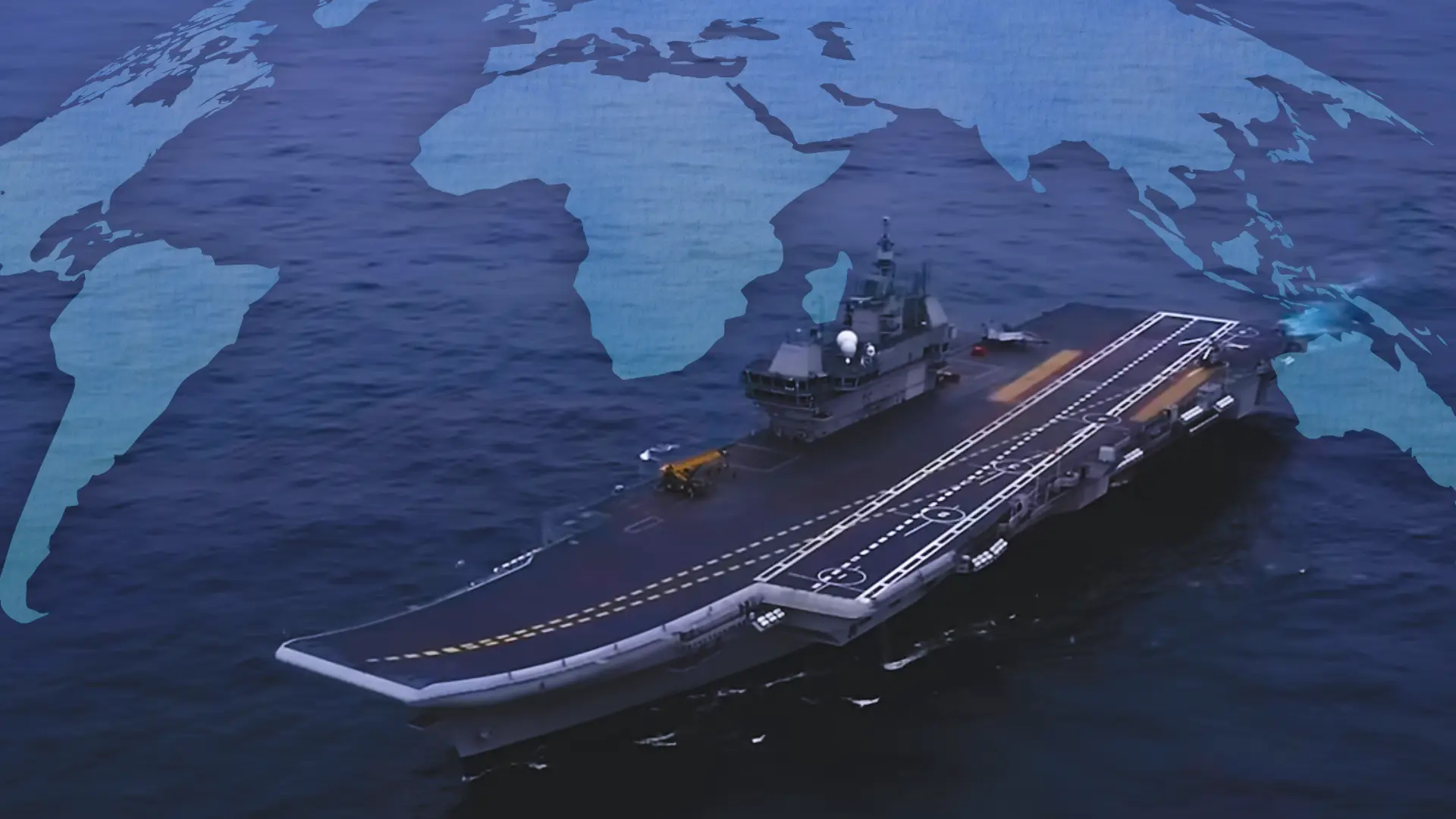
Greater strategic bandwidth would allow New Delhi to accelerate its maritime transformation. The Indian Navy could assume a more prominent role in securing the sea lines of communication that connect the Persian Gulf, the Arabian Sea, the Bay of Bengal, and the wider Indo-Pacific. As nearly all of India’s energy imports and a substantial share of global trade pass through these waters, maritime security has become inseparable from national security.
India is also well positioned to strengthen its role as a net security provider through expanded naval deployments, maritime domain awareness, humanitarian assistance and disaster relief operations, anti-piracy missions, and deeper cooperation with regional partners. Such initiatives would reinforce India’s credibility as a stabilising power while contributing to a rules-based maritime order.
The strengthening of India’s sea-based nuclear deterrent further reinforces this maritime strategy. Ballistic missile submarines not only enhance the survivability of India’s nuclear forces but also integrate strategic deterrence with naval modernization, making maritime security an increasingly central component of India’s overall defence posture.
Strengthening Strategic Partnerships
A reduced continental burden would also enable India to invest more heavily in strategic partnerships across the Indo-Pacific. Cooperation with the United States, Japan, Australia, France, Indonesia, Singapore, and Vietnam could expand beyond naval exercises to encompass defence technology, intelligence sharing, logistics, cyber security, and resilient supply chains.
Rather than viewing the Indo-Pacific solely through the lens of military competition with China, India could pursue a broader strategy that integrates economic connectivity, critical infrastructure, technological cooperation, and maritime governance. This approach would enhance India’s influence without requiring formal alliance commitments.
Linking the Middle East and the Indo-Pacific
India’s growing relationships with Gulf states further reinforce this strategic transition. As one of the largest consumers of Gulf energy and home to a significant expatriate community in the region, India has strong incentives to preserve stability across the Middle East. Increasing defence cooperation with Gulf partners and investments in regional connectivity position India as a bridge between the Middle East and the Indo-Pacific. In this sense, New Delhi’s maritime strategy extends beyond the Indian Ocean, connecting the security of the Gulf with the broader Indo-Pacific strategic environment.
Conclusion
Pakistan’s westward strategic reorientation does not eliminate India’s continental security challenges, nor does it diminish the importance of deterrence against either Pakistan or China. Rather, it may create an opportunity for New Delhi to rebalance its strategic priorities. India’s nuclear deterrent will continue to anchor strategic stability on the subcontinent, allowing conventional military resources to be increasingly focused on maritime security, regional partnerships, and maintaining a favourable balance of power across the Indo-Pacific. The future of India’s grand strategy will therefore depend not only on developments in the Indo-Pacific itself but also on how shifts in the Middle East reshape the strategic environment of South Asia. If New Delhi can leverage the stability provided by credible nuclear deterrence while expanding its maritime reach, it will be better positioned to emerge as a leading Indo-Pacific power without compromising its continental security.
Natalie Treloar
Australian Strategic Affairs Expert • Indo-Pacific Security • Defence Policy • Nuclear Deterrence
Natalie Treloar is the Australian Company Director of Alpha-India Consultancy, a Senior Fellow at the Indo-Pacific Studies Center (IPSC), a Senior Analyst at the National Institute for Deterrence Studies (NIDS), and a member of the Open Nuclear Network (ONN).
Her work focuses on Indo-Pacific geopolitics, strategic alliances, defence policy, military capability, and nuclear deterrence. She writes extensively on regional security, strategic stability, and policies that strengthen deterrence across the Indo-Pacific.