

New Delhi: For the first time in more than two years, Indian motorists are seeing a private fuel retailer lower pump prices.
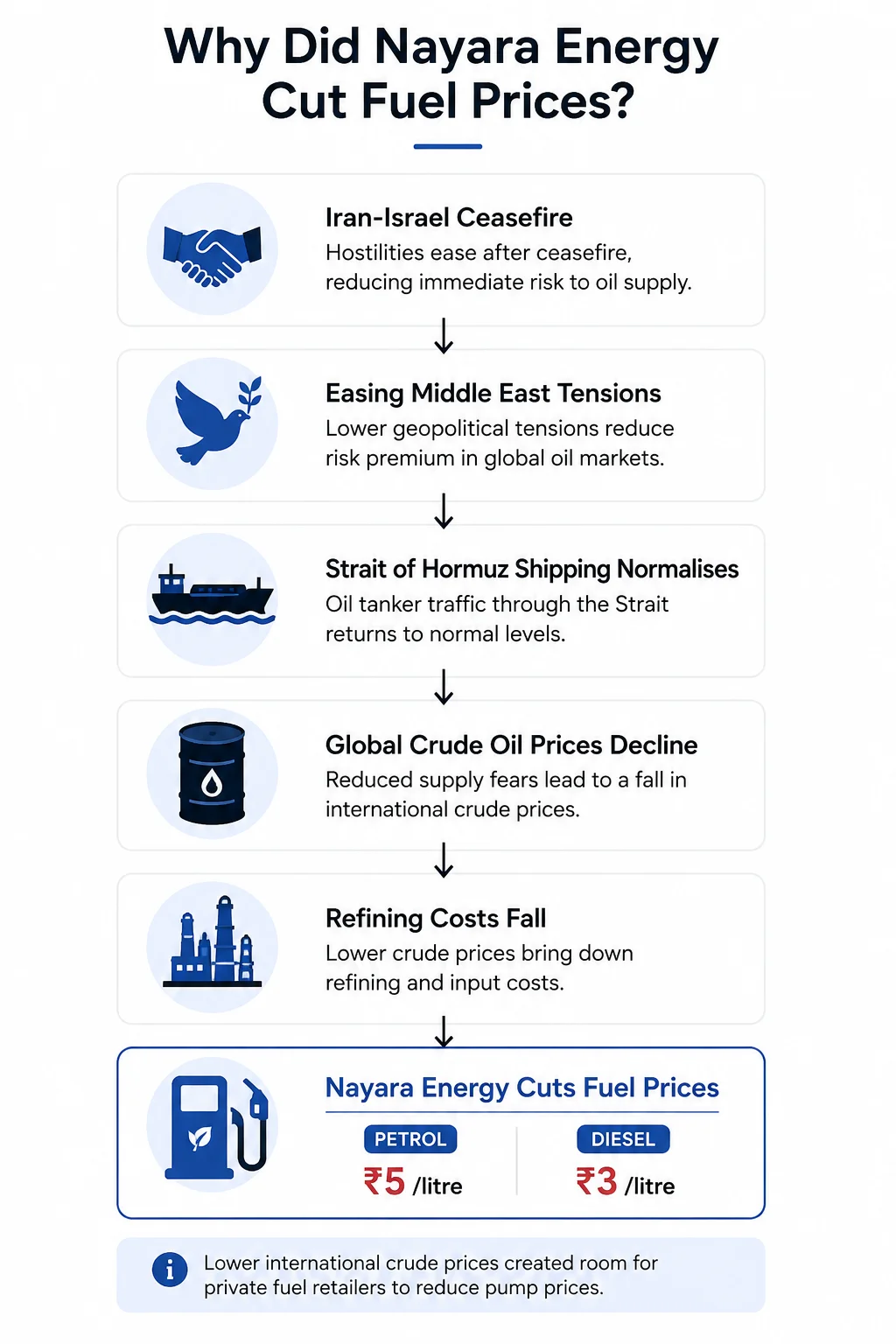
Nayara Energy cuts petrol prices by ₹5/litre and diesel by ₹3/litre per litre across its nationwide retail network after international crude oil prices retreated from the highs triggered by the Iran-Israel conflict. The decision offers immediate relief to consumers, but it also reflects a broader shift in global energy markets and highlights how closely India’s fuel prices remain tied to geopolitical developments far beyond its borders.
The announcement comes as Brent crude has settled back into the low-$70-per-barrel range following the easing of fears over a prolonged disruption in the Strait of Hormuz. For refiners, lower crude costs translate into improved flexibility in retail pricing. Nayara chose to pass part of that benefit directly to consumers, while state-owned oil marketing companies have so far kept pump prices unchanged.
The price cut also explains why searches for Nayara petrol price, Nayara Energy petrol prices, and petrol price in Delhi surged this week. Consumers were not simply reacting to a corporate announcement—they were trying to understand whether the decline in global oil prices would finally reach India’s fuel pumps.
The Real Story Starts in the Persian Gulf
The immediate catalyst for cheaper fuel was not a domestic policy decision but the cooling of geopolitical tensions in West Asia.
Energy Markets
Why the Strait of Hormuz Matters
A critical chokepoint connecting Middle East crude producers to key global markets.
During the Iran-Israel conflict, markets feared that shipping through the Strait of Hormuz—the route used by roughly one-fifth of the world’s traded crude oil—could be disrupted. That risk premium briefly pushed oil prices sharply higher. As diplomatic efforts reduced the likelihood of an immediate supply shock and tanker traffic continued moving through the waterway, traders unwound those fears and crude prices retreated.
Even now, however, oil markets remain cautious. Indirect negotiations between Washington and Tehran continue, while shipping security in the Gulf remains a variable capable of moving prices within hours.
Why India Feels Every Dollar Change in Oil
For India, a fall in crude prices is never just a commodity story.
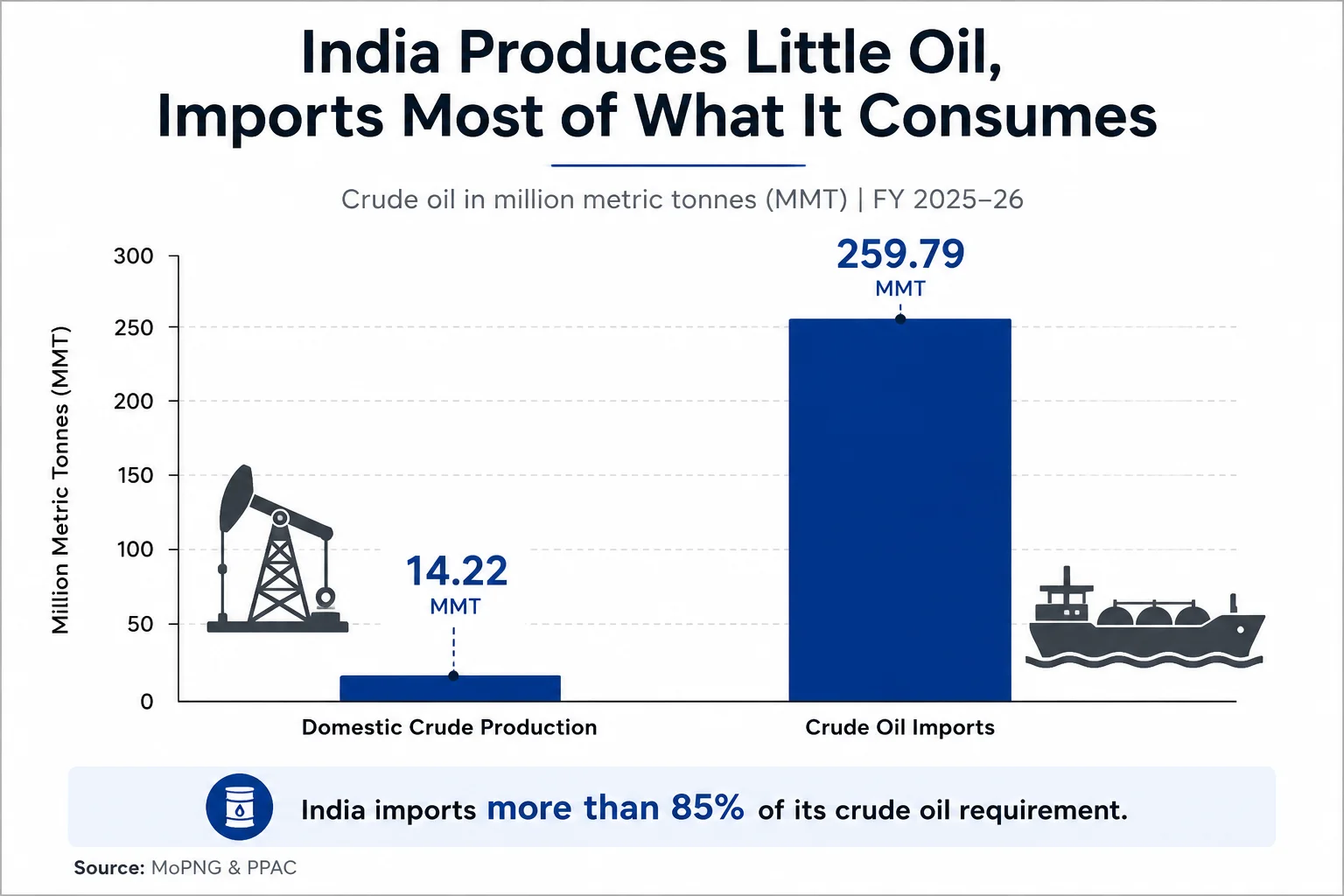
The country produced only 14.22 million metric tonnes of crude oil during FY 2025–26 while importing nearly 260 million metric tonnes, meaning domestic production satisfies only a small fraction of national demand. More than four-fifths of the crude processed by Indian refineries arrives by sea.
Russia has emerged as India’s largest supplier, but Iraq, Saudi Arabia and the United Arab Emirates remain indispensable. Together they ensure Indian refineries continue operating at the scale required by one of the world’s fastest-growing energy markets.
This dependence explains why developments in the Persian Gulf continue to influence prices at petrol stations thousands of kilometres away.
Nayara’s Role Goes Beyond Fuel Retail
Although consumers know Nayara Energy primarily through its petrol stations, the company occupies a much larger position in India’s downstream energy sector.
Nayara Energy’s Vadinar refinery in Gujarat is India’s second-largest single-site refinery and can process a wide range of crude grades sourced from different parts of the world. That flexibility allows the company to optimise procurement when market conditions change and explains why it could respond quickly after crude prices softened.
The recent price cut therefore reflects not only lower international oil prices but also the advantages of operating a complex refinery capable of handling diverse crude supplies.
India Is Preparing for the Next Crisis
While crude prices have eased, policymakers are assuming that future disruptions are inevitable rather than exceptional.
New Delhi is expanding its Strategic Petroleum Reserves, which currently provide about 9.5 days of import cover, alongside commercial inventories held by oil companies. Together these stocks provide roughly 74 days of crude and petroleum product availability.
The strategy extends beyond domestic storage. India’s recent agreement with Abu Dhabi National Oil Company (ADNOC) to expand crude storage in Indian reserves and explore storage at Fujairah reflects a deliberate effort to diversify logistics and reduce exposure to any future disruption in the Strait of Hormuz.
More Than a Fuel Price Story
Nayara Energy’s decision to lower petrol and diesel prices is ultimately a visible consequence of a much larger chain of events stretching from diplomatic negotiations in the Gulf to crude tankers crossing the Arabian Sea and refineries along India’s western coast.
The ₹5 reduction at the pump may be welcomed by motorists, but the bigger story is that India’s energy security increasingly depends on three factors working together: diversified crude imports, sophisticated refining capacity and a growing network of strategic petroleum reserves. As long as the country imports the overwhelming majority of its crude oil, every geopolitical crisis in the Middle East will continue to shape what Indian consumers pay at the fuel station.