
If you are looking for details on the HAL Dividend 2026, the record date is set for August 14, 2026. That’s the cutoff date to be on the company’s shareholder register and qualify for the ₹10 per share final dividend, subject to shareholder approval at the company’s Annual General Meeting (AGM).Add the ₹35 interim dividend paid earlier this financial year, and HAL’s total dividend for FY26 comes to ₹45 per share.
For a stock that has swung between geopolitical optimism and execution concerns, it’s a respectable return—steady, though hardly the main attraction.
The dividend headlines will dominate business pages for a day or two. Retail investors will check their eligibility, brokers will push notifications, and then the market will move on.
While the HAL Dividend 2026 payout provides a steady return, the market is primarily focused on long-term execution capabilities, Because when it comes to Hindustan Aeronautics Ltd. (HAL), dividends rarely determine where the stock goes next.
How the HAL Dividend 2026 Impacts Share Price
Look at what has consistently moved the stock over the past few years.It hasn’t been dividend announcements or payout ratios.It has been execution.
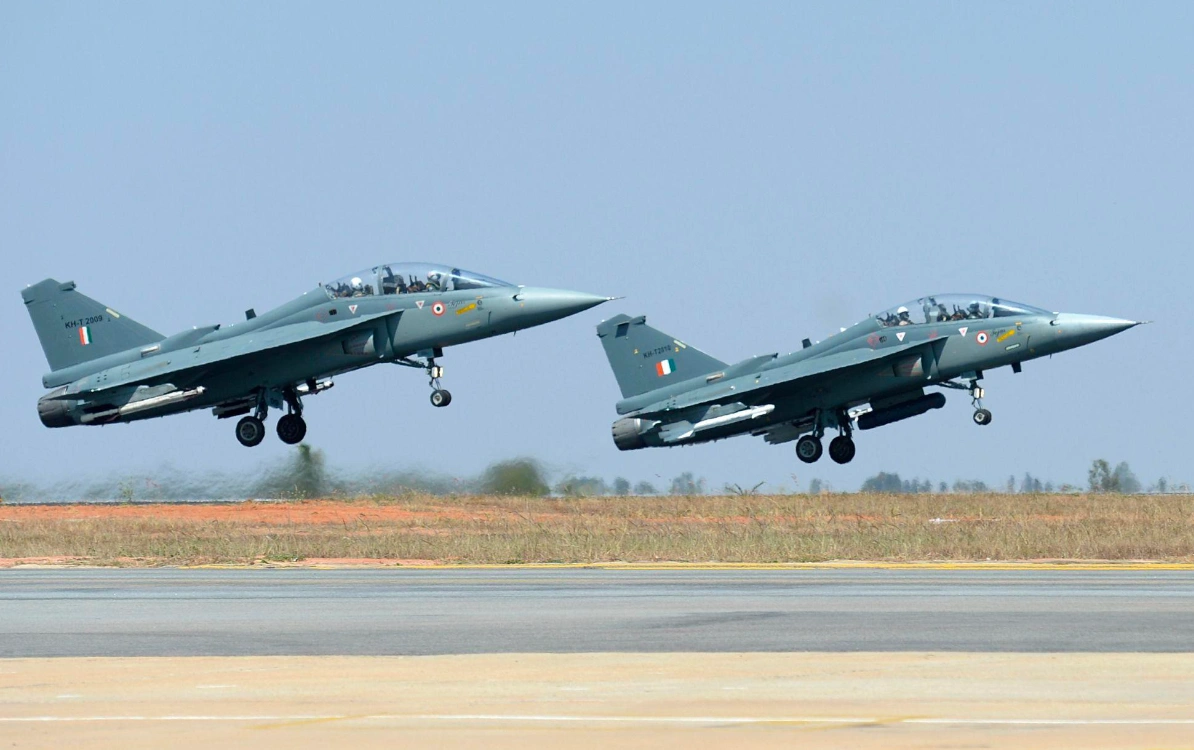
The Tejas Mk1A programme remains the biggest test. HAL is the prime integrator for India’s indigenous light fighter, and every update on deliveries, supply-chain bottlenecks, or production milestones attracts close scrutiny from investors.
Delays have weighed on sentiment, while signs of progress have generally been welcomed by the market.
The same applies to HAL’s helicopter programmes.The Light Combat Helicopter (LCH) and Light Utility Helicopter (LUH) are no longer experimental projects—they are production programmes that showcase the company’s manufacturing capacity and execution capability.
The company’s order book remains one of the strongest in India’s defence sector, supported by continued government procurement under the Aatmanirbhar Bharat initiative, But investors know the difference between an order and a delivery.
An order book represents future business. Successful deliveries translate into revenue, margins and credibility.
That is ultimately what the HAL share price reflects.
The Negotiation That Could Matter More Than Any Dividend
While investors track quarterly production numbers, another development continues quietly in the background.
HAL and GE Aerospace are still working to conclude the commercial agreement for manufacturing the GE F414-INS6 fighter engine in India.The strategic importance of that programme is difficult to overstate.
The engine is planned to power:
- Tejas Mk2
- Twin Engine Deck-Based Fighter (TEDBF)
- The planned initial version of the Advanced Medium Combat Aircraft (AMCA)
HAL and GE have already signed agreements covering the broader collaboration framework.The commercial manufacturing contract—which will determine pricing, costs and implementation—has yet to be finalised.Public reports have indicated differences over commercial terms, while neither company has announced a timeline for concluding negotiations.
Anyone who has followed Indian defence procurement has seen this pattern before.Technical progress often comes first.Commercial negotiations frequently take much longer.
Why the F414 Deal Could Change the Investment Story
Investors weighing the HAL Dividend 2026 against future growth must recognize that the GE F414 engine deal carries significantly higher long-term weight than the annual payout.
This isn’t just another defence contract.HAL already manufactures and assembles several aircraft engines under licence and possesses extensive maintenance, repair and overhaul (MRO) capabilities.
A successful F414 manufacturing programme would significantly deepen India’s modern fighter-engine manufacturing ecosystem and expand HAL’s role in one of the most technologically demanding areas of aerospace production.The significance extends beyond manufacturing.
A locally produced GE F414 engine would support three future combat aircraft programmes while strengthening India’s long-term ecosystem for maintenance, upgrades and potentially exports, depending on future government policy and programme evolution.
Investors are likely to distinguish between a company focused primarily on aircraft integration and one with a larger role in advanced propulsion manufacturing.
If the commercial agreement is concluded, it could strengthen confidence in HAL’s long-term growth prospects.If negotiations continue to drag on, the aircraft programmes themselves are unlikely to disappear, prolonged uncertainty could affect programme timelines, production planning and investor sentiment.
That is why the negotiations matter far more than a quarterly dividend announcement.
A Dividend Today. A Strategic Catalyst Tomorrow.
Yes, the HAL FY26 dividend matters.
The record date is August 14, 2026, and eligible shareholders can expect to receive a total dividend of ₹45 per share for the financial year, subject to the final dividend receiving shareholder approval at the AGM,But long-term investors are unlikely to judge HAL by its dividend yield alone.
The bigger question is whether India’s next generation of fighter aircraft moves from design to production on schedule—and whether HAL secures a deeper role in that journey through the F414 engine programme.
The dividend is tangible.Investors know when they’ll receive it and how much it is worth.The F414 agreement is different.It has no record date, no declared value and no guaranteed timeline.Yet its eventual impact on HAL’s manufacturing capabilities, future revenues and strategic position within India’s defence aerospace sector could prove far more significant than a ₹45-per-share payout.
For investors looking beyond the next dividend, that remains the story worth watching.
Key Takeaways
- HAL FY26 final dividend: ₹10 per share (subject to AGM approval)
- Interim dividend: ₹35 per share
- Total FY26 dividend: ₹45 per share
- Record date: August 14, 2026
- Key long-term catalyst: Commercial agreement for local manufacturing of the GE F414-INS6 engine
- Why it matters: The engine is planned for the Tejas Mk2, TEDBF and the initial version of the AMCA, making it one of HAL’s most important long-term strategic opportunities.

1 thought on “HAL Dividend 2026: ₹45 a Share Is Nice. The GE F414 Engine Deal Is What Matters.”