
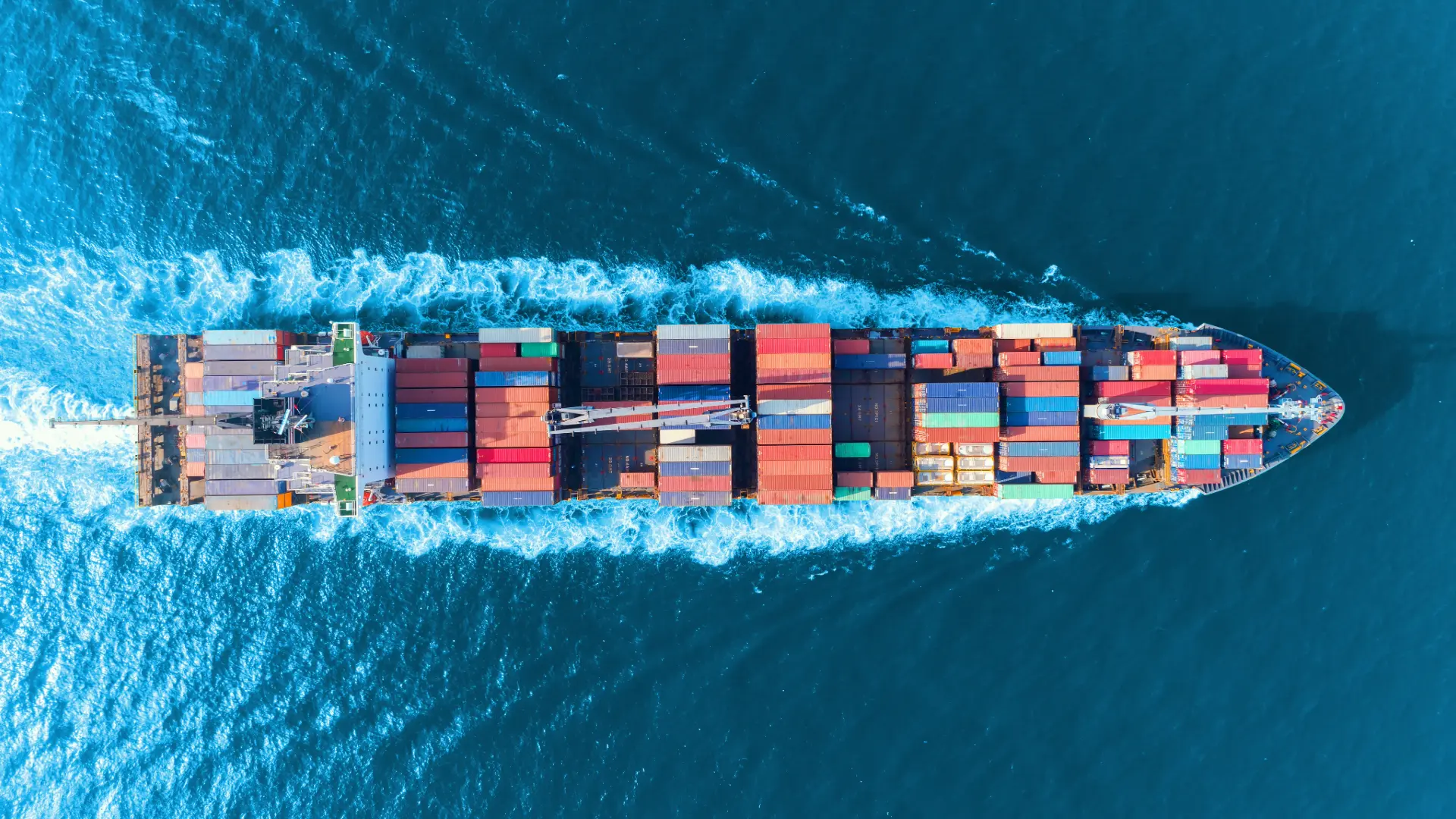
The world’s fifth-largest economy depends on maritime trade, yet remains a minor player in the industry that builds the ships carrying it.
India’s Maritime Paradox
By the Numbers
🚢 95% — Share of India’s trade by volume that moves by sea
🌊 7,500 km — Length of India’s coastline
⚓ 12 major ports and 200+ minor ports — India’s port network
📦 Less than 1% — India’s share of global shipbuilding
🏗️ 95% — Combined share of China, South Korea, and Japan in global shipbuilding output
🎯 Top 10 by 2030, Top 5 by 2047 — India’s shipbuilding ambition
The India shipbuilding industry sits at the center of a growing contradiction. Nearly 95 percent of the country’s trade by volume moves by sea, yet India remains a marginal player in one of the world’s most important maritime industries.
Most people never think about shipyards. They think about factories, technology companies, ports, and trade. Yet the ships carrying global commerce do not appear by accident. They are the product of vast industrial ecosystems involving steel, engineering, financing, logistics, and skilled labor.
That is why shipbuilding matters.
Countries that build ships at scale gain more than economic benefits. They develop industrial capacity, strengthen supply chains, support maritime security, and expand their influence over the networks that move global trade.
Which makes India’s position particularly striking.
India has one of the world’s largest coastlines, a rapidly expanding port network, and an economy deeply dependent on maritime commerce. Yet it builds fewer than one percent of the world’s commercial vessels.
That raises an important question: if India trades by sea, why does it build so few ships?
Why the Global Shipbuilding Industry Is Dominated by Asia
The answer begins with Asia.
Today, China, South Korea, and Japan dominate global shipbuilding. Together, they account for roughly 95 percent of worldwide shipbuilding output. China alone has emerged as the industry’s undisputed giant, producing more commercial vessels than any other country and steadily expanding its position in global markets.
This dominance was built over decades.
China invested heavily in industrial capacity, shipyard infrastructure, steel production, financing, and export support. South Korea became a global leader in high-value vessels such as LNG carriers and advanced commercial ships. Japan established itself as a maritime manufacturing powerhouse long before either country emerged as a major competitor.
The result is an industry where scale matters enormously.
Shipbuilders benefit from extensive supplier networks, specialized labor, technological expertise, and government support. Once these ecosystems are established, they become difficult for competitors to replicate.
India entered this race much later.
While the country developed impressive capabilities in naval construction—building aircraft carriers, destroyers, frigates, and submarines—it never built a commercial shipbuilding sector capable of competing with Asia’s largest producers.
Can the India Shipbuilding Industry Catch Up?
Reviving the India shipbuilding industry has become an increasingly important policy objective.
The government has outlined ambitions to transform India into a leading maritime nation by 2047, while recent partnerships between Indian shipyards and South Korean firms signal a growing effort to attract technology, expertise, and investment.
This is where the story becomes more than an industrial challenge.
India’s economy is expected to continue expanding, its trade volumes are rising, and demand for maritime infrastructure is growing. A stronger domestic shipbuilding sector could reduce dependence on foreign-built vessels while creating jobs and strengthening manufacturing capabilities.
There are reasons for optimism.
India benefits from competitive labor costs, growing domestic demand, and a strategic location along major global trade routes. The country’s shipyards also possess experience in complex naval construction, demonstrating that technical expertise already exists within parts of the industry.
The challenge, however, remains substantial.
India is not competing against emerging economies. It is competing against industrial powers that spent decades building integrated shipbuilding ecosystems. China alone commands a scale that few countries can realistically match in the near future.
Success therefore does not require overtaking China.
A more realistic goal is to become a credible fourth force in global shipbuilding—capable of serving regional markets, building a larger commercial fleet, and competing in selected segments of the industry.
Shipbuilding Is About More Than Ships
The debate surrounding shipbuilding is often framed as an industrial issue.
It is actually much larger than that.
Shipbuilding influences manufacturing, logistics, employment, technology development, supply-chain resilience, and national security. The same industrial base that produces commercial vessels can strengthen a country’s broader maritime capabilities.
For India, this matters because maritime trade is not a peripheral issue. It is one of the foundations of economic growth.
The future of the India shipbuilding industry will not be determined by ambition alone. It will depend on whether India can build the workforce, industrial ecosystem, financing mechanisms, and technological capabilities needed to compete with Asia’s established shipbuilding giants.
India already trades by sea.
The next challenge is building more of the ships that carry that trade.

3 thoughts on “Why Does the India Shipbuilding Industry Lag Behind?”