New Delhi: The Hormuz Toll Dispute took center stage as Tehran and Washington officials began a 60-day countdown to determine if commercial vessels must pay new maritime fees to transit the Strait of Hormuz, following a fragile memorandum of understanding that temporarily suspended Iranian claims to the waterway.
The interim deal grants a 60-day waiver for all shipping fees while negotiators attempt to finalize a broader settlement on maritime security and sanctions.
Commercial tankers currently pass the 21-mile-wide chokepoint without paying the contested security and environmental charges.
But they must still file transit requests with the Iranian Port and Maritime Organization.
Navigational hazards persist. Mine-sweeping operations continue in the shipping lanes.
The Strait of Hormuz carries roughly 21 million barrels of oil per day represents approximately 21% of global petroleum liquid consumption.
Liquefied natural gas flows are equally concentrated. More than 25% of total global LNG trade passes through the channel annually, primarily from Qatari and Emirati terminals.
Why the Hormuz Toll Dispute Threatens Freedom of Navigation
The current Hormuz Toll Dispute centers on whether Iran can legally monetize its role in the Traffic Separation Scheme.
Tehran claims it provides essential services. These include search-and-rescue, oil spill response, and navigational aids.
The United States maintains that the United Nations Convention on the Law of the Sea (UNCLOS) guarantees right of transit passage. Under these rules, states bordering international straits cannot impose taxes or tolls for simple transit.
Iran has not ratified UNCLOS. It argues the waterway falls under the more restrictive “innocent passage” regime within its territorial waters.”Fees are not tolls,” an Iranian maritime official stated in a state media broadcast Monday.The distinction is purely financial for shipping lines.
If Iran implements a service-fee model, a Very Large Crude Carrier (VLCC) could face six-figure charges per transit.These costs would likely be passed to consumers via Worldscale ate adjustments and insurance markets are already reacting.
War risk premiums for the Persian Gulf remain at elevated levels compared to 2022 averages.
Underwriters are monitoring the 60-day window closely. If the waiver expires without a permanent deal, insurance costs for tankers could spike by 15% to 20% overnight.
But the diplomacy is stalling.
U.S. Vice President JD Vance cancelled a scheduled trip to Switzerland for direct talks.The postponement followed a series of drone sightings near regional energy infrastructure.
Tehran officials now say they will not return to the table until Washington releases $6 billion in frozen assets held in Qatari banks.
The 60-day clock continues to run.
And there are few ways around the bottleneck.
The Abu Dhabi Crude Oil Pipeline (ADCOP) can move 1.5 million barrels per day to the port of Fujairah.Saudi Arabia operates the 745-mile East-West Pipeline. It has a nameplate capacity of 5 million barrels per day.These bypasses combined cannot handle even half of the volume that typically moves through the Strait.
Energy traders are pricing in the risk.
Brent crude futures remained volatile on Tuesday as the Hormuz Toll Dispute stayed at the forefront of market analysis.
“The volume is too high to reroute,” a senior commodity analyst in London said.
India is particularly exposed.
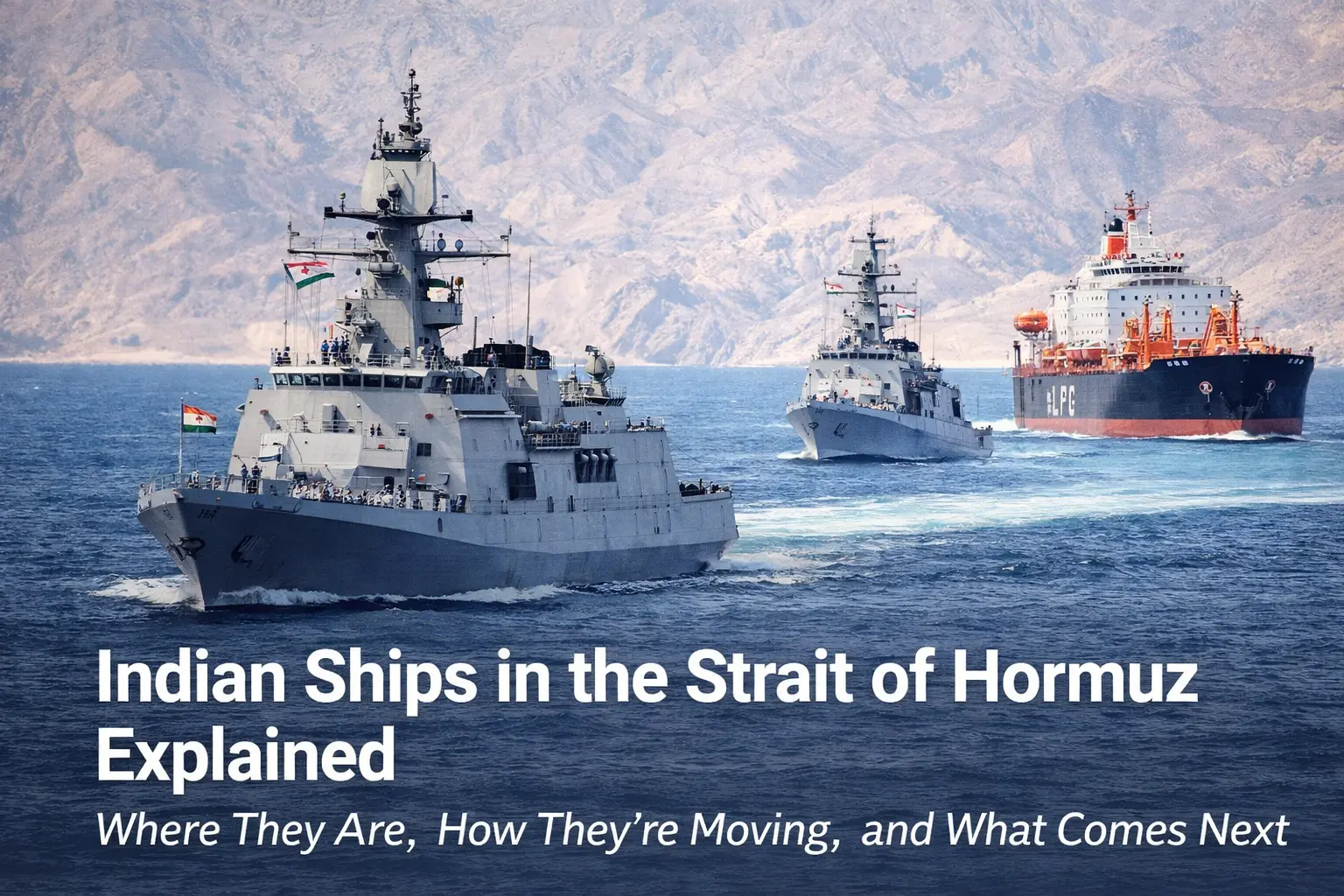
New Delhi relies on the Gulf for over 80% of its crude oil imports.The Indian Ministry of External Affairs has increased its naval presence in the region under Operation Sankalp.Two Indian stealth frigates are currently escorting flagged merchant vessels.
New Delhi wants a permanent “zero-fee” status for the waterway.
If the Hormuz Toll Dispute leads to permanent charges, India’s annual import bill could rise by an estimated $1.2 billion.
That ignores the potential for administrative delays.
Vessels are already required to provide cargo manifests and crew lists to Iranian authorities 48 hours before entry.
Any disagreement over “service fees” after the 60-day period could lead to physical boarding of ships or administrative detention.
The 1980s Tanker War serves as the historical floor for these concerns.During that conflict, more than 500 ships were attacked in the Gulf.
Current tensions have not reached that level, but the legal framework is just as fractured.The U.S. Fifth Fleet, based in Bahrain, has increased its patrol frequency.But the MoU limits the scope of naval interventions while the 60-day waiver is active.
If negotiations fail, the legal status of the Strait returns to a state of ambiguity.Iran could revive its 2019 proposal to charge “protection fees” to non-regional navies.The U.S. State Department has repeatedly called such proposals “extortion “But the economic reality is fixed.The global economy cannot function without the 15 to 20 tankers that move through the Strait every hour.
The current 60-day deal is a pause, not a solution.And the waiver expires in mid-August.If no extension is signed, the shipping industry expects a return to the “gray zone” of maritime seizures and contested invoices.
The facts remain on the water.
Steel and oil move through a channel that is only two miles wide in the outbound shipping lane.
The Hormuz Toll Dispute is now the primary metric for regional stability.
Negotiators in Switzerland have not set a new date for talks.