The Iran Hormuz toll dispute is emerging as one of the biggest obstacles in ongoing U.S.-Iran negotiations, widening disagreements that already include uranium enrichment, sanctions relief, and maritime security in the Gulf.
Recent diplomatic activity in Tehran suggests regional powers are increasingly trying to prevent the standoff from spilling deeper into global shipping routes and energy markets.
Iranian Foreign Minister Abbas Araqchi met Pakistan’s Interior Minister Mohsin Naqvi in Tehran this week as Islamabad continued quiet backchannel engagement between Tehran and Washington. Pakistani officials described the discussions as part of broader efforts to reduce tensions and explore a possible framework for de-escalation.
The meetings come at a sensitive moment. Public rhetoric from Washington has hardened in recent weeks, particularly on Iran’s enriched uranium stockpile and Tehran’s reported discussions around expanded maritime controls linked to the Strait of Hormuz.
U.S. President Donald Trump and Secretary of State Marco Rubio have both signaled that Washington sees the nuclear issue and freedom of navigation in the Gulf as directly connected.
For years, negotiations with Iran largely focused on centrifuges, inspections, and sanctions relief. The current dispute appears wider. Shipping access, energy transit, and regional deterrence are now much closer to the center of the talks.
Pakistan’s Quiet Role in the Iran Hormuz Toll Dispute
Pakistan’s involvement has drawn attention partly because few countries still maintain workable channels across all sides involved.
Islamabad has relations with Tehran, longstanding security ties with Washington, deep economic links with Gulf states, and close strategic coordination with China. That gives it room to communicate quietly where others cannot.
But it also limits how visible that role can become.
Pakistani officials appear careful not to present themselves as formal mediators. Publicly, the language has remained restrained. The focus has been on “bridging gaps” and supporting regional stability rather than sponsoring negotiations outright.
Behind the scenes, the objective appears straightforward: prevent another Gulf escalation from turning into a prolonged economic shock.
Why the Iran Hormuz Toll Dispute Matters
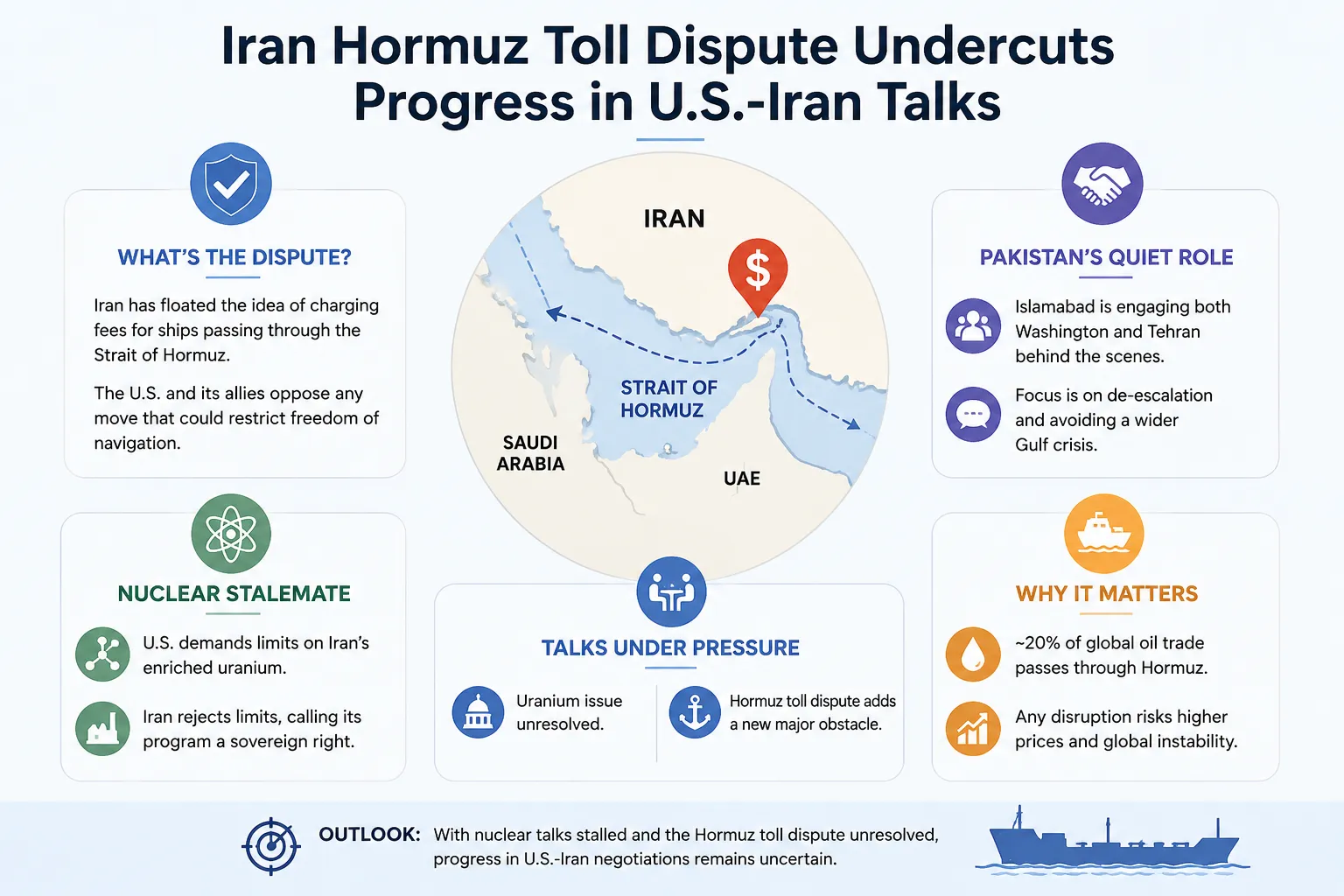
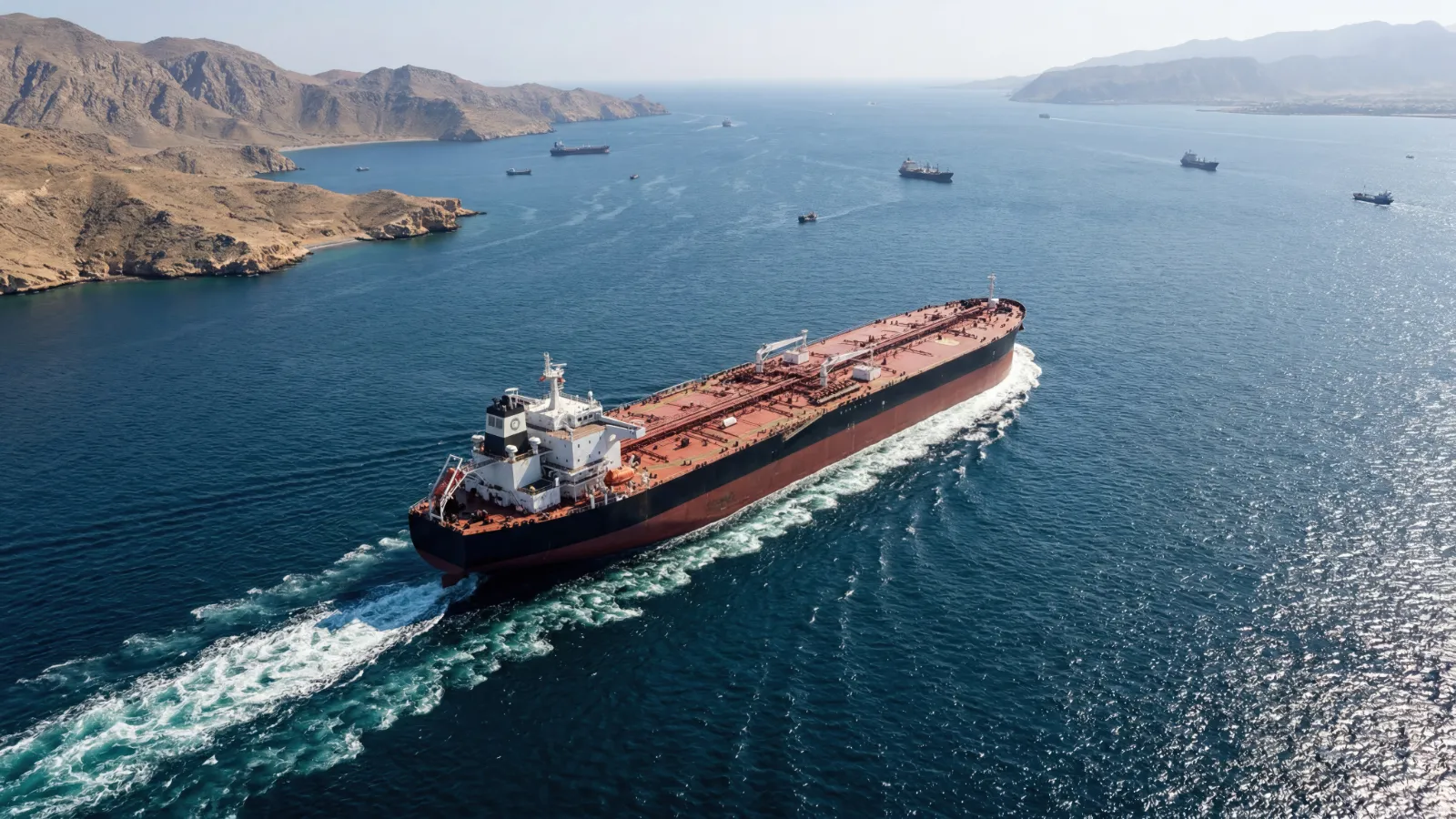
The Strait of Hormuz remains one of the world’s most strategically exposed waterways. Roughly one-fifth of globally traded crude oil passes through the narrow corridor separating Iran from the Arabian Peninsula.
For Asian economies, especially India, the stakes are immediate.
Any sustained disruption around Hormuz affects freight costs, insurance rates, refinery economics, and eventually consumer fuel prices. Markets do not necessarily wait for a blockade. Sometimes uncertainty alone is enough.
That is partly why the Iran Hormuz toll dispute has generated concern in Washington and among Gulf partners.
Iranian political circles have argued that Tehran should exercise greater economic control over transit passing through waters close to its coastline. U.S. officials see the issue differently. Their concern is less about one toll proposal itself and more about establishing a precedent in a waterway central to global trade.
The disagreement reflects competing views about leverage in a region where geography still shapes power.
Uranium Remains a Major Obstacle
At the same time, the uranium dispute remains unresolved.
Washington continues to insist that Iran cannot retain highly enriched uranium capabilities that could shorten the path toward weaponisation. Tehran argues that external demands over its nuclear infrastructure amount to pressure on its sovereignty and long-term security position.
Neither side appears politically positioned for major concessions.
Iran’s leadership has spent years presenting its nuclear program as a matter of national independence. In Washington, meanwhile, domestic political space for compromise with Tehran remains limited, particularly with oil prices and regional tensions already feeding into wider economic concerns.
That combination makes even temporary arrangements difficult.
Markets Are Watching the Gulf Again
Oil markets have become increasingly sensitive to developments around the Gulf over the past several weeks.
Analysts tracking shipping and energy flows say the concern is no longer limited to a worst-case disruption scenario. The bigger issue is whether instability itself starts becoming permanently priced into energy markets.
Higher insurance premiums, rerouting costs, and military risk calculations can gradually push prices upward even without a formal closure of shipping lanes.
For India, which still relies heavily on imported energy, that matters as much as the diplomacy itself.
A prolonged period of elevated crude prices would complicate inflation management and place additional pressure on import costs at a time when many economies are already navigating slower global growth and fragile supply chains.
ran Hormuz Toll Dispute Adds Pressure to Negotiations
The Iran Hormuz toll dispute now sits alongside the nuclear issue as one of the main friction points in U.S.-Iran talks.
Iran sees strategic value in geography, maritime access, and energy transit routes. The United States and its partners want to prevent any single regional actor from turning those advantages into long-term pressure over global trade flows.
That tension is unlikely to disappear quickly, regardless of whether the current negotiations produce a temporary breakthrough.
For now, diplomacy continues quietly through regional intermediaries, with public statements remaining sharper than the negotiations themselves.
But the focus has shifted.
The Iran Hormuz toll dispute is no longer sitting in the background of the wider standoff. It is becoming one of the issues shaping the direction of the talks themselves.