
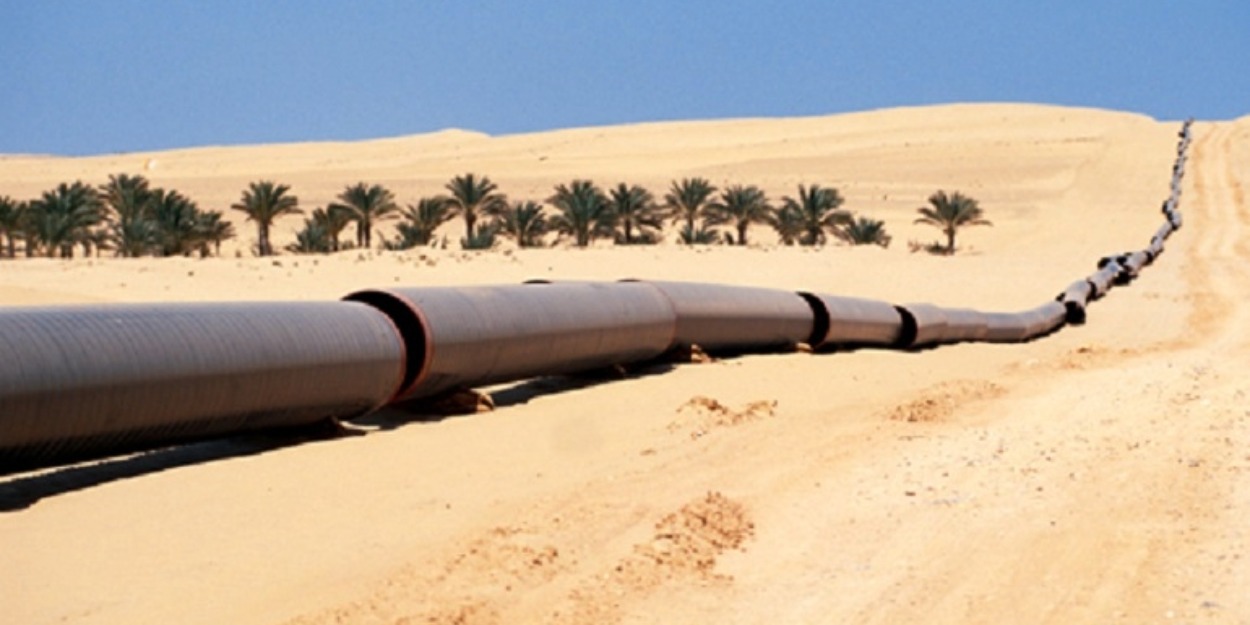
With the 5-million-barrel Petroline disabled by aerial strikes and the Bab-el-Mandeb compromised, the simultaneous closure of maritime and overland bypasses leaves Asian economies facing their gravest energy shock since 1973.
Executive Brief
The sudden shutdown of the Saudi East-West Pipeline on 12–13 September 2026 marks an unprecedented escalation in the regional energy crisis. Following drone and projectile strikes on key pumping stations in Riyadh and Madinah provinces (Gulf News, The Japan Times), the Saudi East-West Pipeline was forced into emergency closure just as Houthi units advanced along the southern Red Sea, pushing Brent crude past $107 per barrel. With the Saudi East-West Pipeline offline, global crude bypass options have vanished, placing extreme pressure on India’s strategic reserves and naval escort operations detailed in our analysis of India’s Military Power in 2026.

1. Anatomy of the Crisis: How the Saudi East-West Pipeline Was Disabled
Spanning 1,200 kilometres from the Abqaiq processing hub in the Eastern Province to the Red Sea port of Yanbu, the Saudi East-West Pipeline (known internationally as Petroline) represents the backbone of Middle Eastern transit security. Designed with a continuous capacity of 5 million barrels per day, the pipeline allowed oil tankers to lift crude entirely outside the Persian Gulf.
However, the coordinated strikes on 12 September forced an emergency shutdown of the Saudi East-West Pipeline. Pumping stations 7 and 8 suffered critical structural damage, halting westward oil flows. With Houthi forces seizing coastal positions near Mokha along the Bab-el-Mandeb, vessels attempting to load at Yanbu now face severe anti-ship missile threats, eliminating the primary redundancy that stabilized world energy markets for decades.
2. Global Transit Shock: Alternatives Beyond the Saudi East-West Pipeline
| Transit Artery | Baseline Volume | Current Operational Status | Strategic Vulnerability Impact |
|---|---|---|---|
| Strait of Hormuz | ~21 Million bpd | Severe disruption; daily commercial transits down by ~90%. | Traps Persian Gulf exports; uninsurable war-risk surcharges. |
| Saudi East-West Pipeline | 5.0 Million bpd | TEMPORARILY SHUT DOWN following aerial strikes on pumping stations. | Eliminates Saudi Arabia’s primary overland export bypass to Yanbu. |
| Bab-el-Mandeb & Red Sea | ~7.0 Million bpd | High-threat zone; coastal missile batteries and drone swarms. | Forces Cape of Good Hope rerouting (+14 to +18 days voyage time). |
| Abu Dhabi (ADCOP) Pipeline | 1.5 Million bpd | Operational to Fujairah terminal outside Hormuz. | Oversubscribed; incapable of absorbing diverted regional volumes. |
3. India’s Macroeconomic Exposure: Refining Margins and SPR Imperatives
The disruption of the Saudi East-West Pipeline directly impacts Indian economic security through three immediate channels:
- Refining Margins & Working Capital: State-owned refiners (IOCL, BPCL, HPCL) face severe gross refining margin (GRM) compression as crude feedstock costs spike above $107, while domestic upstream producers (ONGC, Oil India) benefit from higher realization prices.
- Strategic Petroleum Reserve (SPR) Urgency: India’s operational underground storage caverns (Visakhapatnam, Mangalore, Padur) hold approximately 5.33 million metric tonnes of crude—representing roughly 9.5 days of net requirements. The vulnerability of the Saudi East-West Pipeline reinforces the critical need to accelerate Phase-II SPR expansions at Chandikhol and Padur to build a 30-day sovereign buffer. Read our coverage on domestic industrial resilience in our Latest Strategic Updates.
- Rupee-Dollar Depreciation Risk: Sustained triple-digit oil prices widen India’s trade deficit by approximately $2.1 billion for every $10 increase in crude, creating urgent pressure to settle energy transactions in non-dollar formats via Special Rupee Vostro Accounts (SRVA).
With the Saudi East-West Pipeline disabled, tanker traffic is forced through contested waterways. The Indian Navy’s Western Naval Command has stepped up persistent deployments under Operation Sankalp, positioning guided-missile destroyers, Boeing P-8I patrol aircraft, and marine commandos across the Gulf of Oman and northern Arabian Sea to provide escort security for Indian-flagged commercial vessels lifting crude from Oman and the UAE.
4. Historical Precedent: The 1980s Tanker War and Modern Energy Resilience
The strategic role of the Saudi East-West Pipeline mirrors the geopolitical dynamics of the 1984–1988 Iran-Iraq Tanker War. When maritime strikes threatened commercial shipping in the Persian Gulf, Western and Asian navies launched armed convoy operations (Operation Earnest Will) while Gulf nations accelerated construction of the original Saudi East-West Pipeline to ensure unconstrained access to Red Sea ports.
Today’s crisis proves that overland pipelines can no longer be assumed to be invulnerable sanctuaries. In the modern era of low-cost, long-range loitering munitions, sovereign energy security requires hardening terrestrial pipeline nodes while expanding multi-currency energy trade mechanisms, as detailed in our Strategic Intelligence Reports.
Frequently Asked Questions
What is the Saudi East-West Pipeline?
The Saudi East-West Pipeline (Petroline) is a 1,200 km strategic pipeline transporting up to 5 million barrels of crude oil per day from Abqaiq in eastern Saudi Arabia to the Red Sea port of Yanbu, bypassing the Strait of Hormuz.
Why did the Saudi East-West Pipeline shut down?
The Saudi East-West Pipeline was temporarily shut down following coordinated aerial drone and projectile strikes on key pumping stations in Riyadh and Madinah provinces on 12 September 2026.
How does India respond to the Saudi East-West Pipeline crisis?
India relies on its Strategic Petroleum Reserves (ISPRL), expands crude off-take from non-chokepoint suppliers, and deploys Indian Navy warships under Operation Sankalp to safeguard commercial tankers in the Arabian Sea.

1 thought on “The Chokepoint Collapse: Saudi Arabia Shuts East-West Pipeline as Brent Pierces $107”