
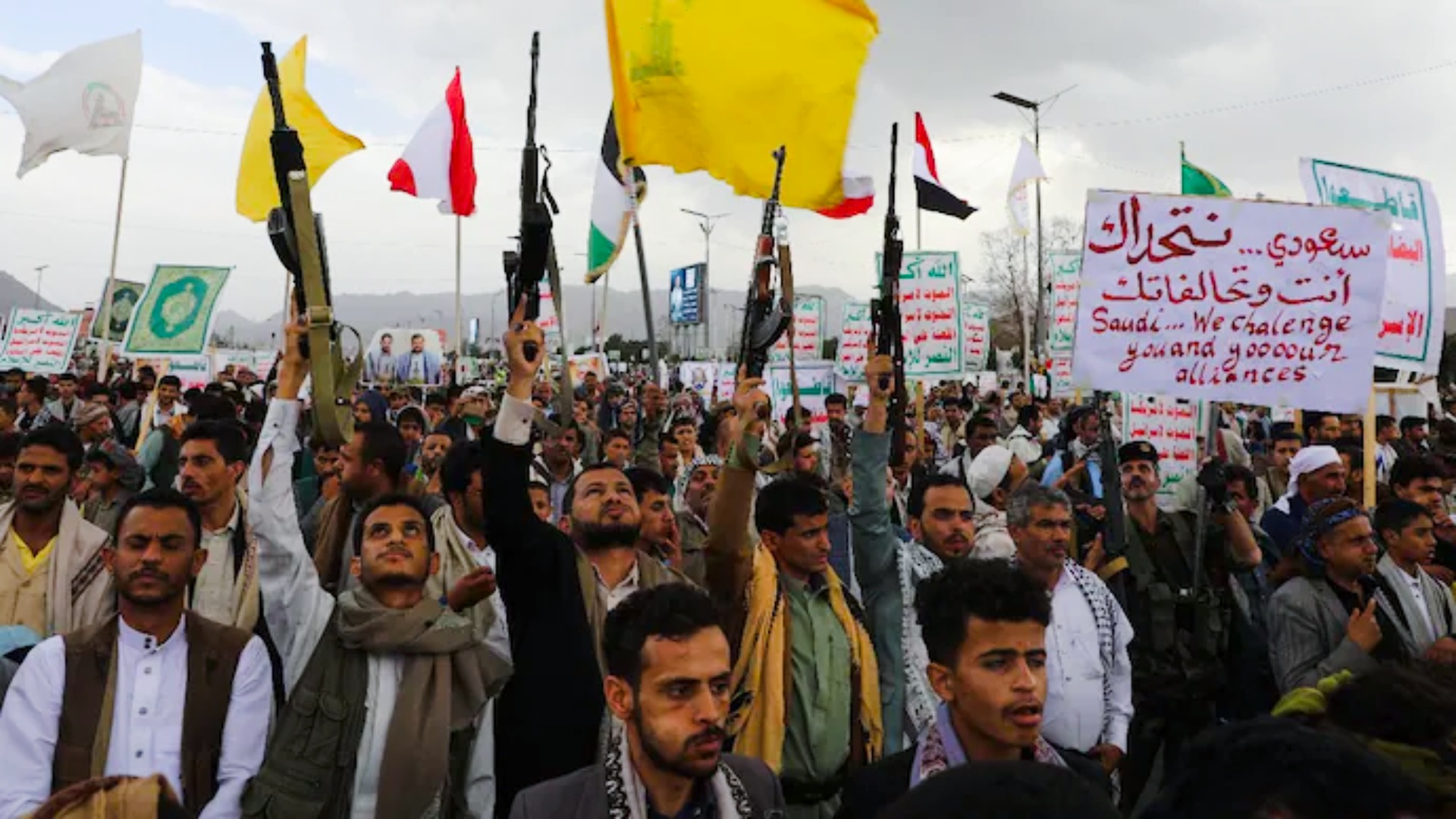
The conventional premise of maritime deterrence held that overwhelming blue-water naval power could reliably cordon regional conflicts away from global shipping lanes. That calculation unravelled across the western littoral of the Arabian Peninsula this week. As the Houthi Red Sea escalation oil prices breach critical technical resistance levels, commercial shipping across both the Bab al-Mandeb Strait and the Strait of Hormuz has encountered a coordinated, asymmetric denial of passage. What began as localized skirmishing has hardened into an interlocking energy shock spanning the Persian Gulf, the Levant, and the Red Sea basin.
Rather than an isolated series of naval skirmishes, markets now confront a synchronized dual-chokepoint squeeze. While heavy exchanges in the Gulf have sunk multiple Iranian oil tankers and triggered retaliatory IRGC attacks on merchant vessels, Ansar Allah forces in Yemen executed a swift coastal sweep, overrunning government positions to seize the critical port of Mocha (Al Makha). With international benchmark Brent crude breaking past $100 per barrel, the geopolitical friction has translated into an immediate balance-of-payments challenge for Asian net importers, placing India’s refining margins, sovereign oil import bill, and naval escort posture directly in the crosshairs.
The Coastal Breakthrough: How the Fall of Mocha Threatens Bab al-Mandeb
The sudden collapse of internationally recognized Yemeni government lines along the southwestern coastline represents the most consequential shift in Yemen’s territorial balance since the 2022 ceasefire. Government-aligned National Resistance Forces under General Tariq Saleh vacated fortified defense posts west of Taiz and south of Mocha following days of intense infantry and drone pressure. Concurrently, amphibious units moving in light assault craft secured control over Zuqar Island in the southern Red Sea, removing maritime reconnaissance outposts that previously tracked rebel boat movements.
The geographical dividends of holding Mocha are immediately tangible. Securing the town’s anchorage and adjacent road junctions allows Ansar Allah to interdict supply lines running south toward Aden while establishing fortified launch positions along the coastal highway. Instead of relying on ballistic strikes launched from inland highland redoubts, coastal launch crews can now deploy short-range anti-ship cruise missiles (ASCMs) and radar-evading suicide drones at point-blank range against commercial convoys entering the strait’s narrow transit lanes.
Crucially, this advance exposes Saudi Arabia’s primary strategic hedge: the Red Sea export terminal at Yanbu. Developed to bypass Persian Gulf vulnerabilities by pumping crude through the 1,200-kilometre East-West Petroline, Yanbu’s tanker loadings had climbed to between 2.9 and 3.7 million barrels per day in early September. Because vessels departing Yanbu to reach Asian markets must sail southward through the Bab al-Mandeb bottleneck, Ansar Allah’s southern sweep has effectively placed the Kingdom’s primary bypass route under direct missile observation.
The Escalation with Riyadh: Testing Pakistan’s Mecca Defence Pact
The fighting inside Yemen quickly spilled across the international frontier. Salvo-controlled drone swarms and ballistic missiles targeted military and energy infrastructure across southern Saudi Arabia, centering on King Khalid Air Base near Khamis Mushait. With civil defence sirens sounding across southern urban centers four times in twenty-four hours and over 70 casualties reported, the Royal Saudi Air Force mounted a sustained response, executing dozens of retaliatory strikes against launch bunkers and logistical convoys in Saada and Hodeidah provinces.
This rapid deterioration tested the durability of the trilateral Mecca Defence Agreement ratified between Riyadh, Ankara, and Islamabad in August 2026. Initially drafted as a mutual security compact to foster joint procurement and intelligence sharing, Saudi officials suggested the accord’s collective defense provisions could be invoked should rebel missile salvos persist against civilian and industrial hubs.
However, Islamabad moved rapidly to clarify its operational posture. During a formal foreign ministry briefing, Pakistani officials reaffirmed that the Mecca agreement serves strictly as a defensive consultative framework, stating unequivocally that Islamabad maintains no plans to join expeditionary combat deployments in Yemen. Pakistan’s diplomatic restraint mirrors its 2015 legislative decision to avoid entanglement in Gulf ground offensives. Facing severe domestic economic adjustments, recurrent unrest in Balochistan, and an unpredictable western frontier with Iran, Pakistan’s security establishment has chosen to preserve delicate regional ties over forward military adventurism in the Arabian Peninsula.
The Washington Calculus: Midterm Deadlines vs Attrition Reality
In Washington, operational choices are deeply intertwined with political timing. Addressing party delegates in Dallas, President Trump tied combat progress directly to retail fuel costs, stating that energy benchmarks would drop sharply once the engagement concludes following the November midterm elections. Asserting that American carrier strike groups held absolute dominance over maritime traffic, Trump publicly proposed renaming the strategic waterway between Oman and Iran the “Trump Strait”.
Beyond rhetoric, the White House issued explicit warnings regarding Iran’s Pickaxe Mountain site—a deeply buried subterranean complex situated near the Natanz enrichment center where international monitors noted renewed excavation activity. Administration officials cautioned that continued naval strikes would invite direct kinetic attacks against deep-underground installations.
Yet institutional assessments from within the Pentagon and intelligence community offer a starkly different outlook. Internal briefings reviewed by major financial dailies indicate senior national security advisers have cautioned that the regional engagement could grind on through the remainder of the presidential term. Kinetic strikes have failed to re-establish deterrence. Following the destruction of five Iranian tankers by American forces, Iranian naval assets retaliated within hours against ten commercial vessels across the Gulf of Oman, including the tanker Hercules Star off the coast of Dubai, proving that asymmetric denial weapons can operate effectively despite heavy air patrols.
Global Energy Shock: Houthi Red Sea Escalation, Oil Prices, and the Rerouting Trap
International energy markets operate on thin surplus margins, and the physical restriction of two primary maritime arteries has overwhelmed commercial freight systems. The Houthi Red Sea escalation oil prices reflect not just temporary risk premiums, but the structural cost of global fleet redirection. When the IRGC designated expansive sectors of the Gulf of Oman and northern Arabian Sea as an uncoordinated “prohibited zone”, transits through the Strait of Hormuz dropped to just seven vessels in a single day—roughly half the normal baseline.
With both corridors contested, container fleets and crude hauliers have few options left beyond rerouting voyages around the Cape of Good Hope. This detour adds 3,500 nautical miles and 10 to 14 days of sailing time between Asian production hubs and European discharge terminals. For an Ultra Large Crude Carrier, this diversion burns hundreds of tonnes of additional marine fuel, ties up vessel availability, and adds steep insurance premiums to delivered cargoes.
The compounding disruption also threatens downstream industrial inputs. According to warnings from international relief and trade bodies, the simultaneous bottleneck across Hormuz, Bab al-Mandeb, and the Black Sea risks creating a severe squeeze on chemical feeds, particularly bulk sulfur and urea fertiliser exports departing Gulf petrochemical complexes, driving up global agricultural production expenses.
Impact on Indian Markets: Macro Deficits, OMCs, and Naval Doctrine
The confluence of rising crude prices and maritime shipping risks strikes directly at the core of India’s economic balance. Econometric models indicate that every sustained $10 per barrel increase in Brent crude expands India’s Current Account Deficit (CAD) by approximately 0.5 percent of Gross Domestic Product. An inflated energy import bill increases dollar demand, requiring active foreign exchange interventions by the Reserve Bank of India (RBI) to prevent volatile depreciation in the Rupee while limiting room for domestic interest rate cuts.
Across equity and commodity markets, the structural impact is highly uneven:
- Downstream Oil Marketing Companies (OMCs): State refiners—including Indian Oil Corporation Limited (IOCL), Bharat Petroleum Corporation Limited (BPCL), and Hindustan Petroleum Corporation Limited (HPCL)—face acute pressure. If retail petrol and diesel pump prices remain unchanged, their net marketing margins turn negative, eroding downstream profitability despite stable refining margins.
- Upstream Exploration Primes: Upstream producers such as Oil and Natural Gas Corporation (ONGC) and Oil India Limited (OIL) benefit from higher nominal wellhead realizations. However, equity valuation upside remains capped by the Ministry of Finance’s Special Additional Excise Duty (SAED) framework, which recalibrates windfall levies to capture supernormal gains above set crude benchmarks.
- Industrial Consuming Sectors: Commercial aviation carriers like InterGlobe Aviation (IndiGo) and paint manufacturers like Asian Paints and Berger Paints face severe input cost spikes due to rising aviation turbine fuel (ATF) and solvent petrochemical prices.
Beyond fiscal ledgers, the crisis reinforces India’s maritime operational doctrine. Under Operation Sankalp, the Indian Navy has maintained persistent forward deployments of guided-missile destroyers—including Kolkata-class (Project 15A) and Visakhapatnam-class (Project 15B) platforms—across the northern Arabian Sea and the Gulf of Aden. Indian naval escorts continue to safeguard Indian-flagged commercial vessels and multi-national merchant crews without joining formal offensive coalitions, exemplifying New Delhi’s strategic autonomy.
This operating environment has accelerated domestic capital allocations toward naval air defense and asymmetric countermeasures. With swarming loitering munitions and anti-ship ballistic missiles dominating the littoral battlespace, procurement priorities are shifting rapidly toward indigenous counter-unmanned aerial systems (C-UAS), electronic warfare suites, and shipborne directed-energy weapons produced by domestic defence primes, notably Bharat Electronics Limited (BEL), Mazagon Dock Shipbuilders, and Cochin Shipyard.
The Strategic Horizon: What Happens Next
The fall of Mocha to Ansar Allah demonstrates that asymmetric littoral tactics continue to outmanoeuvre conventional standoff naval power. As regional powers position themselves for an extended war of attrition, three indicators will determine the trajectory of the crisis:
- Durability of the Mocha Hold: Whether Saudi-backed forces can mount a coherent coastal counter-offensive, or if Ansar Allah consolidates its grip to establish permanent missile outposts controlling the Bab al-Mandeb narrows.
- The Mecca Pact’s Operational Scope: Whether Riyadh exercises diplomatic leverage to demand Turkish naval drone patrols or Pakistani logistics personnel, testing the fragile diplomatic compromise forged in Islamabad.
- Indian Supply Realignment: The speed with which Indian refiners secure discounted crude barrels from alternate geographic basins outside the Persian Gulf to cushion domestic consumer inflation against prolonged three-digit oil prices.

1 thought on “Houthi Red Sea Escalation: Oil Prices, the Mecca Pact, and India’s Vulnerability”