
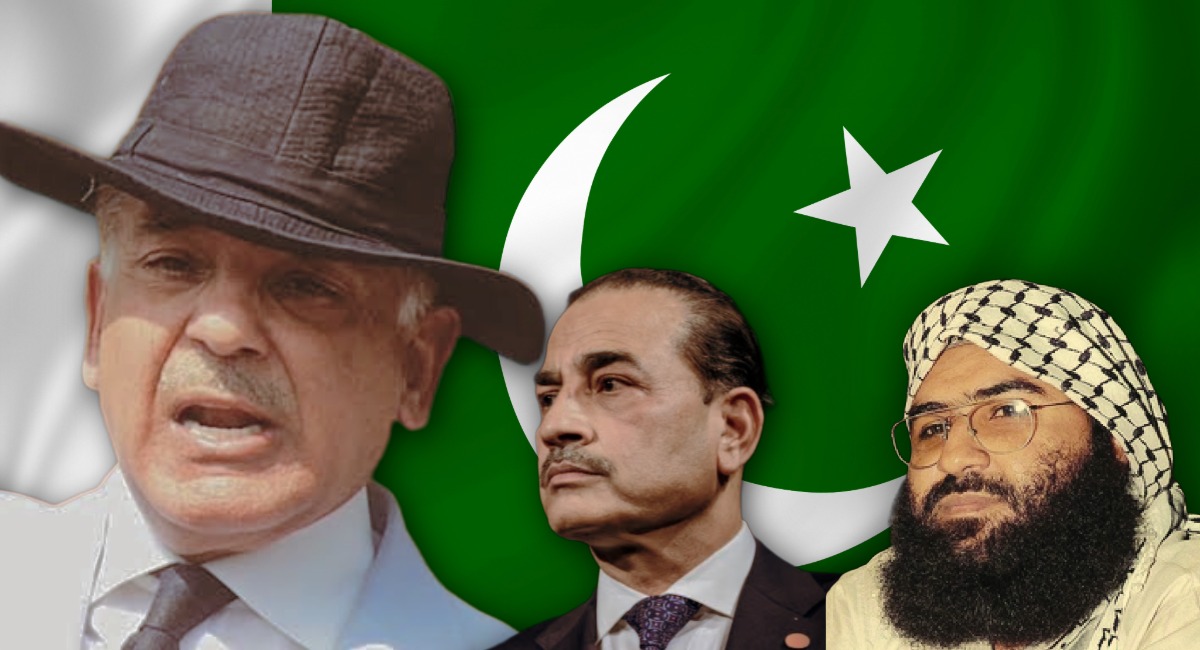
Pakistan has spent five years telling the world that Jaish-e-Mohammed chief Masood Azhar fled to Afghanistan and is no longer on its soil. This week, its own Federal Investigation Agency put his name back in its most-wanted register and raised the price on his head. The listing lands eight days before an International Monetary Fund mission arrives in Islamabad and six weeks before the Financial Action Task Force meets in Paris. Read together, the timing says more about Pakistan FATF compliance strategy than the bounty notice itself does.
What the FIA Actually Announced
Pakistan’s Federal Investigation Agency (FIA) has listed Masood Azhar as a fugitive in its 2026 Red Book of most-wanted terrorists and raised the reward for information leading to his arrest by PKR 20 lakh, from PKR 50 lakh in the 2021 edition to PKR 70 lakh now. The FIA notice names him as Maulana Masood Azhar, son of Khuda Baksh, and lists three terrorism cases registered against him under Pakistan’s Anti-Terrorism Act between 2020 and 2021. The agency’s overall most-wanted register has grown from 1,330 names in 2021 to 1,804 in the current edition, an increase of roughly 35%.
Indian intelligence sources cited in Indian media reporting place Azhar in Nawabshah, in Pakistan’s Sindh province, based on technical analysis conducted over the past six months — a claim Pakistan has not addressed. Islamabad has maintained since 2021 that Azhar left for Afghanistan, a position the Taliban government in Kabul has rejected — one of several contradictions running through Pakistan FATF compliance strategy in recent years. This is the core contradiction that gives Pakistan FATF compliance strategy its shape: a state simultaneously insisting a UN-designated terrorist is not on its territory while its own police agency raises the price on his capture inside a document meant to demonstrate counter-terrorism action.
The Calendar That Explains the Timing
Neither of these dates is speculative; both are on the record from the IMF and from FATF-adjacent reporting. The FIA’s Azhar listing, reported on 14–15 September 2026, sits squarely between the two. Pakistan is not currently at risk of an imminent grey-list placement — its June 2026 FATF status shows no such listing — but a visible paper trail on terror financing ahead of a plenary review, timed alongside an IMF mission assessing programme compliance, is a documented pattern in Pakistan FATF compliance strategy rather than a one-off gesture. The 2021 Red Book listing that first named Azhar was itself issued ahead of an FATF review cycle.
The Western Frontier Pakistan Would Rather Not Discuss
While the FIA’s most-wanted register grows on paper, Pakistan’s western frontier has deteriorated on the ground. Eleven Pashtun-majority districts of Balochistan — including Pishin, Zhob and Ziarat — recorded no attacks by armed groups between January and May 2026. That changed in June, when gunmen struck police installations across four of those districts; at least 13 attacks have followed, including one in July that killed 27 police personnel guarding a dam project near Ziarat. On 1 September 2026, Pakistani security forces said they repelled a Tehrik-i-Taliban Pakistan (TTP) attack on a customs facility at Ziarat Cross in Pishin district. The Pakistani military has attributed several of these attacks to joint TTP and Balochistan Liberation Army (BLA) activity.
This is the frontier Field Marshal Asim Munir — Pakistan’s army chief and, since December 2025, its first Chief of Defence Forces — is managing while Islamabad’s diplomatic energy goes toward the FATF and IMF optics that anchor Pakistan FATF compliance strategy. The contrast is the more revealing part of the story: a state that can update a wanted-persons register in Islamabad within days is struggling to hold routine security perimeters in its own Pashtun-majority districts a few hundred kilometres away.
How India Is Reading This
New Delhi has historically treated Pakistani wanted-list updates on Azhar as symbolic rather than substantive, given Islamabad’s unresolved position on his whereabouts and the absence of any extradition process. Indian security assessments tend to weight operational indicators — cross-border infiltration attempts, terror-camp activity, and financing networks — more heavily than administrative listings timed to international review calendars. That is consistent with India’s broader position since Operation Sindoor, which kept Jaish-e-Mohammed’s infrastructure in focus independent of Pakistan’s own paperwork on the group’s leadership — paperwork New Delhi treats as a Pakistan FATF compliance strategy exercise rather than a security development.
What to Watch
Why did Pakistan raise the Masood Azhar bounty now?
The FIA’s updated listing was reported on 14–15 September 2026, eight days before an IMF mission arrives on 23 September for Pakistan’s fourth EFF and third RSF review, and roughly six weeks before the FATF plenary in Paris (26–30 October 2026). The clustering of dates is the clearest evidence that this is Pakistan FATF compliance strategy at work rather than a standalone law-enforcement action.
Is Pakistan currently on the FATF grey list?
No. Pakistan was removed from the FATF’s increased-monitoring list in October 2022, and its June 2026 status shows no grey-list placement. The Azhar listing appears aimed at reinforcing that position ahead of the October plenary rather than responding to an active grey-list threat.
Does the bounty increase mean Pakistan knows where Masood Azhar is?
Pakistan’s own position, maintained since 2021, is that Azhar is not in the country. Indian intelligence sources place him in Nawabshah, Sindh, based on technical analysis conducted over the past six months — a claim Islamabad has not addressed either way.
Related on TES: Pakistan Looks West: Reducing Dependence on China Through a New Middle Eastern Security Architecture · Indian Navy 2026: Five Times Pakistan’s Tonnage, Third Carrier Still Pending