
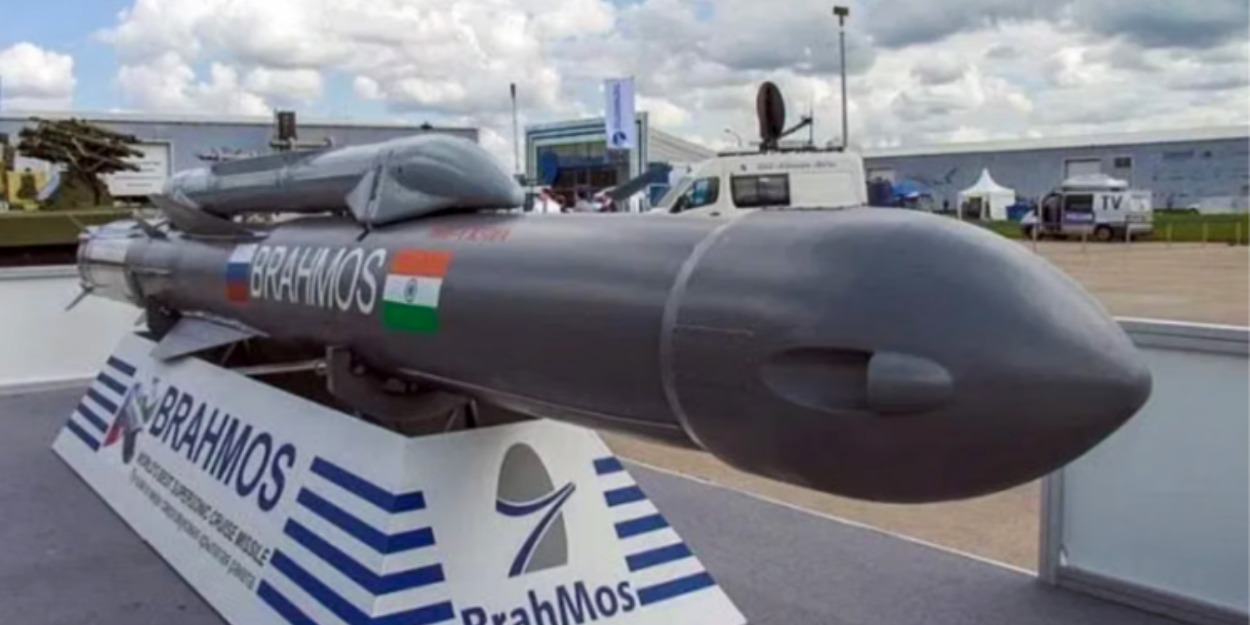
The India Vietnam BrahMos missile deal has entered its final contractual phase, transforming years of bilateral diplomatic overtures into hard maritime deterrence along the South China Sea rim. While multilateral negotiations over regional maritime codes remain deadlocked, Hanoi is moving decisively to field Mach 3 shore-to-ship strike complexes capable of denying naval aggression across its exclusive economic zone. As friction mounts in the ongoing South China Sea standoff, the procurement establishes a vital second pillar in India’s regional missile export architecture, reinforcing New Delhi’s proactive naval statecraft following the Eastern Fleet’s historic forward port call at Cambodia’s Ream Naval Base.
Following the successful delivery of three shore-based coastal batteries to the Philippine Marine Corps under a $375-million contract documented by the SIPRI Arms Transfers Database, Vietnam’s impending contract signals a structural transition. Southeast Asian littoral nations are no longer relying solely on external diplomatic assurances; they are actively acquiring sovereign Anti-Access/Area Denial (A2/AD) capabilities engineered to raise the operational cost of contested maritime intrusions.
Strategic Dimensions of the India Vietnam BrahMos Missile Deal
For Hanoi, acquiring BrahMos is the operational fulfilment of its “active coastal defence” doctrine. The Vietnam People’s Navy (VPN) and Coastal Artillery corps currently operate Russian-supplied K-300P Bastion-P mobile coastal defence systems armed with P-800 Yakhont missiles. Integrating the Indian-manufactured BrahMos creates deep operational redundancy. Because BrahMos was developed through the Indo-Russian joint venture BrahMos Aerospace, it shares foundational propulsion characteristics with the Russian ramjet design while utilizing modernized indigenous Indian fire-control and seeker software. Consequently, Vietnam can assimilate the platforms without overhauling its existing logistics architecture.
Deploying these mobile batteries along Vietnam’s central and southern coastlines alters the operational calculus for naval forces operating in the Western Pacific. Capital warships attempting to enforce contested baseline claims within Vietnam’s 200-nautical-mile Exclusive Economic Zone (EEZ) are forced to operate outside the missile’s rapid launch-to-impact umbrella, fundamentally altering deterrence calculations in the South China Sea standoff. For a deeper breakdown of how regional choke points dictate naval tactics, examine our analysis of Indo-Pacific maritime chokepoints and sea lines of communication.
Figure 1: Dual-flank A2/AD supersonic coastal battery coverage across critical sea lanes.
Financing Framework and the $500 Million Defence Credit Line
Capital structuring has historically served as the primary bottleneck for major arms acquisitions among emerging economies. By coupling procurement with concessionary sovereign credit, New Delhi has successfully replicated a financing mechanism long utilized by global arms exporters. Under guidelines established by the Ministry of External Affairs (MEA), a minimum of 75% of goods and services funded under defence lines of credit must originate from Indian vendors, ensuring direct domestic industrial returns.
This financial pipeline follows earlier bilateral milestones, including the delivery of 12 high-speed guard boats and the 2023 gifting of the active-duty missile corvette INS Kirpan to the VPN. Finalizing the BrahMos package absorbs the primary tranches of the line of credit, while opening discussions for supplementary export credit agreements covering long-term life-cycle support, maintenance depots, and telemetry training facilities on Vietnamese soil.
Industrial Cascades Across the Indian Defence Supply Chain
The expansion of the India Vietnam BrahMos missile deal delivers substantial manufacturing volume to BrahMos Aerospace and its extensive domestic supplier base. As detailed in our report on how the MoD is pushing Indian defence MSMEs into deep-tech tier-1 manufacturing, over 200 micro, small, and medium enterprises feed components into each missile stack, driving recurring revenue across listed primes and private specialists:
| Industrial Partner | Subsystem Responsibility | Commercial & Market Impact |
|---|---|---|
| Larsen & Toubro (L&T) | Mobile Autonomous Launchers (MAL) & Hydraulic Systems | High-margin integration work; expansion of dedicated land-based naval systems capacity. |
| Godrej Aerospace | Liquid Ramjet Engines & Airframe Sections | Long-term manufacturing throughput; scaling precision metallurgy and fabrication lines. |
| Bharat Electronics (BEL) | Coastal Surveillance Radars & C4I Systems | Sensor and command integration export orders; domestic value-addition exceeding 70%. |
| Data Patterns / Zen Tech | Guidance Processing Units & Crew Simulators | High EBITDA margins (35%+) driven by proprietary IP and recurring spares support. |
With domestic procurement already expanding across the Indian Armed Forces, foreign deliveries accelerate the industrial scale of production, driving down unit costs and improving margins across India’s strategic defence manufacturing sector.
Geopolitical Re-alignment in the South China Sea Standoff
The transfer adheres strictly to Vietnam’s foundational “Four No’s” defence doctrine: no military alliances, no foreign military bases on national soil, no alignment with one nation against another, and no threat or use of force in international relations. Purchasing sovereign hardware from India enables Hanoi to enforce deterrence without entering formal treaty alliances or hosting foreign forces.
For New Delhi, the transaction demonstrates diplomatic autonomy and multilateral coordination. Because Russia is an equal equity partner in BrahMos Aerospace, the export required tri-party alignment between New Delhi, Moscow, and Hanoi. As confirmed in official statements on Press Information Bureau (PIB) portals, Indian defence exports have crossed historic thresholds, proving that India can construct resilient, non-provocative security partnerships that protect freedom of navigation without escalating into bloc confrontations. The conclusion of the India Vietnam BrahMos missile deal solidifies this sovereign posture.
Conclusion: The Architecture of Sovereign Deterrence
The successful execution of the India Vietnam BrahMos missile deal represents a watershed milestone in Asian maritime security. By pairing accessible sovereign financing with combat-proven coastal artillery, New Delhi and Hanoi have created an enduring template for regional equilibrium. As the South China Sea standoff continues to define the strategic geography of the Indo-Pacific, sovereign coastal missile bastions ensure that maritime stability rests upon unshakeable defensive capability.