
A routine procurement notice from the Department of Defence Production moved defence stocks within hours on 18 August — but not the way most coverage suggested, and not the companies most readers would guess.
Paras Defence and Space Technologies gained 8% and Zen Technologies rose 6.6% in trade on 18 August, after the Department of Defence Production (DDP), Ministry of Defence, notified the sixth Positive Indigenisation List — 405 items carrying an estimated business potential of ₹3,070 crore. Axiscades, Garden Reach Shipbuilders & Engineers and Data Patterns followed with gains of roughly 4%, 3.3% and 3.2% respectively, while the broader Nifty India Defence index rose 1.22% intraday, touching 9,962.20 against a previous close of 9,841.50. The bigger, more familiar names — Hindustan Aeronautics, Bharat Electronics, Bharat Dynamics — were reported “in focus” for their exposure to the list, without confirmed same-day percentage moves of their own.
That gap between expectation and reality is worth sitting with. A components-and-spares notice, the kind that rarely makes a front page, produced sharper single-day moves in mid-cap defence names than in the sector’s blue chips. Understanding why requires looking at what this recurring government mechanism actually does — and why six years into the exercise, the market has learned to read it as a revenue signal rather than paperwork.
What a Positive Indigenisation List Actually Does
A Positive Indigenisation List is not a subsidy scheme or an incentive. It is closer to an import ban with a deadline. Once an item appears on a PIL, the armed forces, the Indian Coast Guard and India’s Defence Public Sector Undertakings (DPSUs) are barred from importing it after a notified date — it must be sourced domestically, whether through an existing Indian manufacturer or one built up for the purpose. That distinction matters for markets: a PIL does not create demand, it redirects demand that already exists in the defence budget toward Indian industry, on a fixed timeline.
The DDP has now issued six such lists since the mechanism began in August 2020, alongside the SRIJAN Defence Portal, through which DPSUs and Service Headquarters offer items for indigenous development. According to the Ministry of Defence, the SRIJAN portal has facilitated the offer of more than 33,000 defence items for indigenisation up to June 2026, of which 5,012 items were notified under the first five Positive Indigenisation Lists combined. PIL-6 adds 405 more to that ledger.
Six lists in, the mechanism itself has become the story.
What’s Actually in PIL-6
According to the Ministry of Defence release dated 18 August, of the 405 items, 16 relate to the Indian Coast Guard and 389 to DPSUs, spanning Line Replaceable Units, sub-systems, sub-assemblies, spares, components and raw materials. The platforms named span both legacy sustainment and frontline capability:
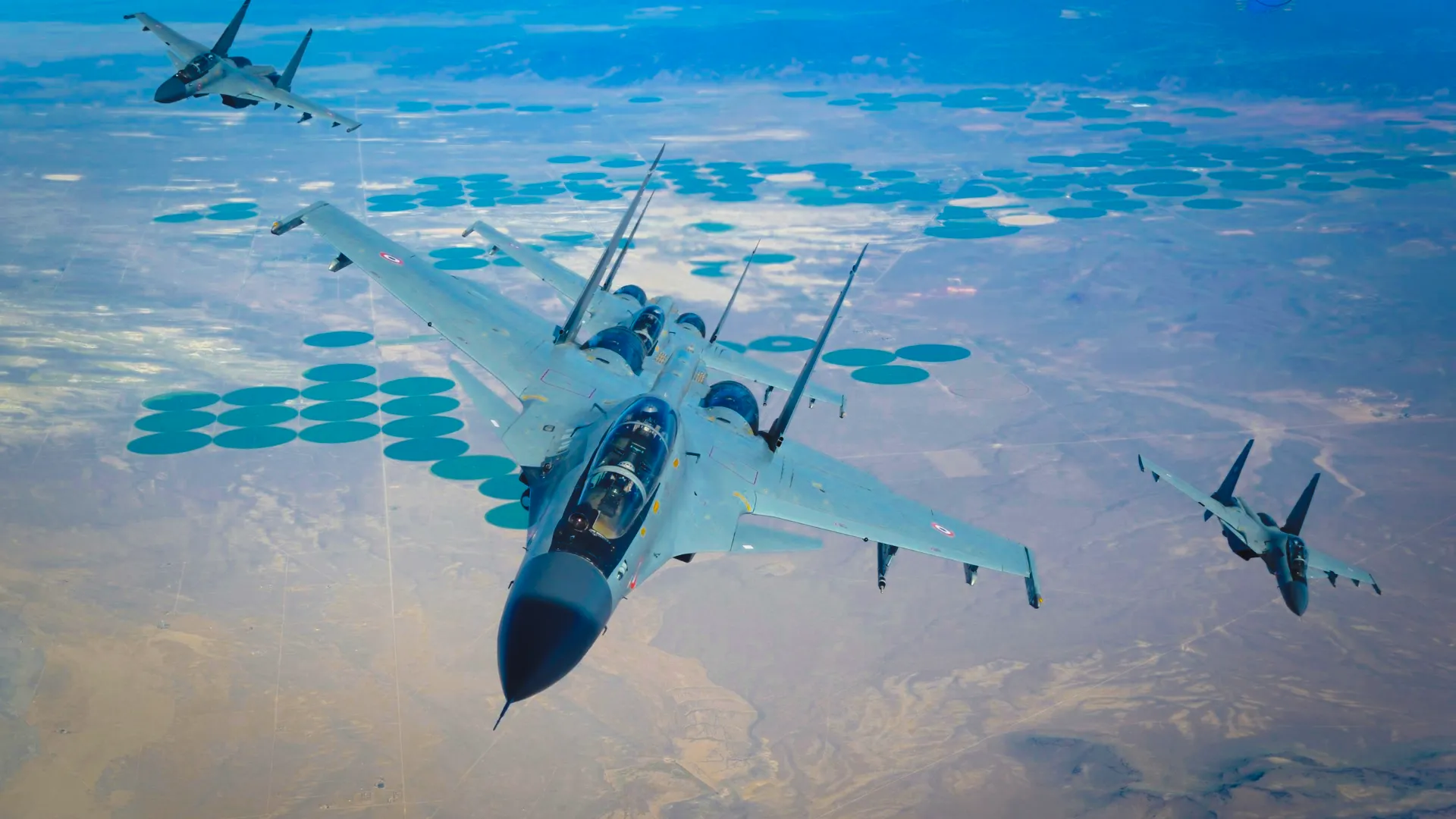
Air platforms: Advanced Light Helicopter, Light Utility Helicopter, Su-30MKI, Light Combat Aircraft, AL-31FP Engine
Armoured platforms: T-72, T-90, BMP-II
Missile systems: Konkurs-M, Invar, MRSAM
Electronics: radars, sonars, fire control systems, satellite communication systems
Other: warships, High Explosive Anti-Tank ammunition
That range — a Soviet-era anti-tank guided missile (Konkurs-M) sitting on the same list as MRSAM, a live medium-range air defence programme — is the detail that explains the uneven stock reaction. Different items on the list point at different companies, and the market moved on the companies it could identify fastest.
Why Paras and Zen, Not BEL and HAL
According to sector reporting on the notification, the three DPSU heavyweights each have identifiable exposure: Bharat Dynamics Limited (BDL) is linked to the missile systems named — Konkurs-M, Invar and MRSAM — as India’s principal missile manufacturer; Bharat Electronics Limited (BEL) supplies electronic systems, thermal imagers and fire control systems for armoured platforms including T-72, T-90 and BMP-II; and Hindustan Aeronautics Limited (HAL) carries the air-platform portfolio — ALH, LUH, Su-30MKI, LCA and the AL-31FP engine.
Yet it was Paras Defence, Zen Technologies, Axiscades, GRSE and Data Patterns — mid-cap and small-cap names with more concentrated, narrower product lines — that recorded the sharpest single-day gains. That pattern is consistent with how markets typically price these notifications: a large, diversified DPSU’s share price barely moves on a ₹3,070 crore incremental opportunity spread across hundreds of items and years of indicative timelines, because it’s a small fraction of an already-large order book. A smaller, more specialised vendor with a narrower revenue base reacts more visibly to the same rupee figure, because it represents a proportionally larger addition to what it already earns.
This is a useful distinction for TES readers tracking the space: a PIL notification is not, by itself, a reliable signal to buy the largest, best-known defence names. It is a stronger signal for the ecosystem of smaller listed vendors and MSMEs the list is explicitly designed to draw in.
The DPSU Ledger — Two Numbers That Aren’t the Same
Coverage of PIL notifications tends to blur two distinct figures into one impression of “money moving.” They are worth keeping separate. According to the Ministry of Defence, more than 15,700 defence items have been successfully indigenised over the last five years, resulting in an estimated import substitution value of about ₹9,000 crore — that is the value of imports India no longer needs to buy. Separately, DPSUs have placed procurement orders, including in-house production, worth approximately ₹10,000 crore on domestic vendors up to March 2026 — that is money that has actually moved to Indian companies as orders.
One measures avoided cost. The other measures realised business. PIL-6’s ₹3,070 crore is an estimate of potential business, sitting somewhere upstream of both those figures, with indicative — not guaranteed — timelines attached to each item.
For investors and industry watchers, that gap between an estimate and a realised order is the part worth tracking over the coming months, not the headline figure itself. A ₹3,070 crore business-potential number, spread across 405 items and multiple indicative timelines stretching years into the future, converts into actual DPSU procurement orders unevenly — some items will be indigenised and ordered within months, others will slip well past their stated deadlines, as earlier PILs have shown. The SRIJAN portal’s item-level timelines are the closest thing to a tracking mechanism available to the public, and are worth revisiting as individual items clear their development milestones.
Old Platforms, New Missiles
The coexistence of Konkurs-M — a missile system dating to Soviet-era armoured warfare doctrine — and MRSAM, a live air defence programme, on the same list is not an accident of bureaucratic list-making. It reflects two separate pressures the Aatmanirbhar Bharat programme is trying to solve at once: keeping decades-old, still-operational platforms supplied with spares whose original foreign vendors may no longer prioritise small orders, and building sovereign capacity in newer systems India intends to rely on for decades to come.
India’s defence industry has been here before, in a different form. After the 1998 Pokhran-II nuclear tests, sanctions from the United States and other suppliers cut off access to a range of dual-use components and technologies for India’s aerospace and defence programmes, forcing DRDO and HAL to indigenise items — from gas turbine components to certain avionics — that had previously been taken for granted as available on the open market. The lesson from that period persists in how the PIL mechanism is designed: dependence on a single foreign source for a still-active platform’s spares is treated as a strategic vulnerability worth closing, whether the platform is thirty years old or three.
Import substitution is not just economics. It is insurance against a supplier’s future decisions.
What to Watch
Will PIL-6 items be procured only from Indian companies going forward?
Yes, according to the Ministry of Defence release — once an item’s indicative indigenisation timeline is met, procurement will be made exclusively from Indian industry, implemented by DPSUs and the Coast Guard through their ‘Make’ procedure and in-house development.
Does the ₹3,070 crore figure represent confirmed orders?
No. It is the Ministry’s estimated business potential across all 405 items, not a confirmed order value. Actual procurement will depend on each item’s indicative indigenisation timeline and successful domestic development.
Where can vendors find the full item-level list?
The Ministry of Defence has stated the detailed list is available on the SRIJAN Portal (srijandefence.gov.in), which also carries indicative timelines for each item.
Source Transparency
Verified fact: PIL-6 item counts, platform list, and the ₹9,000 crore / ₹10,000 crore figures — Ministry of Defence / PIB release, 18 August 2026 (Release ID 2300723). Company stock movement figures — sector market reporting on the same date. Company-to-item mapping (BDL/BEL/HAL) — sector reporting, not an official Ministry attribution. Analysis of why mid-cap names outperformed DPSU heavyweights, and the 1998 sanctions comparison, are TES editorial assessment, not official statements.
Disclaimer: This article is for informational and editorial purposes only and does not constitute investment advice, a recommendation, or a solicitation to buy or sell any security. Stock prices and index levels cited are as reported at the time of writing and are subject to change. Readers should conduct their own research or consult a qualified financial advisor before making investment decisions.
Related on TES: ₹52,000 Crore DAC Approval and the Defence Stocks Reaction · Inside the BEL-HAL Defence Sector Boom — and Its Risks · India’s Private Missile Manufacturing Push

2 thoughts on “Paras Defence Leads Rally as India Notifies Sixth Positive Indigenisation List”