
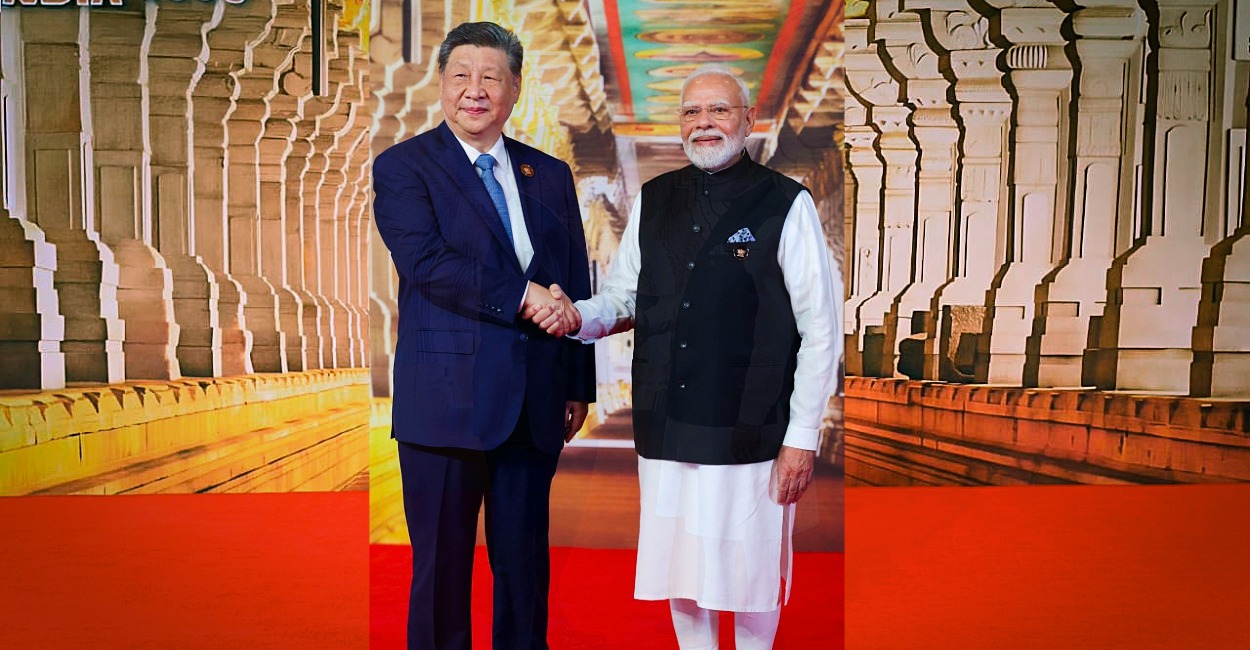
When Chinese President Xi Jinping stepped into Bharat Mandapam for his first visit to India in seven years, the symbolism of the Modi-Xi Summit 2026 was unmistakable. Yet behind the handshake and diplomatic courtesies, the bilateral meeting between Prime Minister Narendra Modi and President Xi on 12 September 2026 established a decisive strategic boundary. For the past four years, Beijing sought to compartmentalize the relationship—advocating that trade, commercial investments, and multilateral coordination should accelerate unhindered while military friction along the Line of Actual Control (LAC) remained frozen in place. New Delhi explicitly dismantled that proposition. At the Modi-Xi Summit 2026, India asserted its fundamental baseline: genuine bilateral normalization cannot be separated from verifiable peace, mutual sensitivity, and uncompromising territorial integrity along the northern frontiers.
Rather than treating the bilateral dialogue as an uncritical reset, Indian statecraft approached the negotiations from an established position of comprehensive national strength. Backed by sustained mirror troop deployments, hardened border logistics engineered by the Border Roads Organisation (BRO), and an assertive industrial strategy under Atmanirbhar Bharat, New Delhi entered the room with clear leverage. The diplomatic outcome was neither a concession nor a generic truce. It represented a hard-nosed, calculated recalibration in which India paired frontier de-escalation with an aggressive demand for trade reciprocity, directly confronting a record $112.16 billion bilateral trade deficit and constructing sovereign countermeasures against Chinese critical mineral export controls.
The LAC Architecture: Verifiable Disengagement on India’s Terms in the Modi-Xi Summit 2026
The operational framework negotiated in New Delhi reflected the direct lessons of the post-Galwan standoff. According to diplomatic reporting in The Hindu and Hindustan Times, the primary security priority for Indian interlocutors was establishing unambiguous, verifiable buffer monitoring protocols across eastern Ladakh and stabilizing patrolling arrangements in sensitive pockets of the Arunachal Pradesh sector.
India’s diplomatic posture was strengthened by physical reality on the ground. Over the past several years, the Ministry of Defence systematically transformed the frontier operating environment. Through the construction of all-weather tunnels, heavy-load bridges, advanced landing grounds (ALGs), and fortified habitat infrastructure, the Indian Army achieved operational parity that effectively neutralized coercive pressure tactics. This forward posture, integrated into the strategic balancing act analyzed in our examination of India’s multilateral summit posture, convinced decision-makers in Beijing that tactical revisionism carried unacceptable operational costs.
Crucially, New Delhi calibrated its confidence-building measures (CBMs) strictly as sequential, phased steps. Announcements regarding the resumption of direct commercial passenger flights, streamlined business visas for corporate specialists, and the reopening of historic trans-Himalayan trading and pilgrimage routes through the Lipulekh Pass in Uttarakhand and the Nathu La Pass in Sikkim were not offered as unconditional concessions. They were tied directly to verifiable ground disengagement. By establishing this sequence, Prime Minister Modi ensured that military de-escalation remained the anchor of the bilateral dialogue.
The Trade Ledger: Enforcing Industrial Reciprocity on the $112.16 Billion Deficit
The economic dimensions discussed between the two delegations in New Delhi highlight the central industrial challenge of the Asian continent. Data compiled by The Silicon Review reveals that while total two-way trade crossed $151.1 billion, Indian exports have faced persistent institutional hurdles in mainland Chinese markets. The resulting $112.16 billion trade deficit is fundamentally structural, characterized by heavy Indian imports of intermediate electronic components, solar photovoltaic wafers, and chemical precursors.
During the bilateral sessions surrounding the Modi-Xi Summit 2026, Prime Minister Modi pressed for equitable market access. For over a decade, Indian pharmaceutical firms producing world-class generic therapeutics and active pharmaceutical ingredients (APIs), alongside Indian IT services and engineering consultancies, have navigated opaque regulatory clearance processes within China’s state-procurement networks. New Delhi made it clear that sustainable trade relations require Beijing to dismantle these informal barriers and facilitate direct commercial entry for value-added Indian goods.
Simultaneously, India is actively fortifying its domestic industrial base. Rather than passively accepting trade imbalances, the Government of India has deployed comprehensive policy instruments:
- Production Linked Incentive (PLI) Expansion: Direct budgetary capital allocated to scale domestic manufacturing across telecommunications networking, semiconductor packaging, advanced automotive chemistry cells, and bulk drugs.
- Quality Control Orders (QCOs): Rigorous mandatory standards enforced by the Bureau of Indian Standards (BIS) to filter out substandard industrial dumping while elevating domestic product quality.
- Bilateral Clearing Discipline: Aligning trade settlement with the multilateral principles codified in the New Delhi Declaration 2026 consensus, preventing third-party financial exposure while incentivizing balanced direct settlement.
The Critical Mineral Contest: India’s Sovereign Supply Strategy
Beyond traditional commodities, the most strategically sensitive discussions at the Modi-Xi Summit 2026 centered on the critical materials powering modern digital and defence hardware. Over the past twenty-four months, Beijing systematically introduced stringent export licensing requirements on refined gallium, germanium, graphite, and antimony—elements essential for semiconductor fabrication, electric vehicle traction motors, infrared optics, and military munitions.
India’s national response has been proactive rather than reactive. Recognizing that strategic autonomy depends on material sovereignty, New Delhi has mobilized a tripartite counter-strategy:
- Overseas Asset Acquisition via KABIL: Joint-venture enterprise Khanij Bidesh India Limited (KABIL) has aggressively expanded upstream exploration pacts in South America’s lithium triangle and partnered with Australian and African suppliers to secure independent supply lines for critical battery and magnet materials.
- Accelerated Domestic Mineral Auctions: The Ministry of Mines has successfully auctioned scores of critical and strategic mineral blocks across domestic mineral belts, offering streamlined exploration licenses to fast-track commercial mining of nickel, cobalt, and rare earth elements inside Indian territory.
- Insulating Defence Electronics: Within state-run defence primes such as Bharat Electronics Limited (BEL) and dedicated DRDO research centers, scientists and engineers have prioritized the domestic fabrication of Gallium Nitride (GaN) semiconductor substrates. These components form the operational heart of Active Electronically Scanned Array (AESA) radars, electronic warfare pods, and precision-guided missile seekers, ensuring that Indian sovereign defence pipelines—previously mapped in our study of critical mineral competition across Asian corridors—remain fully protected from external supply shocks.
Historical Anchor: The 1988 Normalization vs. The 2026 Deterrence Reality
Diplomatic historians frequently reference the landmark December 1988 meeting between Prime Minister Rajiv Gandhi and Chinese leader Deng Xiaoping as the precedent for major bilateral resets. That summit established a thirty-year operating paradigm: placing contentious border demarcations into joint working groups while expanding economic and commercial engagement in parallel.
However, the strategic balance governing the Modi-Xi Summit 2026 is fundamentally transformed compared to earlier decades. In 1988, India possessed limited border connectivity, negligible industrial leverage, and faced economic constraints. In 2026, the strategic reality is anchored in comprehensive national power:
- Sovereign Frontier Infrastructure: Border roads, high-altitude bridges, and hardened logistics nodes ensure that the Indian Armed Forces maintain rapid mobilization capability across every Himalayan sector.
- Economic Scale and Resilience: With a fast-growing $4-trillion economy and a massive domestic consumer market, India is a vital destination for global capital, giving New Delhi significant regulatory leverage over multinational supply chains.
- Multi-Aligned Geopolitical Architecture: Through its active leadership in the Quad, bilateral security partnerships across the Indo-Pacific, and initiatives like the India-Middle East-Europe Economic Corridor (IMEC), India possesses extensive strategic options that prevent external coercion.
The operating formula for 2026 is unambiguous: cooperation must be founded on mutual respect and mutual sensitivity. As analyzed in NDTV’s summit reporting, New Delhi has demonstrated that while it remains open to constructive dialogue, economic engagement cannot proceed in isolation from frontline stability.
Strategic Outlook: What Changes and What to Watch Next
1. Will the border verification protocols prevent future tactical friction along the LAC?
Assessment: The protocols agreed upon in New Delhi establish clearer operational deconfliction mechanisms and verified buffer monitoring, significantly reducing the likelihood of sudden localized escalations. However, until a final, mutually accepted boundary settlement is achieved, Indian Armed Forces will maintain forward deployment vigilance and enhanced technological surveillance across all sectors.
2. How will India compress the $112.16 billion trade deficit in upcoming fiscal cycles?
Assessment: New Delhi is pursuing a dual approach: enforcing rigorous quality standards and anti-dumping measures domestically to substitute non-essential imports, while utilizing bilateral joint working groups to secure verified procurement quotas for Indian pharmaceuticals, specialty chemicals, and IT services in Chinese state-regulated markets.
3. How rapidly can India achieve critical mineral sovereignty for high-tech manufacturing?
Assessment: Through fast-tracked international joint ventures via KABIL and ongoing commercial auctions by the Ministry of Mines, India is building a diversified, resilient procurement network. In specialized defence applications, indigenous GaN semiconductor initiatives at BEL and DRDO ensure sovereign component availability, insulating high-priority defence systems from external licensing disruptions.
The enduring achievement of the Modi-Xi Summit 2026 lies in its clarity. By refusing to sacrifice national security for commercial convenience, Prime Minister Modi established a principled, dignified framework for 21st-century Asian statecraft. India has shown that it can manage complex power competition with firmness and maturity—welcoming diplomatic dialogue and peaceful frontier coexistence while relentlessly safeguarding its territorial integrity, industrial sovereignty, and economic destiny.