
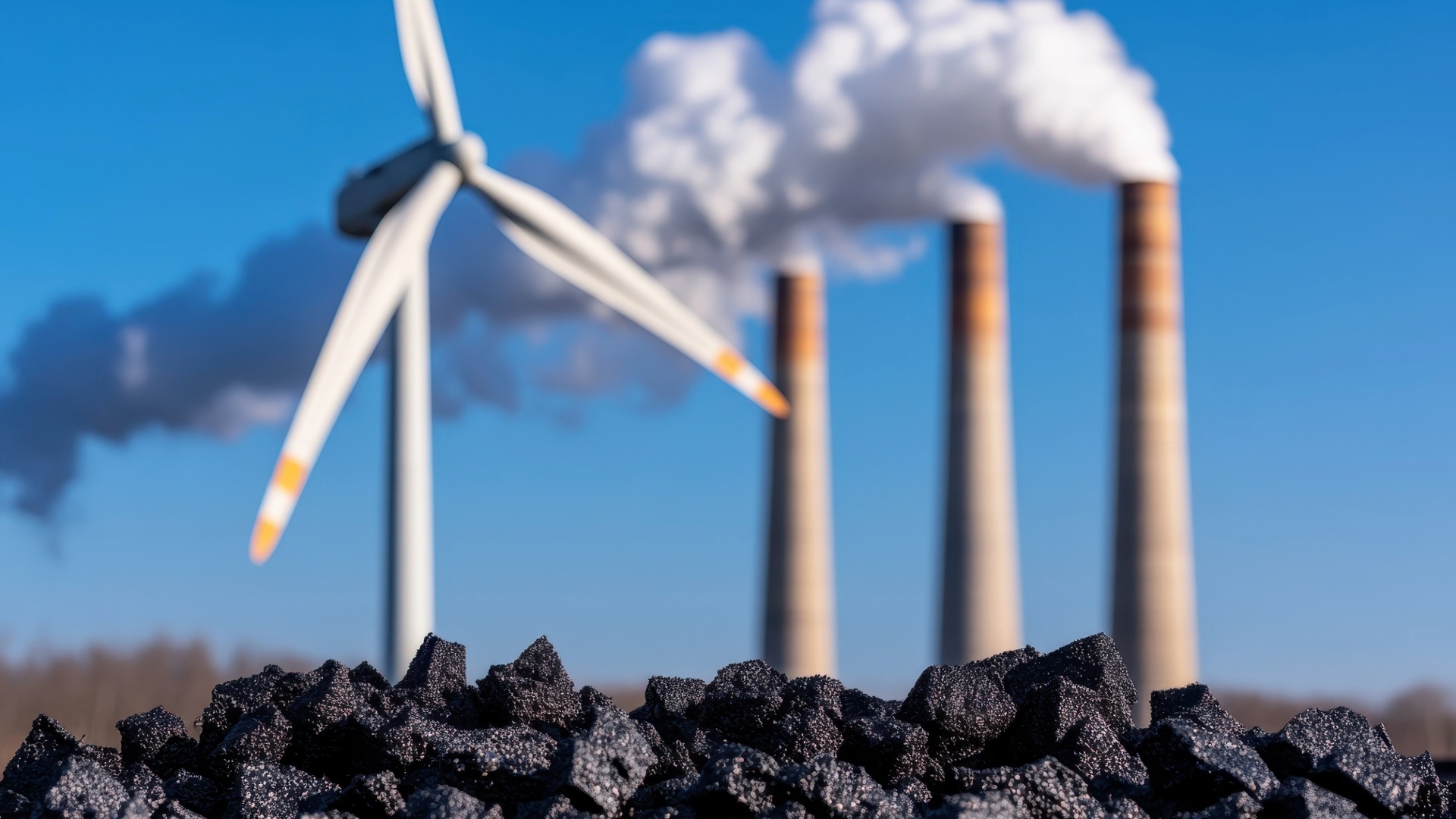
Seven commercial bids. A ₹37,500-crore state underwriting package. A target to replace a ₹2.77-lakh-crore import drain across liquefied natural gas, urea, ammonia, and methanol. When the Ministry of Coal announced the closure of Round 1 under its flagship surface coal gasification scheme on 8 September 2026, it did not merely report administrative compliance—it delivered a decisive geopolitical and industrial inflection point.
For over a decade, surface coal gasification in India struggled under the weight of technological scepticism, high capital costs, and policy inertia. Critics frequently dismissed proposals to convert domestic high-ash coal into synthesis gas (syngas) as economically unviable compared to cheap imported fuels. However, volatile maritime trade routes, weaponised commodity supply chains, and recurrent foreign exchange outflows have fundamentally rewritten New Delhi’s strategic calculus. Domestic coal gasification has now shifted from an environmental experimental hobby into a foundational pillar of national energy security.
The ₹37,500-Crore Signal: Silencing Sceptics of Coal Gasification
The Request for Proposal (RFP) floated on 7 July 2026 generated seven comprehensive bids by its closing deadline. According to the Press Information Bureau disclosure from the Ministry of Coal, the applicants include Adani Enterprises Limited submitting three separate urea proposals, state power giant NTPC Limited bidding for Synthetic Natural Gas (SNG), Talcher Fertilisers Limited committing to urea production, and Gallantt Ispat Limited alongside Shyam Sel & Power Limited proposing syngas and Direct Reduced Iron (DRI) complexes.
This commercial appetite shatters the persistent narrative that industrial giants would shun capital-intensive domestic gasification infrastructure. With eight initial projects already progressing under the earlier ₹8,500-crore incentive window approved in January 2024, the arrival of conglomerates with formidable balance sheets indicates that the economic viability equation has shifted. Following the formal Union Cabinet sanction of the ₹37,500-crore outlay, the Ministry of Coal’s announcement of rolling two-month bidding cycles for Round 2 beginning 8 September 2026 confirms that state machinery intends to sustain procurement momentum toward the national goal of 100 million tonnes of coal gasification capacity by 2030.
The Gaseous Hydrocarbon Chokepoint: How SNG Insulates the National Grid
According to data from the Petroleum Planning & Analysis Cell (PPAC), India imports over 50% of its total natural gas consumption in the form of Liquefied Natural Gas (LNG). The vast bulk of these seaborne cryogenic cargoes originate in Qatar, the United Arab Emirates, and the United States, transiting vulnerable geopolitical choke points including the Strait of Hormuz. Whenever regional military conflicts or shipping disruptions choke the Persian Gulf, Indian gas buyers face immediate supply curtailments and crushing spot price volatility on the Japan Korea Marker (JKM) and European Title Transfer Facility (TTF) benchmarks.
Synthetic Natural Gas produced via coal gasification breaks this external dependency. By converting domestic sub-bituminous coal into high-methane gas matching transmission grid specifications, NTPC creates a pithead gas source that bypasses maritime trade risks entirely. Because India possesses over 360 billion tonnes of geological coal reserves, converting solid fossil reserves into gaseous hydrocarbons anchors domestic energy sovereignty without depleting scarce foreign exchange reserves.
Decoupling the Agrarian Shield: The ₹2.77-Lakh-Crore Fertiliser Equation
Agricultural stability in India is intrinsically linked to energy security. Synthetic nitrogenous fertiliser production is fundamentally an energy-intensive chemical process: natural gas represents roughly 70% to 80% of the total cash production cost of urea. In FY 2024–25, imports of LNG, urea, ammonia, and methanol collectively cost the Indian exchequer approximately ₹2.77 lakh crore ($33.2 billion). When the Russia-Ukraine war erupted in 2022, global spot gas prices spiked, forcing the Government of India to expand its fertiliser subsidy outlay beyond ₹2.5 lakh crore to prevent domestic agrarian distress.
The bids submitted by Adani Enterprises Limited (three distinct plants) and Talcher Fertilisers Limited—a joint venture comprising Coal India Limited (CIL), GAIL (India) Limited, Rashtriya Chemicals & Fertilizers (RCF), and Fertilizer Corporation of India Limited (FCIL)—demonstrate a concerted push to end this vulnerability. Coal-to-urea plants utilise synthesis gas generated from coal gasification to produce ammonia, bypassing imported methane reforming completely. Substituting imported LNG with domestic coal establishes an unshakeable price floor for agricultural inputs, securing food sovereignty for 1.4 billion citizens against geopolitical coercion.
De-Coking Strategic Metallurgy: Syngas, Direct Reduced Iron, and Defence Steel
While India holds immense thermal coal reserves, it remains critically deficient in prime metallurgical (coking) coal required for traditional blast furnaces. India currently imports over 85% of its coking coal needs, leaving domestic primary steel production hostage to Australian mining monopolies, recurring cyclone disruptions in Queensland, and unpredictable seaborne freight rates. In wartime or severe maritime trade embargoes, an interruption in coking coal flows would immediately imperil steel production.
Direct Reduced Iron produced with syngas changes this operational paradigm. The chemical synthesis gas generated from surface coal gasification contains concentrated carbon monoxide (CO) and hydrogen (H2), which strip oxygen from iron ore pellets in shaft furnaces. This enables steelmakers like Gallantt Ispat and Shyam Sel & Power to manufacture high-purity sponge iron without consuming premium imported coking coal or scarce natural gas. Just as the Defence Acquisition Council prioritised sovereign industrial bases in its recent ₹1.10 lakh crore defence capital clearance, securing domestic sponge iron shields steel supply chains for naval warship hulls, armoured combat vehicles, and hardened infrastructure against overseas raw material embargoes.
Capital Goods Supercycle: The Industrial Ecosystem from BHEL to L&T
A commercial surface gasification facility represents one of the most sophisticated chemical engineering assets in the industrial world. Operating under severe pressures (typically 30 to 80 bar) and temperatures exceeding 1,200 degrees Celsius, gasification vessels demand metallurgical alloys capable of resisting hydrogen embrittlement, slag abrasion, and extreme thermal cycling. Furthermore, each commercial plant requires massive cryogenic Air Separation Units (ASUs) to provide pure oxygen, gas clean-up trains for sulphur removal, and shift-reaction synthesis reactors.
This massive buildout creates a secular equipment supercycle for Indian engineering giants. Public sector prime Bharat Heavy Electricals Limited (BHEL) has spent over a decade developing and operating pilot pressurised fluidised bed gasification (PFBG) systems tuned specifically to Indian high-ash coal. Alongside private heavy fabrication leaders such as Larsen & Toubro (L&T), Thermax, and Engineers India Limited (EIL), domestic industry is poised to commercialise proprietary reactor designs. As highlighted in our strategic assessment of the AMCA aero-engine and gas turbine complex race, mastering high-pressure vessels and advanced thermal metallurgy creates vital industrial spillover, echoing the Ministry of Defence’s broader initiative to advance precision manufacturers into high-value tier-1 systems integrators.
Strategic Assessment: The 2030 Horizon and Geopolitical Realpolitik
International environmental discourse has frequently advocated the rapid and unconditional abandonment of coal mining across developing nations. However, the energy shocks witnessed across Europe and Asia following the 2022 geopolitical crisis demonstrated that premature retirement of domestic fossil assets invites catastrophic industrial vulnerability. India’s national coal gasification target of 100 million tonnes by 2030 does not contradict long-term climate goals; instead, it eliminates fugitive emissions, captures sulphur and ash at pithead gasification islands, and paves the operational pathway toward commercial blue hydrogen and carbon capture, utilisation, and storage (CCUS).
The lessons from China’s extensive coal-to-chemicals industrial complex are instructive. Over two decades, Beijing built massive synthetic fuel, methanol, and olefins capacity in Shaanxi and Inner Mongolia, providing an internal industrial backstop against naval blockade in the Malacca Strait. By executing its ₹37,500-crore policy scheme, India is constructing an analogous shield across eastern mineral belts in Odisha, Jharkhand, and West Bengal. Round 1 has proved that capital is eager to participate; the decisive test will now lie in rapid regulatory clearance, technology absorption, and unwavering execution discipline across all seven project sites.
Source Transparency and Verification
- Government Primary Source: Ministry of Coal Press Information Bureau (PIB) Release (ID: 2307725), issued on 8 September 2026, confirming Round 1 applicants, scheme parameters, and the launch of Round 2.
- Cabinet Sanctions: Union Cabinet approval of the ₹37,500-crore Scheme for Promotion of Surface Coal/Lignite Gasification Projects dated 13 May 2026, building upon the initial ₹8,500-crore incentive package sanctioned in January 2024.
- Trade and Macroeconomic Statistics: Ministry of Commerce and Industry FY 2024–25 import valuation data for LNG, urea, ammonia, and methanol (aggregate ₹2.77 lakh crore), alongside PPAC natural gas import metrics.
- Industrial Data: Project filings and technical frameworks from NTPC Limited, Adani Enterprises Limited, Talcher Fertilisers Limited, and the Indian Direct Reduced Iron Manufacturers Association (IDRIMA).