
Energy sovereignty in the twenty-first century is governed by critical mineral access. While the international community tracks battery chemistry and semiconductor fabs, New Delhi is executing a quiet, multi-decade expansion of its sovereign baseload power infrastructure. At the core of this industrial mobilisation lies the India nuclear fuel supply chain, an intricate geopolitical and metallurgical network designed to insulate the nation’s grid from global fossil fuel volatility and maritime choke point disruptions.
Recent policy releases from the Press Information Bureau (PIB) entitled ‘A New Chapter in India’s Nuclear Journey’, cross-referenced with detailed industrial tracking in The Economic Times and The Times of India, reveal an accelerating global procurement campaign. While mainstream business commentary focuses on market indices and daily moves in the crude oil price today, analysts at The Eastern Strategist Strategic Markets Desk are examining the structural mechanics: bilateral yellowcake contracts, domestic fuel pellet fabrication at Hyderabad, and capital expenditure across India’s premier heavy engineering contractors.
The Domestic Ore Dilemma: Why Low Grades Mandate the India Nuclear Fuel Supply Chain
Direct Strategic Assessment: India possesses substantial geological uranium deposits, notably across the Singhbhum shear zone in Jharkhand and Tummalapalle in Andhra Pradesh. However, with an average ore grade of barely 0.03% to 0.05% U3O8, domestic extraction alone cannot economically fuel the 22,480 MW fleet expansion, making foreign natural uranium imports an absolute prerequisite.
The operational reality of India’s nuclear sector begins with metallurgical economics. Uranium Corporation of India Limited (UCIL), a public sector enterprise under the Department of Atomic Energy (DAE), operates underground and open-cast mines across Jaduguda, Bhatin, Narwapahar, Turamdih, and Mohuldih in Jharkhand. While these deposits have provided foundational fuel security for decades, their low ore concentration requires crushing and chemical processing of thousands of tonnes of rock to yield a single kilogram of yellowcake concentrate (diuranate), necessitating a broader India nuclear fuel supply chain that integrates international supply pacts.
By comparison, tier-1 global deposits in Canada’s Athabasca Basin boast ore grades exceeding 15% to 20% U3O8, while Kazakh in-situ recovery (ISR) operations extract uranium at a fraction of underground mining costs. Consequently, relying exclusively on domestic mining to fuel a commercial fleet scaling towards 22,480 MW would impose severe capital expenditure strains on the DAE. Securing external yellowcake supplies is therefore not an abandonment of indigenisation; it is an operational necessity that preserves high-cost domestic reserves for sovereign strategic requirements.
This reality underpins the architectural design of the modern India nuclear fuel supply chain. By importing natural uranium ore concentrates under International Atomic Energy Agency (IAEA) safeguards for civilian reactors, India simultaneously satisfies its clean energy baseload goals while preserving full strategic autonomy over unsafeguarded domestic fuel cycles.
The Central Asian Axis: Securing Long-Term Uranium Supply Corridors
Bilateral Diplomacy in Action: Central Asia forms the geographical anchor of India’s civilian nuclear fuel architecture. Through multi-year government-to-government contracts with Kazakhstan’s Kazatomprom and Uzbekistan’s Navoiyuran, India has established resilient overland and multimodal maritime corridors to import thousands of metric tonnes of uranium concentrate.
Diplomatic diversification has been the core strength of the India nuclear fuel supply chain since the historic 2008 waiver granted by the Nuclear Suppliers Group (NSG). Rather than relying on a single geographic source, New Delhi has systematically established bilateral fuel supply agreements across three continents. Kazakhstan, the world’s leading uranium producer, has consistently served as the anchor supplier through state-owned Kazatomprom, delivering continuous tranches of natural uranium ore concentrate to fuel Nuclear Power Corporation of India Limited (NPCIL) reactors.
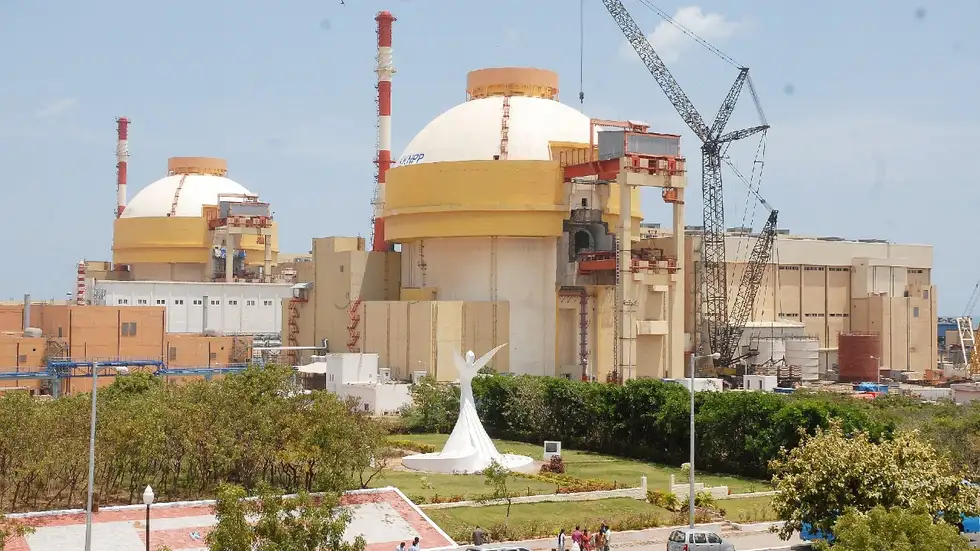
In parallel, Uzbekistan has emerged as a premier energy partner. Bilateral agreements with the Uzbek state enterprise Navoiyuran (formerly Navoi Mining and Metallurgical Combinat) provide dedicated annual quotas of uranium concentrate through 2026 and beyond. These Central Asian corridors, supplemented by periodic shipments from Canada’s Cameco and Russian fuel assemblies for the VVER-1000 reactors at Kudankulam, demonstrate the structural resilience of the India nuclear fuel supply chain against regional disruptions.
Crucially, this procurement strategy decouples India’s atomic power generation from maritime vulnerabilities in the Middle East. As documented in our strategic analysis of Strait of Hormuz oil disruption risks, fossil fuel imports remain continuously hostage to narrow naval choke points. In sharp contrast, nuclear fuel possesses extraordinary energy density: a single 10-gram pellet of uranium produces energy equivalent to roughly 800 kilograms of coal or 500 litres of petroleum, meaning several years of baseload power can be airlifted and stockpiled inside sovereign territory.
Fuel Fabrication and Metallurgy: The Nuclear Fuel Complex (NFC) Advantage
Domestic Processing Moat: Raw yellowcake imported from abroad cannot be loaded directly into reactors. At the Nuclear Fuel Complex in Hyderabad and the newly operational NFC Kota facility in Rajasthan, imported natural uranium is chemically converted into high-density uranium dioxide (UO2) ceramic pellets, sintered, and sealed within indigenous zircaloy-4 alloy fuel bundles.
While uranium mining requires global mineral diplomacy, fuel fabrication within the India nuclear fuel supply chain is entirely domestic. The DAE’s Nuclear Fuel Complex (NFC) in Hyderabad represents one of the world’s few industrial facilities capable of executing the complete manufacturing cycle: from yellowcake chemical conversion and zirconium sponge extraction to precision extrusion of seamless zircaloy pressure tubes and final 19-element and 37-element fuel bundle assembly.
The operational commissioning of NFC Kota adds a crucial secondary manufacturing hub, doubling India’s indigenous fuel bundling capacity to over 1,500 metric tonnes per year. This domestic fabrication mastery ensures that even if geopolitical friction impacts international shipping, the technological core of the India nuclear fuel supply chain remains fully under sovereign control.
Furthermore, because India’s commercial fleet is anchored on Pressurised Heavy Water Reactor (PHWR) technology, the fuel does not require expensive isotopic enrichment—a process that remains heavily controlled by Western and Russian enrichment consortiums. PHWRs utilise natural uranium containing 0.7% fissile U-235 moderated by heavy water (deuterium oxide, D2O), which India produces indigenously through the Heavy Water Board (HWB) plants at Manuguru, Thal, and Hazira.
Heavy Engineering Primacy: The Industrial Order Book Expansion
Industrial Capex Multiplier: The Cabinet Committee on Security’s approval of 10 indigenous 700 MWe PHWRs in ‘fleet mode’ has unlocked over ₹1,05,000 crore in long-term engineering orders. Private and public engineering primes, led by Larsen & Toubro, BHEL, and Godrej & Boyce, are the primary beneficiaries of this capital cycle.
The expansion of the India nuclear fuel supply chain into an atomic energy powerhouse is fundamentally an advanced heavy engineering enterprise. In 2017, the Union Cabinet sanctioned the simultaneous construction of 10 indigenous 700 MWe PHWRs in fleet mode across Kaiga (Karnataka), Chutka (Madhya Pradesh), Gorakhpur (Haryana), and Mahi Banswara (Rajasthan). Unlike past project-by-project contracting, fleet mode contracting allows industrial primes to invest in specialized heavy tooling, forging presses, and automated cleanroom manufacturing facilities.
Larsen & Toubro (L&T) serves as the primary EPC and heavy component partner in the India nuclear fuel supply chain, fabricating end shields, calandrias, steam generators, and reactor headers at its dedicated nuclear manufacturing complex in Hazira, Gujarat. Bharat Heavy Electricals Limited (BHEL) manufactures the 700 MW turbine-generator packages, while precision fabricators including Godrej & Boyce, Walchandnagar Industries, and MTAR Technologies produce control rod drive mechanisms (CRDM), fuel handling machines, and specialized reactor coolant pumps.
| Industrial Prime / Partner | Critical Nuclear System / Component | Manufacturing Hub | Strategic Supply Role |
|---|---|---|---|
| Larsen & Toubro (L&T) | Calandria, End Shields, Steam Generators, Primary Piping | Hazira, Gujarat | Heavy nuclear island fabrication & EPC integration |
| BHEL | 700 MWe TG Island, Secondary Cycle Heat Exchangers | Haridwar & Bhopal | Power block turbine & generator manufacturing |
| Nuclear Fuel Complex (NFC) | Zircaloy Cladding, UO2 Sintered Pellets, Fuel Bundles | Hyderabad & Kota | Sovereign fuel fabrication & bundle assembly |
| Godrej & Boyce / MTAR | Fuel Handling Bridges, Control Rod Drive Mechanisms (CRDM) | Mumbai & Hyderabad | High-precision core instrumentation & robotic refuelling |
For investors monitoring the industrial manufacturing ecosystem at The Eastern Strategist Defence & Strategic Desk, the nuclear capital cycle mirrors the structural indigenisation underway across defence PSUs. These multi-decade reactor operational lives (40 to 60 years) ensure steady, recurring revenue streams for replacement steam generators, zircaloy tubing, and maintenance overhauls, cementing the India nuclear fuel supply chain as a long-term compounder of high-value manufacturing capabilities.
Small Modular Reactors (SMRs): Decarbonising Captive Heavy Industry
The Next Generation Horizon: Beyond mega-grid power stations, India is pivoting towards Small Modular Reactors (SMRs) of 50 to 300 MWe. The indigenously adapted 220 MWe Bharat Small Reactor (BSR) is specifically engineered to replace retiring coal boilers in energy-intensive sectors like steel, cement, and aluminium production.
The traditional model of giant gigawatt-scale nuclear parks faces significant land acquisition hurdles, high upfront capital costs, and lengthy gestation timelines, prompting a modular evolution in the India nuclear fuel supply chain. To bypass these limitations, the DAE and NPCIL are commercialising Small Modular Reactors (SMRs). At the vanguard is the Bharat Small Reactor (BSR), a factory-fabricated, modular redesign that expands the India nuclear fuel supply chain into flexible industrial clusters.
These compact reactors offer profound strategic advantages. Industrial conglomerates requiring massive, uninterrupted thermal and electrical baseload—such as integrated steel plants and aluminium smelters—can install SMR units directly within captive industrial zones. This reduces grid transmission losses, mitigates carbon border adjustment taxes imposed by Western markets, and frees up national electricity grid capacity.
Furthermore, amending the Atomic Energy Act to facilitate joint ventures between NPCIL and private industrial primes represents a watershed structural reform. Integrating private balance sheets into the India nuclear fuel supply chain accelerates capital deployment, allowing India to position itself alongside France, the United States, and South Korea as an exporter of plug-and-play SMR platforms to developing economies seeking affordable clean baseload power.
Strategic Autonomy: Navigating Safeguards and Fissile Sovereignty
The Dual-Track Architecture: India maintains a separation between civilian facilities subject to IAEA safeguards and unsafeguarded strategic facilities. Importing yellowcake under safeguards frees domestic uranium for sovereign strategic programmes, reinforcing national deterrence while driving commercial electrification.
India’s nuclear doctrine and the architecture of the India nuclear fuel supply chain are inextricably linked to the principle of strategic autonomy. Under the 2008 Civil-Military Nuclear Separation Plan, India placed 14 civilian thermal reactors under permanent IAEA safeguards, while keeping 8 indigenous reactors, fast breeder development facilities, and naval propulsion reactors outside international inspection regimes.
This institutional architecture provides maximum strategic flexibility. Imported yellowcake from Uzbekistan, Kazakhstan, and Canada is dedicated exclusively to IAEA-safeguarded commercial power plants. By fulfilling commercial energy demands through foreign corridors, New Delhi eliminates the zero-sum competition between civilian electricity generation and strategic deterrence, ensuring that the India nuclear fuel supply chain supports economic growth without compromising national security imperatives.
Looking ahead, the successful operation of the 500 MWe Prototype Fast Breeder Reactor (PFBR) at Kalpakkam will inaugurate the second stage of the India nuclear fuel supply chain roadmap. By utilising plutonium extracted from PHWR spent fuel to breed more fissile material than it consumes, the fast breeder cycle dramatically multiplies the energy yield of every kilogram of imported natural uranium, laying the technological foundation for the eventual utilisation of India’s vast thorium reserves.
Frequently Asked Questions on India’s Nuclear Expansion
India possesses domestic uranium deposits in Jharkhand and Andhra Pradesh, but the ore grade is very low (0.03% to 0.05% U3O8). Importing higher-grade uranium concentrate from partners like Kazakhstan and Uzbekistan is far more cost-effective for civilian power, allowing India to conserve domestic reserves for sovereign strategic requirements.
India’s primary yellowcake suppliers include Kazakhstan (Kazatomprom), Uzbekistan (Navoiyuran), and Canada (Cameco), alongside Russian enriched fuel assemblies for Kudankulam VVER-1000 reactors.
The Bharat Small Reactor (BSR) is an indigenous 220 MWe Small Modular Reactor (SMR) adapted from India’s proven PHWR design, engineered for rapid modular deployment to provide dedicated, low-carbon captive power for heavy industries.