
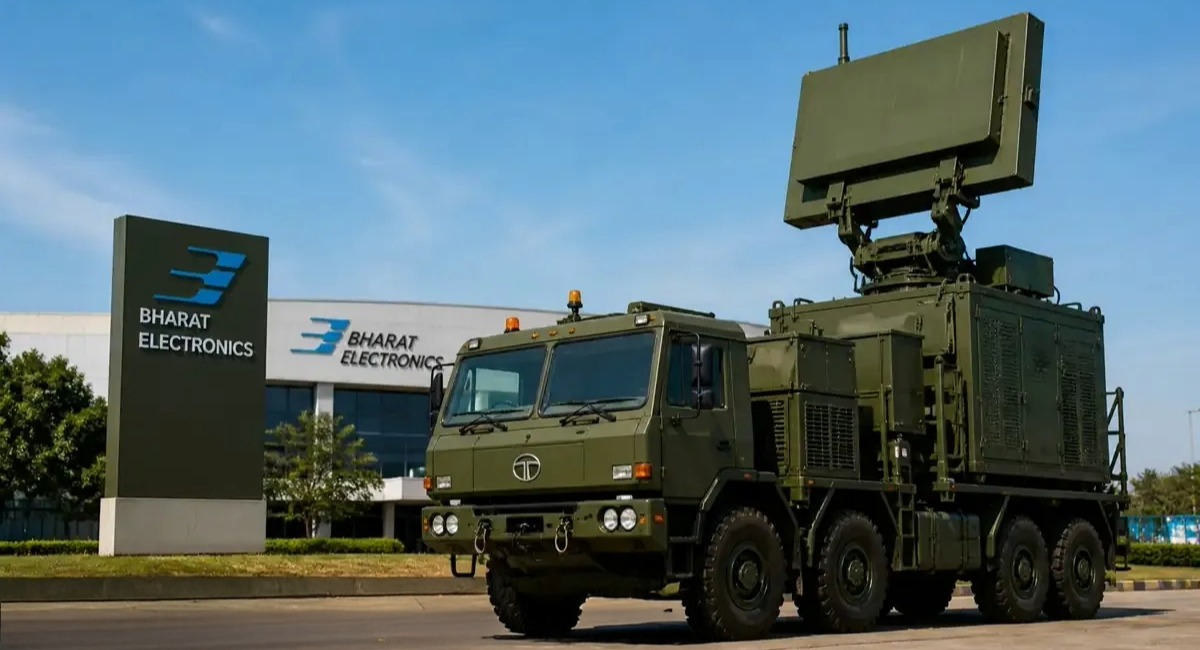
Three of India’s most-tracked defence public sector undertakings moved through Google’s India trending charts on 15 September 2026, and each was trending for a different reason. Bharat Electronics is carrying a backlog nearly three times its annual revenue while its input costs climb. Cochin Shipyard has just handed boardroom control of a ship-repair yard to a Dubai partner in order to expand it. BEML posted a familiar first-quarter loss inside a record order book. None of that shows up if the only number an investor checks is backlog size. Indian defence stock valuations that are built on order-book totals alone are starting to miss the more interesting story underneath them.
What Actually Moved BEL, Cochin Shipyard and BEML This Week
BEL, Cochin Shipyard and BEML shares were among the most-searched defence-related terms on Google in India on 15 September 2026, but the search spike was not the result of one sector-wide trigger. It followed a week of separate, company-specific disclosures: routine order accretion at BEL, a board-approved joint venture at Cochin Shipyard, and lingering attention on BEML’s early-August results.
BEL shares traded in a ₹393–405 range through the week of 15 September, roughly 10% below their 52-week high of ₹473.45 struck earlier in the year. Cochin Shipyard, whose market capitalisation stands near ₹36,300 crore, moved on news specific to its own balance sheet rather than sector sentiment. BEML, meanwhile, was still digesting a stronger-than-expected quarter reported in early August. Reading all three as a single “defence PSU” trade would have missed what was actually driving each stock, and it is exactly this kind of blended reading that leaves Indian defence stock valuations looking more uniform on a screener than they are in practice.
Bharat Electronics: A Real Backlog, and Real Cost Pressure
For readers tracking Indian defence stock valuations through order-book size alone, BEL looks like the safest name in the sector. The Navratna defence electronics major, which builds radars, electronic-warfare suites and the Akash air-defence family among other systems, is not short of demand. What has changed is the cost side: BEL’s cost of materials rose 55% year-on-year to ₹3,041.23 crore in the April–June 2026 quarter, a sharper increase than its revenue growth for the same period (up 25.27% year-on-year to ₹5,533 crore). A backlog that size buys revenue visibility, but it does not by itself protect margins if imported components or sub-systems get more expensive to source — a dynamic that matters more to Indian defence stock valuations than the headline order-book figure ever will.
Cochin Shipyard’s New Playbook: Trading Control for Capacity
This is the clearest single data point in the sector right now for anyone modelling Indian defence stock valuations off capacity rather than backlog. What makes this notable is who ends up in charge. Drydocks World will nominate three of the joint venture’s five directors and hold the chief executive, chief financial and chief operating officer roles; Cochin Shipyard keeps two board seats. In effect, CSL has ceded majority operational control of a facility worth nearly a third of its net worth in exchange for the capacity and turnaround-time improvements it could not deliver at the same pace on its own. The shipbuilding side of the business, by contrast, continues to execute on schedule: the Anti-Submarine Warfare Shallow Water Craft programme has delivered vessels progressively through 2026, including INS Mangrol in August. The capacity problem, in other words, sits specifically in ship repair, not in CSL’s core naval construction line — a distinction that matters for anyone reading the DAC’s broader capital acquisition pipeline into Indian defence stock valuations for shipbuilders.
BEML’s Q1 Loss Is Seasonal, Not a New Warning Sign
BEML’s first quarter has been loss-making in nine of the last ten years, a pattern tied to how its rail, metro, mining and defence execution is weighted toward the second half of the financial year; Q4 FY26 alone produced a ₹179.82 crore net profit. The more useful data point for investors is composition, not the quarterly loss: at FY26 close, rail and metro made up roughly 68% of BEML’s order book against defence’s 25% and mining and construction’s 7%. A company frequently discussed as a defence play is, by its own backlog, primarily a rail and metro manufacturer — a distinction that changes what BEML’s order book actually signals about defence-sector demand, and one more reason blanket Indian defence stock valuations models built purely on backlog size need a company-by-company adjustment.
What This Means for Indian Defence Stock Valuations
TES Analytical Assessment: the three companies above illustrate why a single “order book multiple” is a poor lens for Indian defence stock valuations right now. BEL’s story is about margin durability under rising input costs, not order visibility. Cochin Shipyard’s is about a company actively restructuring how it delivers capacity rather than simply expanding it organically. BEML’s is about business-line composition being misread as a defence signal. Treating all three as one “PSU rally” or one “PSU reality check” risks missing the specific, verifiable mechanism driving each stock — which is where the more durable investment read actually sits. Indian defence stock valuations that ignore these company-level mechanics will keep getting the direction right and the timing wrong.
What to Watch
Is Bharat Electronics’ order book shrinking?
No. BEL’s order book stood at ₹72,258 crore as of 1 July 2026 and has grown further through routine order disclosures since, including ₹730 crore added by late August 2026. The company’s guided FY26 EBITDA margin of 27% is lower than FY25’s actual margin of roughly 29%, which is the more relevant pressure point.
What does the Cochin Shipyard–Drydocks World joint venture mean for shareholders?
CSL will receive half the ₹1,800 crore ISRF valuation in cash and half in JV shares, but cedes majority board and management control of the facility to Drydocks World. The deal still requires approval from the Cochin Port Authority, the Government of India, and CSL’s own shareholders before taking effect.
Why did BEML report a loss despite a record order book?
BEML has posted a first-quarter loss in nine of the last ten years due to how its rail, metro, mining and defence execution is weighted toward later quarters. Q1 FY27’s loss of ₹27.01 crore was actually a 57.9% improvement over the prior year, alongside the company’s first positive Q1 EBITDA in a decade.
Related on TES: DAC’s ₹1.10 Lakh Crore Clearance: Which Defence Stocks Are Already Positioned · Mazagon Dock Project 75I: Why a Stock Sitting 32% Below Its Record Hasn’t Moved Yet · Indian Defence Stocks: The Complete Guide