
MIDDLE EAST & DIPLOMACY
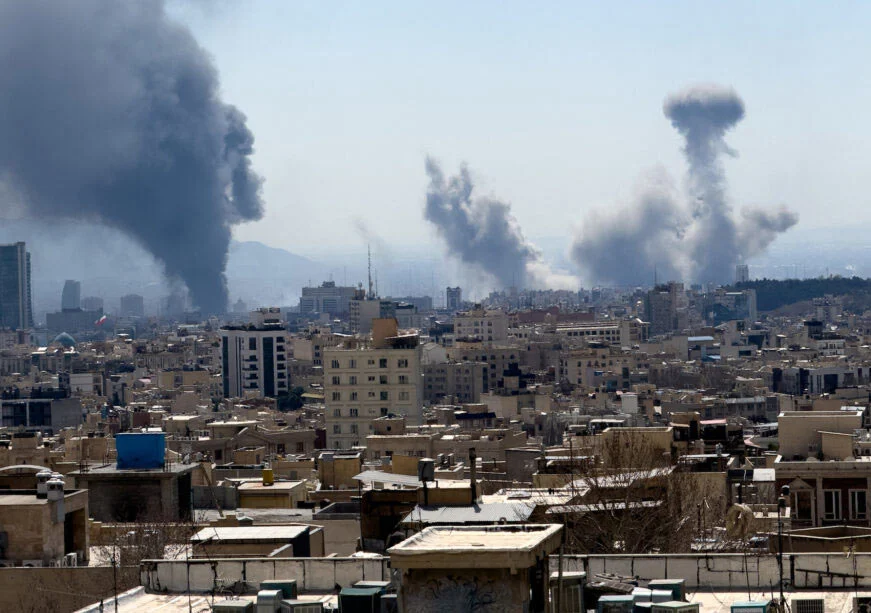
Iran has told Washington what it wants to stop fighting. The Iran peace terms conveyed through Doha this weekend read less like an opening bid than a closing argument — and Tehran is pairing them with a fresh antiship missile test, not a ceasefire gesture.
Iran’s Supreme National Security Council secretary, Mohsen Rezaei, has told Al Jazeera that Tehran has conveyed conditions for ending the war to the White House through Qatari and Pakistani mediators: an end to hostilities on every front, the release of Iran’s frozen overseas funds, and the lifting of the US naval blockade on Iranian ports. Iran says the Strait of Hormuz will not reopen until those conditions are met. The demands arrive as Washington’s own war-fighting capacity is under strain — congressional and Pentagon watchdog reports both confirm significant munitions depletion — and as President Trump faces sinking approval ratings ahead of November’s midterm elections. This analysis sets out what Iran is actually asking for, why Washington may not take the offer at face value, and what a resolution would mean for oil markets and India.
Iran Peace Terms: Tehran Names Its Price
Mohsen Rezaei, Iran’s security chief, told Al Jazeera on 19 September 2026 that Tehran has sent the White House its Iran peace terms through Qatari and Pakistani mediators. The three conditions are an end to the war on all fronts, the unfreezing of Iranian funds held abroad, and the lifting of the US naval blockade on Iranian ports. Rezaei said Iran is now awaiting a response from President Trump.
This is the first time in the current phase of the war that Tehran has stated its negotiating position as a defined package rather than a running list of grievances. That distinction matters. A single, bounded set of demands is something Washington can accept, reject or counter — a scattered list of complaints is not. Whether that clarity was intended to invite a deal or simply to put the onus of refusal on Trump is a separate question, and one the coming days should answer.
Iran’s Foreign Ministry has separately reiterated a position it has held since the ceasefire first began fraying in July: that any activity in the Strait of Hormuz, including its reopening, “rests exclusively with Iran.” Al Jazeera’s own reporting on 20 September carried the header framing directly — the Strait will not reopen until Tehran’s conditions are satisfied. For a waterway that historically carries around a fifth of the world’s traded crude oil, that is not a negotiating flourish. It is a statement about who controls the tap.
What Holding Firm Looks Like
Rezaei paired the peace terms with a description of Iran’s shifted military posture: planning now centres on US naval assets from the Gulf through the Gulf of Oman to the Arabian Sea, and Iran has recently test-fired a multi-warhead antiship missile near a US vessel or carrier group. He said a further American strike remains “very much on the cards” by Iran’s own assessment, and that any future Iranian response would again reach US regional bases and commercial interests.
David Des Roches, a former Pentagon director for Arabian Peninsula affairs, offered Al Jazeera a blunter read of the terms themselves: at first glance, he said, Washington is unlikely to treat them as a serious opening, since they would be viewed as surrender. He did note one meaningful shift — Iran appears to have dropped an earlier demand for war reparations, which he read as a sign of movement, however small.
Iran’s own economic position gives that shift some context. A daily operational assessment published by GlobalSecurity.org on 18 September recorded the Iranian rial trading below 2.3 million to the dollar, food inflation at 127.5 percent, and Iran’s flag carrier suspending flights to Turkey and Georgia. Brent crude, the same assessment noted, had settled above $105 a barrel following a Saudi rerouting decision, while two separate shipping datasets recorded only four and twelve vessel transits through Hormuz — a fraction of pre-war traffic. Tehran is negotiating from a position of visible strain, not comfort. It is simply declining to let that strain show in its terms.
Two readings of the Iran peace terms are defensible, and the public record does not yet settle between them. The first treats the package as a genuine, if hard-nosed, opening position from a government under real economic pressure — the dropped reparations demand supports this. The second treats it as calibrated theatre: terms severe enough to be refused, timed to let Tehran blame Washington for the war’s continuation while it rebuilds capacity behind the antiship missile programme Rezaei described. Iran’s forty-year record of prolonged, grinding negotiation offers a precedent for either reading. In 1988, Ayatollah Khomeini described accepting the UN-brokered ceasefire that ended the eight-year war with Iraq as “drinking a chalice of poison” — a settlement reached only after the military and economic cost of continuing became unbearable, not a moment before. Tehran’s negotiators have shown they can hold a hard line for years and then accept an unfavourable peace in a matter of weeks once the internal calculus shifts. Nothing in Rezaei’s statement indicates that calculus has shifted yet.
Washington Has Its Own Reasons to Deal
Iran is not the only side facing pressure to end this war. The Congressional Budget Office estimated on 16 September that the conflict has cost $38 billion over six months, is rising by roughly $3 billion a month, and will take up to five years to fully replenish depleted munitions stockpiles. Separately, President Trump’s approval ratings have fallen to record lows heading into November’s midterm elections, with the war and rising fuel prices cited among the contributing factors.
The Pentagon’s own inspector general confirmed on 15 September that the war has produced what it called “strategic inventory shortfalls” in American munitions — a finding that arrived after months of the administration publicly denying exactly that. We have covered the arithmetic behind those shortfalls, and what they mean for Lockheed Martin, RTX and India’s own defence-industrial base, in a separate analysis: White House Media Ban: Why It Landed 3 Days After the Pentagon Confirmed Missile Shortfalls. That piece is worth reading in full for the production numbers; this one is concerned with what Iran is asking for, not with re-running that arithmetic.
It is against that backdrop that Trump’s decision to bar CNN, MS NOW and Politico from the White House on 18 September reads as much as frustration as strategy. The president had earlier called reporting on the ammunition shortage “actually treasonous” on Truth Social; Reporters Without Borders called the subsequent ban an attempt “to control who covers him and where.” Whatever its intent, the ban has not stopped coverage of the war — all three outlets have continued reporting on Iran’s terms and the mediation effort since losing their White House access. It looks, on the available evidence, like a frustrated move by an administration fighting an expensive war it cannot yet end and does not want scrutinised while it tries.
What a Reopened Hormuz Would Mean for Oil and India
Iran’s insistence that the Strait of Hormuz stays closed until its terms are met keeps roughly a fifth of the world’s seaborne crude oil trade hostage to the outcome of these talks. India, which depends heavily on Gulf energy shipments and has already restructured its crude sourcing once during this war, has the most to gain from a resolution and the most to lose from further delay.
We have tracked the mechanics of this chokepoint closely as the war has evolved. Our 15 September analysis, Strait of Hormuz Oil Disruption: The Asymmetric Naval Choke Point Threatening Global Energy and India’s Strategic Reserve, examined how asymmetric naval tactics and rising war-risk insurance premiums have already reshaped shipping through the strait even without a full closure. Our July analysis, Two Chokepoints, One War: Why Trump Is Weighing a “Massive Attack” as Hormuz Diplomacy Collapses, traced the last time talks broke down entirely and what followed. Rezaei’s terms are, in effect, the same negotiation resuming from a slightly different starting point, with Iran’s public position on control of the strait unchanged since Ambassador Amir Saeid Iravani told the UN Security Council that any external interference would “violate” existing arrangements.
For markets, the relevant variable is not whether Iran’s terms are accepted this week, but whether they mark the start of a genuinely converging negotiation or another cycle of proposal and collapse. Every prior cycle in this war has moved Brent crude on the headline alone, before any tanker actually changed course. Investors and energy planners in India would be better served watching the mediators’ next public statement than the price action that follows Rezaei’s interview.
What Happens Next
Five things will determine whether Iran’s peace terms lead anywhere. First, whether the Trump administration responds publicly or through the same Qatari and Pakistani channels Iran used. Second, whether Iran’s naval posture — including further antiship missile tests — escalates or pauses while the terms are considered. Third, whether Saudi Arabia’s reported success in foiling a Houthi attack on Riyadh this weekend signals the broader regional conflict cooling or simply relocating. Fourth, whether shipping data through Hormuz shows any change from the low transit numbers recorded in mid-September. Fifth, whether the litigation over the CNN, MS NOW and Politico ban produces any ruling that reshapes how this war is covered from Washington’s side.
None of these will resolve quickly. Wars that end at the negotiating table instead of on the battlefield tend to move in exactly this register — a stated position, a long silence, and then either a counter-proposal or a resumption of fire. Iran has given Washington a defined target to respond to. What Washington does with it, and how fast, will say more about the state of this war than anything either side has said so far.
Reporting on Tehran’s negotiating position in this article draws on Al Jazeera’s 19 and 20 September 2026 coverage of Mohsen Rezaei’s statements, the Congressional Budget Office’s 16 September report, the Defense Department inspector general’s 15 September report, and a GlobalSecurity.org daily operational assessment dated 18 September 2026. Statements by Iranian and US officials are attributed to the named outlets that reported them. Passages labelled “TES Analytical Assessment” represent editorial inference and reasoned judgement, not reported fact. Internal links point to prior TES coverage; verify slugs against the live sitemap before publishing.
This article discusses crude oil price movements and energy market implications for informational and analytical purposes only. Nothing here constitutes investment advice, a recommendation, or a solicitation to buy or sell any security or commodity. Readers should consult a qualified financial advisor before acting on any information in this article.