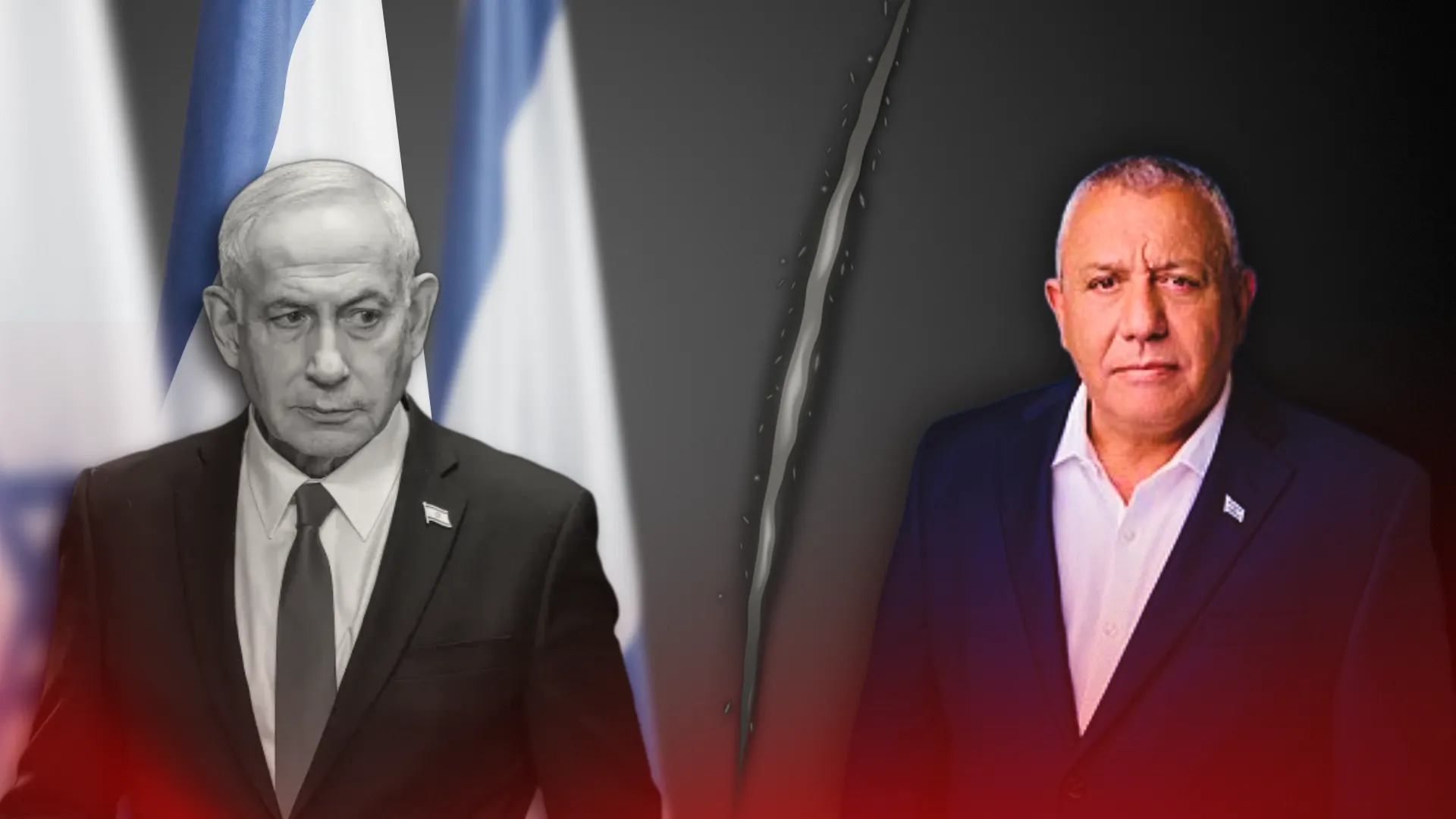
Israel’s election ended with Prime Minister Benjamin Netanyahu’s bloc on 53 seats, the opposition led by Gadi Eisenkot on 48 and Arab-led parties on a record 19. Neither camp reaches the 61 seats needed to govern, according to the final count released by the Central Elections Committee on 29 October 2026. The Israel election impact on India will show up in timing before it shows up in direction. The partnership rests on defence ministries, industry and a free trade agreement still under negotiation, and all three need a cabinet that can decide.
Israel election impact on India: a risk of delay, not a change of direction
New Delhi’s Israel ties are built on institutions that predate this vote: defence procurement, technology cooperation and a trade agreement both governments say they want. The exposure is delay. A coalition process that runs for weeks, or ends in another election, postpones decisions that need a settled cabinet, and the free trade agreement is the clearest example.
External Affairs Minister S Jaishankar met Netanyahu in Jerusalem on 16 December 2025 and discussed cooperation in technology, the economy, skills, connectivity and security, according to All India Radio’s account of his post. He also expressed confidence in an early conclusion of the India-Israel Free Trade Agreement, as reported by the broadcaster.
Delhi has a record of writing to whoever wins. In November 2022, Prime Minister Narendra Modi congratulated Netanyahu on his return and thanked outgoing Prime Minister Yair Lapid for his priority to the strategic partnership. The commercial links are as much Indian as Israeli: an Adani-led consortium bought Haifa Port in 2022, and Israel’s foreign ministry describes a pivot to the east, with the India-Middle East-Europe Economic Corridor (IMEC) cited as a growth area.
TES’s earlier look at the India-Israel defence roadmap traced how much of that relationship is moving to local manufacturing in India, which is the part least exposed to coalition arithmetic. A caretaker Netanyahu remains prime minister while talks run, so day-to-day continuity is not in doubt. What a divided Knesset limits is new legislation, and that is where the Israel election impact on India is most likely to appear, in trade and not in defence supply.
Five routes to a government, and the draft law blocks most of them
President Isaac Herzog will receive the certified results next week, consult party leaders and then give a mandate to Netanyahu or Eisenkot, with 28 days to build a coalition, extendable by 14, according to reports. No route is clear. The ultra-Orthodox conscription exemption sits across almost every path.
- Unity government. Reports say Netanyahu has shown no interest, and Eisenkot has refused to serve under him, including in a rotation.
- Arab-backed opposition government. Yisrael Beytenu leader Avigdor Liberman said on 30 October that his party will not sit in any coalition that includes Ra’am or the Joint List. Eisenkot has said neither meets his conditions for a partnership.
- Haredi abstention. Channel 12 reported that some United Torah Judaism (UTJ) figures are weighing abstaining on votes to sustain an Eisenkot-led minority government. Without UTJ’s seven seats, Netanyahu’s bloc would stand at 46 against Eisenkot’s 48. The talks are at junior level, and Yashar declined to comment.
- Minority government. Eisenkot floated one before the vote, built on 58 or 59 seats. Liberman rejected any minority government at the time.
- Another election. One Israeli analysis argues that Netanyahu’s fraud claims prepare the ground for a repeat vote in which his bloc could gain.
What the 2021 precedent shows
A government does not need 61 votes to take office, only more votes than its opponents on the day. In June 2021 the Bennett-Lapid government won its confidence vote 60 to 59, with one abstention. Israel held five elections in less than four years before Netanyahu’s 2022 return, and the India relationship carried on through the churn: Jaishankar visited Israel in 2021 and invited Prime Minister Naftali Bennett to India.
A fraud claim and a foreign-influence probe test Israel’s institutions
Likud says Arab-led parties “stole” the vote. The Central Elections Committee does not support the claim: it says the election was conducted lawfully and that there is no basis for claims of systematic interference. Separately, Shin Bet is running a limited probe into suspected foreign influence, which Hebrew media report the Mossad has joined.
The probe followed a request from committee chairman Justice Noam Sohlberg that Shin Bet examine intelligence on suspected foreign funding, which he stressed had not been substantiated. Qatar and Turkey, named in media reports, reject the allegations. Shin Bet says the inquiry is focused and limited and casts no aspersions on any section of voters. Israeli media also reported that three Ra’am activists arrested on suspicion of voter bribery were due for release with no evidence found, and a police source said there was no basis for the stolen-election claim.
For the Israel election impact on India, this fight matters narrowly. A government that spends its first weeks defending the count has less room for outreach to Asia, which is a TES assessment, not a reported fact.
Both blocs want Iran’s nuclear programme ended, and Washington sets the clock
A change of government in Jerusalem would alter method more than aim. Eisenkot said in September that the Iran file “must end in the destruction or dismantling of the Iranian nuclear programme.” Analysts at the Carnegie Endowment note that the blocs differ mostly on strategy: Eisenkot prefers targeting Iran’s capabilities to targeting its government.
The war began on 28 February 2026 with US-Israeli strikes. Israel and Iran have not struck each other since 8 June, when President Donald Trump demanded a ceasefire, according to Carnegie. The pause is now under pressure. US Central Command chief Admiral Brad Cooper presented Iran options to Trump on 29 October, the Wall Street Journal reported, a report Reuters could not independently verify.
Israeli media reported last week that Washington and Jerusalem were weighing a short, intensive round of strikes after the 3 November US midterms, and flight-tracking analysts counted more than ten US military transport aircraft landing at southern Israeli airbases in a week. Trump could still decide against action.
How the Israel election impact on India reaches Hormuz and crude
India’s exposure runs through the Strait of Hormuz. Three tankers struck mines on an unauthorised route south of the strait within 24 hours, according to a statement by Iran’s Islamic Revolutionary Guard Corps carried by state media. It is not clear who laid the mines. TES’s September analysis of Hormuz oil flows found volumes near pre-war levels, a baseline a renewed exchange would test, and TES’s explainer on what the US-Iran war changed sets out how the first phase ended.
A caretaker Netanyahu holds Israel’s side of any strike decision while coalition talks run. On TES’s assessment, the Israel election impact on India is therefore most direct in energy: the post-3 November window, not the Knesset arithmetic, is the nearer risk for Indian crude. Analysts at Carnegie add that either leader will face US pressure to wind down involvement in the war.
What to watch next
Herzog’s consultations next week open the formal process, and the US midterms arrive in the same days. If a government forms quickly, the Israel election impact on India stays small and the agenda resumes where Jaishankar left it in December. If it does not, expect the free trade agreement and defence-industrial decisions to wait, while Hormuz carries the more immediate risk for New Delhi’s energy planning. The 2021 vote suggests Israel can install a government on a margin of one. Whether it can do so again depends on a draft law that nobody in the Knesset has yet found a way to pass.
Source note: Central Elections Committee figures, Israeli and international media reports, Carnegie Endowment analysis and Indian government statements. Party and official claims are reported as claims and have not been verified by TES.