India Slovakia Defense Cooperation: The Bratislava Shift and Europe’s Defense Supply Chain
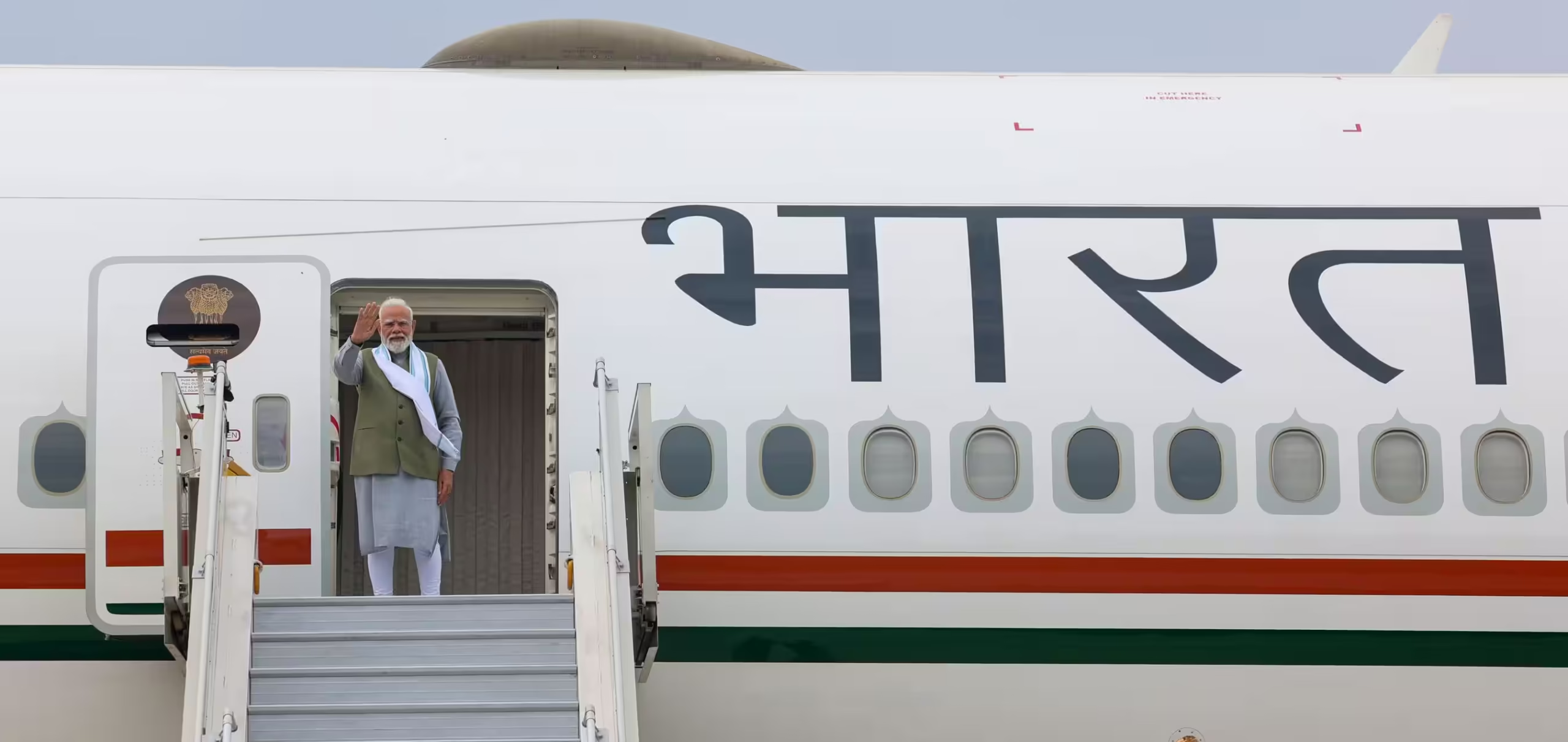
BRATISLAVA — When Prime Minister Narendra Modi landed in Slovakia on Sunday, most headlines focused on the symbolism. It is, after all, the first visit by an Indian prime minister to the Central European nation since its independence in 1993.
But beneath the diplomatic ceremony lies a development with potentially far greater strategic significance.
At a time when Europe is racing to rebuild military stockpiles, expand industrial capacity, and reduce vulnerabilities exposed by the war in Ukraine, India is quietly positioning itself inside a defense ecosystem that was once almost entirely dominated by Western suppliers. Slovakia may prove to be one of the first gateways.
For decades, the India-Europe defense relationship largely flowed in one direction. European companies supplied technology, equipment, and expertise while India remained one of the world’s largest defense importers.
That dynamic is beginning to change.
The visit to Bratislava comes amid rapidly expanding economic and industrial ties between the two countries. Bilateral trade has surged in recent years, while growing cooperation in manufacturing, automotive production, railways, and advanced technologies has created a broader foundation for strategic engagement.
Defense cooperation has emerged as one of the most notable pillars of that relationship.
Diplomatic Milestones in India Slovakia Defense Cooperation
During President Droupadi Murmu’s visit to Slovakia in 2025, both countries signed their first defense cooperation agreement, opening the door for joint development and manufacturing initiatives involving armored vehicle technologies, remote weapon systems, protection systems, and other military platforms.
The significance of these projects extends beyond their immediate commercial value.
Europe’s defense industry is currently facing an unprecedented challenge. Governments across the continent have announced major rearmament programs, but production capacity remains under strain. Ammunition shortages, supply chain bottlenecks, and rising procurement costs have forced European nations to search for new industrial partners capable of delivering quality equipment at scale.
India sees an opportunity.
Aligning Atmanirbhar Bharat with European Defense Demands
How India Slovakia Defense Cooperation Validates Atmanirbhar Bharat.
Over the past decade, New Delhi has invested heavily in building a domestic defense-industrial base under the Atmanirbhar Bharat initiative. Indian companies that once focused primarily on licensed production are increasingly developing indigenous systems ranging from artillery and missiles to drones, electronic warfare platforms, and armored vehicle technologies.
The goal is no longer simply import substitution.
The goal is exports.
New Delhi has repeatedly stated its ambition to transform India into a major defense exporter, targeting markets across Asia, Africa, the Middle East, and increasingly Europe. While Indian-made systems have already secured buyers in several regions, establishing a presence inside the European defense ecosystem would represent a different level of validation.
That is where Slovakia becomes strategically important.
Situated in the heart of Central Europe, Slovakia possesses a long industrial tradition and remains deeply integrated into European manufacturing supply chains. Its defense sector maintains links across NATO markets while its geographic position provides access to wider European production networks.
India Slovakia Defense Cooperation: A Gateway to NATO Supply Chains
Industrial Integration via India Slovakia Defense Cooperation.
For Indian defense manufacturers seeking credibility and market access in Europe, cooperation with Slovak partners offers something potentially more valuable than a single export order: industrial integration.
The broader geopolitical environment reinforces this trend.
European governments are under growing pressure to increase defense spending, replenish inventories, and diversify suppliers. At the same time, India is seeking stronger strategic partnerships with European nations as part of its wider effort to deepen engagement beyond traditional relationships with Russia and the United States.
The convergence of those interests creates a window of opportunity.
Modi’s visit is expected to focus on trade, technology, innovation, and industrial cooperation. Yet the defense dimension may ultimately prove to be the most consequential outcome.
If India can establish itself as a trusted industrial partner for European defense programs—whether through co-development, component manufacturing, or technology collaboration—it would mark a significant milestone in the country’s long journey from arms importer to defense producer.
The significance of Bratislava, therefore, is not measured by the number of agreements signed during a three-day visit.
It lies in what the visit represents.
A generation ago, India looked to Europe primarily as a source of military technology.
Today, Europe is beginning to look at India as a potential contributor to its own defense-industrial future.
That shift may still be in its early stages. But if it succeeds, historians could look back on the Bratislava visit as more than a diplomatic milestone.
They may see it as one of the moments when India quietly entered Europe’s defense supply chain.