
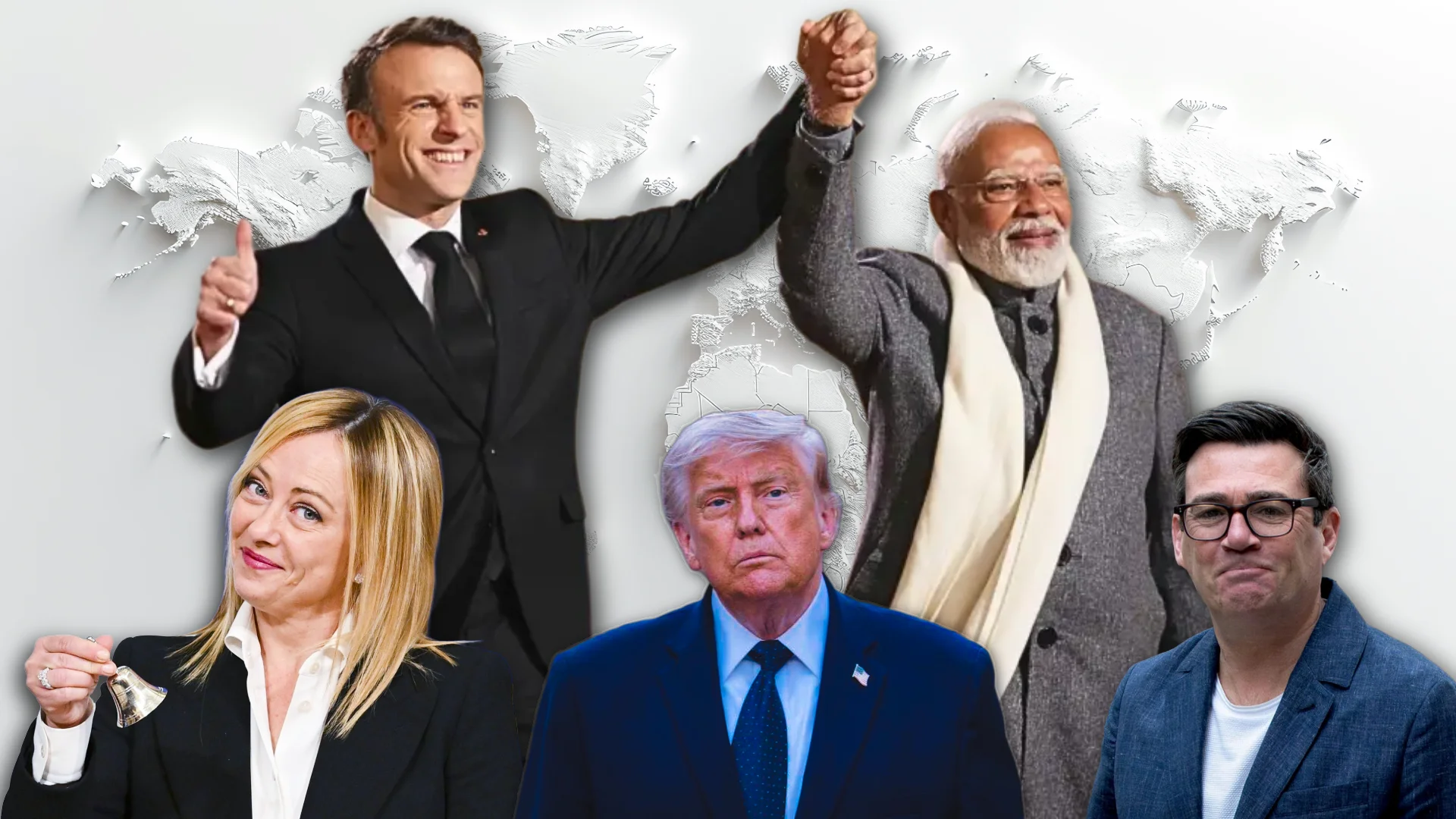
As domestic political shifts reshape the UK, it is becoming increasingly clear that Europe is betting on India to serve as its primary economic and strategic anchor, With UK PM Keir Starmer announces resignation as prime minister after less than two years in the role, clearing the way for Andy Burnham to become Britain’s seventh premier in a decade. In his speech, Starmer said he accepted the verdict of Labour MPs that he was not the best person to lead the party into the next election. “I accept that answer with good grace,” Starmer said.
Andy Burnham, sworn in as MP for Makerfield on Monday, is heavily favored to succeed Starmer. Nominations open July 9, meaning a new premier could be installed before September. If a “coronation” occurs, Andy Burnham takes the keys to Downing Street as early as July 17.
The domestic chaos has already spilled into foreign policy. The EU and UK just postponed a major July 22 summit aimed at rebuilding economic ties.
While British politics temporarily freezes, Andy Burnham’s strategic targets are already locked. On the campaign trail, the incoming leader took direct aim at Washington, warning voters against adopting what he called a “poisonous, polarizing” American style of politics under Donald Trump.
Why Europe is Betting on India for Strategic Stability ?
Yet, this ideological friction does not slow the economic engine. Andy Burnham is executing a pragmatic economic pivot toward New Delhi. As the former Mayor of Greater Manchester, he spent years building the Manchester-India Partnership, and his immediate priority now is the smooth rollout of the historic India-UK Free Trade Agreement.
The agreement, known as CETA, goes live on July 15. The public goal is doubling bilateral trade to over $100 billion by 2030 by removing tariffs on 99 percent of Indian goods, while British scotch duties will drop from 150 percent down to 40 percent.
New Delhi successfully leveraged London’s political instability during the final hours of negotiation. Memos from India’s Ministry of Commerce reveal they successfully insulated 85 percent of their steel exports from upcoming British safeguard caps. They also secured a critical five-year social security exemption that saves millions for temporary Indian tech professionals.
They cannot stabilize their own houses. They have to buy predictability from the outside.
London is not acting alone. Across the English Channel, the traditional transatlantic partnership is facing unprecedented structural strain. French President Emmanuel Macron has increasingly championed European strategic autonomy, openly pushing to decrease continental reliance on Washington’s shifting political tides.
In Rome, Giorgia Meloni has converted geopolitical friction with Trump into domestic leverage. Following a highly public fallout at the G7 Summit where Trump claimed she “begged” for a photograph, Meloni fired back cleanly. “Neither I nor Italy ever beg,” she stated, before pivoting swiftly to deepen her diplomatic and economic focus on Narendra Modi’s administration.
This is a structural realignment born of systemic exhaustion. European capitals increasingly view Washington as an erratic economic ally that threatens blanket tariffs and re-evaluates long-standing treaties with every change of administration. Simultaneously, Brussels’ official classification of Beijing as a systemic rival has accelerated efforts to diversify supply chains out of East Asian factories.
That leaves India as a primary economic anchor. The European pivot has shifted rapidly from basic trade talk to heavy defense and technological cooperation. Spain is actively deepening joint artificial intelligence infrastructure with New Delhi to foster alternative tech corridors to bypass Silicon Valley giants, while Germany continues to co-develop naval submarines with the Indian Navy.
India’s massive consumer market and institutional governance offer a level of baseline reliability that traditional superpowers are currently struggling to project. The upcoming Gaganyaan human spaceflight program completes this push by eliminating foreign crew transportation dependencies entirely, granting New Delhi elite status without forced geopolitical alignment.
This drift has clearly caught the attention of Washington and Beijing. Insiders suggest the US State Department is quietly reviewing its trade counter-proposals to prevent European capital from permanently shifting its geographic focus southward.
Beijing is equally wary of the flight of factory capital. The Chinese Foreign Ministry has notably softened its rhetoric on long-standing Himalayan border disputes in an apparent bid to stabilize regional ties and keep supply lines from migrating to Indian soil.
The global center of gravity is visibly shifting. On July 15, the trade documents will get stamped while British politicians struggle to sort out their cabinet. India holds the consumer scale, commands the manufacturing infrastructure, and is increasingly dictating the global price of admission.