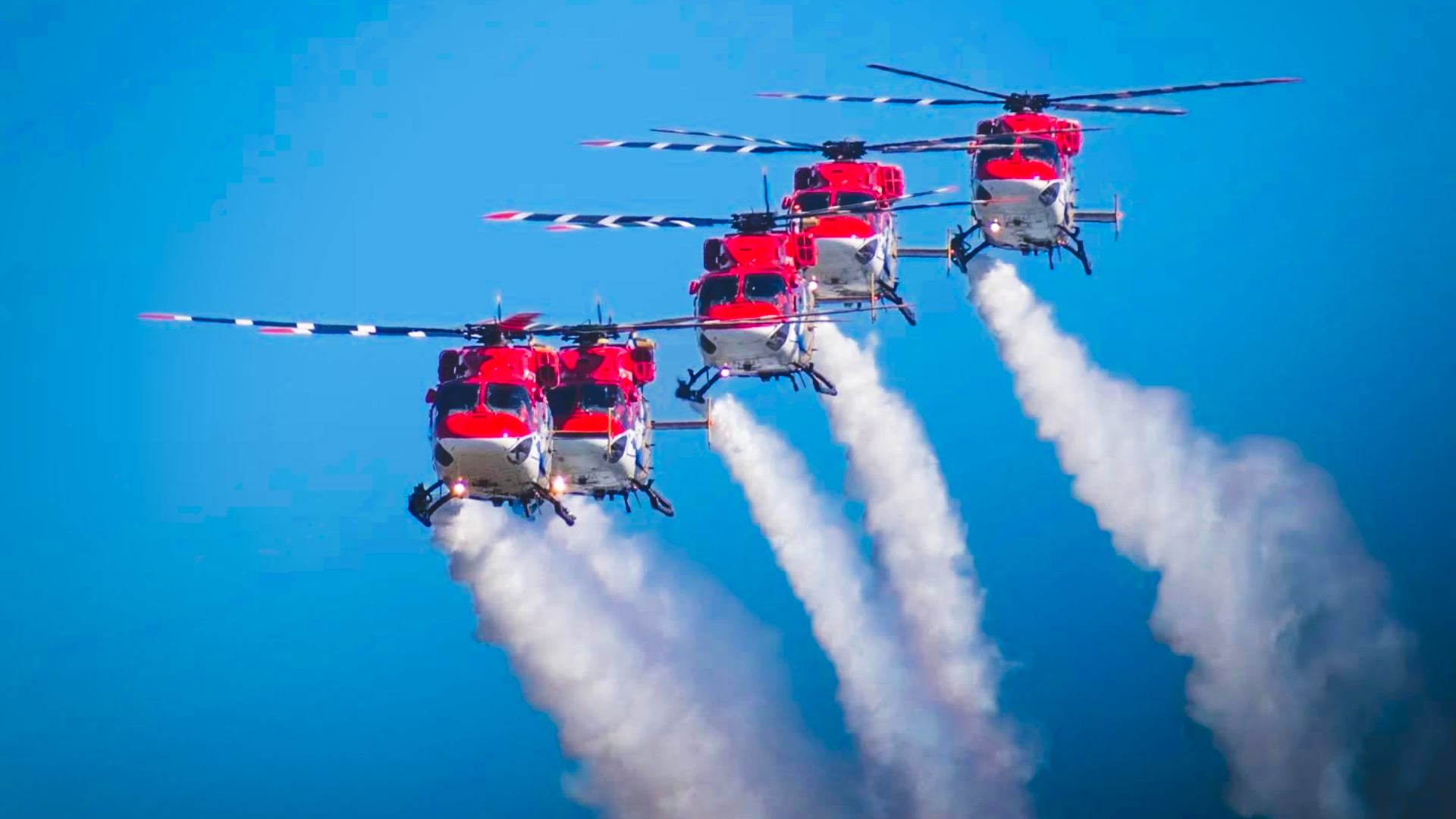
Five Dhruv helicopters looped past the Pyramids of Giza this week. The image was striking. What it could not hide is that the Tejas Egypt deal India has pursued for close to a decade still has no signature on it.
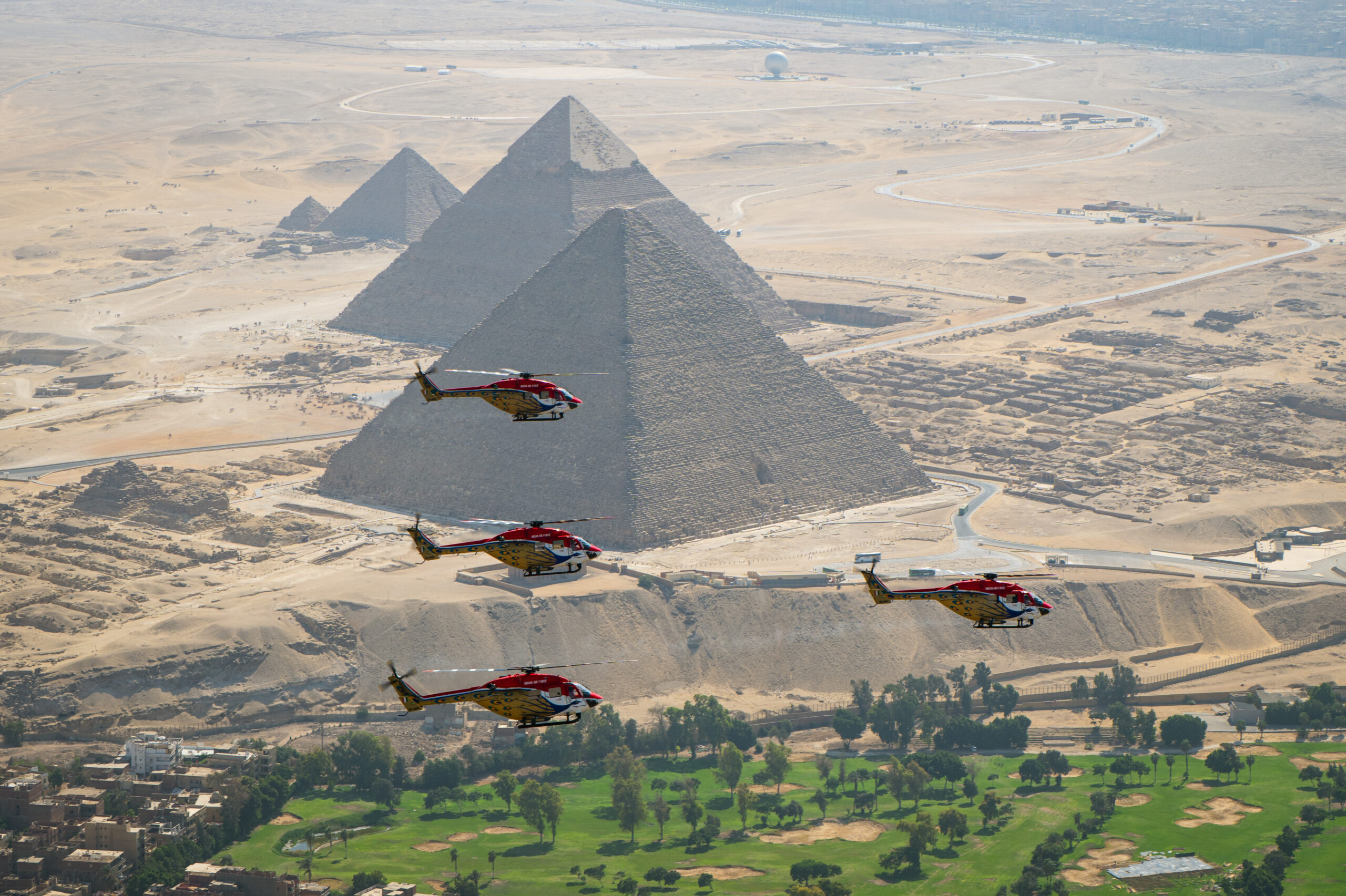
Five helicopters, painted the colour of marigolds, cut across the Great Pyramid of Giza in tight formation on 6 September 2026. It is, by any measure, a striking photograph. It is also a slightly strange one to sit with for more than a few seconds, because the aircraft doing the flying belong to a country that has spent close to a decade chasing a fighter-jet deal with Cairo it has not yet managed to sign.
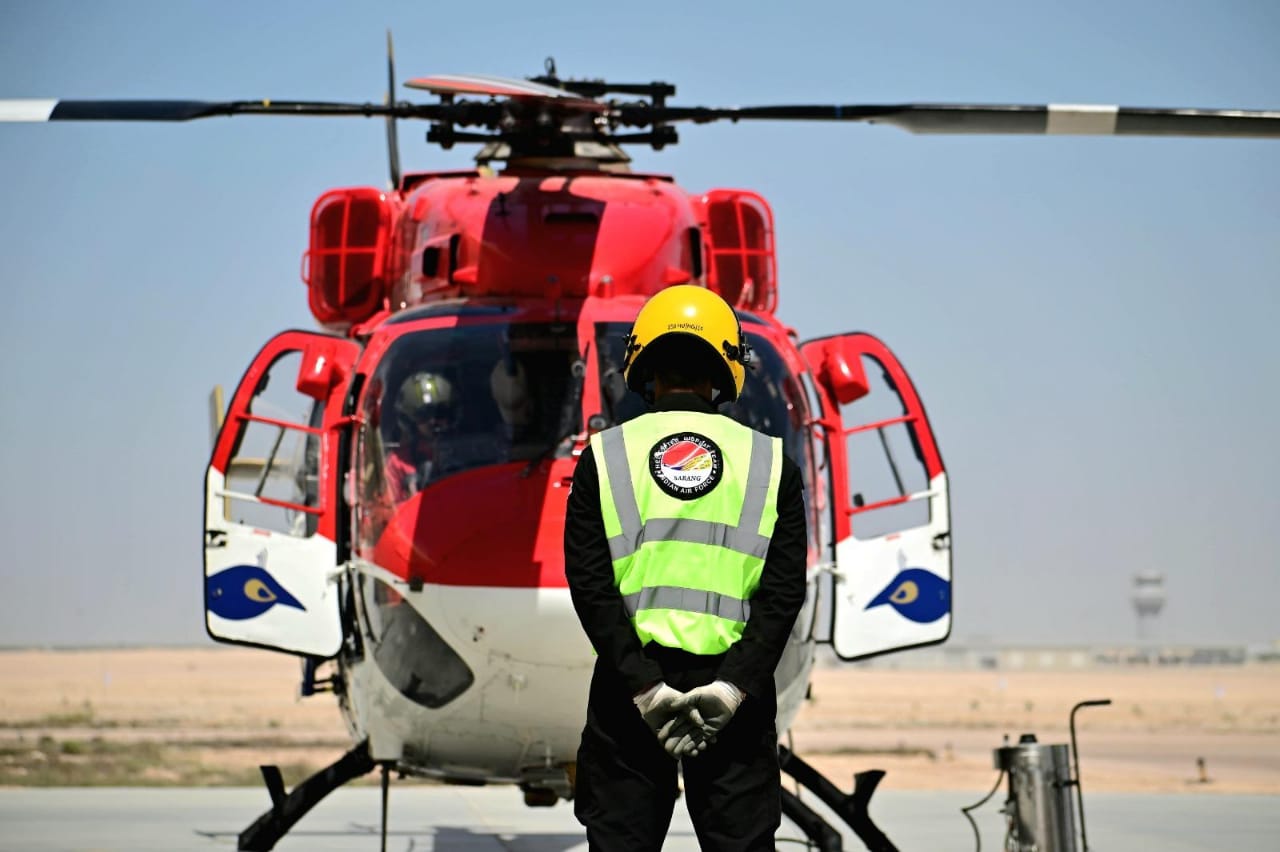
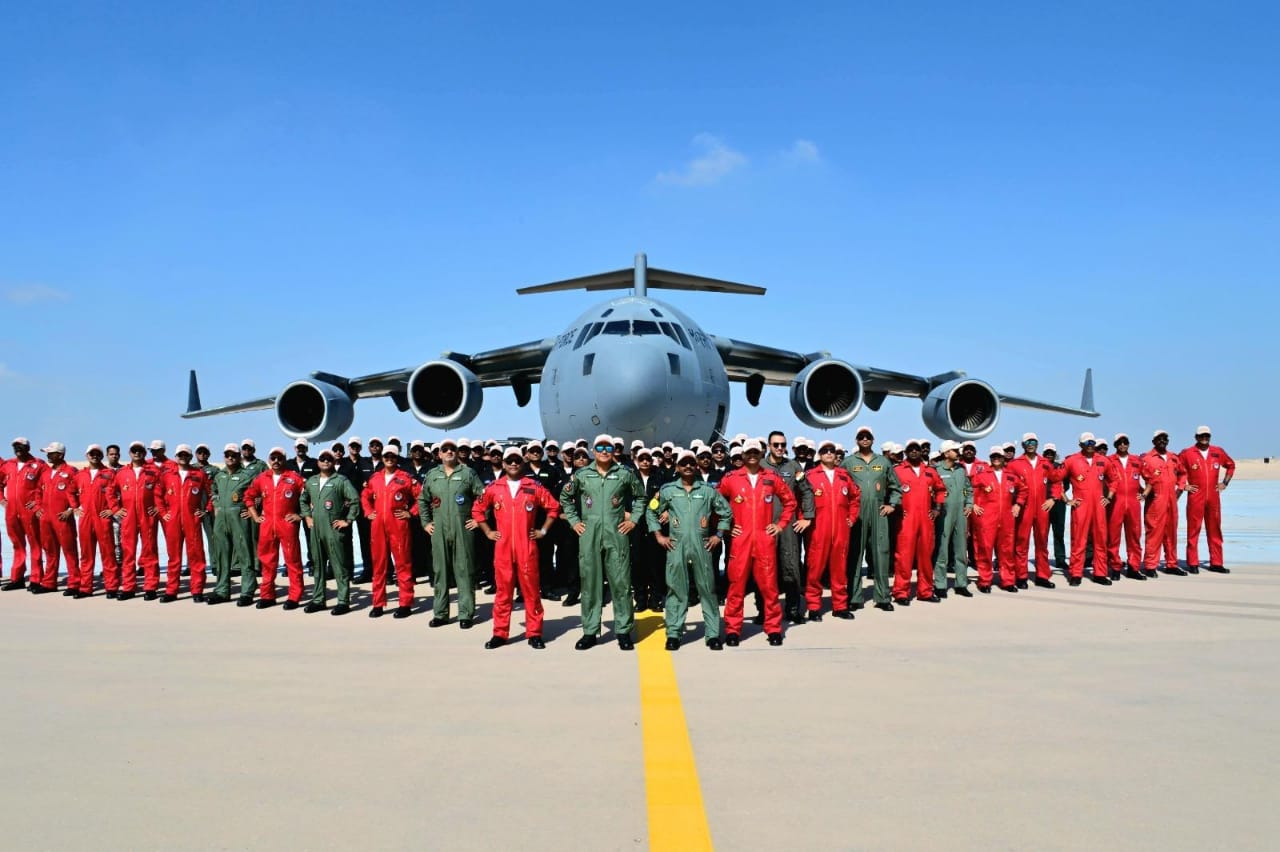
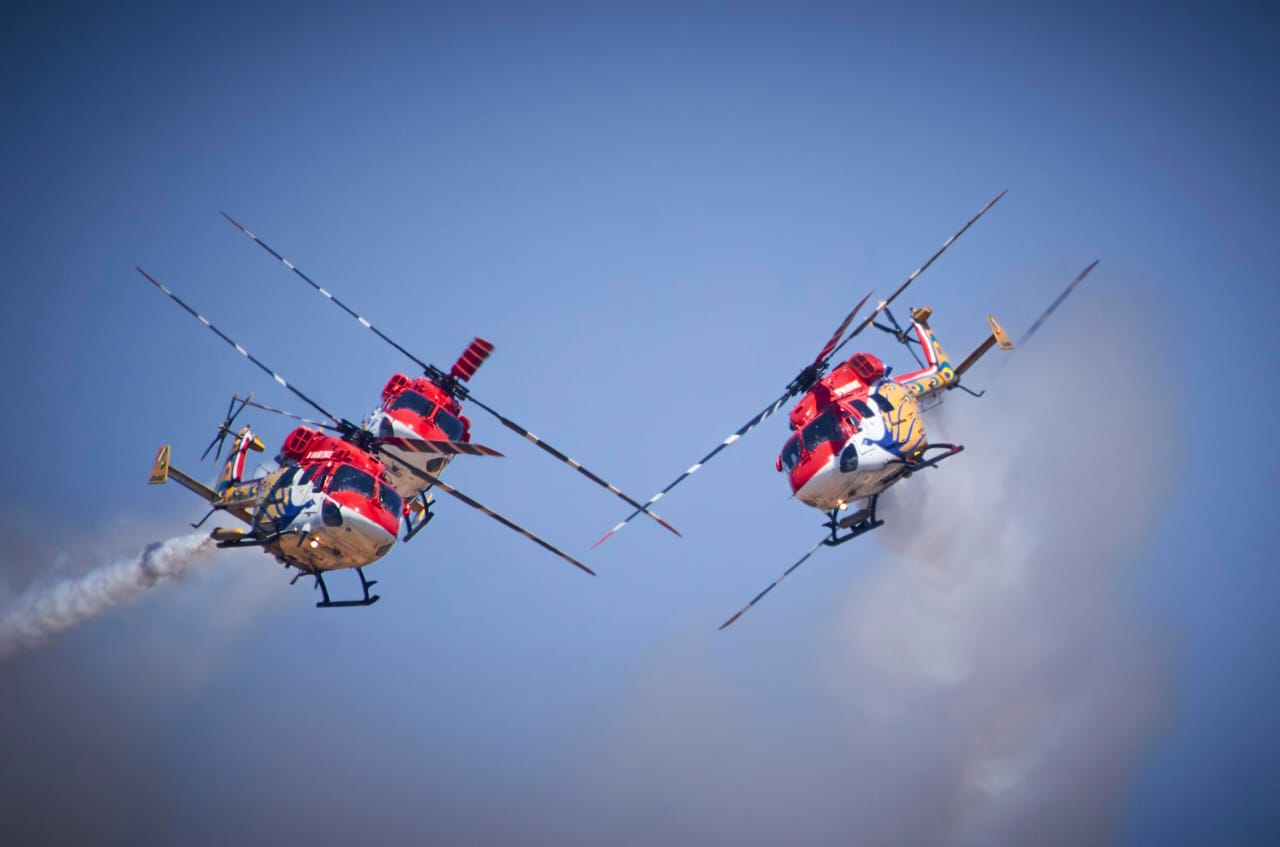
The Sarang Helicopter Display Team of the Indian Air Force reached Egypt this week to take part in the second edition of the El Alamein International Airshow, scheduled for 8 to 10 September 2026 at El Alamein International Airport, according to a Press Information Bureau release. Flying the indigenously built HAL Advanced Light Helicopter (ALH) Dhruv, the team describes itself as the world’s only five-helicopter aerobatic display unit, known for close-proximity formation flying and its signature “Dolphin Leap” manoeuvre. This year it will also debut a new one, called the Spot Stall Turn.
It is a genuinely rare capability. It is also, this week, a supporting act.
A Show Built for Buyers, Not Spectators
El Alamein International Airshow has grown fast for a second edition. Organisers expect more than 250 exhibitors and delegations from over 80 countries, with roughly 90 percent of exhibition floor space allocated months in advance. Lockheed Martin has signed on as headline sponsor of the accompanying conference; Dassault, GE Aerospace, Thales, L3Harris, Korea Aerospace Industries, Turkish Aerospace and Leonardo have all confirmed participation. The UAE has brought a national pavilion led by the Tawazun Economic Council, featuring EDGE Group and Abu Dhabi Aviation.
This is not an airshow built to entertain. It is a procurement bazaar, and Egypt is the customer everyone on that list is trying to court.
The reason is sitting on Egyptian runways already. Egypt operates one of the most eclectic fighter fleets anywhere — roughly 218 F-16s, many dating to the 1980s, alongside 24 Rafales, 19 Mirage 2000s, 43 MiG-29s and 80 ageing Mirage 5s. Cairo has reportedly asked Dassault for 24 more Rafales, which would take its fleet to 78 aircraft — the largest Rafale export fleet in the world, though no contract has been signed as of this writing. An air force that size, replacing platforms that old, is exactly the kind of opportunity that pulls Lockheed and Dassault and Turkish Aerospace to a Mediterranean airstrip three years running.
India has wanted a piece of that opportunity for a long time. The Tejas Egypt conversation, in one form or another, has been running since at least 2022.
The Tejas Egypt Talks Nobody Has Closed
India and Egypt’s aviation history did not start this decade, and it did not start well. In 1963, the Indian Air Force sent Group Captain Kapil Bhargava to Cairo to help test-fly the HA-300, a fighter jet Egypt was developing at its “Factory 36” facility. India later gifted Egypt a modified version of its own HF-24 Marut fighter and stationed a technical team near Cairo to maintain it — an unusually close aerospace partnership between two newly non-aligned powers, according to a Deccan Herald account of the relationship’s history.
It went nowhere. Egypt’s 1967 defeat in the Six-Day War pushed Cairo decisively toward Soviet hardware, and joint work on engines and airframes between the two countries quietly stopped. Six decades on, India is back at the table with a different aircraft, and on the public record, a similar outcome so far.
HAL first went public with Tejas Egypt discussions at Aero India 2023, when the company’s then chairman said it had proposed selling 20 Tejas LCA Mk-1A jets to Egypt, alongside a fuller pitch of 35 aircraft with a complete transfer of technology for local assembly. Egypt was also named as a country evaluating the Tejas as a lead-in fighter trainer around the same period. Since then, publicly available tracking of Tejas operators lists no export as concluded to any country, with Egypt named specifically among the campaigns — alongside Argentina, Australia, Botswana, Malaysia, Nigeria and the Philippines — that have not progressed to a signed contract as of 2026. TES has found no official confirmation, from either government, that the Tejas Egypt talks have advanced beyond the proposal stage described in 2023, and treats any claim of an imminent deal as unconfirmed until one side announces a signed agreement.
What has moved, more concretely, is the institutional relationship around it. The two countries elevated ties to a Strategic Partnership in 2023, and their 11th Joint Defence Committee meeting in Cairo this April produced a 2026–27 roadmap built around joint training, maritime security cooperation and defence industrial collaboration. India used that meeting to make its now-standard pitch: domestic defence production crossing $20 billion, exports of roughly $4 billion to more than 100 countries. It is a real number. It has simply not yet included Egypt in any major hardware sense, and the Tejas Egypt file remains where it has been for several years — under discussion, not under contract.
The Platform Doing the Flying Has Its Own Credibility to Rebuild
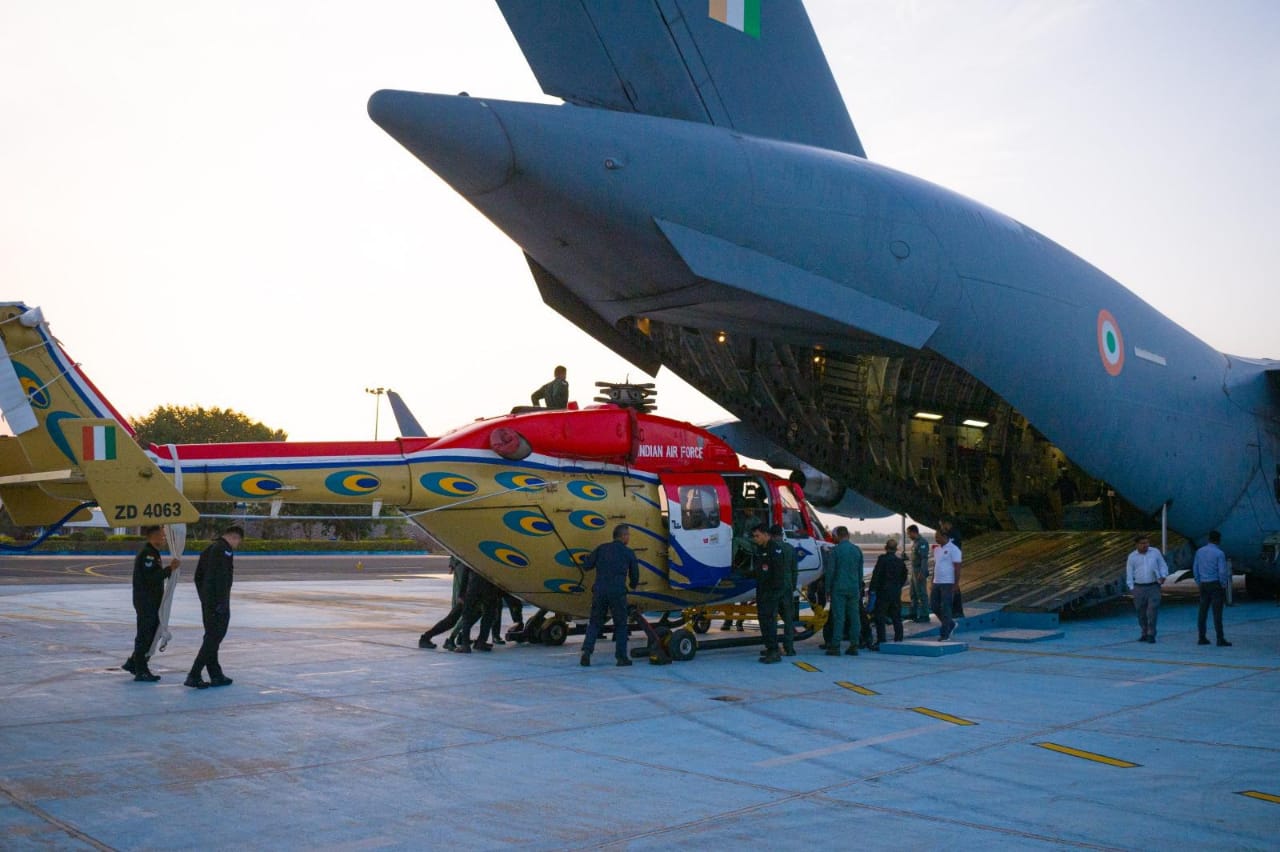
There is a second layer to this that is easy to miss amid the pageantry: the Dhruv itself has spent the past two years clawing back trust, not just export orders.
The ALH fleet was grounded across the Indian armed forces following a fatal crash in 2024–25 — serious enough to briefly pull India’s only indigenous utility helicopter out of frontline service altogether. Its return to favour has been gradual and recent. In March 2026, India’s Ministry of Defence signed a ₹2,901 crore (roughly $315 million) contract with HAL for six ALH Mk-III maritime helicopters for the Indian Coast Guard, widely read within the industry as a signal that operator confidence in the platform had been restored. Export interest, correspondingly modest, is currently centred on an offer of ALH helicopters to the Philippine Coast Guard under an Indian line of credit, alongside existing users in Nepal, Mauritius and the Maldives.
So the helicopters looping past the pyramids this week are not just India’s aerobatic showpiece. They are also, quietly, evidence that the aircraft can be trusted again — a message aimed as much at future buyers as at spectators on the ground at El Alamein.
What This Means for the Order Book Back Home
Back on Dalal Street, the export question is not an abstraction — it shows up directly in how analysts price Hindustan Aeronautics Limited (HAL). The stock has had a strong run, trading near ₹5,000 through mid-August 2026, with HAL’s total order backlog reaching a record ₹2,54,538 crore as of 31 March 2026, up from ₹1,89,000 crore at the start of FY26. Nomura has kept a Buy rating on the stock.
Not everyone is convinced the re-rating has further to run. JM Financial, in a note published in late August, flagged what it called execution headwinds and potential for a slowdown in order inflow growth, pointing to the fact that many of HAL’s prospective wins — export deals very much included — are largely in various stages of approval or development, with competition from imports and private domestic players increasing. That is analyst language for a simple point: the Tejas Egypt talks, the Malaysia talks, the Philippines pipeline, all of it sits in HAL’s growth story as potential, not booked revenue. Markets have priced in the ambition. They have not yet had to price in a failure to close it, because nothing has closed either way.
What the Aerobatics Are Actually For
None of this makes Sarang’s presence in Egypt meaningless — it makes it precisely calibrated. An aerobatic display team cannot sign a fighter contract. What it can do is keep India visible, credible and in the room at a show where the actual hardware decisions are years, not days, away from being made. Egypt is not choosing between Sarang and Lockheed. It is choosing, eventually, between Rafales it already half-owns and a Tejas that has not yet flown for a single foreign air force in operational colours.
Sixty-three years ago, an Indian test pilot helped Egypt try to build a fighter jet of its own. It did not survive contact with a war. This week, a different set of Indian aircraft flew past the same desert skyline, considerably more polished and considerably less armed — a reminder that in this relationship, the flying has always come more easily than the selling.
Related reading on TES: The Tejas Truth: HAL Stock Analysis · Rajnath Singh’s Defence Export Record · The GE-HAL F414 Engine Deal