
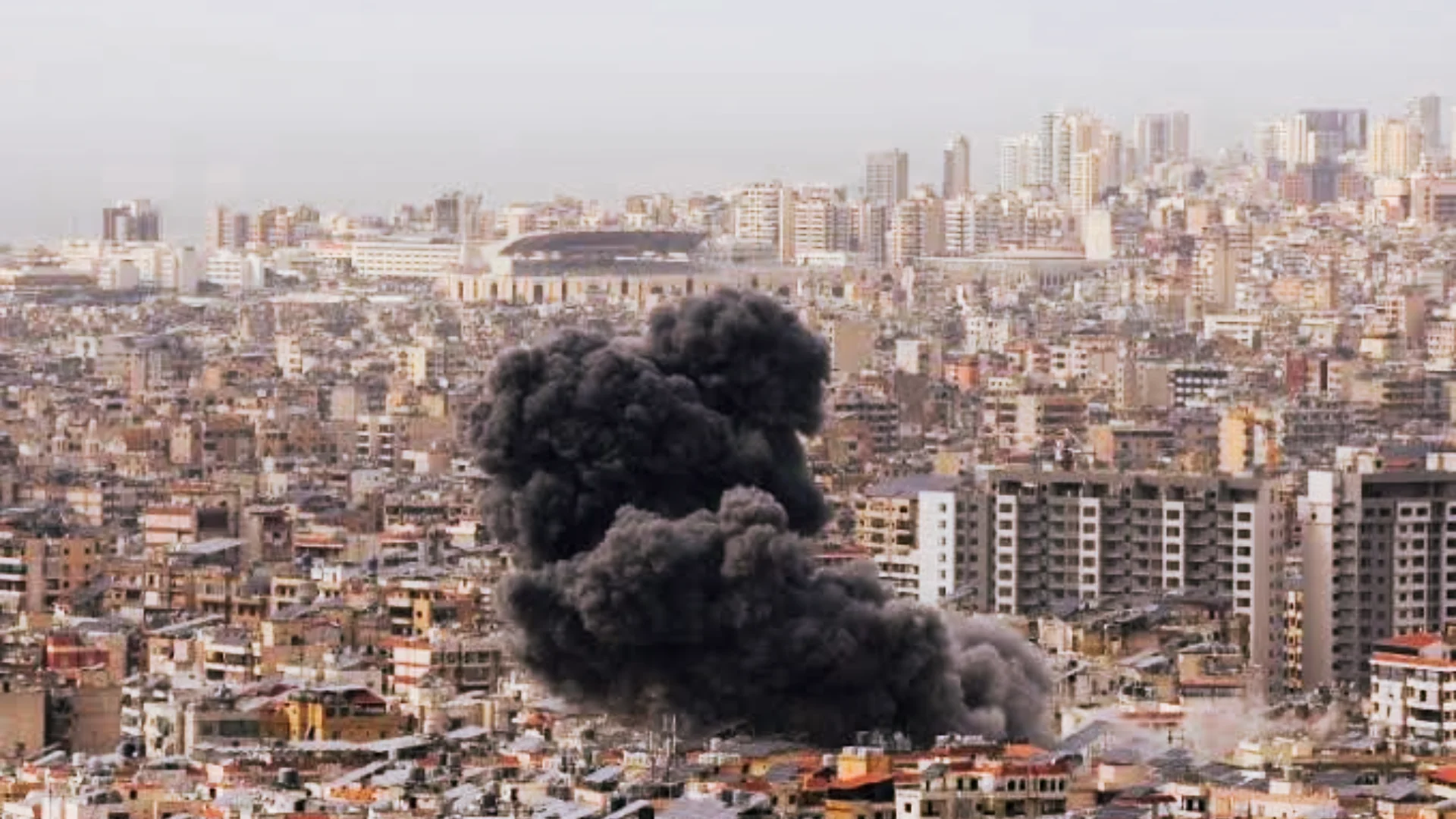
JERUSALEM / BEIRUT / TEHRAN — The Beirut strike tests US-Iran peace push at the most delicate moment in years, threatening to unravel a diplomatic framework that both Washington and Tehran had described as nearing a breakthrough.
The strike targeted Beirut’s Dahiyeh district, a Hezbollah stronghold that has long served as both a symbol of the group’s power and a focal point of Israeli military strategy. Israeli officials said the operation was carried out in response to attacks launched from Lebanon into northern Israel, reiterating that Jerusalem would not tolerate threats against its territory.
The timing, however, has transformed what might otherwise have been a localized military exchange into a wider geopolitical test.
Beirut Strike Tests US-Iran Peace Push as Accusations Fly
For months, U.S. and Iranian negotiators have been working toward a framework aimed at reducing regional tensions, easing sanctions pressure, and creating pathways for broader de-escalation. While President Donald Trump suggested an agreement was close, Iranian officials have repeatedly cautioned that key issues remain unresolved.
Now, the Beirut strike tests US-Iran peace push by injecting fresh uncertainty into that process. Iranian Parliament Speaker and senior negotiator Mohammad Bagher Ghalibaf accused Washington of effectively giving Israel a “green light” for the operation, arguing that the attack raised serious questions about America’s ability to uphold commitments made during negotiations.
Tehran has increasingly linked progress in diplomatic talks to stability across the wider region, including Lebanon. The accusation places the United States in an uncomfortable position: Washington remains Israel’s closest security partner while simultaneously attempting to preserve a diplomatic track with Iran. Any perception in Tehran that the U.S. cannot restrain Israeli military actions could undermine confidence in negotiations at a critical moment.
Beirut Strike Tests US-Iran Peace Push and the Dahiyeh Doctrine
The strike also revived discussion of the so-called “Dahiyeh Doctrine,” a military concept associated with Israel’s response to Hezbollah. Critics describe the doctrine as the use of overwhelming force to deter future attacks, while supporters argue it reflects the realities of confronting armed groups that operate within densely populated civilian areas.
Whether or not the doctrine formally guided the latest operation, the symbolism of striking Dahiyeh was impossible to ignore. The Beirut strike tests US-Iran peace push precisely because it signals that Israel’s security timeline does not bend to diplomatic calendars, a reality that complicates Washington’s assurances to Tehran.
The broader concern for diplomats is that even a limited exchange between Israel and Hezbollah could trigger a cycle of retaliation at the very moment negotiators are attempting to build trust. Hezbollah has yet to announce a major response, but regional observers believe the group’s next move will be closely watched in Washington, Tehran, and Jerusalem alike.
Beirut Strike Tests US-Iran Peace Push: Three Scenarios
Three broad scenarios now appear possible as the Beirut strike tests US-Iran peace push. The first is escalation, in which Hezbollah launches a significant retaliation and Israel responds with broader military action, potentially derailing negotiations entirely. The second is a controlled exchange in which both sides calibrate their responses, allowing diplomacy to continue despite heightened tensions. The third, and perhaps most difficult, outcome would involve diplomatic intervention by regional and international actors seeking to prevent further escalation while preserving momentum in the talks.
For now, none of those paths are guaranteed. What is clear is that the significance of the Beirut strike extends far beyond the damaged buildings of Dahiyeh. The attack has become a test of whether diplomacy can survive amid active conflict—and whether Washington can convince Tehran that any future agreement will be backed not only by promises, but by the ability to enforce them.
As negotiators continue their discussions, the question facing all sides is no longer simply whether a deal can be reached. It is whether events on the ground are moving faster than diplomacy itself.