
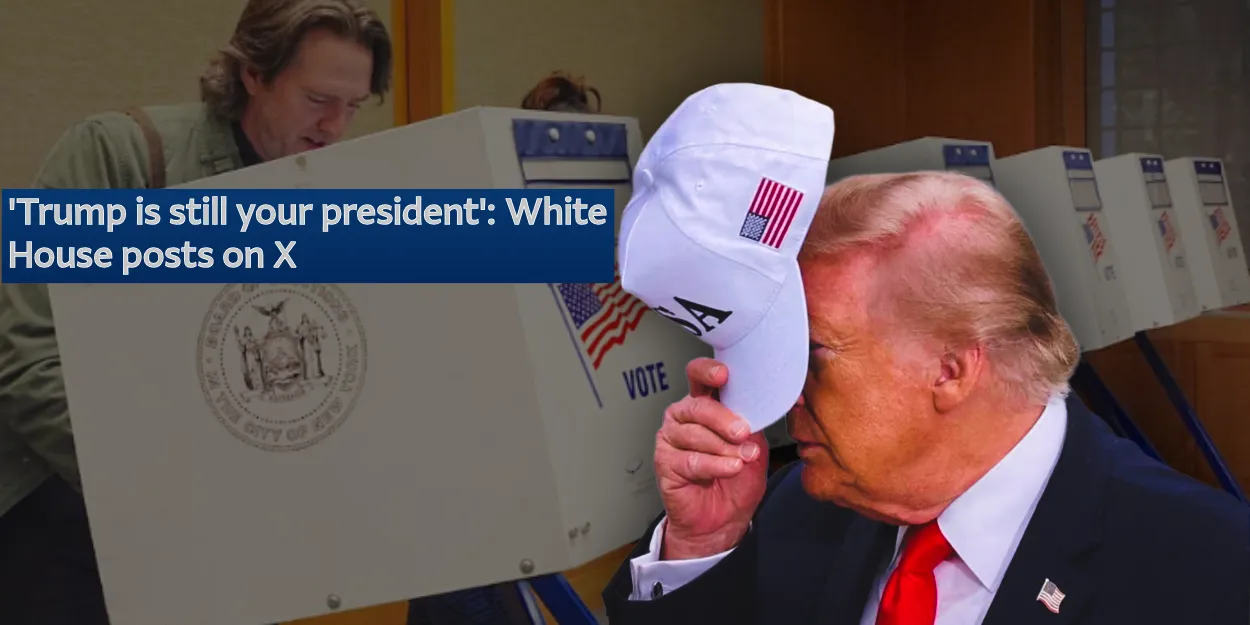
Updated 13 November 2026. First published 4 November. This version corrects the Brent price for 4 November and adds the Hegseth impeachment vote, the removal of Vice President JD Vance from the Iran talks and the fall in crude below $90.
The US midterms India impact comes down to a gap in time. Democrats have won control of both chambers of Congress, according to Associated Press calls reported since 4 November 2026, which gives Congress a way to restrain the Iran war from January. The new Congress is sworn in only on 3 January 2027, so until then New Delhi faces a Washington with fewer electoral constraints and a Gulf where Indian crude, crews and trade talks stay exposed.
Brent crude, the global benchmark that Indian refiners track, fell about 9 per cent on 4 November to $94.29 a barrel, its lowest since 4 September, according to Reuters. It briefly traded below $90 on 10 November. The fall shows how far the market has priced in hope without a signed settlement behind it. The war began in February 2026, and its costs for India are already counted in lives, freight and fuel. The impact of the US midterms on India therefore starts with that price and the calendar behind it.
Since the vote, Trump has sidelined Vance, Hegseth has survived and Brent has dropped below $90
Between 4 and 13 November three things moved. The House voted 211-204 on 10 November to send impeachment articles against Pentagon chief Pete Hegseth to committee. On 12 November Trump told Vance, the vice president who had taken the most active role in the Iran talks, to turn to alleged corruption in Democratic-run states, and wrote that the United States does not need a deal with Iran. Brent briefly traded below $90 on 10 November. None of this settles the war.
The impeachment vote followed Republican Representative Thomas Massie’s filing of eight articles on 9 November, which include the conduct of the Iran war under the War Powers Resolution. All Democrats present voted to proceed and every Republican except Massie voted to refer the resolution to committee, which ends it for this Congress. House Democratic leader Hakeem Jeffries, expected to become speaker, has said he backs impeachment. Whether Democrats revive the articles after 3 January is not settled.
Trump’s 12 November post did not close the mediated channel with Tehran. The Wall Street Journal had reported a day earlier that Vance was weighing face-to-face talks with a senior Iranian security official, and Vance had publicly blamed the war for the Republican defeat. TES assessment: the decision removes the official who, according to US reporting, had been most active on the file, which makes a signed outcome before 3 January harder to expect.
Iran’s answer so far is a claim. The Islamic Revolutionary Guard Corps said on 13 November that it targeted a US early-warning radar in Bahrain, after what it described as a US strike on a telecommunications tower in Sirik. Neither Washington nor Manama had confirmed damage in early reports. Trump said Saudi Arabia, Qatar and other Gulf states asked him to hold off on further large strikes, which is his own account of those conversations.
In Israel, where Prime Minister Benjamin Netanyahu remains caretaker, Gadi Eisenkot wrote on 11 November asking him to avoid major security decisions until a new government is sworn in. AP reported, citing one briefed person, that Netanyahu pressed Trump for new strikes on a weekend call and that Trump did not commit. TES has set out the lame-duck window and what Eisenkot and Miller mean for India.
The crude move came from signals, and TES’s report on the claimed Hormuz exemption for Indian ships sets out what is and is not known about access through the strait itself.
Figure: the gap between the US vote and the new Congress. Source: TES compilation from official election dates, AP calls and Reuters market data.
Democrats can block Iran war funding but cannot end the war quickly
The US Constitution gives Congress the powers to declare war and to appropriate money. President Donald Trump began the Iran campaign in February 2026 without congressional approval. Michael O’Hanlon of the Brookings Institution has said Congress cannot easily force an immediate end to hostilities, but a Democratic Congress can refuse funds for a major escalation. That makes a wider campaign costlier from January and leaves current operations untouched.
The president keeps his own instruments. Tariffs and the use of force are executive decisions, and analysts note that a president blocked at home often looks outward. Trump has acknowledged that the Iran war contributed to the Republican defeat, while standing by the decision to fight it, the Wall Street Journal reported on 4 November. TES had already tracked how a weak Trump approval rating complicated the Iran talks before the vote.
The two-month gap before 3 January leaves Trump freest to act
Between the vote and the swearing-in, the outgoing Republican Congress remains seated and Trump faces no ballot. A 4 November risk analysis by Credendo argues that the chance of military escalation in the Middle East could rise in this period, because Trump and Israeli Prime Minister Benjamin Netanyahu may see the transition as a closing window. Market analysts read the same result as pressure on Trump to settle. For India, the midterm result is first a question of timing. In the first ten days after the vote the reported evidence points to restraint on large operations and limited, disputed exchanges of fire.
Both readings are analysis, and neither is a forecast New Delhi can bank. History offers a caution. Democrats won Congress on 7 November 2006 largely on voter anger over Iraq, and in January 2007 President George W. Bush announced a troop surge instead of a drawdown. A rebuked president can read the vote as a reason to change tactics and keep the objective.
Tehran reads the US midterms as Trump’s defeat, which raises escalation risk
Iranian officials have framed the result as a verdict on Trump personally. Parliament Speaker Mohammad Bagher Ghalibaf, who is also Iran’s chief negotiator, posted that Americans voted against war and warned that Iran’s refusal “comes with a Nightmare” if Washington ignores them. Judiciary chief Gholam Hossein Mohseni Ejehi said Trump had failed in war and in politics. Iran’s Supreme Leader said anyone expecting partisan shifts in the US to end American hostility was mistaken. These are Iranian statements and claims.
Reuters reported that two senior Iranian sources said Tehran remains on high military alert and fears a retaliatory strike, because it presented the result as Trump’s personal loss. Gulf analysts warn that if Tehran reads the vote as American weakness and overplays its hand, it could invite exactly that response.
Qatari mediators are waiting for both capitals to answer a new peace proposal. New Delhi will read the Iranian framing of the midterms as a risk factor for its own Gulf exposure.
US midterms India impact: crude, seafarers and an unsigned trade deal
For India, the midterms change the operating environment and leave the bilateral architecture as it was. The exposure sits in three places: crude bought from West Asia, Indian crews on Gulf routes, and trade talks that began in February. Each depends less on American domestic politics than on whether the Gulf stays quiet through the handover.
Energy: a crude price that moves on statements keeps the import bill and the rupee exposed
India imports most of its crude, and the Petroleum Planning and Analysis Cell publishes the import and price data that shows how a disrupted Hormuz feeds into the import bill (PPAC). TES has mapped the Strait of Hormuz oil flows and the impact of the US-Iran conflict on crude prices for India. The US midterms India impact on energy is indirect. Brent went from a close near $103.6 on 3 November to below $90 on 10 November on signals alone, so planning should treat the price as hostage to Washington’s tone until the Qatari track produces a signed outcome. The Reserve Bank of India publishes the daily rupee reference rate against which the import bill is measured.
People: 24 Indians killed, including 15 seafarers
The Hindu reported on 4 November that the war has killed at least 24 Indians, including 15 seafarers in the Strait of Hormuz. For the Ministry of External Affairs, the practical task through January is advisories, evacuation readiness and the safety of Indian crews on Gulf routes, whatever Washington decides. The midterms do not change that human cost for India. Four Indian-origin lawmakers won seats in Congress, though Republican Vivek Ramaswamy lost in Ohio.
Trade: the US midterms India impact on the FTA table
India and the United States announced an interim trade framework on 2 February 2026, but a full agreement remains unsigned, as TES has set out in its piece on what is delaying the India-US trade deal. Experts quoted by The Hindu expect Trump to raise tariff pressure so that he can show a quick win at home.
Indian negotiators, the same report says, see a chance to extract better terms from a weakened president. From January a Democratic Congress also gains oversight of trade policy, which adds a second table for New Delhi to watch. The US midterms India impact on trade will show first in the language of the next negotiating round.
China policy stays steady, so the Gulf carries the variables for India
Tough American policy on China enjoys support in both parties, so analysts expect Beijing to find little relief in the result. China’s Foreign Ministry spokesperson Mao Ning described the midterms as a domestic affair. For India, the midterms leave the American posture in the Indo-Pacific broadly stable, while the open variables sit in the Gulf.
Three markers decide how India fares before 3 January
Will the mediated talks survive Trump’s statement that the US needs no deal?
Reports on 12 November said the indirect channel had not been formally closed. A reply from both capitals to the Qatari proposal would be the first sign that the vote has moved either side, and silence through November keeps the two-month window open for escalation. TES assessment: a response from both remains the single most useful signal for India’s energy planners.
Will Brent hold below $100 a barrel?
Brent fell about 9 per cent on 4 November and briefly traded below $90 on 10 November. A rebound above $100 would suggest markets doubt de-escalation, while a hold below $90 would suggest they believe it. Eurasia Group, in a note carried by Reuters, said escalation would push Brent into a band of $110 to $125. TES assessment: the price is a sentiment gauge and not yet evidence of peace.
Will tariff language return to the India-US talks before the new Congress sits?
If Washington raises tariff demands in November or December, it would confirm the expectation of a president seeking a quick win. If it does not, India enters January with talks on the interim framework undisturbed. TES assessment: tariff pressure is likelier while Trump is least constrained.
If the Gulf stays quiet through the handover, the midterms leave India with a more constrained Washington and a stronger position at the trade table. If it does not, India enters 2027 with the same energy exposure and a Congress that can criticise the war but cannot end it. The first test arrives well before 3 January, in whether the mediated channel survives Trump’s 12 November post and how Tehran and Washington answer Doha.
Source note: US constitutional provisions, AP election calls, House vote records, official and party statements, Indian and international news reports, and think-tank and market analysis.