
US POLITICS & IRAN WAR DIPLOMACY
“Trump approval rating 29 percent” is the number driving this week’s headlines, drawn from a single American Research Group poll; a separate survey put it at 32 percent instead, and both are career lows. Neither number is the real story. The real story is what one Middle East analyst told Al Jazeera about why Iran will not hand back the Strait of Hormuz: because it is “the thing Washington most wants back, with oil prices high and midterms approaching.”
Trump approval rating 29 percent is the figure an American Research Group poll released this week produced, the first sub-30 reading of either of his terms; a separate Reuters/Ipsos poll put it at 32 percent, itself a career low, as Republican approval cracked from 82 percent to 73 percent in a single week. Both arrived as US and Iranian officials held three hours of indirect talks on the sidelines of the UN General Assembly, hours before Trump threatened to “annihilate” Iran from the same podium. This analysis separates the two polls from each other, traces the diplomacy in New York, and examines the argument — made on the record by a Middle East analyst — that Trump’s domestic weakness is now a reason for Iran to hold the Strait of Hormuz longer, not release it sooner.
Trump Approval Rating 29 Percent: What the Number Actually Is
A poll by American Research Group, conducted 16-20 September among 1,100 US adults, put Trump’s overall approval rating at 29 percent, with 68 percent disapproving — the first time either of his terms has registered below 30 percent in a national survey. A separate four-day Reuters/Ipsos poll that closed on 21 September put his approval at 32 percent, described by Al Jazeera and Reuters as the lowest of his political career. These are two different instruments measuring two different samples in the same week, not one number restated twice.
The distinction matters because the polling average sits meaningfully higher than either headline figure. An aggregation of major trackers — Real Clear Politics, Decision Desk HQ, CNN, The Economist, The New York Times and others, compiled on Wikipedia’s rolling tracker of the second Trump presidency — put average approval at 38 percent as of 18 September, with disapproval at roughly 60 percent. One analyst who reviewed the American Research Group figure directly, writing on Substack, called the 29 percent reading “real” but cautioned that the trend line, not the single data point, is what deserves attention: whether the next Reuters/Ipsos poll shows Republican support stabilising or continuing to erode. Political scientist Kyle Kondik of the University of Virginia’s Center for Politics told Newsweek that the American Research Group poll “is an outlier, as others are not as bleak for the president,” while adding that Trump’s numbers are nonetheless worse now than at the equivalent point eight years into his prior term.
| Poll | Approve | Disapprove | Field Dates |
|---|---|---|---|
| American Research Group | 29% | 68% | 16-20 September |
| Reuters/Ipsos | 32% | Not separately confirmed | Closed 21 September |
| Major-tracker average (Wikipedia aggregation) | 38% | ~60% | As of 18 September |
- Two different polls, two different numbers: 29 percent (American Research Group) and 32 percent (Reuters/Ipsos) are separate readings, not the same figure quoted twice.
- Republican approval fell from 82 percent to 73 percent in one week, the fastest erosion of Trump’s core base recorded this term.
- Cost of living, not the Iran war directly, is the issue driving the slide, with just 17 percent approving of his handling of it.
- Analysts at Chatham House and the Australian Strategic Policy Institute link the approval collapse directly to why Iran is unlikely to release Strait of Hormuz leverage before 3 November.
The Republican Crack Behind Both Numbers
Both polls agree on the underlying movement even where they disagree on the headline figure: Republican approval of Trump is falling for the first time since he returned to office, driven by anger over the cost of living rather than the war itself. Reuters/Ipsos recorded Republican approval falling from 82 percent to 73 percent in a single week, with just 17 percent of all respondents approving of Trump’s handling of the cost of living — the issue Americans say will decide their vote in the 3 November midterm elections.
For the first time in his second term, Republicans who disapprove of Trump’s handling of the cost of living outnumber those who approve, 51 percent to 44 percent. That is a specific and countable shift, not an impression. Dissatisfaction has been building since the war against Iran began on 28 February and pushed fuel prices sharply higher — a dynamic this publication has previously connected to the administration’s tightening posture toward unfavourable press coverage of the war’s costs.
Three Hours in New York, Then an “Annihilate” Threat
On 23 September, US special envoys Steve Witkoff and Jared Kushner held three hours of indirect talks with Iranian Foreign Minister Abbas Araghchi on the sidelines of the UN General Assembly — a meeting Trump publicly called “very good” and “very productive.” Hours later, at the same gathering founded after the Second World War to prevent conflict, Trump suggested he could “annihilate” Iran, prompting Iran’s military to warn it was ready to answer with “crushing” attacks more severe than earlier in the war, according to Al Jazeera’s reporting from the summit.
The same week produced two other firsts. Iranian President Masoud Pezeshkian arrived in New York on Wednesday to address the General Assembly in person — the first time a sitting leader of a country at war with the United States has done so on US soil. Chinese President Xi Jinping, by contrast, skipped New York altogether for a separate one-on-one meeting with Trump in Washington, his first state visit to the US in nearly a decade. Qatar and Oman, longstanding mediators between Washington and Tehran, continued working the sidelines, with Gulf leaders separately weighing a Qatari proposal for a regional security framework covering Iran and the Gulf states.
Why the Strait of Hormuz Is the Real Hinge
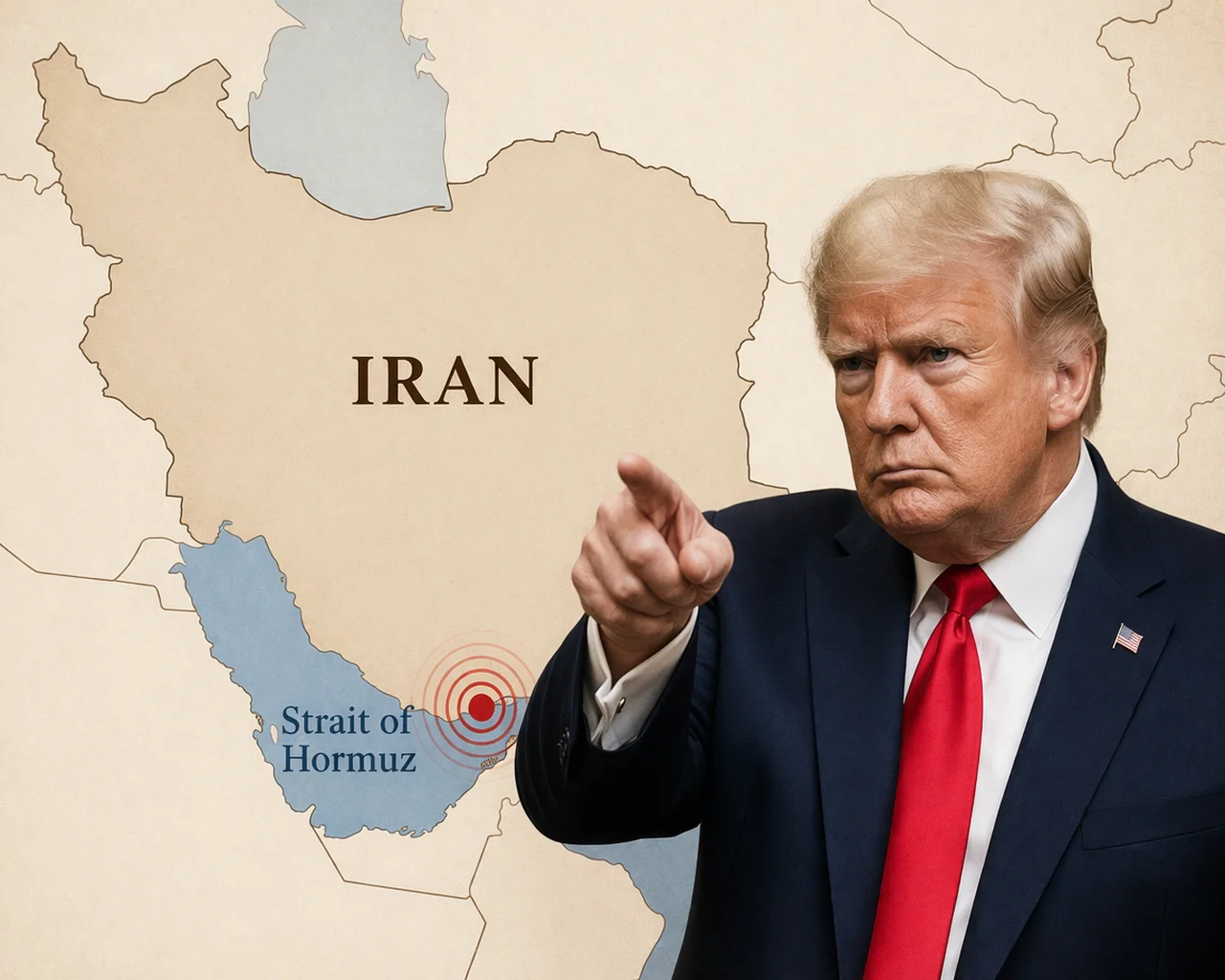
Iran’s continued effective closure of the Strait of Hormuz remains the single largest obstacle to any deal, and the reason has as much to do with the American electoral calendar as with Tehran’s own war aims. Adel Abdel Ghafar, a senior fellow at the Australian Strategic Policy Institute, put it directly to Al Jazeera: the Strait “is Iran’s strongest card and the thing Washington most wants back, with oil prices high and midterms approaching,” adding that Tehran will be reluctant to release it “without firm guarantees in return.”
That single sentence connects the two halves of this story. A president whose approval has fallen to 29 or 32 percent, largely over the cost of living, badly needs the relief that a reopened Hormuz would bring to gasoline and diesel prices before 3 November. Iran’s negotiators know this. Sanam Vakil, director of the Middle East and North Africa Programme at Chatham House, told Al Jazeera she is “sceptical that a breakthrough deal can emerge this week,” though “a series of understandings can build confidence for renewed diplomacy” — and named the specific signals worth watching: another confirmed round of US-Iran contact, agreement on the sequencing of reciprocal steps, and language from both sides that addresses implementation instead of repeating what she called maximalist demands.
The link between Trump’s collapsing approval and Iran’s Hormuz leverage cuts in two directions at once, and neither the Al Jazeera reporting nor the polling data resolves which will dominate. A weakened president facing a hostile midterm electorate has a genuine incentive to accept a face-saving settlement that lowers fuel prices before voters go to the polls. The same weakened president, addressing his domestic base and a UN audience within hours of the New York talks, also has an incentive to sound uncompromising instead of conciliatory — precisely the pattern this week’s “very good meeting” followed by an “annihilate” threat illustrates. Abdel Ghafar’s own framing, that both governments need a formula they can present at home as a negotiated compromise and not a capitulation, describes a genuine constraint on both sides, not a prediction of outcome. We present the analysts’ framing as their assessment, not as a forecast of what Washington or Tehran will ultimately do.
The Market and Defence Read
A protracted Hormuz standoff running into the American election calendar keeps a floor under oil prices and under pressure on India’s crude sourcing, an angle this publication has tracked closely since the blockade began. It also keeps alive the resupply question the Pentagon’s own inspector general flagged in mid-September, when it confirmed strategic inventory shortfalls in American munitions stocks after months of denial — a constraint a prolonged conflict would continue straining far more than a negotiated close would.
None of the diplomatic threads this week point toward an imminent ceasefire of the kind laid out in earlier proposed peace terms involving a naval blockade and frozen funds. Abdel Ghafar’s caution about the Red Sea is worth carrying forward on its own: even a Hormuz de-escalation, he told Al Jazeera, “won’t necessarily mean calm in Bab al-Mandab,” where Houthi forces retain effective control and Yemen’s separate war has begun to flare again. Markets pricing a single “Iran deal” narrative are, on this reading, pricing only half the geography that actually determines Gulf shipping risk.
What Happens Next
Three dates and one data point are worth tracking against each other over the coming weeks. First, whether Araghchi and Pezeshkian secure any direct, on-record contact with senior US officials beyond the 23 September indirect talks — Vakil’s clearest signal of genuine movement. Second, whether the next Reuters/Ipsos poll shows Republican approval stabilising in the mid-70s or continuing its slide from 82 to 73 percent, since that single sub-metric is arguably a better predictor of Trump’s negotiating posture than his topline number. Third, whether Yemen’s Houthi-Saudi fighting escalates further, since a calmer Hormuz alongside a hotter Bab el-Mandeb would leave shipping risk broadly unchanged even if the headline crisis appears to ease. The 3 November midterm elections remain the fixed point every other date is measured against.
Polling figures are drawn directly from Reuters/Ipsos, American Research Group, and the Wikipedia-hosted aggregation of major polling trackers (Real Clear Politics, Decision Desk HQ, CNN, The Economist, The New York Times and others), linked inline at first mention. Diplomatic reporting on the 23 September UN General Assembly talks, and all direct quotations from Sanam Vakil (Chatham House) and Adel Abdel Ghafar (Australian Strategic Policy Institute), are drawn from Al Jazeera’s reporting and attributed accordingly; The Eastern Strategist has not independently interviewed these analysts. Passages labelled “TES Analytical Assessment” represent editorial inference and reasoned judgement, not reported fact. Internal links point to prior TES coverage; verify slugs against the live sitemap before publishing.

1 thought on “Trump Approval Sinks into 20s as Inflation, Iran War Wear Down GOP Support”