
The Eastern Strategist 15 July 2026 | Washington D.C.
A federal prosecutor sworn into office at 7:40 a.m. on Wednesday received a dismissal email from the White House less than an hour later. He was still waiting to meet his predecessor.
That is how the appointment of Roger Rogoff as US Attorney for the Western District of Washington ended — before it could begin. The episode, which unfolded publicly on 15 July 2026, has become one of the sharpest flashpoints yet in an ongoing dispute between the Trump administration and the federal judiciary over who has the authority to staff America’s Justice Department when the Senate fails to confirm a nominee.
The answer, it now appears, will be settled in court.
What Happened in Seattle
The Western District of Washington — which covers Seattle and its surrounding area — has been without a Senate-confirmed US Attorney since the resignation of Nick Brown, a Biden-era appointee. Under federal law, the administration can install an interim replacement for 120 days. When that period expires without Senate confirmation of a permanent nominee, a separate provision — Section 546(d) of the US Code — allows the district’s federal judges to appoint someone themselves.
The Trump administration had not nominated anyone for Senate consideration. In January 2026, the judges of the Western District announced their intent to fill the vacancy. After what has been described as a merit-based review process, the court unanimously selected Rogoff — a graduate of the University of Washington School of Law with a career spanning fourteen years as a King County prosecutor, six years as an assistant US Attorney handling terrorism and violent crime cases in Seattle, seven years as a King County Superior Court judge, and most recently, a role as the first director of Washington state’s Office of Independent Investigations, the body created to independently review police use of deadly force.
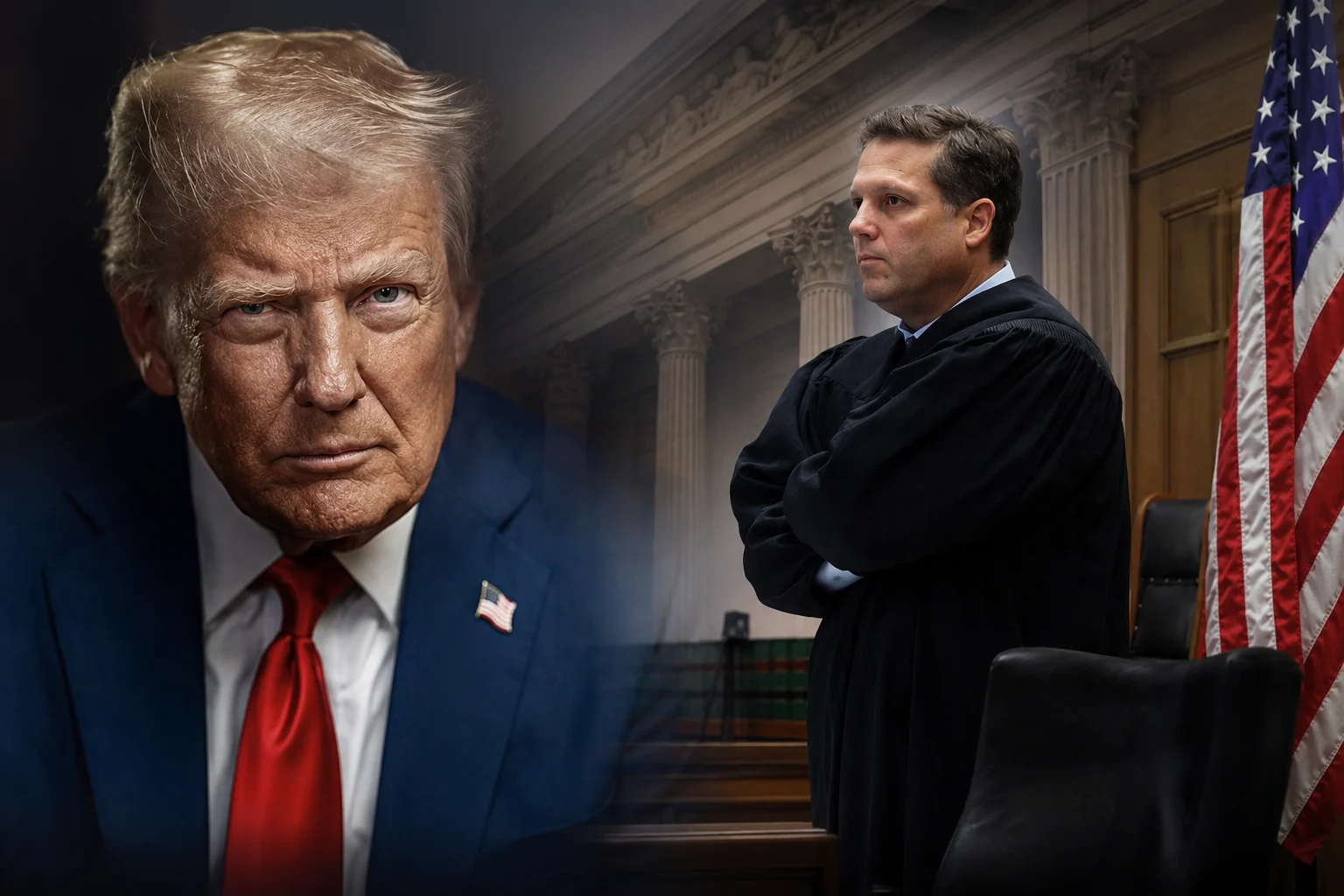
At 7:40 a.m. on Wednesday, the judges swore Rogoff in. Fifty-four minutes later, President Donald Trump fired him.
Rogoff said he was dismissed through an email titled “A Message From the President,” which informed him that, pursuant to presidential authority, he was being removed from the office of United States Attorney. He told reporters it was “the greatest hour” of his life.
The Administration’s Position
Acting Attorney General Todd Blanche did not dispute the court’s legal authority to make the appointment. In a post on social media, Blanche said the judges had “abandoned” the time-honoured practice of consulting with the administration before selecting a candidate — a process he described as ensuring the appointee is “qualified to serve in the administration.” He stated plainly: “District court judges can appoint a temporary US Attorney, and POTUS can fire them.”
The written removal notice sent to Rogoff cited both Section 28 U.S.C. 541(c) and Article II of the Constitution as the basis for the President’s authority to remove him.
This was not the first such firing. Donald Kinsella, appointed by a panel of federal judges in February 2026 to fill a vacancy in the Northern District of New York, was sworn in the same day but fired by the White House within hours. Blanche publicly stated at that time, “Judges don’t pick US Attorneys, the President does,” invoking Article II. In the Western District, the administration had previously dismissed Tessa Gorman, another court-appointed US Attorney.
Roger Rogoff’s Position — and the Legal Challenge Ahead
Roger Rogoff’s reading of the law is different. He told reporters: “When the judges appoint somebody constitutionally and statutorily, and they’re summarily dismissed without a conversation, without an examination, without any understanding of what they intend to do when they get into office, then yes, I think that firing is not appropriate and is most likely unlawful.”
He has retained national firm HKM Employment Attorneys LLP and said the situation is “untenable, not constitutional, and not legal,” adding: “The president gets to choose his US attorney, but only with the advice and consent of the Senate.”
Roger Rogoff’s legal team is expected to sue the administration and the Justice Department — a more aggressive posture than that taken by the court-appointed US Attorneys in the Eastern District of Virginia and the Northern District of New York, who were ousted under similar circumstances but did not litigate.
Influential lawyers in Western Washington had previously discussed the need for the court to select someone willing to pursue legal action if fired. Roger Rogoff, it appears, is willing.
The Legal Question That Has No Clean Answer
The tension here runs through the Constitution itself.
Congress created Section 546(d) precisely to prevent federal districts from being left without a chief prosecutor indefinitely. The statutory text explicitly authorises district judges to fill the vacancy. The courts exercised that authority legally.
The executive branch argues that appointment authority and removal authority are separate questions. The President may not control who the judges appoint, but retains constitutional power — under Article II — to remove executive branch officers regardless of how they came to hold office.
Neither argument is frivolous. The core question a court will have to address, if Roger Rogoff proceeds with litigation, is whether a court-appointed US Attorney enjoys any protection from immediate removal before taking meaningful action in the role, or whether presidential removal power is unconditional once the appointment takes effect. The outcome could shape how future Justice Department vacancies are managed — particularly in districts where the Senate confirmation process stalls.
This is not simply an abstract constitutional puzzle. The Western District of Washington’s seven active district judges were all appointed by President Biden. The political dimension of the standoff is visible to everyone involved, even as the legal arguments are framed in constitutional terms.
Why This Matters Beyond the United States
TES readers — government officials, policy professionals, and investors in strategic sectors — have reason to watch this case even if their primary interest lies outside American domestic politics.
The credibility of American democratic institutions is a live variable in how allies and partners assess US reliability. The Justice Department’s independence from political direction has long been presented as a structural feature that distinguishes the United States from systems where law enforcement serves the executive’s immediate interests. When that independence is openly contested — not in theory, but in real time, through the firing of a federal prosecutor on his first morning in office — it registers in allied capitals.
There is also a practical dimension for anyone who conducts business or litigation in the Western District of Washington, one of the country’s most commercially significant federal jurisdictions covering major technology companies, port operations, and defence contractors. It is unclear who will fill the role now that Roger Rogoff has been fired. The office, which oversees around 85 attorneys and 70 support staff, is led in the interim by Charles Neil Floyd as First Assistant US Attorney.
What to Watch Next
The immediate question is whether Roger Rogoff files suit, and if so, how quickly a federal court agrees to hear the case. Should litigation proceed, judges will likely be asked to rule on whether the President’s removal power under Article II is unconditional in the context of a court-appointed officer, or whether Section 546(d) implies any degree of tenure protection.
If a court rules in Roger Rogoff’s favour, the ruling could require the administration to reinstate him — at least temporarily — while the broader constitutional question is argued. If the administration prevails, the pattern already visible in New York and Washington would be confirmed as legally settled, with potential implications for how future judicial appointments to US Attorney positions are handled nationally.
The case is also being watched in the context of a Senate Judiciary Committee hearing in which Todd Blanche was testifying on the same morning the Roger Rogoff firing occurred. The administration’s approach to prosecutorial independence is already under scrutiny on multiple fronts. This episode adds to that record.
What began in a Seattle federal courtroom before 8 a.m. on a Wednesday morning may end up shaping the legal architecture of executive authority over the Justice Department for years to come.
Also Read
Canada Wildfires 2026: Ontario Smoke Pushes Toronto’s Air Quality Among the World’s Worst
As wildfire smoke spread across Ontario and into the United States, the crisis became more than an environmental emergency. Read how deteriorating air quality, cross-border impacts, and climate-driven disasters are reshaping North American resilience and public health.
Read Full Analysis →