
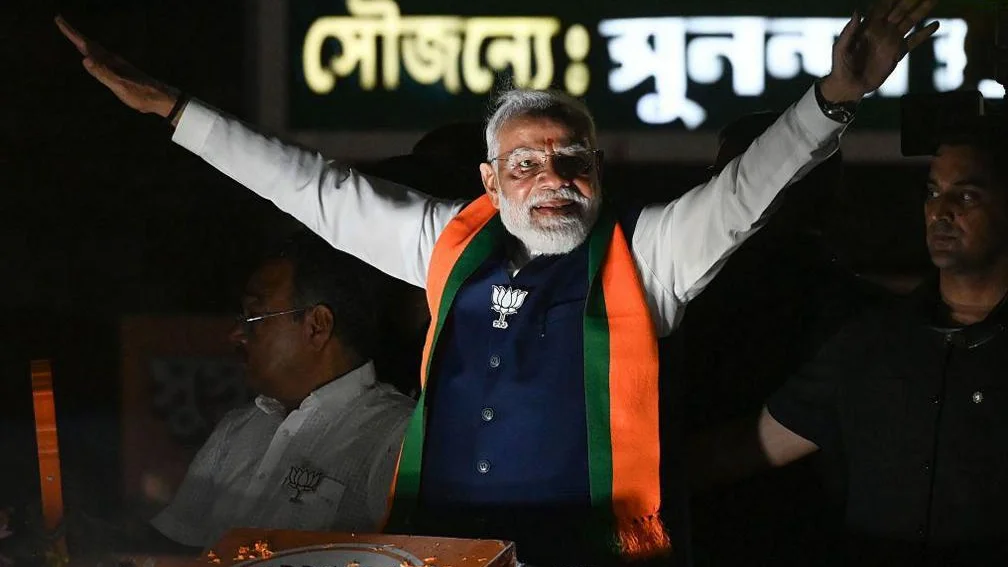
A breakthrough in eastern India reinforces political stability and sends a strategic signal to global investors and regional actors.
New Delhi — India’s governing Bharatiya Janata Party (BJP) has secured significant breakthroughs in the crucial 2026 state elections. This electoral performance not only consolidates Prime Minister Narendra Modi’s domestic authority but also projects a vital message of political continuity to global markets navigating a highly volatile geopolitical landscape.
The 2026 state election results represent more than routine political gains; they highlight a structural and geographic shift in Indian politics. The BJP’s expansion in eastern India is transforming the nation’s historically fragmented, coalition-dependent federal system into a more cohesive national structure, where central leadership increasingly dictates state-level mandates.
A Structural Shift in Eastern India
The most notable shifts are occurring in states where the ruling party historically faced steep resistance:
- West Bengal: In a state where the BJP once struggled to establish even a marginal footprint, the party has now emerged as a decisive political force. This marks a major regional realignment, proving the party’s ability to penetrate deep into regional strongholds.
- Assam: The BJP is successfully securing a third consecutive term. This victory reinforces the narrative of sustained governance acceptance rather than mere single-cycle electoral momentum.
While many modern Western democracies are currently grappling with declining approval ratings, fragmented electorates, and policy paralysis, India is charting the opposite course. The country is demonstrating increasing political consolidation, which is rapidly becoming one of its primary competitive advantages on the world stage.
Markets Read Stability as Strategy
Financial markets reacted swiftly and positively to the early election trends. Indian equities rallied amid expectations of sustained economic stability and uninterrupted policy direction.
For global investors, this political mandate is a signal of systemic reliability. As global supply chains continue their structural shift away from China, India’s internal political coherence heavily minimizes long-term regulatory uncertainty. This environment of policy continuity is expected to accelerate critical reforms, boost infrastructure expansion, and strengthen investor confidence in India as the premier “China+1” alternative.
Regional Signaling and Border Security
The implications of these elections extend far beyond domestic policy, carrying significant weight for regional geopolitics.
Throughout the campaigns in eastern India, border security and illegal immigration were heavily emphasized. Because both West Bengal and Assam share sensitive borders with Bangladesh, migration remains a highly combustible political issue. The renewed mandate suggests that New Delhi will likely adopt a much firmer posture on undocumented migration, specifically concerning flows involving Bangladeshi nationals and Rohingya populations.
How India translates this electoral rhetoric into tangible policy—whether through strict border enforcement, intense regional diplomacy, or structural demographic reforms—will be closely monitored by stakeholders across South Asia.
Conclusion
India’s rise as a dominant economic and geopolitical actor is intrinsically tied to its internal political stability. The 2026 state election results signify a transition toward a more centralized, resilient political structure capable of executing long-term strategic goals.
By aligning rapid economic expansion with firm political stability, India is fundamentally redefining its role in the shifting global order.
Executive Takeaway
The ruling party’s electoral expansion in eastern India signals a politically stable and strategically assertive nation. This internal consolidation is actively shaping external expectations, boosting financial markets, and setting the stage for firmer regional security policies.