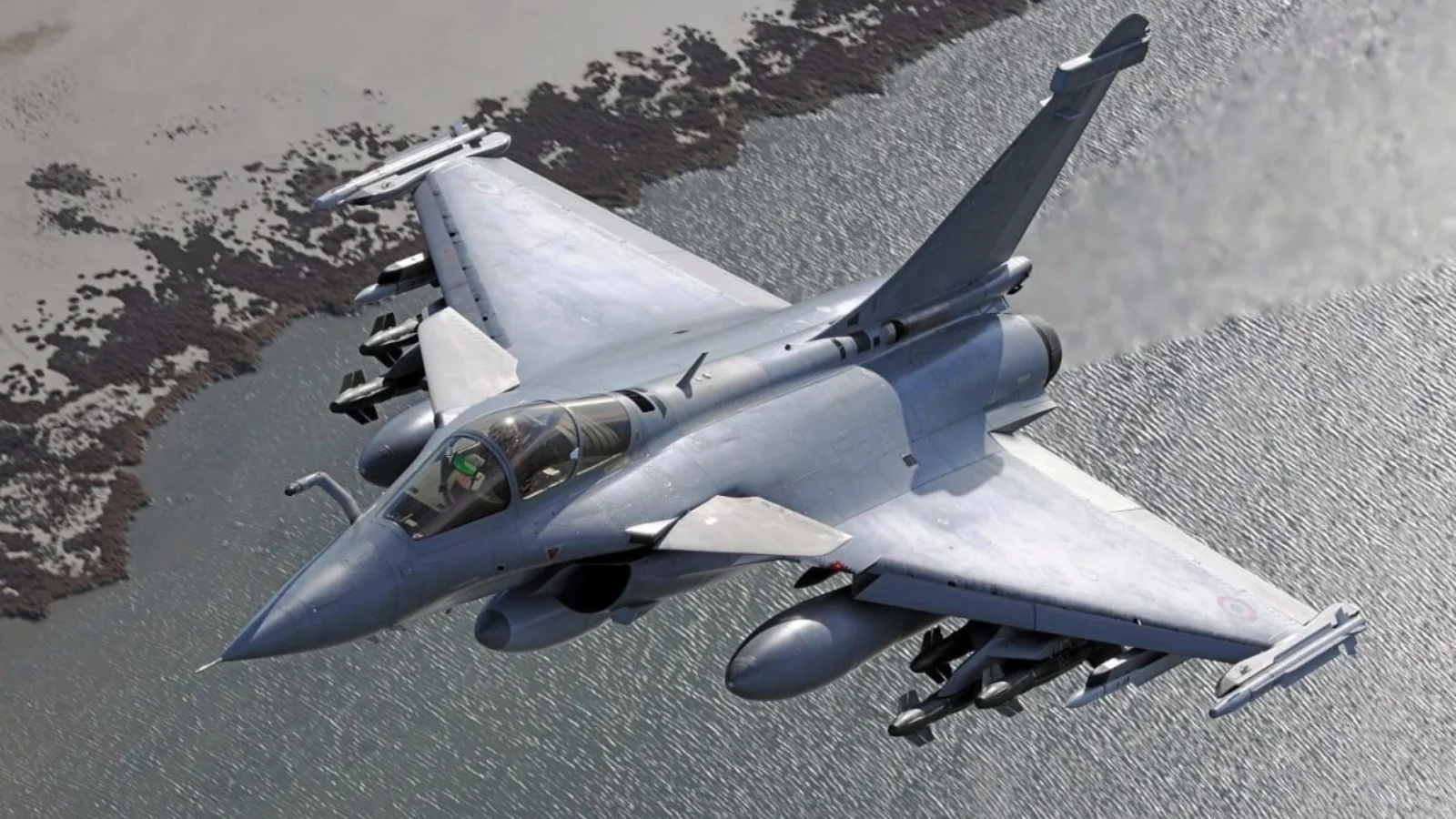
Paris/New Delhi, 02 June: India’s 114 Rafale deal has formally moved a step closer to what could become the largest fighter aircraft acquisition in its history, issuing a Letter of Request to France for 114 additional Rafale fighter jets under the Indian Air Force’s long-running Multi-Role Fighter Aircraft (MRFA) program.
The proposed deal, estimated at roughly ₹3.25 lakh crore, is expected to involve large-scale manufacturing in India, a domestic maintenance ecosystem, and a long-term upgrade roadmap extending far beyond the aircraft currently flying with the Indian Air Force.
At first glance, the story appears straightforward: India needs more fighters, and Rafale has emerged as the preferred solution.
A closer examination of French government documents, Dassault Aviation’s development plans, and the company’s roadmap for the Rafale F4 and F5 standards reveals something far more significant.
France is no longer treating Rafale as merely another fighter aircraft. It is building Rafale into the centerpiece of its future combat aviation strategy. The aircraft is expected to become the sole combat aircraft type operated by both the French Air and Space Force and the French Navy, supported by continuous upgrades, artificial intelligence, advanced networking, and eventually a stealth combat drone ecosystem designed to remain operationally relevant beyond 2060.
That distinction matters.
If India proceeds with the proposed acquisition, it may not simply be buying 114 aircraft. It may be securing access to one of the world’s longest-running and most ambitious combat aviation development programs.
Why Rafale Again?
The Indian Air Force already operates 36 Rafales, while the Indian Navy has ordered 26 carrier-capable Rafale Marine fighters.
That existing ecosystem gives Rafale a significant advantage.
Pilots are trained. Infrastructure already exists. Maintenance systems are established. Weapons such as Meteor, SCALP and HAMMER are already integrated into Indian operations.
Rather than introducing an entirely new aircraft type, India can build upon capabilities that already exist, reducing costs, logistics complexity and training requirements.
Rafale is also one of the most combat-proven Western fighters in service today, having seen operational deployments across Afghanistan, Libya, Iraq, Syria and the Sahel region.
Which Version Is India Looking At?
The most likely candidate is the Rafale F4 standard.
India’s current fleet is based on the F3R standard with India-specific enhancements. The proposed 114-aircraft package is widely expected to focus on the newer F4 configuration, which represents a significant evolution in how the aircraft gathers, processes and shares information.
The difference between F3R and F4 is not primarily about speed or maneuverability.
It is about battlefield awareness.
F4 introduces improved sensor fusion, enhanced electronic warfare systems, better networking, advanced data links and artificial intelligence-assisted predictive maintenance.
The aircraft becomes less of a standalone fighter and more of a connected combat node within a larger battlespace.
Why Rafale F4 Matters More Than Most Headlines Suggest
Many discussions focus on missiles, radar systems and payload capacity.
The real significance of F4 lies elsewhere.
It is the first Rafale standard designed around collaborative combat and future battlefield connectivity. The aircraft is intended to operate as part of a larger information network involving airborne early warning aircraft, ground forces, naval assets and eventually autonomous systems.
The objective is simple: reduce pilot workload while increasing situational awareness.
Future upgrades throughout the decade are expected to introduce increasingly powerful artificial intelligence tools capable of assisting pilots in managing more complex combat environments.
In many ways, F4 is less a destination than a bridge to the next generation of air warfare.
The “Look-And-Lock” Upgrade Few Are Talking About
One of the most interesting additions expected with Rafale F4 is the introduction of an advanced Helmet-Mounted Display and Sight system.
Military pilots often describe the capability as “look and lock.”
In traditional engagements, pilots generally needed to maneuver the aircraft toward a target before locking and firing a missile.
With modern helmet cueing systems, a pilot can simply turn their head toward a target, designate it through the helmet and cue compatible weapons almost instantly.
The aircraft effectively follows the pilot’s eyes.
While several modern frontline fighters already possess similar technology, Rafale’s adoption of the capability closes one of the few frequently cited gaps between earlier Rafale standards and the newest generation of Western fighters.
More importantly, the helmet becomes increasingly valuable when combined with F4’s enhanced sensor fusion, networking architecture and future collaborative combat capabilities.
How Many Aircraft Will Be Built In India?
Final numbers remain under negotiation, but current industry reports suggest that most of the fleet will be manufactured domestically.
The structure most frequently discussed involves:
- 18–24 aircraft delivered directly from France
- 90–96 aircraft manufactured in India
This would make the program one of the largest fighter production efforts ever undertaken in the country.
The initiative is expected to become a major component of India’s Make in India defense manufacturing strategy.
Who Will Build Them?
No final industrial partner has been officially confirmed.
However, discussions have frequently centered around Dassault’s expanding industrial footprint in India, including facilities in Nagpur.
Potential Indian partners mentioned by industry observers include Reliance Defence, Tata Advanced Systems and Hindustan Aeronautics Limited.
The final industrial arrangement could prove as strategically important as the aircraft themselves.
The Engine Question
Every Rafale is powered by two Safran M88 turbofan engines.
The key issue for India is not simply engine supply.
The real question is how much engine-related work can be localized.
Maintenance, repair and overhaul activities are widely expected to form part of the package. More extensive technology transfer remains a subject of negotiation and will be closely watched because engine technologies remain among the most sensitive areas of military aviation.
The outcome could influence India’s broader ambitions in advanced aerospace manufacturing.
Why Not The F-35?
Whenever a major fighter acquisition is discussed, comparisons with the F-35 inevitably follow.
The answer is less about which aircraft is more advanced and more about what India is trying to achieve.
India is seeking:
- Operational sovereignty
- Domestic manufacturing
- Industrial participation
- Long-term maintenance capability
- Technology transfer opportunities
Rafale aligns closely with those objectives while also complementing India’s indigenous Advanced Medium Combat Aircraft (AMCA) program.
Rather than replacing India’s future fighter ambitions, Rafale may serve as a bridge toward them.
The Real Attraction: Rafale F5
The most important part of the story may not be Rafale F4 at all.
It may be Rafale F5.
France has already confirmed that the next major Rafale standard will integrate advanced artificial intelligence capabilities, collaborative combat systems and a new stealth Unmanned Combat Air System (UCAS).
Instead of operating alone, future Rafales will be designed to work alongside autonomous combat drones capable of reconnaissance, electronic warfare and strike missions.
The future UCAS is expected to incorporate stealth technologies, autonomous control systems, internal weapons carriage and man-in-the-loop decision-making.
According to Dassault Aviation, the Rafale F5 and UCAS combination is intended to remain operationally relevant beyond 2060.
That changes how the current deal should be viewed.
India may not simply be buying 114 fighters.
It may be securing access to a future combat ecosystem that combines manned aircraft, artificial intelligence and autonomous systems.
Will India Participate In F5?
No formal participation has been announced.
However, if India eventually operates around 176 Rafales across the Air Force and Navy, it would become one of the largest Rafale operators in the world.
That scale could provide New Delhi significant influence over future upgrades, weapons integration, maintenance arrangements and modernization pathways.
For many analysts, this is where the strategic value of the deal truly lies.
Why France’s Rafale Strategy Matters To India
France has made a crucial strategic decision.
Rather than replacing Rafale with an entirely new aircraft in the near future, Paris intends to continuously evolve the platform through successive standards.
That means:
- Long-term upgrade certainty
- Continued investment by Dassault and Safran
- Production line stability
- A large and active operator community
For India, this reduces the risk of operating an aircraft that could become strategically isolated or technologically stagnant.
Which version of the Rafale is India expected to buy?
India is widely expected to acquire the Rafale F4 standard under the proposed 114-aircraft deal. The F4 variant introduces improved sensor fusion, advanced networking, enhanced electronic warfare capabilities, AI-assisted maintenance systems and a new helmet-mounted targeting system. It is also designed to serve as the foundation for future upgrades to the Rafale F5 standard.
How many Rafale jets will be built in India?
While final negotiations are ongoing, current reports suggest that 90–96 Rafale fighters could be manufactured in India, with the remaining 18–24 aircraft delivered directly from France in fly-away condition. The project would become one of India’s largest fighter aircraft manufacturing programs.
Why is India choosing Rafale instead of the F-35?
India’s priorities extend beyond aircraft performance. New Delhi is seeking greater operational sovereignty, local manufacturing, industrial participation, maintenance capability and technology transfer opportunities. Rafale aligns more closely with those objectives while also complementing India’s indigenous AMCA stealth fighter program.
What is Rafale F5 and why does it matter to India?
Rafale F5 is the next-generation evolution of the French fighter currently under development. It is expected to integrate artificial intelligence, collaborative combat systems and stealth combat drones operating alongside manned aircraft. Many analysts believe access to the future F5 ecosystem is one of the most strategically valuable aspects of India’s proposed Rafale acquisition.
For investors, the proposed 114-Rafale program could create a much broader beneficiary list than just the prime contractor. If the deal follows the expected Make in India structure, the winners could span airframes, precision castings, titanium parts, engines, electronics, wiring, MRO and aerospace materials.
Tier 1: Direct Beneficiaries
Hindustan Aeronautics Limited (HAL)
Even if HAL is not the primary assembly partner, it remains India’s largest military aviation company and could benefit from:
- MRO support
- Systems integration
- Future upgrades
- Weapons integration
- Aerospace manufacturing ecosystem expansion
HAL would also be involved if indigenous weapons such as Astra or Rudram are integrated in the future.
Tata Advanced Systems (TASL)
Tata is arguably one of the strongest contenders for major aerospace work.
TASL already manufactures aerostructures for Airbus, Boeing and Lockheed Martin and has become India’s leading private aerospace manufacturer.
Potential benefits:
- Airframe structures
- Fuselage sections
- Composite assemblies
- Precision manufacturing
Many analysts believe Tata would be among the biggest winners if large-scale local production occurs.
Reliance Defence
Reliance already has an existing aerospace relationship with Dassault in Nagpur.
If the reported production model materializes, Reliance could become one of the largest beneficiaries through:
- Final assembly activities
- Component manufacturing
- Supply chain participation
- Aerospace infrastructure
Tier 2: Aerospace Component Winners
PTC Industries
One of the most interesting plays.
PTC specializes in:
- Titanium castings
- Superalloys
- Aerospace-grade precision components
If India localizes Rafale production, companies like PTC could become important suppliers of high-value aerospace parts.
For long-term investors, PTC may offer more upside than larger companies because even modest contract wins can significantly affect revenue.
Data Patterns
Potential beneficiary if Indian electronics, testing systems or mission-support equipment are included.
Astra Microwave Products
Possible opportunities in radar subsystems, RF components and defense electronics supply chains.
Tier 3: Engine and Materials Theme
Bharat Forge
Strong aerospace forging capability.
Could benefit from:
- Structural components
- Aerospace forgings
- Titanium parts
MTAR Technologies
Specializes in precision engineering and high-specification aerospace manufacturing.
Mishra Dhatu Nigam
Potential supplier of:
- Titanium alloys
- Superalloys
- Aerospace metals
The Biggest Question: Safran Engine Localization
The real industrial prize is not the aircraft.
It is the engine.
The Rafale uses the Safran M88 engine. If India secures meaningful engine manufacturing, assembly or MRO participation from Safran, the beneficiaries could include:
- HAL
- Bharat Forge
- PTC Industries
- MIDHANI
- MTAR Technologies
Engine work typically creates higher technological value than airframe assembly.
How India’s 114 Rafale Deal Could Reshape the Indian Defence Industry
If the Rafale deal progresses broadly along the lines currently reported, the companies with the strongest strategic positioning appear to be:
Tier A
- Tata Advanced Systems (unlisted)
- HAL
- Reliance Defence (unlisted/private)
Tier B
- PTC Industries
- Bharat Forge
- Data Patterns
- MTAR Technologies
- MIDHANI
PTC Industries, Bharat Forge, Data Patterns and MIDHANI are probably the names most likely to attract attention if localization details begin emerging during negotiations.
The key catalyst to watch is not the aircraft order itself, but announcements on:
- Local manufacturing percentage
- Engine workshare
- MRO contracts
- Tier-1 and Tier-2 supplier selection
Those details will determine where the real value creation occurs.
Strategic Outlook
The proposed Rafale acquisition is ultimately not a story about 114 aircraft.
It is a story about time.
While many air forces are debating what comes after today’s fighters, France has chosen a different path: continuously evolving Rafale through successive standards, artificial intelligence integration and collaborative combat systems stretching into the second half of the century.
India now faces a strategic decision. It can view Rafale as a fighter purchase, or it can view Rafale as an entry ticket into a combat aviation ecosystem that may still be evolving when today’s pilots have long retired.
The difference between those two interpretations could determine the true value of the deal.