
By The Eastern Strategist 15 July 2026 | New Delhi
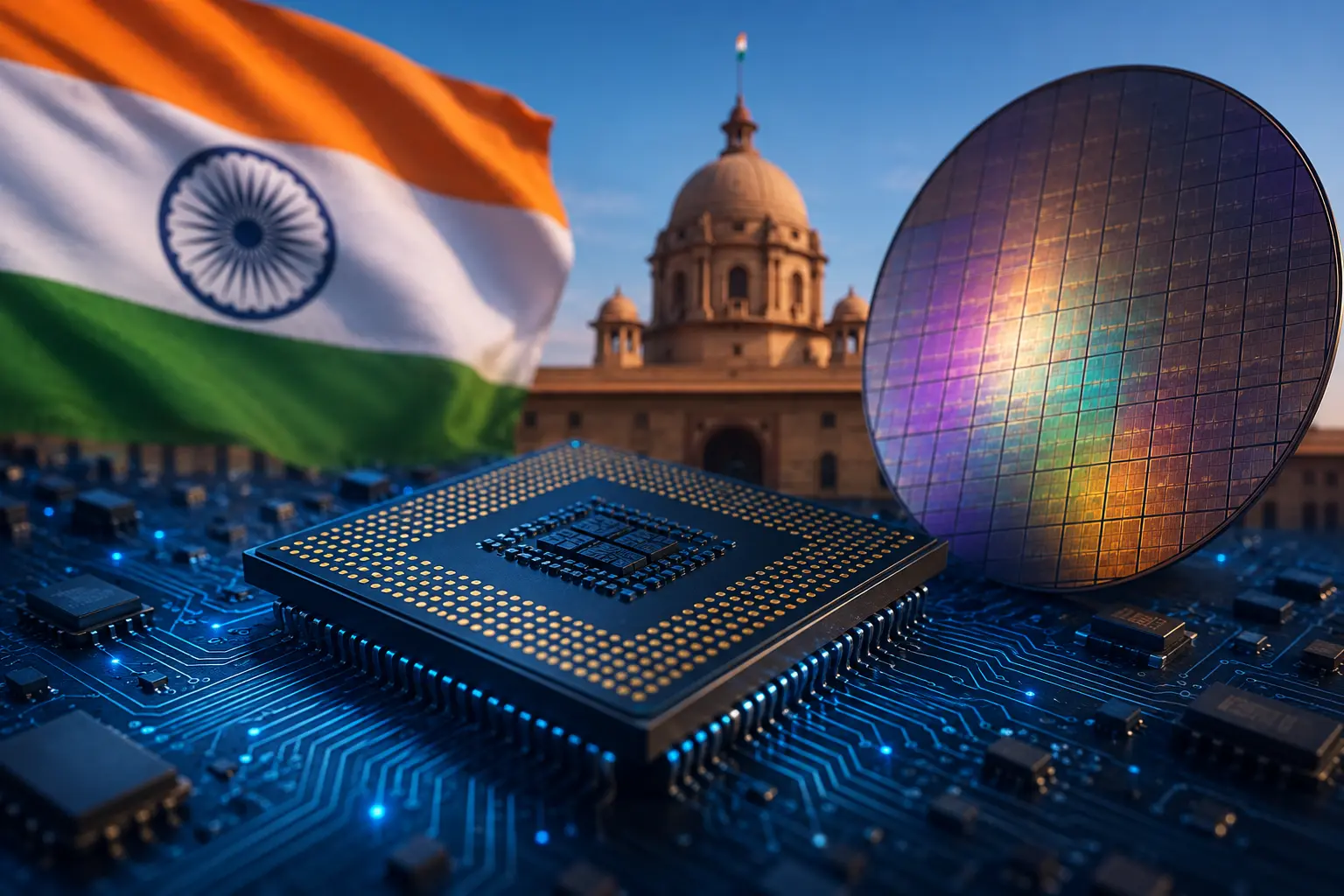
India just made its biggest bet yet on becoming a global technology power. On Wednesday, the Union Cabinet approved two landmark schemes — Semicon 2.0 India, worth ₹1,27,500 crore, and the Mobile Phone Manufacturing Scheme (MPMS), worth ₹62,500 crore — in a single sitting. Together, that is nearly ₹1.9 lakh crore committed to semiconductors and electronics manufacturing, representing roughly 87 per cent of the total ₹2.19 lakh crore approved at the Cabinet meeting. The announcement signals that India is no longer content to be a place where foreign companies assemble gadgets. New Delhi wants to design and manufacture the chips that power them.
Why Semiconductors Matter — and Why India Is Moving Now
Semiconductors are the tiny chips inside virtually every device you use — your phone, your car, your television, the satellites overhead. For decades, the world depended on a handful of countries, particularly Taiwan, South Korea and the United States, to produce them. When the Covid-19 pandemic disrupted global supply chains, that dependence became painfully visible: automakers shut production lines, electronics prices spiked, and governments scrambled to secure chip supplies.
Since then, every major economy — the United States, the European Union, Japan, China — has launched programmes to build domestic semiconductor capacity. India’s first phase, the India Semiconductor Mission launched in 2021, drew early investment and approved 12 manufacturing projects. Semicon 2.0 is the government’s effort to move from those early foundations to something far more ambitious.
The timing is also strategic. As global companies seek alternatives to China-heavy supply chains, India is positioning itself as a trusted manufacturing destination — backed by democratic governance, a large English-speaking engineering workforce, and a growing domestic market.
What Is Semicon 2.0 India?
Semicon 2.0 India is a five-year national programme designed to build a complete semiconductor ecosystem inside India — not just one piece of it.
Six Pillars of the Plan
Chip Design: More than 105 Indian startups are already developing chips using government-provided design tools. Semicon 2.0 deepens this by supporting the development of homegrown semiconductor intellectual property — the foundational designs that manufacturers need before a single chip can be made.
Machines and Materials: India currently imports most of the chemicals, gases, and precision equipment required to make chips. The new scheme incentivises domestic companies to manufacture these inputs, reducing reliance on foreign suppliers and laying the groundwork for a self-sustaining industry.
More Fabrication Plants: India’s first silicon fabrication plant is scheduled to open in 2028. Semicon 2.0 seeks to attract more such facilities — covering silicon chips, compound semiconductors, discrete components, and display manufacturing.
Packaging and Testing: Once chips are fabricated, they must be assembled, tested, and packaged into the components that end up in devices. India has already built credibility in this segment, and the new scheme encourages more companies to set up advanced facilities here.
Research and Development: India’s current chip manufacturing starts at 28-nanometre technology. The most advanced chips in the world now operate at below 5 nanometres. Semicon 2.0 funds research to progressively move India up this technology ladder through collaborations with institutions in India and abroad.
Talent Development: Roughly 315 universities across the country are already training students in chip design using industry-standard software. Around 68,000 students have been trained so far. The new programme extends this to include hands-on training in cleanroom operations and fabrication techniques — the practical skills the industry actually needs.
What Has Already Been Built
The government says 12 semiconductor manufacturing projects have already been approved under the first phase, drawing cumulative investment exceeding ₹1.64 lakh crore. These include one silicon fabrication plant, one silicon carbide facility, a gallium nitride display fab, and nine packaging units. Companies including Micron, Kaynes, and CG Semi have already begun commercial production.
On the design side, 24 chip design projects from startups and small businesses have received government funding. These teams are developing chips for artificial intelligence, satellite communications, Internet of Things devices, drones, telecom networks, smart meters, and surveillance systems.
Global semiconductor companies are also taking notice. According to IT and Electronics Minister Ashwini Vaishnaw, Applied Materials and AMD have each committed investments of USD 400 million in India, Lam Research has committed USD 1.1 billion, and KLA has committed USD 400 million. ASML, one of the world’s most critical chip equipment makers, has signed agreements with the Tata Group.
What Is the Mobile Phone Manufacturing Scheme?
The Mobile Phone Manufacturing Scheme (MPMS), approved alongside Semicon 2.0, replaces the earlier Production Linked Incentive (PLI) scheme for large-scale electronics, whose tenure ended in March 2026. The new programme runs for five years, from FY 2026-27 to FY 2030-31.
How the Incentives Work
Manufacturers producing mobile phones in India will receive performance-linked incentives on eligible sales ranging from 2.25 per cent to 5 per cent. Companies that source key components and sub-assemblies domestically receive an additional incentive of up to 1.5 per cent. Indian brands that invest in product design and research and development receive a further 3 per cent on eligible sales — a deliberate nudge toward building homegrown technology rather than simply assembling imported parts.
The Numbers Behind It
The scale of India’s mobile phone transformation over the past decade is striking. In FY 2014-15, Indian factories produced mobile phones worth ₹18,900 crore. By FY 2025-26, that figure had reached ₹6.27 lakh crore. Exports grew even more dramatically: from ₹1,566 crore in 2014-15 to ₹2.60 lakh crore in 2025-26. The government notes that smartphones became India’s single largest export product category in 2025, surpassing traditional leaders such as refined petroleum and cut diamonds.
India is now the world’s second-largest mobile phone manufacturer by volume, with 99.2 per cent of handsets sold in the country manufactured domestically. The MPMS seeks to deepen that success by pushing manufacturers to add more value in India — building components, not just assembling them.
The government projects that the scheme will generate mobile phone production worth approximately ₹39 lakh crore over five years and create around 60,000 direct jobs.
A Coordinated Strategy, Not Two Separate Schemes
It is worth understanding how these two programmes fit together.
Semicon 2.0 targets the upstream end of the electronics value chain — chip design, materials, fabrication, and research. The MPMS targets the downstream end — the finished devices that use those chips. Together, they are designed to create a loop in which chips designed and made in India go into phones designed and made in India, reducing dependence on foreign suppliers at every step.
This approach reflects a broader shift in Indian industrial policy. The earlier PLI model focused heavily on attracting foreign companies and ramping up production volume. The new model retains those goals but adds a stronger emphasis on domestic value addition, Indian intellectual property, and research capability — the building blocks of an industry that can compete globally on its own terms rather than simply offering cheaper assembly.
Who Stands to Benefit?
Several categories of Indian companies are positioned to gain from the new policy environment.
Electronics manufacturing firms such as Dixon Technologies, Kaynes Technology, and Syrma SGS Technology are likely to see expanded production opportunities. Semiconductor-focused companies including CG Power, Tata Electronics, and MosChip Technologies could benefit from increased investment in fabrication and packaging. Design and engineering firms such as Tata Elxsi and Cyient stand to gain as growing semiconductor activity creates demand for embedded systems and product design services. Defence electronics companies, including Bharat Electronics Limited, have a long-term interest in domestic chip production securing supply chains for sensitive equipment.
What to Watch Next
The gap between policy and results is where most industrial programmes are won or lost. Several questions will determine whether Semicon 2.0 and the MPMS deliver on their promise.
The first is whether India’s first silicon fabrication plant opens on schedule in 2028. A delay would undermine global confidence in India’s semiconductor timelines and slow momentum with foreign investors.
The second is whether the engineering talent pipeline keeps pace with industry demand. Training 68,000 students in chip design software is a start. The more challenging requirement is producing engineers who can work in actual fabs — a skill that requires laboratory infrastructure and sustained industry-academic collaboration.
The third is whether domestic companies can use these incentives to build genuine technological capability, or whether the industry remains anchored at the assembly and packaging end. The additional incentives for design and R&D investment in the MPMS are an encouraging signal, but results will take years to measure.
India’s semiconductor ambition is serious, well-funded, and backed by real global interest. Whether it translates into a competitive domestic chip industry will be answered over the next decade — not in Cabinet meetings.