
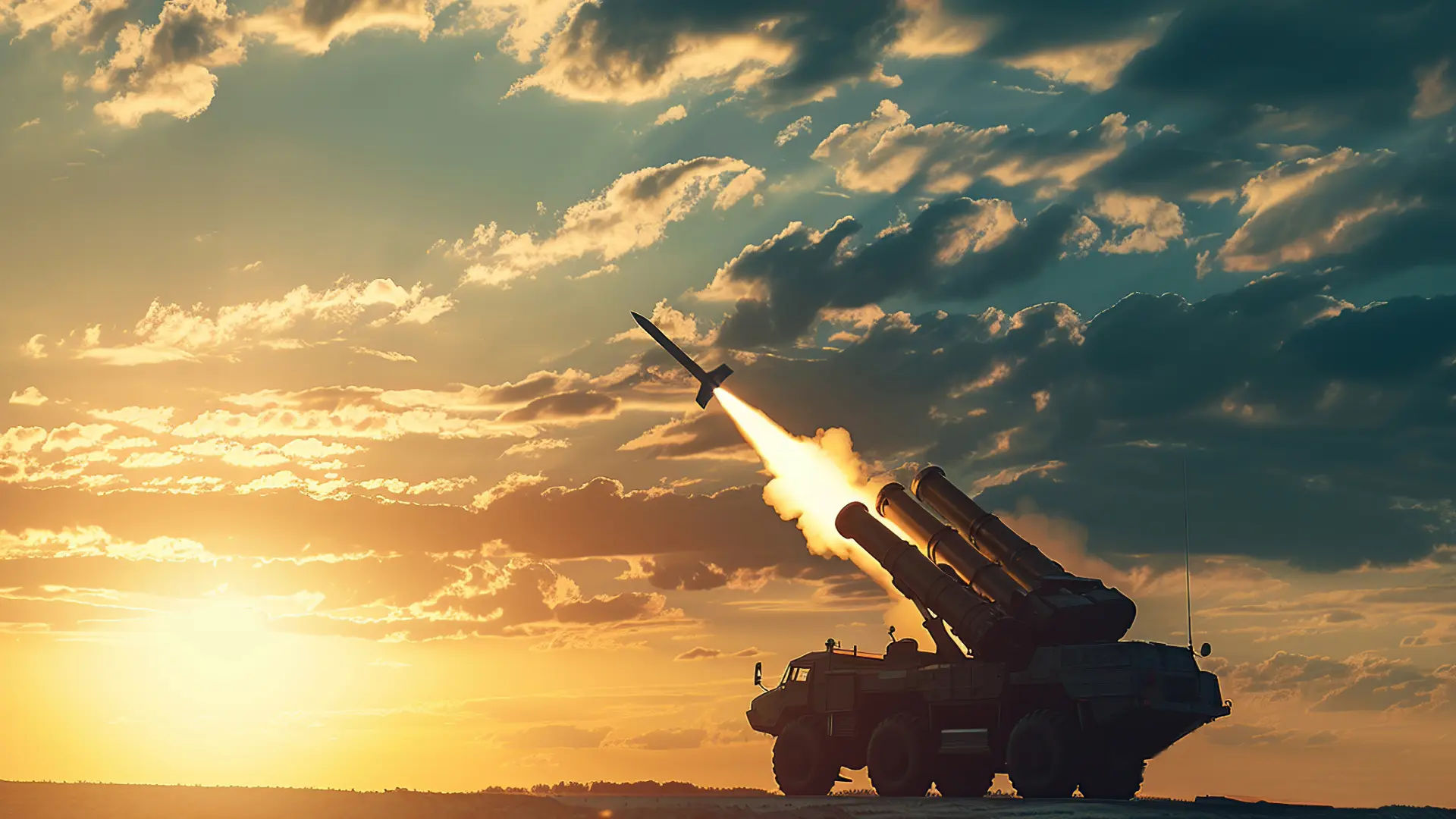
A month has passed since the Ministry of Defence released the FY 2026 production figures of Rs 1.78 lakh crore. While the headline numbers captured the immediate attention, the real story lies in the underlying shifts—specifically, the transition from simple assembly to complex system integration—which are becoming clearer with the passage of time.
India’s defence production reached Rs 1.78 lakh crore in Financial Year 2025–26, according to figures released on 17 June 2026 by the Press Information Bureau on behalf of the Ministry of Defence. The figure represents a 15.6 per cent increase over the previous year’s Rs 1.54 lakh crore and more than doubles the Rs 84,643 crore recorded in FY 2020–21 — the year the government launched its most intensive phase of Atmanirbhar Bharat reform in the defence sector.
Measured against FY 2013–14, when output stood at Rs 43,746 crore, production has grown nearly four-fold. That comparison is not merely statistical. It frames roughly a decade of industrial policy, procurement reform, and private sector engagement — from the initial push to open defence manufacturing to private firms through to the structured Foreign Direct Investment liberalisation, the Positive Indigenisation Lists, and the redesign of the Defence Acquisition Procedure.
Private Sector Participation in India Defence Production FY 2026
The ministry’s release flags private sector contribution at approximately 24 per cent of total output — up from 22 per cent in FY 2024–25 — with an absolute value of around Rs 42,000 crore, which it describes as an all-time high. Defence Public Sector Undertakings and other public-sector entities account for the remaining 76 per cent.
The trajectory matters more than the current ratio. When the government began its reform push, private sector participation in defence production was negligible in formal output terms. A 24 per cent share is meaningful, but the composition of that figure — how much reflects complex system integration versus subsystem assembly and components — is not addressed in the government release. That distinction will determine whether India’s private defence sector is building genuine platform-level capability or consolidating in the more accessible tiers of the supply chain.
Several private firms have now moved beyond initial footholds. Tata Advanced Systems, Larsen & Toubro, Mahindra Defence, and Bharat Forge have expanded both the range and complexity of their production. Collaboration with HAL on aircraft components, with Bharat Electronics Limited on electronic warfare systems, and with DRDO on guided munitions programmes reflects a supply chain that is integrating more tightly — though it remains heavily anchored to the public sector as programme lead.
India Defence Exports 2026: A Validation Metric for Growth
The government links rising production directly to export performance. Defence exports reached Rs 38,424 crore in FY 2025–26, a figure that has grown sharply over the past several years. Exports are a useful cross-check: a buyer choosing to procure Indian-origin equipment is making an independent assessment of quality, price, and delivery reliability.
India’s export portfolio currently spans BrahMos cruise missiles — notably to the Philippines — artillery systems, small arms, coastal surveillance radars, and a range of electronics and avionics components. The BrahMos sale is the clearest demonstration of high-value, system-level exports. Scaling this to other platforms — particularly in naval systems, armoured vehicles, and light helicopters — will be the test of whether India can compete as a defence exporter in higher capability tiers, rather than primarily in lower-cost components and legacy platforms.
The Five Whys: Decoding the Defence Production Surge
To understand why India’s defence production has reached this milestone, we must move beyond the top-line numbers and interrogate the drivers:
- Why has defence production reached Rs 1.78 lakh crore? Because of a massive, sustained increase in domestic procurement orders by the Ministry of Defence.
- Why are procurement orders shifting domestically? Because of the implementation of the Positive Indigenisation Lists, which legally mandate the sourcing of critical systems and platforms from domestic manufacturers.
- Why did the government mandate this? To eliminate structural vulnerabilities in the armed services’ supply chains caused by excessive reliance on foreign-origin platforms.
- Why was that reliance a strategic risk? Because reliance on external suppliers for critical systems—like aero-engines, advanced sensors, and precision munitions—can be leveraged during high-intensity conflict.
- What is the final analytical takeaway? The production figure is a measure of industrial volume and policy success, but it is not yet a measure of total strategic self-sufficiency. The gap between volume and true technological depth—specifically in propulsion and advanced sensors—remains the true frontier for India’s defence industrial base.
Structural Context: What the Growth Reflects
A production figure of this scale is driven by several concurrent forces. First, the Positive Indigenisation Lists — three tranches covering hundreds of items banned from import — have compelled the armed services to source domestically, creating a captive demand floor that supports manufacturing scale. Second, the government’s push on the Defence Acquisition Procedure (DAP 2020) created new procurement categories that explicitly mandate indigenous content percentages, giving producers planning confidence.
Third, a series of large platform programmes — including the Light Combat Aircraft Mk 1A, the Advanced Light Helicopter, various artillery acquisitions, and naval shipbuilding contracts — have been advancing through production phases, generating output that registers in the annual figures. These are programmes with long gestation periods; the production numbers now partly reflect investment decisions made years earlier.
The Rs 1.78 lakh crore figure is production value, not an independent measure of indigenisation quality or technological capability. A system assembled domestically with imported subsystems contributes to production output. How the government classifies value addition at each tier is not detailed in the public release. Analysts tracking India’s defence industrial base have consistently noted this distinction as a gap in available public data.
Strategic Significance: Autonomy and Dependency
India’s long-term strategic objective through Atmanirbhar Bharat in defence is to reduce operational dependency on external suppliers for critical systems. That dependency has historically been most acute in aero-engines, advanced sensors, and precision-guided munitions — areas where indigenous capability is still developing.
The production milestone is a real indicator of progress in volume and industrial organisation. It does not, on its own, resolve the question of whether India can sustain its most capable platforms in a high-intensity conflict without access to foreign supply chains. That question requires programme-level data — on which India’s defence production reporting remains less granular than comparable assessments published by peer nations.
Raksha Mantri Rajnath Singh, in his response to the release, described the upward trajectory as a clear indicator of an expanding defence industrial base and pointed to private sector participation and export growth as evidence of sustained momentum. The framing is accurate as far as it goes.
Challenges in HAL LCA Mk1A Production
Several developments will test whether the structural shift is consolidating.
The HAL LCA Mk1A production schedule to the Indian Air Force is running behind original projections. How HAL manages the compressed ramp-up will be an indicator of whether production capacity has grown proportionately with output value. The Indian Navy’s ongoing P75I submarine programme — planned under strategic partnership model with private sector as lead integrator — is the most complex domestic shipbuilding challenge currently active. Progress there will reveal whether private sector capability has deepened sufficiently to absorb system-level submarine integration.
What to Watch Next
While the 17 June figures provide a snapshot of FY 2026, the real test of this industrial architecture will play out in the P75I submarine programme and the maturity of the aero-engine initiatives over the next six months
Export pipeline diversification also warrants attention. Armenia, Egypt, Vietnam, and several African nations have shown interest in Indian defence equipment. Converting that interest into contracted supply — particularly for higher-value platforms rather than ammunition and components — will determine whether India’s export trajectory sustains or plateaus.
And the aero-engine question remains unresolved. The Kaveri engine programme has not delivered a production-ready powerplant for the LCA. A credible domestic aero-engine capability would mark a genuinely qualitative shift in India’s defence industrial base that no production figure alone can substitute for.
🇮🇳 Indian Defence Stocks 2026: Ultimate Guide
From HAL and BEL to emerging private defence companies, this complete guide explains the trends, government policies, defence budgets, export opportunities, valuation risks, and the companies shaping India’s long-term defence supercycle.
Read the Complete Guide →
3 thoughts on “Beyond the 1.78 Lakh Crore Milestone: Assessing the Structural Reality of India’s Defence Industrial Base”