
Key Takeaways
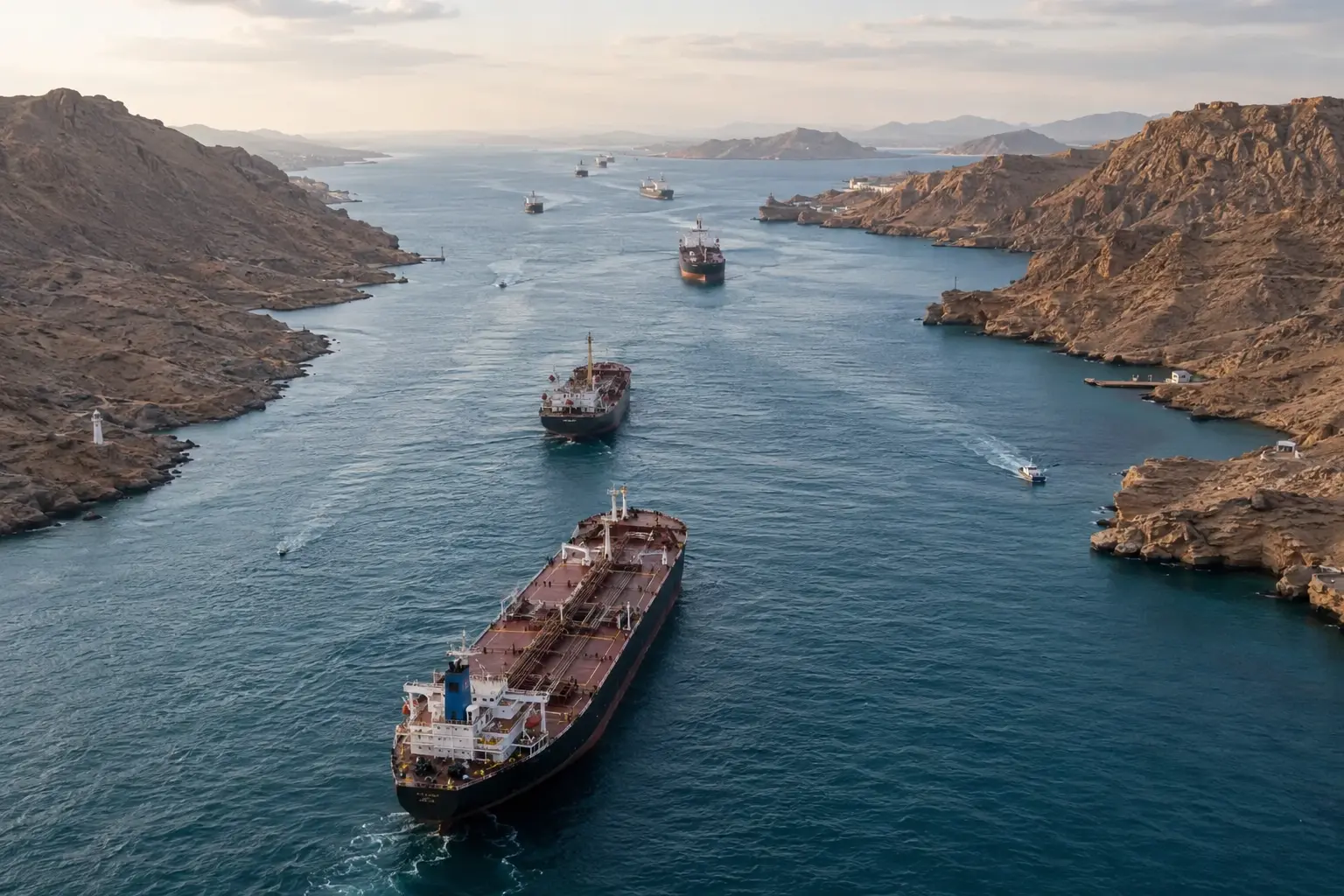
- The “Gate of Tears”: Connecting the Red Sea to the Gulf of Aden, the 18-mile-wide Bab el-Mandeb Strait handles roughly 12% of total seaborne global commerce and millions of daily oil barrels.
- Hormuz vs. Bab el-Mandeb: While the Strait of Hormuz serves as the world’s primary raw crude oil spigot, Bab el-Mandeb acts as the primary global logistics and supply chain artery connecting Asia to Europe.
- The Dual-Chokepoint Squeeze: Disruption at both passages simultaneously cuts off backup pipeline routes like Saudi Arabia’s Yanbu terminal, sending crude prices past $100 per barrel.
Understanding the Bab el-Mandeb Strait
Situated between Yemen on the Arabian Peninsula and Djibouti and Eritrea in the Horn of Africa, the Bab el-Mandeb Strait is one of the world’s most critical maritime bottlenecks. Measuring just 18 miles across at its narrowest point, it serves as the exclusive southern entrance to the Red Sea and the Suez Canal.
In Arabic, Bab el-Mandeb translates to the “Gate of Grief” or “Gate of Tears”. Historically named for its treacherous currents, hidden coral reefs, and ancient pirate activity, the passage has acquired fresh geopolitical significance in modern energy and trade logistics.
Data from the U.S. Energy Information Administration (EIA) highlights that millions of barrels of crude oil and petroleum products transit the strait daily, alongside approximately 30% of global container ship traffic.
Strait of Hormuz vs. Bab el-Mandeb: Key Differences
To evaluate international market risk, economists distinguish between the primary functions of these two maritime chokepoints:
1. Raw Energy Shock vs. Supply Chain Inflation
To understand the primary benchmark, explore how the Strait of Hormuz affects global oil trade. Hormuz carries nearly one-fifth of global crude liquidity. In contrast, Bab el-Mandeb is a broader logistics bottleneck. Disruptions at Bab el-Mandeb tie up container fleets, increase war-risk premiums, and delay retail components between Asia and Europe.
2. The Pipeline Bypass Reality
When security risks threaten Persian Gulf shipping, Saudi Arabia utilizes its East-West Pipeline to ship crude across the desert to its Red Sea terminal at Yanbu. However, as detailed in our analysis of the systemic risks of a blockade paralyzing the Strait of Hormuz, a simultaneous threat at Bab el-Mandeb neutralizes Yanbu as an alternative export hub.
Geopolitical Drivers Behind the Red Sea Blockade
The security environment around Bab el-Mandeb changed dramatically when Yemen’s Houthi movement initiated targeted naval blockades and missile strikes against commercial vessels. For background on the regional group operating along this coast, read our deep-dive on who the Houthis are and how they became a regional force.
These actions stem from wider regional friction. As examined in our overview of why America remains in conflict with Iran, non-state groups across the Middle East use key maritime bottlenecks as strategic leverage. For updates on ongoing diplomatic and military moves, consult our news coverage on Middle East maritime security.
Official records from the United Nations Security Council continue to document maritime safety advisories and embargo enforcement actions in these waters.
Economic Implications for Energy Importers
When commercial ships avoid Bab el-Mandeb, they must sail around the Cape of Good Hope at Africa’s southern tip. This detour adds approximately 3,500 nautical miles, 10 to 14 sailing days, and substantial fuel expenses to every voyage.
For major import economies, the fallout spreads rapidly. Learn more about how crude oil price spikes from U.S.-Iran conflicts directly impact India’s economy, where increased freight rates and delayed Russian and Gulf crude shipments place upward pressure on refining margins and domestic inflation.