New Delhi: Washington’s aggressive India and the Quad messaging reflects rising concern over Indo-Pacific chokepoints, fragile supply chains, and China’s expanding maritime influence.
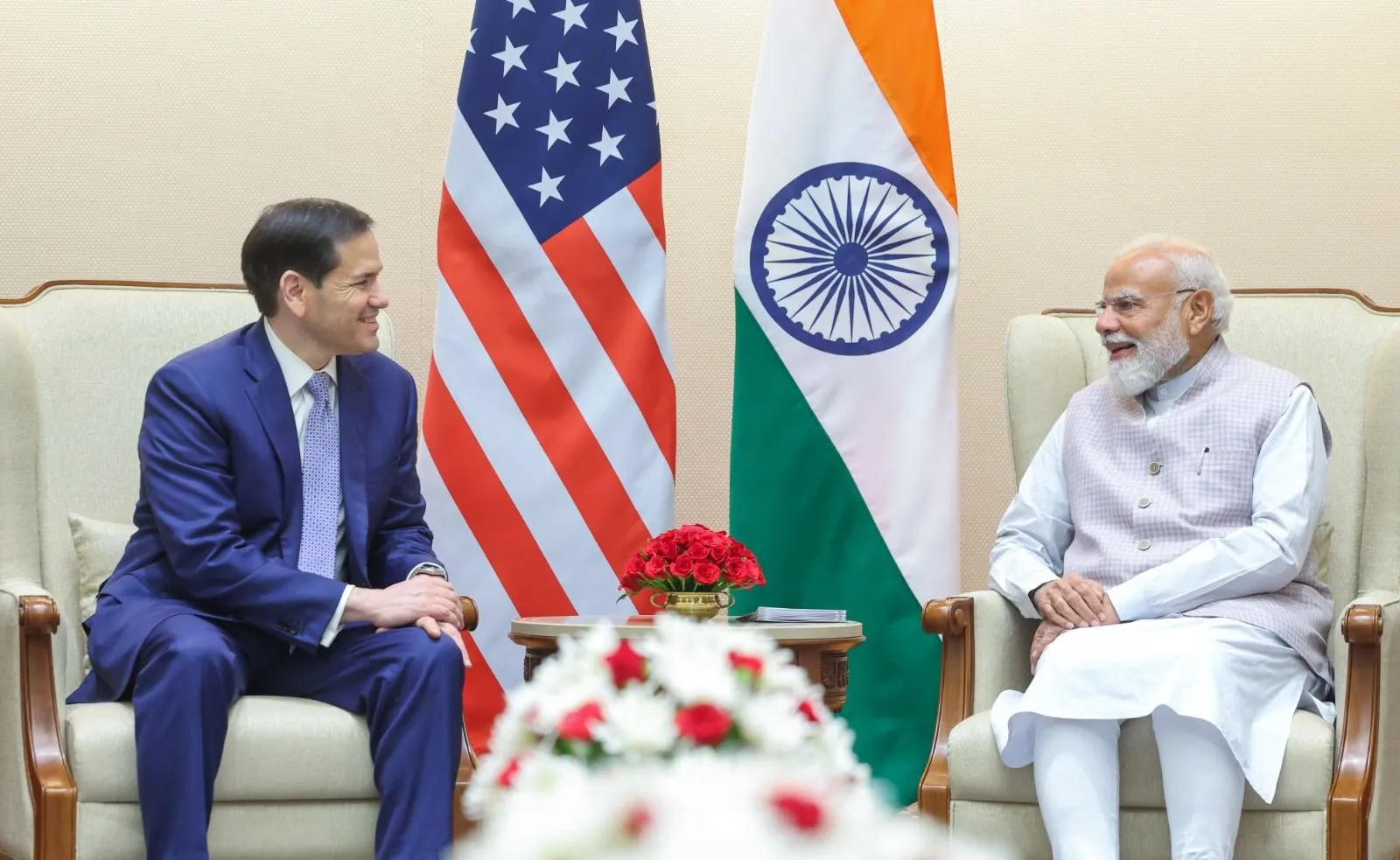
The messaging from Washington continued even after Rubio’s high-level engagements in New Delhi. Following a meeting with Prime Minister Narendra Modi, Sergio Gor described India as “a vital partner to the United States,” highlighting discussions focused on security, trade and critical technologies. The statement further reinforced the unusually direct tone emerging from the U.S. side during Rubio’s India visit — one that repeatedly linked India, the Quad and Indo-Pacific stability within the same strategic framework.
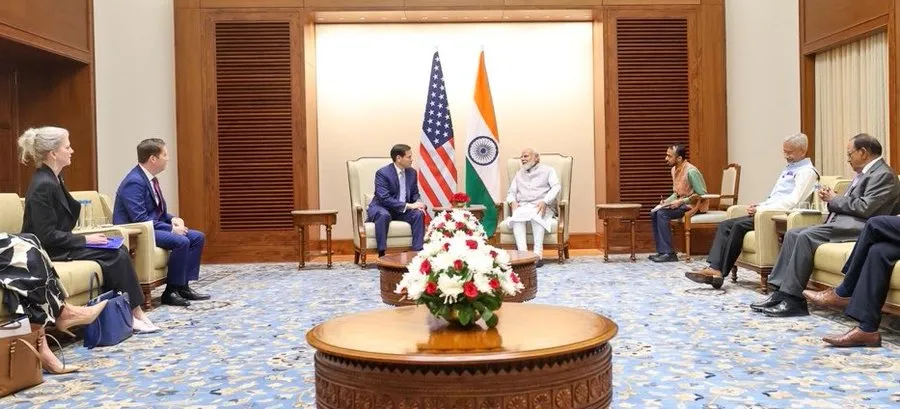
“Great to join Secretary Marco Rubio for a meeting with Prime Minister Narendra Modi. We had a productive discussion on ways to deepen U.S.-India cooperation across security, trade, and critical technologies — areas that strengthen both our nations and advance a free and open Indo-Pacific. India is a vital partner to the United States.”
— Sergio Gor
As U.S. Secretary of State Marco Rubio arrived in India this week, one thing stood out beyond the routine diplomatic optics. Alongside Rubio’s visit, U.S. Ambassador Sergio Gor launched an unusually aggressive public messaging campaign around the Quad — repeatedly posting about Indo-Pacific security, critical supply chains, maritime stability and the strategic importance of India. Washington’s evolving India Quad strategy suddenly became difficult to ignore.
The carefully choreographed optics surrounding Rubio’s India visit reinforced that impression. Rubio arrived in Kolkata with his wife Jeanette Rubio, visited the Missionaries of Charity alongside Sergio Gor to pay tribute to Mother Teresa, and later departed for New Delhi for high-level strategic discussions. Simultaneously, the U.S. Embassy India intensified its Quad messaging across social media platforms, emphasizing “shared values,” maritime stability and a “free and open Indo-Pacific.”
The messaging push became even more visible when the Embassy released a one-minute video package explaining “how the Quad is changing your daily life.” The video highlighted critical supply chains, protected trade routes, technology-sharing and humanitarian coordination — unusually direct public messaging for a grouping that has traditionally operated through cautious diplomatic language. The campaign suggested Washington may now be trying to position the Quad not merely as a diplomatic forum, but as a long-term economic and strategic architecture for the Indo-Pacific.
The timing of Washington’s intensified messaging may not be accidental. The recent Strait of Hormuz crisis, coupled with Red Sea shipping disruptions and growing fears over vulnerable global trade routes, appears to have reinforced a deeper strategic concern inside the United States: that future geopolitical instability may increasingly revolve around maritime chokepoints and supply-chain disruption rather than traditional territorial conflict alone.
If Hormuz exposed the fragility of global energy flows, American strategists are increasingly aware that the Indo-Pacific presents an even larger long-term vulnerability. The Strait of Malacca — one of the world’s busiest maritime trade corridors — carries a major share of global commerce, energy shipments and Asian manufacturing supply chains. Any serious disruption there could trigger economic consequences far beyond the Middle East.
Why India’s Geography Is Central to the New India Quad Strategy
In that emerging maritime picture, India’s geography becomes difficult to ignore. Positioned between the Persian Gulf and the Indo-Pacific sea lanes, India sits across the wider maritime arc connecting Hormuz, the Indian Ocean, the Bay of Bengal and the approaches to Malacca. The strategic importance of the Andaman and Nicobar Islands, in particular, has grown sharply as Washington recalibrates its India Quad strategy and broader Indo-Pacific calculations.
That growing American focus may also help explain recent strategic discussions surrounding the Bay of Bengal. Reports involving Bangladesh’s Port of Chittagong and Matarbari Port have fueled debate over expanding U.S. maritime interest in the region. While no formal military basing arrangement has been publicly confirmed, the broader direction of U.S. strategic positioning in the Bay of Bengal is becoming increasingly visible.
From Diplomatic Forum to Indo-Pacific Resilience Architecture
The larger anxiety driving Washington’s India Quad strategy is not difficult to understand. China’s expanding naval presence, growing influence over ports and infrastructure, military modernization and strategic footprint across the Indo-Pacific have raised fears inside the United States that future geopolitical competition may increasingly revolve around maritime control, logistics and trade connectivity.
That is also why the language surrounding the Quad has evolved. Earlier diplomatic emphasis on broad democratic cooperation is now being paired with far more strategic terminology: critical minerals, semiconductor supply chains, maritime resilience, shipping security, emerging technologies and energy-route protection. Increasingly, the Quad appears to be evolving beyond a diplomatic forum into something closer to an Indo-Pacific resilience architecture.
For Washington, the lesson emerging from the Hormuz crisis may be larger than the Middle East itself. American policymakers increasingly appear to believe that the next era of geopolitical competition will not be determined solely by military power, but by the ability to secure the arteries of global trade, technology and energy flows.
In that emerging reality, the United States seems increasingly convinced that India and the Quad can no longer remain secondary pillars of Indo-Pacific strategy. They are rapidly becoming central to it.