
New Delhi, 26 May: Late on Sunday, May 24, Robert Kiyosaki posted a message that quickly spread across financial media and social platforms. “Death of the US Dollar?” he wrote, pointing followers toward billionaire investor Ray Dalio and arguing that Iran’s growing acceptance of Chinese yuan payments for oil marked a historic turning point in global finance.
The warning sounded dramatic — even apocalyptic. But beneath the viral rhetoric lies a real geopolitical and financial shift that markets, governments, and central banks are increasingly watching closely.
The question is not whether the US dollar is collapsing tomorrow. It is whether the foundations of the post-1970s petrodollar system are beginning to weaken under the pressure of sanctions, geopolitical fragmentation, and China’s push to internationalise the yuan.
The Fear Behind the ‘Death of the US Dollar’ Narrative
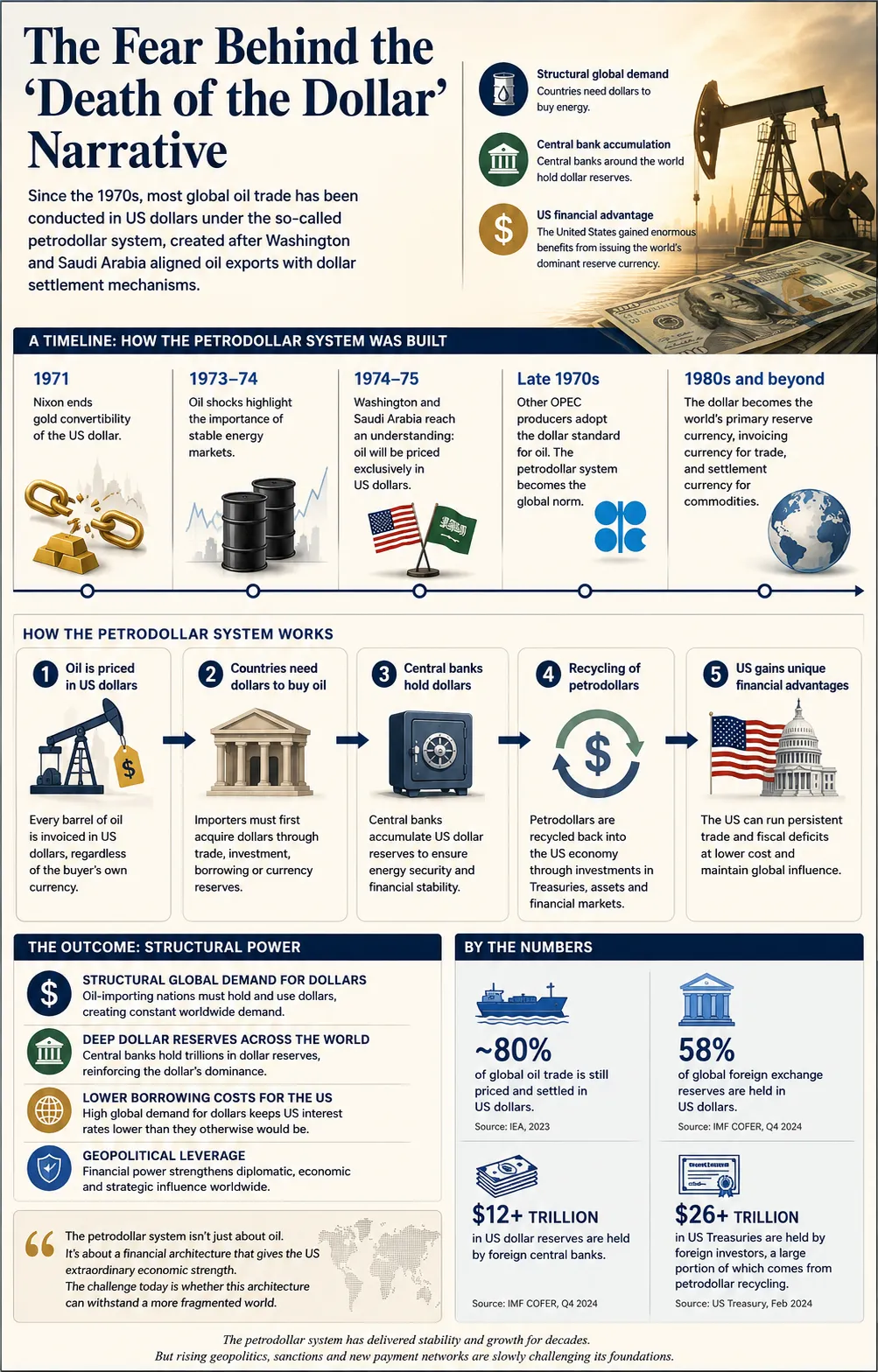
Since the 1970s, most global oil trade has been conducted in US dollars under the so-called petrodollar system, created after Washington and Saudi Arabia aligned oil exports with dollar settlement mechanisms.
That system created structural global demand for dollars. Countries needed dollars to buy energy, central banks accumulated dollar reserves, and the United States gained enormous financial advantages from issuing the world’s dominant reserve currency.
Kiyosaki’s concern — echoed in different forms by Dalio and several macro investors — is that geopolitical conflict is accelerating efforts to bypass that system.
In a recent podcast, Dalio warned that history shows reserve currencies tend to weaken gradually and then suddenly during periods of excessive debt, conflict, sanctions pressure, and declining geopolitical trust. He compared the current moment to Britain’s post-Suez decline in the 1950s.
While such comparisons remain controversial, recent developments around the Strait of Hormuz have added new urgency to the debate.
What Is Actually Happening in the Strait of Hormuz
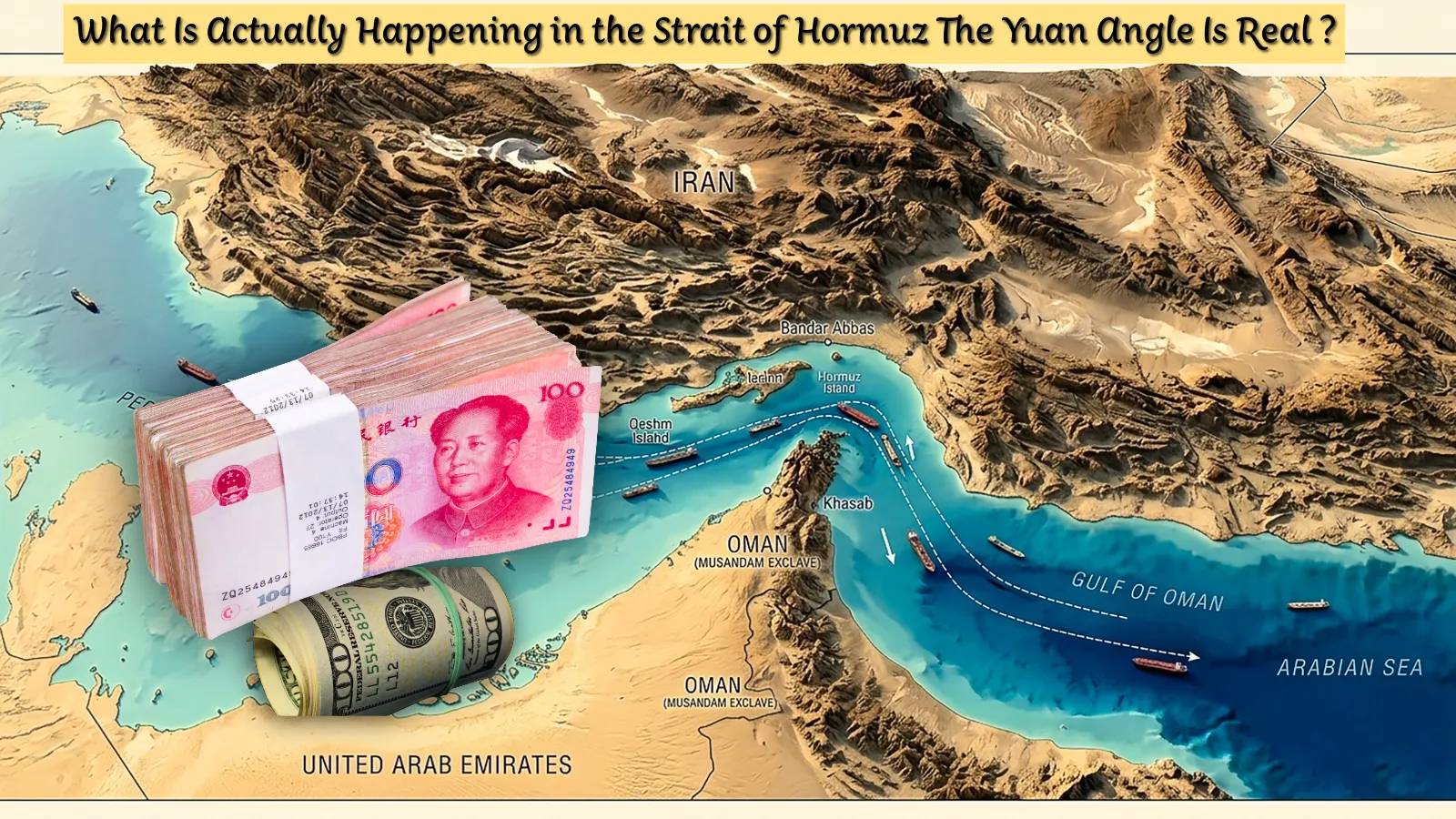
Since March and April 2026, Iran has increasingly tightened control over maritime traffic through the Strait of Hormuz, the narrow chokepoint through which roughly one-fifth of global oil supply normally passes. Reuters reported that Tehran has considered and, in some cases, implemented transit fee mechanisms tied to security arrangements and vessel clearance procedures.
According to Reuters investigations, Iran has established extensive vetting systems involving island checkpoints, inspections, and selective passage arrangements. Some vessels linked to countries viewed as politically aligned with Tehran — including China, Russia, India, and Pakistan — reportedly received more favourable treatment.
The United States has strongly opposed the idea. US Secretary of State Marco Rubio warned that any formal tolling system in the Strait would be considered unacceptable and could undermine diplomatic negotiations with Iran.The US Treasury warned shipping firms against making payments connected to Iranian transit arrangements, including payments routed through alternative mechanisms such as digital assets or intermediaries.
The Yuan Angle Is Real — But Still Limited
One reason the issue has attracted global attention is the increasing role of China’s currency in Iran-related trade.
Al Jazeera, citing shipping and industry reports including Lloyd’s List, reported that at least two vessels were believed to have paid transit-related fees in Chinese yuan. One transaction was reportedly facilitated through a Chinese maritime intermediary.
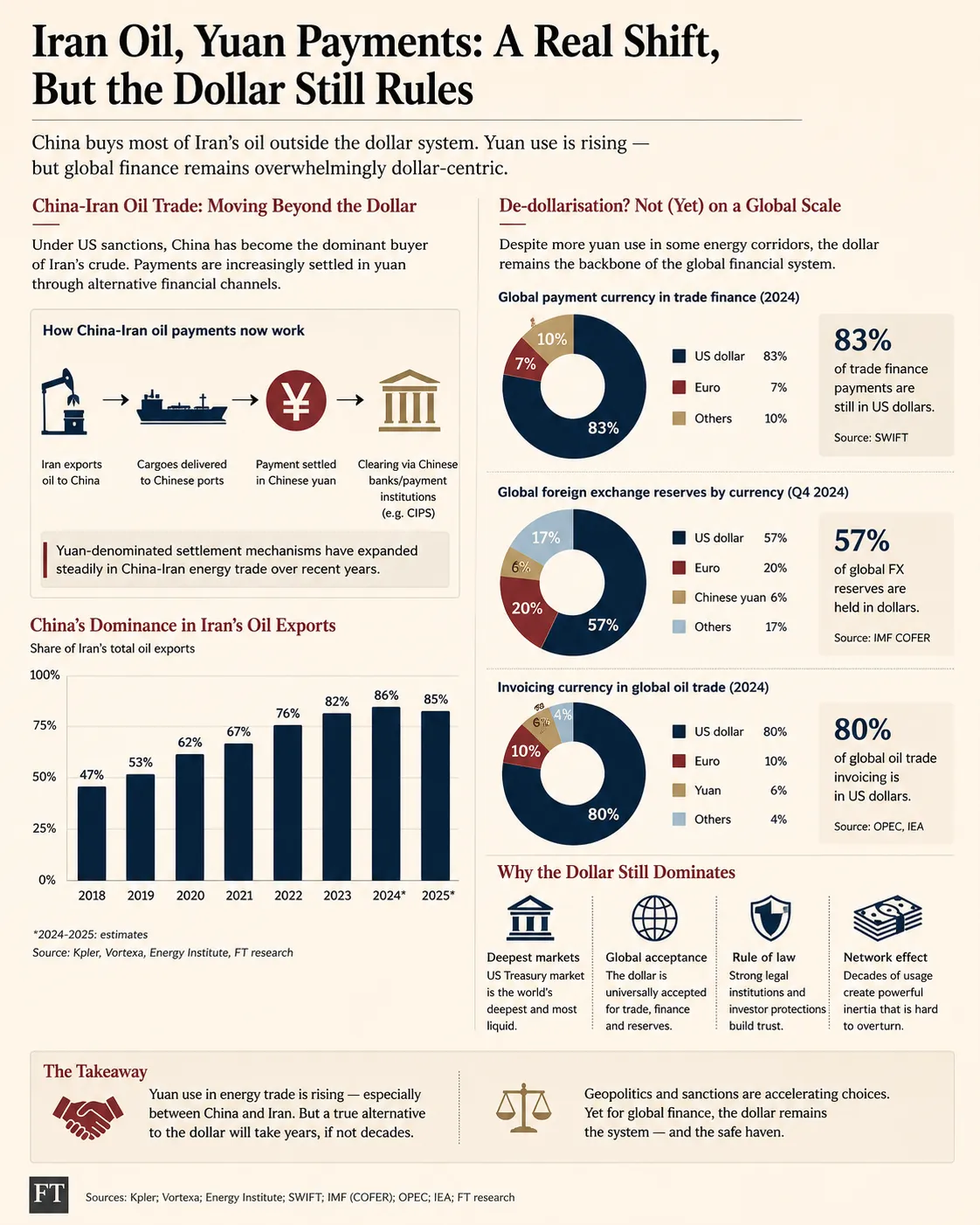
China already purchases the majority of Iran’s oil exports, largely outside the dollar system due to US sanctions pressure. Yuan-denominated settlement mechanisms have therefore expanded steadily in China-Iran energy trade over recent years.
At the same time, analysts caution against exaggerating the scale of de-dollarization.
Despite the rise of yuan-based settlement in some energy corridors, the dollar still dominates global trade finance, reserve holdings, and commodity markets. Most oil transactions worldwide remain dollar-settled, and US Treasury markets remain vastly deeper and more liquid than Chinese markets.
China also maintains strict capital controls, limiting the yuan’s ability to function as a fully global reserve currency in the same way as the dollar.
Research from S&P Global noted that while yuan-based oil trade could grow over time, structural obstacles mean any major transition away from the dollar would likely take years — if not decades.
Why Markets Are Paying Attention Anyway
Even if the dollar is not facing imminent collapse, the broader trend matters.
The Hormuz crisis has demonstrated how geopolitical conflict is increasingly spilling into:
- payment systems,
- shipping infrastructure,
- reserve currency competition,
- sanctions architecture,
- and global energy trade.
Reuters reported that Iran’s growing control over Hormuz traffic has already disrupted energy supply chains and forced major exporters to reroute shipments away from the Gulf.
Saudi Arabia and the UAE have expanded Red Sea export routes to reduce reliance on Hormuz, while China has continued building financial infrastructure designed to reduce dependence on Western-controlled payment networks.
The result is not the sudden “death” of the dollar that social media personalities often predict.
Instead, what may be emerging is a slower, structural fragmentation of the global financial order — one where the dollar remains dominant, but no longer entirely unchallenged.
That distinction is critical.
Kiyosaki’s warnings may be exaggerated. But the underlying geopolitical shift he is pointing toward is increasingly visible in shipping lanes, sanctions policy, energy markets, and the growing competition between Washington and Beijing over the future architecture of global trade and finance.