
Published: July 2026
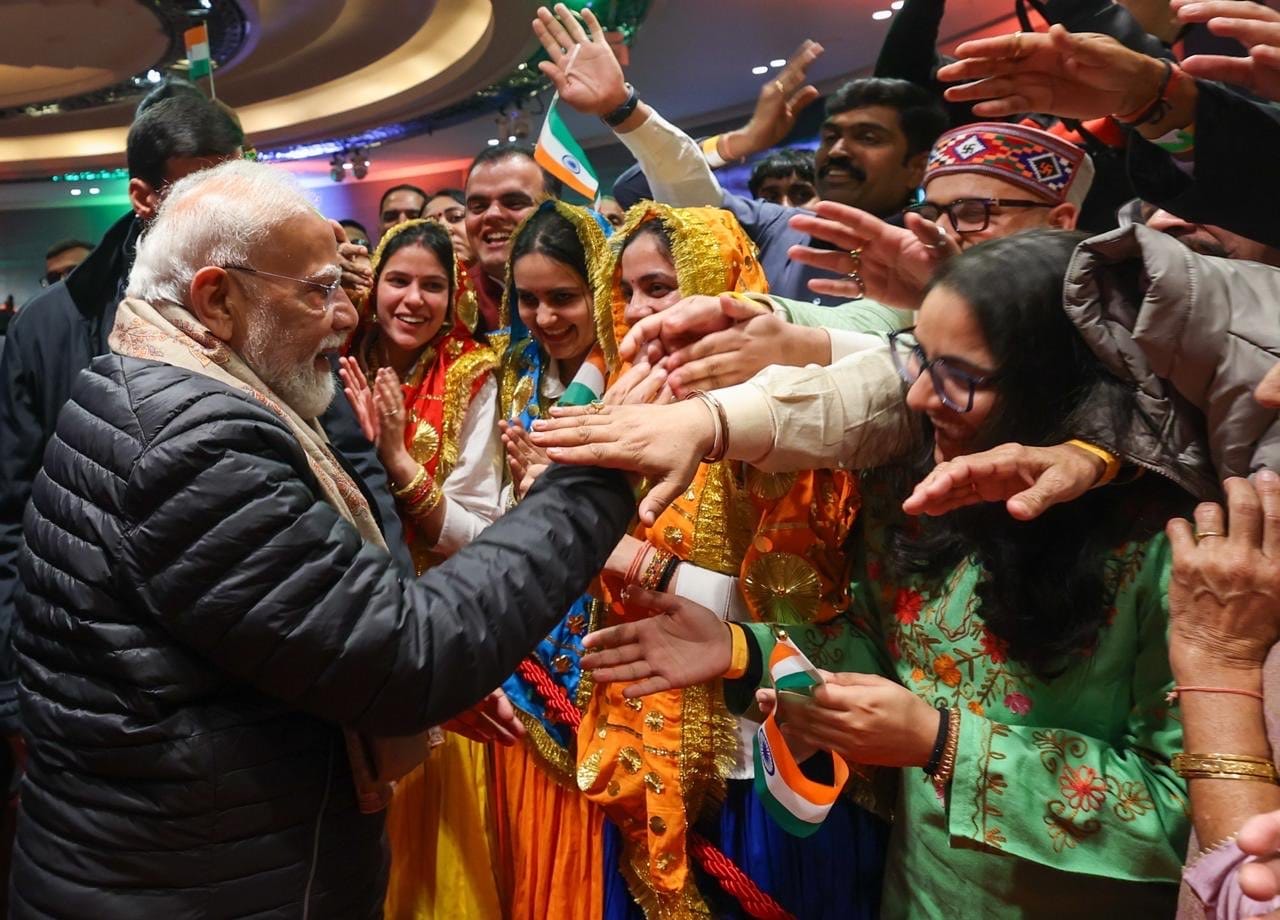
Prime Minister Narendra Modi’s latest diplomatic tour has produced images that naturally dominate headlines. A ceremonial welcome in Jakarta, an address to Indonesia’s Parliament, enthusiastic receptions from the Indian diaspora, and high-level engagements in Australia and New Zealand all provide compelling visuals. Yet diplomacy is rarely defined by photographs. The significance of this journey lies elsewhere—in the geography of the itinerary itself.
Taken in isolation, each visit appears to pursue a different objective. Indonesia represents India’s maritime outreach. Australia reinforces defence and economic cooperation. New Zealand expands engagement with the Pacific. Read together with Modi’s recent visits across Europe and the Gulf, however, a broader pattern begins to emerge. India is steadily building a network of partnerships that connects the Arabian Gulf, Northern Europe and the Indo-Pacific into a single strategic framework.
This approach reflects a changing international landscape. The world’s most important trade routes no longer separate regions; they connect them. Energy from the Gulf powers Asian industries. European technologies strengthen manufacturing across the Indo-Pacific. Critical minerals extracted in Australia and Indonesia feed supply chains stretching across continents. Maritime security has become inseparable from economic security. In such an environment, foreign policy can no longer be organised through isolated regional priorities.
New Delhi appears to recognise this reality. Rather than approaching Europe, the Gulf and the Indo-Pacific as distinct theatres, India is gradually linking them through a series of practical partnerships built around technology, logistics, industrial cooperation, defence and resilient supply chains. The result is less a collection of diplomatic visits than an emerging strategic corridor.
Europe Was Never a Detour
When Prime Minister Modi travelled through Europe earlier this year, much of the public discussion focused on bilateral agreements and investment opportunities. That interpretation overlooked the larger strategic context. Europe has become an increasingly important pillar of India’s long-term economic and technological ambitions.
Countries across the continent are reassessing global supply chains, reducing excessive dependence on single markets and searching for trusted partners capable of supporting advanced manufacturing and innovation. India has become central to that conversation.
This shift explains why New Delhi has invested considerable diplomatic capital in strengthening partnerships across Europe. As explored in our analysis, Why Europe Is Betting on India , the relationship increasingly extends beyond trade into semiconductors, critical technologies, resilient manufacturing and industrial cooperation.
The Prime Minister’s engagement with Slovakia illustrated this evolution. Defence manufacturing, industrial technology and innovation formed the centrepiece of discussions, demonstrating that India’s European partnerships are increasingly focused on long-term capability building rather than short-term commercial gains. We examined this transformation in India-Slovakia Tech Cooperation and Defence Ties .
France represents another important dimension of this strategy. Cooperation has steadily expanded into artificial intelligence, defence production, aerospace and advanced research. These initiatives strengthen India’s technological ecosystem while supporting broader efforts to diversify strategic partnerships.
Readers can explore these developments in our earlier analyses on India-France AI Collaboration and India-France Strategic Partnership .
The Nordic Connection Carries Strategic Weight
Northern Europe deserves particular attention. Although Nordic economies are comparatively small, they possess capabilities that have become increasingly valuable in a rapidly changing global economy. Green technologies, maritime innovation, advanced manufacturing, defence research and digital transformation are areas where these countries consistently rank among global leaders.
Prime Minister Modi’s visit to Norway—the first by an Indian Prime Minister in more than four decades—therefore carried significance beyond protocol. It reflected India’s growing interest in maritime cooperation, renewable energy, Arctic dialogue and emerging industrial technologies. Our detailed assessment of the visit is available in Modi’s Norway Visit After 43 Years .
Similarly, Gothenburg has emerged as one of Europe’s most dynamic industrial and innovation hubs. Strengthening engagement with Sweden supports India’s ambitions across clean manufacturing, mobility solutions and industrial research. These themes were explored in Modi in Gothenburg: The Nordic Industrial Capital .
Viewed independently, each European engagement addresses a specific national relationship. Viewed collectively, they reveal something more substantial. India is assembling partnerships that strengthen industrial resilience across sectors that will shape global competitiveness over the coming decades.
From the Gulf to the Indo-Pacific
The strategic map becomes even clearer when Europe’s engagements are connected with India’s expanding partnerships in the Gulf. The United Arab Emirates has grown into one of India’s closest economic and strategic partners, extending cooperation well beyond hydrocarbons into logistics, digital payments, investment, ports and connectivity. The Gulf increasingly functions as India’s western gateway into Europe and Africa while supporting growing trade across the Indian Ocean.
This western arc now connects naturally with the Prime Minister’s current engagements in Indonesia, Australia and New Zealand. Rather than beginning a new diplomatic chapter, the Indo-Pacific tour extends a strategic journey that has already crossed Europe and the Gulf.
The sequence matters because geography matters. Energy security, advanced technology, industrial production, maritime logistics and defence cooperation increasingly reinforce one another. Countries capable of linking these sectors across multiple regions will enjoy greater resilience in an era marked by geopolitical competition and economic uncertainty.
Indonesia stands at the centre of that eastern expansion—not simply as Southeast Asia’s largest economy, but as one of the world’s most consequential maritime powers.
Indonesia Is the Maritime Anchor
No serious discussion about the Indo-Pacific can ignore Indonesia. Stretching across more than 17,000 islands and sitting astride the Strait of Malacca, the Sunda Strait and the Lombok Strait, the country occupies one of the most consequential maritime positions in the world. A significant share of global trade and energy supplies passes through these waters every day. For India, the relationship with Indonesia is therefore not simply another ASEAN partnership; it is central to securing the eastern gateway of the Indian Ocean.
Prime Minister Narendra Modi’s visit to Jakarta reflected this strategic reality. The joint statement released by both governments covered far more than ceremonial diplomacy. It expanded cooperation across defence, maritime security, critical minerals, digital infrastructure, space, health, food security and advanced technology. Rather than announcing isolated initiatives, both countries laid out a roadmap that seeks to align long-term national priorities with regional stability.
Defence cooperation has entered a new phase. India and Indonesia agreed to deepen collaboration through joint research, defence manufacturing, technology transfer, shipbuilding, maintenance facilities and defence industrial partnerships. The emphasis on expanding cooperation around the BrahMos missile system and air-to-air missile programmes demonstrates that the relationship is steadily moving from dialogue towards capability development.
Maritime cooperation remains the foundation of the partnership. Both governments reaffirmed cooperation on maritime domain awareness, coastal surveillance, humanitarian assistance and disaster relief, search and rescue operations, hydrography and coast guard coordination. These initiatives strengthen operational cooperation while improving the collective security of one of the world’s busiest maritime corridors.
Infrastructure received equal attention. Discussions surrounding the development of Sabang Port, located near the entrance to the Malacca Strait, alongside plans to strengthen connectivity between India’s Andaman and Nicobar Islands and Indonesia’s Aceh Province, indicate a shared understanding that ports, logistics and maritime infrastructure are becoming strategic assets as important as traditional military capabilities.
Economic cooperation followed the same logic. Critical minerals, rare earth processing, steel manufacturing, local currency settlements, digital payments and resilient supply chains emerged as priority areas. Indonesia possesses some of the world’s largest nickel reserves, while India continues to expand its ambitions in electric mobility and advanced manufacturing. Their interests increasingly complement one another.
Equally noteworthy was the growing digital partnership. The expansion of India’s Open Network for Digital Commerce (ONDC) architecture into Indonesia, progress on cross-border QR payment systems and cooperation in artificial intelligence, cybersecurity and digital public infrastructure indicate that India’s technological engagement is becoming an important pillar of its foreign policy.
Australia Completes the Industrial Dimension
If Indonesia anchors India’s maritime strategy, Australia strengthens its industrial and strategic depth. Relations between New Delhi and Canberra have evolved rapidly during the past decade, driven by changing regional security dynamics and growing economic complementarities.
Critical minerals now occupy the centre of this partnership. Australia’s abundant reserves of lithium, cobalt and other strategic resources have become increasingly important for countries seeking secure supply chains for batteries, renewable energy systems and advanced manufacturing. For India, dependable access to these resources is no longer simply an economic objective; it has become a strategic necessity.
Defence cooperation has followed a similar trajectory. Regular military exercises, expanding naval engagement, intelligence sharing and collaboration under the Quad framework have steadily increased trust between both countries. The relationship today extends well beyond security dialogues. It increasingly encompasses defence industries, emerging technologies, cyber resilience and maritime awareness across the wider Indo-Pacific.
Trade is also entering a new phase. The Australia-India Economic Cooperation and Trade Agreement has reduced barriers across several sectors, encouraging investment while opening opportunities in education, research, clean energy and advanced manufacturing. These developments suggest that the relationship is gradually becoming one of India’s most comprehensive strategic partnerships.
The overwhelming reception accorded to Prime Minister Modi by the Indian community in Australia naturally attracted media attention. Yet the strategic significance of the visit lies elsewhere. Diaspora engagement strengthens people-to-people ties, but it is cooperation across technology, defence, minerals and industrial supply chains that will shape the partnership over the coming decades.
New Zealand Extends India’s Reach into the Pacific
New Zealand rarely dominates discussions on India’s foreign policy, yet its strategic relevance continues to grow. The country combines advanced agricultural research, food technology, renewable energy expertise and innovation-driven industries with a strong presence across the Pacific Islands.
For India, cooperation with Wellington supports multiple national priorities simultaneously. Agricultural innovation contributes to food security. Educational exchanges strengthen knowledge partnerships. Scientific collaboration supports research and emerging technologies. Equally important, New Zealand provides another avenue for India to deepen engagement across the Pacific without approaching the region solely through the lens of strategic competition.
This balanced approach reflects a broader characteristic of India’s diplomacy. Development partnerships, capacity building and technological cooperation increasingly complement traditional security engagement. The objective is not to replace existing regional institutions but to become a reliable contributor to regional growth and stability.
A New Strategic Geography
The true significance of these visits becomes clear only when they are viewed together.
The Gulf strengthens India’s energy security and financial connectivity. Europe contributes advanced technologies, industrial partnerships and innovation. Indonesia reinforces maritime security across the eastern Indian Ocean. Australia strengthens access to critical minerals and defence cooperation. New Zealand broadens India’s engagement with the Pacific through technology and development partnerships.
Individually, these relationships pursue different national interests. Collectively, they reshape India’s strategic geography.
This represents an important evolution in Indian foreign policy. Previous decades often treated Europe, the Gulf and the Indo-Pacific as separate diplomatic theatres. Today’s geopolitical realities make those distinctions increasingly difficult to sustain. Supply chains connect continents. Maritime routes link economies. Technology partnerships influence defence capabilities. Critical minerals determine industrial competitiveness.
India’s recent diplomacy reflects an understanding that these developments are interconnected. Rather than responding to individual regional challenges, New Delhi appears to be constructing a wider network capable of supporting economic growth, technological advancement and strategic resilience simultaneously.
The map of India’s diplomacy is therefore expanding in two directions at once. One stretches west through the Gulf and Europe. The other reaches east across Southeast Asia into the Pacific. Together, they form a strategic arc that connects many of the regions expected to shape the twenty-first century.
That arc is still under construction. Yet its direction is becoming increasingly difficult to ignore.
A Strategy Measured in Connections, Not Visits
Diplomatic tours are often assessed by the number of agreements signed or investment commitments announced. Those metrics remain important, but they rarely capture the strategic direction of foreign policy. The real measure of India’s recent engagements lies in the connections they create across regions that increasingly shape one another’s future.
The maritime space stretching from the Arabian Gulf to the Pacific is becoming the centre of global economic activity. Nearly every major issue influencing international politics today—energy security, semiconductor supply chains, critical minerals, digital infrastructure, maritime trade and emerging technologies—intersects along this corridor. Countries that can build trusted partnerships across it will possess greater strategic flexibility in an increasingly uncertain world.
India’s recent diplomatic outreach suggests that New Delhi intends to be one of those countries. The objective is neither to replace existing alliances nor to create competing geopolitical blocs. Instead, India is expanding its strategic options by deepening cooperation with countries that share an interest in open sea lanes, resilient supply chains, technological collaboration and sustainable economic growth.
That approach also reflects India’s changing position in the international system. As the world’s fastest-growing major economy and an increasingly important manufacturing destination, India is no longer viewed solely as a regional power. Partners across Europe, the Gulf and the Indo-Pacific increasingly see New Delhi as an essential participant in shaping future economic and security architectures.
The sequence of recent visits reinforces that perception. The engagements in Europe strengthened partnerships centred on advanced manufacturing, innovation and defence technology. The Gulf remains indispensable for energy security, investment and connectivity. Indonesia anchors India’s maritime engagement in Southeast Asia. Australia supports critical mineral security and defence cooperation. New Zealand broadens India’s presence across the Pacific through innovation and development partnerships.
Each partnership serves a distinct purpose. Together, they reduce strategic dependence, diversify economic opportunities and strengthen India’s ability to respond to an increasingly fragmented global order.
The Road Ahead
Whether this diplomatic momentum translates into long-term strategic gains will depend on implementation. Agreements must evolve into investment. Industrial partnerships must create resilient supply chains. Maritime cooperation must improve regional security through regular coordination and capacity building. Digital initiatives require sustained collaboration between governments and private industry.
The India-Indonesia Joint Statement demonstrates that both countries recognise this challenge. Its emphasis on defence industrial cooperation, maritime connectivity, critical minerals, digital public infrastructure and local currency settlements indicates a preference for practical outcomes over symbolic diplomacy. Similar trends are becoming visible across India’s partnerships with Europe, Australia and the Gulf.
For businesses, investors and policymakers, this evolving network presents opportunities that extend beyond bilateral trade. It reflects the emergence of new economic corridors linking manufacturing, technology, logistics and innovation across multiple regions. For smaller states, it offers another model of engagement built around capacity building and mutually beneficial cooperation rather than strategic dependence.
The significance of Prime Minister Modi’s latest tour therefore extends beyond the countries visited. It provides another indication that India’s foreign policy is entering a more interconnected phase—one that seeks to link the Gulf, Europe and the Indo-Pacific through complementary partnerships rather than isolated engagements.
Foreign policy is often described through speeches and summit declarations. Yet its lasting impact is usually determined by the networks it creates. The strategic arc connecting Europe, the Gulf and the Indo-Pacific is still taking shape, but its direction is becoming increasingly clear. If sustained through consistent policy and implementation, it could emerge as one of the defining features of India’s engagement with the twenty-first century.
Frequently Asked Questions
Why is Prime Minister Modi’s Indonesia visit strategically important?
Indonesia occupies one of the world’s most important maritime locations, connecting the Indian and Pacific Oceans. The visit expanded cooperation in defence, maritime security, critical minerals, digital infrastructure, trade and connectivity, strengthening India’s Indo-Pacific strategy.
How are Modi’s Europe and Indo-Pacific visits connected?
Rather than separate diplomatic engagements, the visits form a broader strategy linking Europe, the Gulf and the Indo-Pacific through technology partnerships, resilient supply chains, maritime cooperation and industrial collaboration.
Why is Australia becoming an important strategic partner for India?
Australia complements India’s priorities in critical minerals, defence cooperation, maritime security, education, clean energy and advanced manufacturing, making it one of New Delhi’s fastest-growing comprehensive strategic partnerships.
What role does New Zealand play in India’s Indo-Pacific strategy?
New Zealand strengthens cooperation in agriculture, innovation, education, renewable energy and Pacific engagement while supporting India’s broader outreach across the Indo-Pacific.

1 thought on “From Europe to the Pacific: Modi’s Strategic Arc Is Reshaping India’s Maritime Century”