
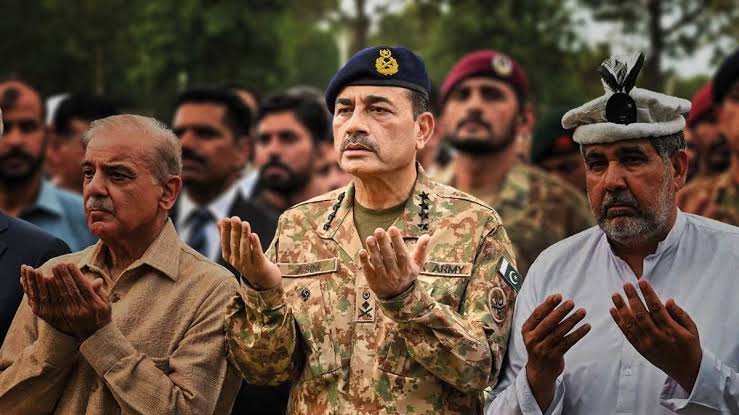
The Pakistan new provinces plan reported on 9 October 2026 comes with a governance rationale and an unanswered question about control. According to The Economist, Field Marshal Asim Munir, Pakistan’s Chief of Defence Forces, wants to replace the country’s four provinces with 12 to 15 units, or as many as 160. The report adds that the new units could be run by elected chiefs, assemblies or nominees of “the government”. Pakistan has announced no official decision. The nominee option decides whether the plan decentralises power or concentrates it.
The idea predates the report. In July, Interior Minister Mohsin Naqvi said “the system we are living under has collapsed”. Planning Minister Ahsan Iqbal had earlier floated a choice between 15 new provinces and empowered local governments across 160 districts. What is new is the claim that the field marshal himself backs the new provinces plan, at a specific scale.
The timing overlaps with unrest. Thousands of supporters of jailed former prime minister Imran Khan began a march towards Islamabad this week, amid fresh turmoil in Khyber Pakhtunkhwa.
The Pakistan New Provinces Plan Rests on One Report and Several Public Endorsements
The 12-to-15 and 160 figures come from The Economist. Public backing for smaller provinces is documented separately. Naqvi, Iqbal and Communications Minister Abdul Aleem Khan have each argued for them. Aleem Khan, for instance, proposed dividing Punjab into four units, with a “Western Punjab” headquartered at Faisalabad, in a release from Pakistan’s Press Information Department. No official decision has been reported.
| Claim | Source | Status |
|---|---|---|
| Munir wants 12–15 provinces, or up to 160 smaller units | The Economist | Reported; not confirmed by Pakistan’s government |
| New units may be ruled by elected chiefs, assemblies or government nominees | The Economist | Reported; no design document seen |
| Senior ministers favour smaller provinces | Statements by Naqvi, Iqbal and Aleem Khan | Official statements |
| Changing a province’s limits needs two-thirds approval in that province’s assembly and in both houses | Constitution of Pakistan, Article 239(4) | Constitutional requirement |
| Government has decided to proceed | None found | No decision reported |
The Governance Case Rests on Real Gaps in Scale and Service Delivery
Punjab has about 128 million people, slightly over half of Pakistan’s total, according to the 2023 census. Balochistan has about 15 million, roughly 6 per cent. A single provincial government in Lahore therefore answers for more people than most of the world’s countries. Reformers have argued for years that this scale makes governance unwieldy, and Naqvi has made the same case in public.
The counter-case to the new provinces plan is about cost and sequence. Economists and business leaders see a service-delivery gain but warn of added bureaucracy for a cash-strapped state. Khaqan Najeeb, a former adviser to the finance ministry, argued that Islamabad should first strengthen existing tools such as the National Finance Commission (NFC) Award and provincial finance commissions. Television commentator Kamran Khan takes the opposite view: four provinces designed for roughly 60 million people, he argues, cannot carry close to 250 million.
The Economist’s Concern Is Who Appoints the Rulers of the New Units
According to The Economist, the new units would be governed by elected chiefs, provincial or district assemblies, or nominees of “the government”. The third option carries the weight. A province with an elected government has its own mandate to resist Islamabad. A unit run by appointees has less of one.
The Economist argues that Punjab and Sindh work as counterweights to the centre because they are the power bases of two long-established parties, the Pakistan Muslim League (Nawaz) and the Pakistan Peoples Party. Its verdict is that the field marshal “has them in his sights”. The report describes Munir as having partly co-opted both parties, while Khan, the leader of the third main party, remains in jail.
The report also notes that the army owns large tracts of valuable land and controls businesses. Critics add that the military is itself a source of many of the problems smaller provinces are meant to solve.
How This Differs From the One Unit Scheme
Pakistan has redrawn its internal map from the top before. The One Unit scheme, implemented in October 1955, merged the provinces of West Pakistan into a single unit. It was dissolved in 1970. That scheme amalgamated; this one would fragment. The 1970 reversal is the more useful precedent, because it shows that boundaries imposed from above can be undone once the political balance shifts.
Article 239(4) Gives Each Province a Veto Over Its Own Division
Under Article 239(4), an amendment that alters a province’s limits cannot go to the President for assent unless that province’s assembly has approved it by at least a two-thirds majority. Constitutional amendments also need two-thirds in both houses of Parliament. A route to a 15-province map therefore runs through the assemblies of the provinces being divided, each asked to vote for its own division.
Counting the Votes for the Pakistan New Provinces Plan
Commentators disagree on the arithmetic. Some say the ruling alliance of the PML(N) and the PPP holds a two-thirds majority in both houses of Parliament. Others say no single party commands two-thirds in Parliament or the provincial assemblies, so any move would need broad consensus. The PPP, which governs Sindh, has opposed dividing the province.
TES has not verified the seat counts that the new provinces plan would need. In its assessment, the provincial assemblies, not Parliament, are the harder test. Sindh’s opposition is on record, and the unrest around Khyber Pakhtunkhwa this week suggests an unwelcoming climate for a vote on dividing that province.
The Pakistan New Provinces Plan Would Reshape the NFC Bargain and Balochistan’s Mineral Leverage
The money question sits under the map. Under the 7th NFC Award, provinces receive 57.5 per cent of the federal divisible pool, and Article 160(3A) bars any later award from cutting their share. Splitting provinces would not alter that collective floor. It would change how many claimants divide it and who negotiates for them. The reporting does not say how 12 to 15 units would be represented at the NFC table.
Minerals raise a sharper issue. Article 172(3) vests oil, gas and minerals found in a province jointly and equally in that province and the federation. Balochistan’s provincial government is a partner, alongside Barrick Mining and federal state-owned enterprises, in the Reko Diq copper-gold project. If Balochistan were subdivided, existing agreements would need a clear counterparty. None of the reports addresses that legal question, and TES has not seen an official statement on it.
For lenders and investors, the first-order issue is political risk. Pakistan’s economy is already under pressure from weak growth and heavy debt-servicing costs. A boundary dispute would land on top of insurgent violence in Balochistan, which TES has tracked in its reporting on the BLF’s KAAD unit, and on the overlapping pressures set out in TES’s analysis of Pakistan’s three-front crisis.
For India, the New Provinces Plan Raises Two Watch Points: PoK Status and Pakistan’s Western Front
The reports concern Pakistan’s four provinces and say nothing about Pakistan-occupied Jammu and Kashmir or Gilgit-Baltistan. India’s position on those territories is settled. In a release of 4 May 2020, the Ministry of External Affairs (MEA) said that Jammu and Kashmir and Ladakh, including Gilgit and Baltistan, are integral to India by virtue of a “fully legal and irrevocable accession”.
The release added that Pakistan has “no locus standi” there, and that India rejects “continued attempts to bring material changes”. It notes that this position is reflected in a resolution Parliament passed by consensus in 1994. Any attempt to fold either territory into a new provincial map would be expected to draw the same response.
The second watch point is the western front. In TES’s assessment, a boundary overhaul would absorb political and administrative attention while the army manages unrest in Khyber Pakhtunkhwa, an insurgency in Balochistan and tension on the Afghan border. MEA spokesperson Randhir Jaiswal said on 14 August 2025 that Pakistan’s leadership whips up anti-India rhetoric to hide its own failures. A reorganisation that strains domestic order could sharpen that pattern. Indian planners will also watch whether a more centralised Islamabad changes how decisions on India policy are made.
That watch list rests on existing dynamics. TES has examined the Afghanistan–Pakistan conflict and why India–Pakistan military competition persists. The plan adds a domestic variable to both.
Questions Readers Are Asking About the Pakistan New Provinces Plan
How many provinces does Pakistan have now?
Four: Punjab, Sindh, Khyber Pakhtunkhwa and Balochistan. The Economist’s reported proposal would replace them with 12 to 15 units, or up to 160 smaller territories.
Has Pakistan’s government approved new provinces?
No decision has been reported. Ministers including Naqvi, Iqbal and Aleem Khan have backed smaller units, but the government has not announced an official decision.
Can the army create new provinces on its own?
Not under the Constitution. Changing a province’s limits needs two-thirds approval in that province’s assembly and in both houses of Parliament, so the new provinces plan needs political consent or a route around it that has not been reported.
What to Watch: The Test Is Who Appoints the Heads, Not How Many Units Emerge
Five signals would settle most open questions about the Pakistan new provinces plan:
- Publication of the governance design for the new units, specifically whether their heads are elected or nominated.
- Public positions from the PML(N) and PPP leaderships on dividing Punjab and Sindh.
- Tabling of any constitutional amendment bill, and the votes in the provincial assemblies.
- A statement on how new units would be represented at the NFC and in the Senate, which the Constitution fills by province.
- Clarity on how existing mining and investment agreements in Balochistan would carry over.
A map redrawn from above in 1955 lasted fifteen years. Whether the new provinces plan would outlast its authors depends less on the number of provinces than on who holds the power to appoint their heads.
Source note: The Economist’s report as covered by Indian and Pakistani media, ministers’ public statements, MEA statements, Pakistan’s 2023 census and the 1973 Constitution. TES did not access the original Economist report.