
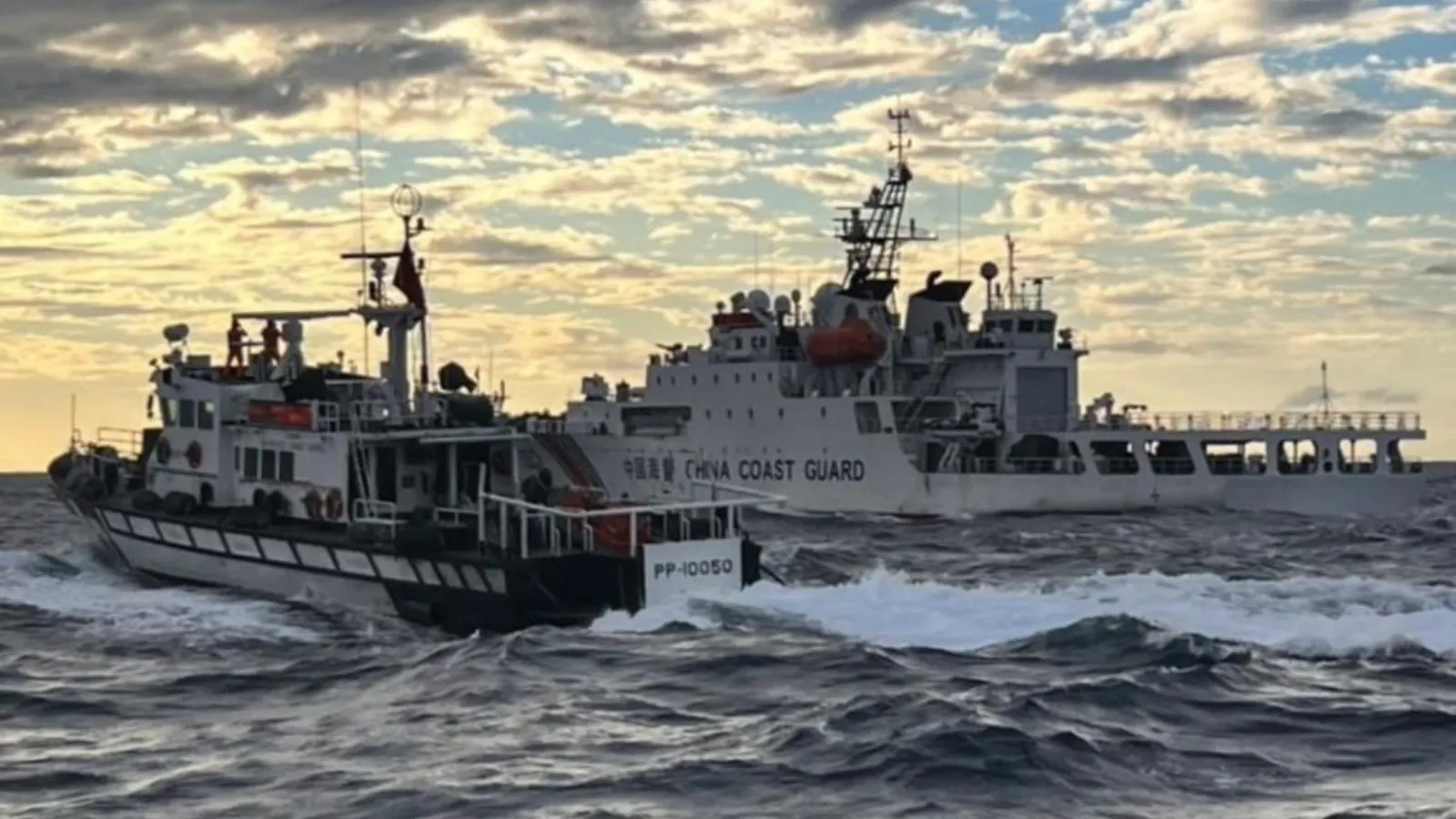
Taiwan-China Coast Guard Standoff: A tense maritime confrontation in the Taiwan Strait has renewed concerns over Beijing’s growing use of coast guard pressure tactics around Taiwan-controlled waters.
According to multiple reports, Taiwan accused Chinese coast guard vessels of entering restricted waters, triggering a tense maritime confrontation in sensitive areas of the Taiwan Strait.
Taiwanese authorities said coast guard ships were deployed after Chinese vessels approached waters near Taiwan-controlled territory. The encounter did not escalate into a military clash, but it added to a growing pattern of maritime pressure around the island.
Officials in Taiwan described the Chinese activity as deliberate interference rather than routine patrol movement. Beijing has not significantly altered its broader position on Taiwan, which it claims as its own territory.
The latest incident comes as China steadily increases coast guard and maritime operations near Taiwan and across disputed parts of the South China Sea. In recent years, these missions have become more frequent and more visible.
Unlike naval deployments, coast guard operations sit in a legal and political grey area. Governments can present them as law enforcement activity while still using them to assert territorial claims or challenge rival patrols.
That has become a central feature of China’s maritime approach.
Rather than relying only on naval power, Beijing increasingly uses coast guard ships, maritime militia fleets and regular patrol activity to expand its presence in contested waters. Analysts say the strategy allows China to maintain constant pressure without crossing the line into direct military confrontation.
Taiwan has also become more public in responding to such incidents. Officials in Taipei now regularly release details of Chinese air and maritime activity around the island, partly to draw international attention and partly to show domestic audiences that the government is actively responding.
The wider concern is not necessarily a single standoff. It is the accumulation of these encounters over time.
The Taiwan Strait has become one of the most heavily monitored and politically sensitive waterways in the Indo-Pacific. Chinese military aircraft cross near Taiwan’s air defence zone almost daily, while naval and coast guard patrols have expanded around nearby islands and shipping routes.
For regional governments, the concern is that repeated close-range encounters increase the risk of miscalculation.
A collision, aggressive manoeuvre or communication failure at sea could quickly become politically difficult to contain, especially during periods of already elevated tension between China and the United States.
Countries including Japan and the Philippines have also faced increasingly assertive Chinese coast guard activity in nearby waters. Regional security officials have warned that maritime law enforcement agencies are now playing a much larger strategic role than they did a decade ago.
For India, developments around Taiwan are watched closely because of their wider implications for Indo-Pacific trade routes, shipping security and regional military balance.
The Taiwan Strait carries a significant share of global commercial shipping, while Taiwan itself remains central to global semiconductor production. Any sustained instability in the area would likely have economic consequences far beyond East Asia.
Taiwan-China Coast Guard Standoff History
Tensions between China and Taiwan at sea have steadily increased over the past decade, particularly after Beijing intensified military and coast guard activity around the island following the 2016 election of Taiwan’s pro-sovereignty leadership. Chinese vessels now regularly patrol near Taiwan-controlled waters, while Taiwan has expanded maritime monitoring and response operations. Similar gray-zone tactics have also been used by China in the South China Sea and near the Japan-administered Senkaku Islands, raising wider regional security concerns.
For now, the latest coast guard confrontation appears contained. But the steady rise in these encounters suggests that maritime friction between China and Taiwan is becoming routine rather than exceptional.The incident reflects how competition in the Indo-Pacific is increasingly unfolding through constant operational pressure at sea rather than overt military escalation.