In late February 2026, the United States and Israel launched an air campaign on Iran that killed its Supreme Leader, Ali Khamenei, on the first day. Almost eight months on, the Iran war 2026 has ended its bloodiest phase without ending anything else: a fragile memorandum of understanding, signed in June and repeatedly broken, leaves Iran’s government intact, its enriched uranium unaccounted for, and the Strait of Hormuz under tighter Iranian control than at any point in modern memory.
The questions ordinary people ask about the Iran war 2026 are simpler than the ones officials answer. Why was it fought? What did the United States actually get? Who won the Iran war? And if the aim was a calmer Middle East, why does the region look more dangerous than before it began?
This article answers those questions directly. Where a claim is contested — and several are — it gives the strongest case on each side rather than picking one. It is an explainer, not an argument for or against the war.
Quick answers
- Why was the war fought? The US said Iran was weeks away from a nuclear weapon and had to be stopped. The UN nuclear watchdog and US intelligence never confirmed that claim.
- What did the US achieve? Iran’s navy, air defences and missile production are badly damaged. But the government survived under a harder-line leader, and its enriched uranium is unaccounted for.
- Was there a Hormuz toll before the war? No. Passage through the strait was free. Iran now charges an “insurance” fee of roughly $1.5–2 million per vessel.
- So what did the war do for Hormuz? On this measure, it made things worse: it converted a free international waterway into one Iran controls and taxes.
- Can anyone guarantee Iran never gets a bomb? Not verifiably. The IAEA has lost oversight of Iran’s nuclear material since the strikes began.
- Why won’t Russia make Iran strong? Russia arms and advises Iran but will not fight for it. Its priority is Ukraine, and the oil-price spike has handed it a windfall.
- Why won’t China side with Washington? China wants the strait open and buys most of Iran’s oil, but it gains from the US being distracted and will not confront Washington.
- Who profits? Russia (a $45–151 billion budget windfall), oil majors, defence contractors and trading banks.
- Who pays? Oil importers such as India, China and Europe, and American households — about $1,760 each.
- Is the Middle East safer? Analysts say it is more volatile: Iran survived, hardened, and now controls the strait.
Why the US went to war — and why critics say it should not have
The stated case was nuclear. In his State of the Union address in February 2026, President Donald Trump said the Iran nuclear programme had restarted and Iran was developing missiles able to reach the United States. The strikes that followed on 28 February were launched, in the administration’s words, to destroy Iran’s ballistic missile and naval power, to sever its support for proxy forces, to prevent it ever acquiring a nuclear weapon, and — Trump hinted — to enable regime change.
The critical case is that the premise was never verified. The International Atomic Energy Agency had found no evidence that Iran was weaponising its programme, and its director general, Rafael Grossi, said the agency “did not have any proof of a systematic effort to move into a nuclear weapon.” US intelligence had assessed that Iran would need until about 2035 to build a missile capable of reaching the United States. Critics, including legal scholars, argue the attack was a war of aggression launched without UN authorisation. The administration’s own director of national intelligence, Tulsi Gabbard, told Congress that Iran’s enrichment programme had been “obliterated” in 2025 and that there had been “no effort to rebuild” it — a statement that sits awkwardly beside the claim of an imminent threat.
Both readings rest on real evidence. The US case points to the Iran nuclear programme’s 60 percent-enriched uranium stockpile, its missile arsenal and its network of proxies. The critics’ case points to an IAEA and an intelligence community that did not corroborate the urgency the war was sold on. The reader can weigh them; what is not in dispute is that the war’s stated aims and its results have diverged.
What the US has gained — and what it still wants
Militarily, the campaign did real damage. The US military says it sank 161 Iranian naval vessels and knocked out 82 percent of Iran’s air defences; it claims to have destroyed 85 percent of Iran’s defence-industrial base and to have set Iran’s ability to build and stockpile ballistic missiles and long-range drones back by years. By the numbers, Iran — never a strong military power — is now far weaker, the clearest military gain of the Iran war 2026.
Strategically, the picture is murkier. The regime did not fall; Khamenei was succeeded by his son, Mojtaba Khamenei, described by analysts as a younger, more hard-line figure. The Iran nuclear programme is “severely damaged and set back, but not destroyed,” in the assessment of former US officials, and roughly 440 kilograms of 60 percent-enriched uranium — enough, if further enriched, for several weapons — remains unaccounted for. What the US still wants is what it wanted at the start: an Iran that hands over that stockpile and accepts zero enrichment. Iran has refused both, offering only to discuss its programme, not to dismantle it.
The Strait of Hormuz toll — there was none before the war, and now there is one
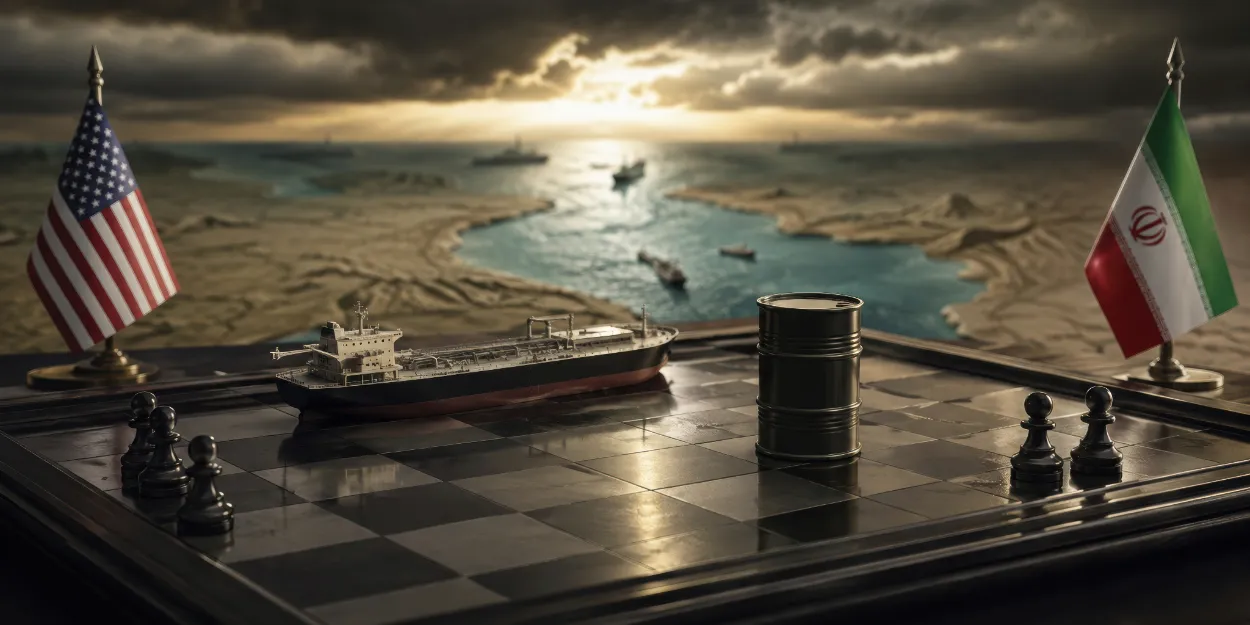
This is the war’s sharpest contradiction. Before February 2026, the Strait of Hormuz — through which about a fifth of the world’s oil and a fifth of its liquefied natural gas passed — was an international waterway open to all shipping, free of charge. Iran’s threats to close it were a recurring fear, but not a reality.
Iran closed the Strait of Hormuz within days of the first strikes. It then built what shipping analysts call a “toll booth”: vessels are routed through Iranian territorial waters near Larak Island, vetted by the Revolutionary Guard, and escorted through a controlled corridor. Iran’s parliament moved to codify the arrangement, and by June officials confirmed fees of roughly $1.5–2 million per vessel, payable in cash, cryptocurrency, goods or barter. A route that once cost nothing now has a price, and Iran — not the international community — sets it.
Trump declared the strait would be “permanently toll-free.” Iran’s foreign ministry said it was not levying “tolls” but “service fees,” and that it alone now controls the waterway. Analysts are blunt about the consequence: a ceasefire that leaves Iran in charge of the strait, in the words of maritime-law experts, “in some ways legitimises Iran’s control.” On the specific question of whether the Iran war 2026 improved the Strait of Hormuz, the evidence points the other way.
The Iran nuclear programme: can anyone guarantee no bomb?
Not verifiably — and this is the war’s most durable problem. Because of the strikes, the IAEA has not been able to inspect the Iran nuclear programme’s four declared enrichment facilities since the bombing began. In its February 2026 report, the agency said it “cannot verify” whether Iran has suspended enrichment, the size of its uranium stockpile, or its inventory of centrifuges. In September, its board declared Iran in non-compliance and referred the matter to the UN Security Council — a step unlikely to produce action, because Iran’s allies Russia and China hold vetoes.
The Iran war 2026 may also have made a bomb more likely, not less. Before it, Iran’s Supreme Leader had issued a religious decree against nuclear weapons; that decree died with him. Several analysts argue the war taught Tehran the opposite lesson from the one intended: states that possess nuclear weapons, such as North Korea, are not attacked, while Iran — which does not — has been bombed repeatedly. On that reading, Iran now has more incentive to pursue a weapon, not less.
Russia’s role cuts both ways. Moscow is Iran’s most important external partner: it has supplied fighter jets, attack helicopters and air-defence systems, shared satellite and targeting intelligence with Tehran, and, through its state nuclear company Rosatom, is building reactors at Bushehr. It also vetoes Western pressure at the UN. Yet Russia will not fight for Iran. Carnegie analysts conclude that Russian arms “are still unlikely to be able to protect Iran from U.S. or Israeli air strikes,” and that the Kremlin — preoccupied with Ukraine — “has no intention of saving Tehran.” Russia’s interest is in a weak Iran that buys its weapons and a distracted America, not a strong Iran that could drag it into war. That is why Moscow arms Iran without making it strong, and why it cannot — and will not — be the guarantor of a nuclear-free Iran either.
Why China won’t simply side with Washington
Trump’s hope that Beijing would pressure Iran to reopen the Strait of Hormuz did not materialise. When Washington asked China to help, Beijing gave a non-answer and called for an immediate halt to military operations. Treasury Secretary Scott Bessent later said he expected China to work “behind the scenes,” and at a May summit the two presidents agreed the strait should stay open — but China also made clear its opposition to “the militarisation of the Strait and any effort to charge a toll.”
China’s calculus over the Strait of Hormuz is its own. It buys about 90 percent of Iran’s oil and roughly half its crude imports pass through Hormuz, so it wants the strait open. But it also benefits from a United States bogged down in the Middle East, which diverts American attention and weapons away from Asia and Taiwan. Analysts note that Beijing “probably doesn’t need to do much” — most Chinese officials believe “the United States is undermining itself,” so China can simply stay out of the way. China will lean toward its interests, which is not the same as leaning toward Trump’s.
Who pays, who profits
The war’s economic effects have been the largest oil-supply disruption in decades, and they have redistributed money across the world. Russia is the clearest winner: as the Urals price roughly doubled and the discount on Russian crude narrowed, the KSE Institute estimates Moscow could gain $45–151 billion in extra budget revenue in 2026 — more than its entire 2025 deficit — while the US issued temporary waivers that let buyers such as India resume purchases. European oil majors BP, Shell and TotalEnergies posted sharply higher profits on trading volatility; Lockheed Martin’s shares rose about 25 percent; and JP Morgan’s trading arm booked record revenue. Defence contractors across the US and Europe reported record order backlogs.
The losers are the oil importers and, most of all, households. India and China, the largest buyers of Gulf crude, were hit hardest; European growth forecasts were cut. And in the United States itself, the war has become a cost-of-living event. As the table below shows, the price of the war has been paid at the pump, the mortgage desk and the grocery aisle — not by the oil majors.
| Indicator | Before the war (late Feb 2026) | Now |
|---|---|---|
| Hormuz transits per day | about 130 | about 15 |
| Hormuz toll per vessel | none | $1.5–2 million |
| US petrol, per gallon | $2.98 | about $4.50 |
| US diesel, per gallon | about $3.75 | $6.52 (record) |
| US inflation (CPI) | 2.4% | 3.4% |
| US 30-year mortgage | under 6% | over 7% |
| Cost to the average US household | — | about $1,760 |
| Iran’s 60%-enriched uranium | 440.9 kg, under safeguards | unverified since the strikes |
Safer or more dangerous? The Middle East after the war
On the question of whether the region is more stable than before, the weight of expert opinion says it is less. The Iran war 2026 has cost the US 18 soldiers and more than 750 wounded, while fighting on several fronts — in the Gulf, in Lebanon through Israel’s campaign against Hezbollah, and against Iran’s proxies in Iraq and Yemen. The Houthis have attacked shipping in the Bab el-Mandeb; Iran has struck US allies in Bahrain, Kuwait, Qatar and Jordan. The Pentagon has drawn down scarce munitions such as Patriot interceptors and Tomahawks, leaving other theatres short.
The Iran war 2026 also did not produce the outcome its architects sought. Iran’s government survived, its military is degraded but rebuilding, and it now controls a waterway it previously only threatened. Some analysts argue the net effect is a harder, more isolated, more motivated Iran — a worse position than the pre-war status quo. Others, such as the authors of a Foreign Affairs assessment, counter that three years of pressure have “largely reversed Iran’s regional successes over the prior 20 years,” and that containment, not regime change, is now a winnable goal. What both sides agree on is that the war settled nothing. As one expert put it, the US failed to translate military superiority into political gains, and Iran surviving is not a victory either.
So who won the Iran war 2026?
On who won the Iran war, the honest answer is: a weaker Iranian military, and not much else that was promised. The US degraded Iran’s conventional forces, killed much of its leadership, and set back its defence industry. It did not end Iran’s nuclear programme, did not remove the regime, and did not secure a free and open Strait of Hormuz — the opposite, in fact. Measured against the goals Trump set out on 28 February, the campaign is incomplete at best; measured against the narrower aim of containment, it may have bought time.
The costs of the Iran war 2026, meanwhile, are concrete and continuing: higher energy and borrowing costs worldwide, a distracted and depleted US military, a Russia enriched by the oil shock, and a Middle East whose central chokepoint is now controlled by the very state the war was meant to contain.
What to watch
Where the Iran war 2026 goes now hinges on a handful of indicators. The first is the Strait of Hormuz: whether Iran formalises its fee system with Oman’s cooperation, or whether the US resumes strikes to break it. The second is Iran’s enriched-uranium stockpile, and whether the IAEA ever regains access to verify it. The third is the 60-day negotiating framework that has repeatedly collapsed — whether a permanent deal on enrichment and the strait emerges, or the ceasefire fails outright. And the fourth is the price of oil, which decides how much of this the world’s households, and America’s voters, continue to pay.
Editorial note. This article is analysis, not advocacy for any party to the conflict, and not investment advice. Contested claims — including whether the war was necessary and whether the region was more stable beforehand — are presented with the strongest arguments on each side and attributed to those who make them.
Sources. Reported figures are drawn from the International Atomic Energy Agency’s board reports (GOV/2026/8 and GOV/2026/50); the Congressional Research Service; the Federal Reserve Bank of Dallas and CEPR research on the war’s inflation impact; the KSE Institute; and high-regarded reporting by Reuters, the Associated Press, Al Jazeera, the BBC, CNN, CSIS, the Carnegie Endowment, the Peterson Institute for International Economics, the Middle East Institute and Foreign Affairs. Market and price levels are as reported between late 2026 and the war’s outbreak.