On 30 June 2026, Paras Defence and Space Technologies told India’s stock exchanges that a little-known American drone company had handed it the exclusive right to manufacture and sell a counter-drone interceptor system inside India. Eleven weeks later, the same company sent a delegation to Rawalpindi, met Pakistan’s top soldier, and came away with a memorandum of understanding and a confidential government order that the Pakistan Army’s own statement never mentioned. The Powerus Pakistan drone deal and its quieter Indian predecessor are not, on their own, evidence of anything improper. Read together, against the backdrop of a pending merger in which two of the sitting US President’s sons hold a stake, they are a case study in how unevenly one vendor’s access to South Asia’s two nuclear rivals is being disclosed — and what that asymmetry is worth watching for.
In This Article
- What Powerus actually agreed with India’s Paras Defence
- What is — and is not — confirmed about the Pakistan MoU
- The Trump family’s stake in the Powerus-Aureus Greenway merger
- Why the Guardian-1 lineage traces back to Ukraine
- What it means for Paras Defence shareholders
- What to watch next
The India Deal: A Filing, Not a Rumour
Start with what is on the record. In a filing to India’s stock exchanges on 30 June 2026, Paras Defence and Space Technologies disclosed that Powerus, acting through its subsidiary Tandem Defense LLC, had granted the Mumbai-listed company exclusive rights to manufacture and commercialise its Guardian interceptor family — starting with Guardian-1 — inside India, in exchange for a licence fee and a share of net profits from Indian sales, as ThePrint later detailed once the Pakistan deal drew scrutiny back to it. That is a Verified Fact: it comes from the company’s own regulatory disclosure, not a leak or an anonymous briefing.
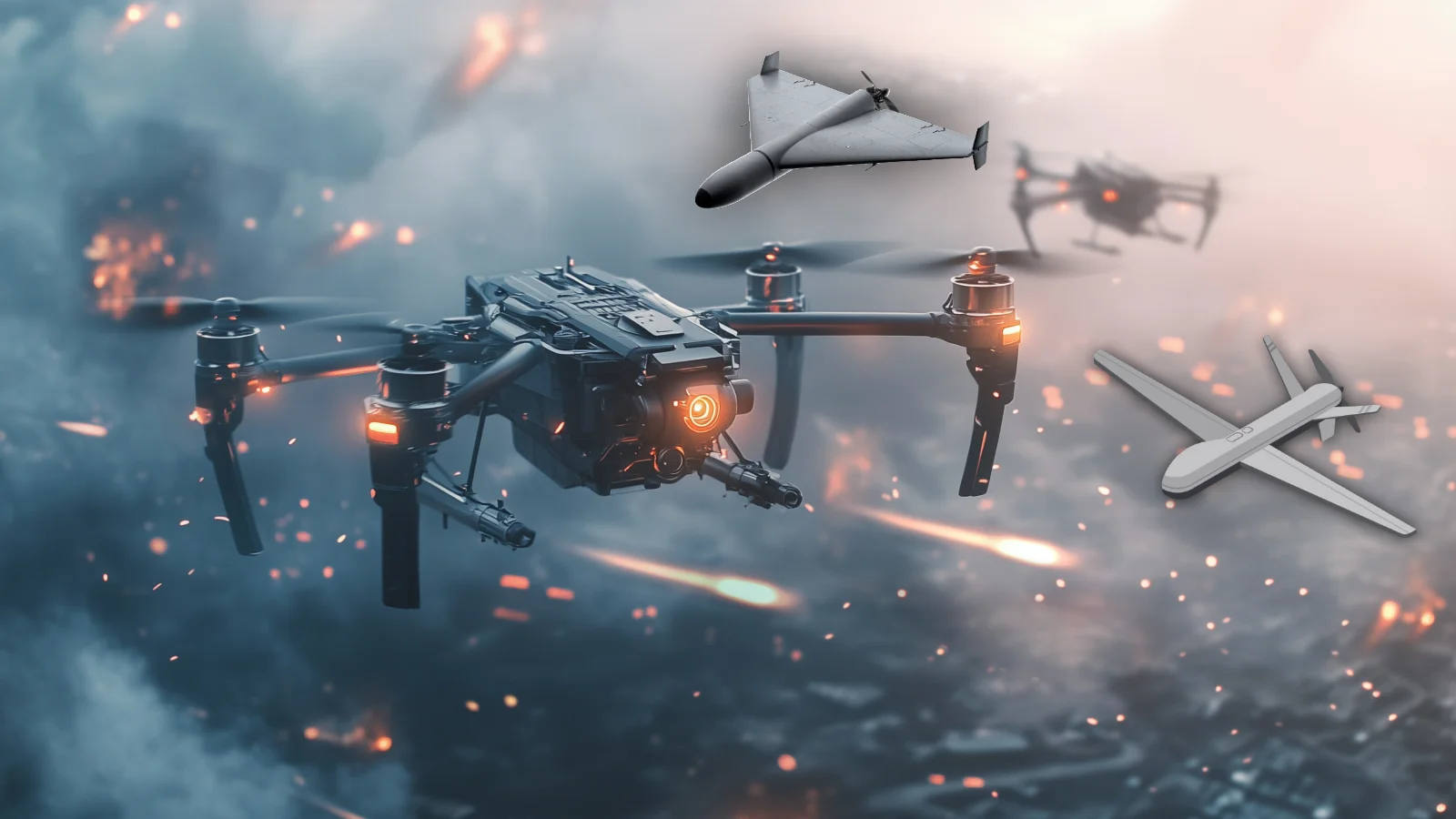
What the filing does not say matters just as much. It does not mean the Indian Army or Indian Air Force has selected Guardian-1 for induction. Powerus describes Guardian-1, and the upgraded Guardian-2 introduced in April 2026, as low-cost, high-speed interceptors built to defeat hostile drones at scale — but any move from industrial licence to military service would still require India’s standard evaluation and procurement process, and there is no public indication that process has begun.
The technology’s lineage is more layered than a typical American defence product. Powerus entered a venture in March 2026 to commercialise autonomous defence and power technologies originally developed in Ukraine and owned by G1 Exploration — Powerus holds 51 percent of that venture, G1 the remaining 49 percent, with G1 contributing the intellectual property and Powerus the capital and distribution infrastructure. The Paras agreement, in other words, brings Ukrainian-origin counter-drone technology into India’s defence-manufacturing chain through an American corporate wrapper.
Timeline: the Powerus-Aureus Greenway merger, the Paras Defence licence, and the Pakistan Army MoU, March-October 2026
Inside the Powerus Pakistan Drone Deal: What Reuters Confirmed, and What Nobody Will Say
The Pakistan side of the story is thinner on documentation, and that thinness is itself the story. On 16 September 2026, a Powerus delegation led by co-founder Brett Velicovich met Pakistan’s Chief of Defence Forces and Army Chief, Field Marshal Syed Asim Munir, at General Headquarters in Rawalpindi. Reuters reported that Pakistan’s Inter-Services Public Relations issued a statement afterwards describing a discussion on defence procurement, production and long-term capacity building — but the statement did not mention any MoU.
Velicovich told Reuters separately that Powerus had in fact struck a deal that day — an MoU plus an initial order — describing the order only as falling “within the category” of unmanned aerial systems. He declined to disclose value, quantity or system type, citing security and commercial sensitivity. Powerus later clarified the structure to Al Jazeera: the MoU was signed with the Pakistan Army, while the actual procurement order came from Pakistan’s Ministry of Defence — two different institutions, folded together in the first wave of reporting, which Dawn and other Pakistani outlets had carried largely at face value. Powerus’s own statement called the memorandum a non-binding strategic framework, not a definitive purchase agreement, subject to US export law and government approval on both sides.
Company founder Andrew Fox described Pakistan’s private defence sector as “emerging but still not mature,” and Velicovich said Powerus was exploring building technology locally, aiming for what he called a joint arrangement pairing American and Pakistani capability. None of that constitutes a confirmed contract for Guardian-series interceptors specifically — the reporting establishes an unmanned-systems order in general terms, not a mirror of the Guardian-1 deal signed with India. Conflating the two would overstate what is actually known.
Why the Trump Family’s Stake Changes the Optics, Not the Facts
The Powerus Pakistan drone deal did not happen inside a corporate vacuum. Powerus is not a standalone private company much longer. It is merging with Aureus Greenway Holdings, a Nasdaq-listed operator of two Florida golf clubs, in a reverse-merger transaction both sides expect to close in early October 2026 under the new name Powerus Corporation, ticker PUSA. Donald Trump Jr. and Eric Trump hold their interest through an investment vehicle called American Ventures, itself roughly 90 percent owned by Dominari Holdings — a financial firm in which the two brothers together hold close to 12 percent. Regulatory filings show American Ventures is expected to hold a 9.9 percent beneficial stake in the combined company once the merger closes.
This is not the brothers’ first drone-adjacent bet. Reporting has linked them to two earlier ventures in the same sector: a roughly 1.5 billion dollar tie-up involving Israeli drone maker XTEND, and an investment in Florida-based JFB Construction Holdings. Powerus is their third.
On the record, both sides of the conflict-of-interest question have spoken. A spokesperson for Donald Trump Jr. told media outlets he is a passive investor with no operational role and no prior knowledge of the Pakistan deals. The White House has said the arrangement presents no conflict of interest. Neither statement can be independently verified from outside the companies and the administration — they are Official Statements, not confirmed facts, and this piece treats them as such rather than as a resolved matter either way.
It is also worth noting, for balance, that Washington arming states that distrust each other is not new. Mansoor Ahmed, an honorary lecturer at the Australian National University’s Strategic and Defence Studies Centre, pointed out to Al Jazeera that the United States has long sold the same aircraft type to rival buyers — F-16s across Greece, Turkiye, Egypt and Israel, and F-35s to Saudi Arabia alongside an Israeli fleet already in service. Powerus selling into both Indian and Pakistani supply chains sits inside that broader American pattern; what is unusual here is the specific overlap with a sitting president’s family finances.
What It Means for Paras Defence — and for India’s Counter-Drone Base
Paras Defence is not a passive bystander in this story; it is a listed company whose shareholders are exposed to however this plays out. The stock has traded at a rich multiple through 2026 — a trailing price-to-earnings ratio north of 100, against a market capitalisation of roughly Rs 11,400 crore as of late September — built on a mix of its existing Ministry of Defence anti-drone orders, a counter-UAS export agreement with France’s CERBAIR, and now the Guardian-1 licence itself. None of that valuation rests on Guardian-1 having been chosen by the Indian military; it rests on optionality, and optionality can compress quickly if the interceptor is never inducted or if the Pakistan controversy complicates Powerus’s standing as a defence-technology partner more broadly.
There is a second, quieter angle for India’s own counter-drone industrial base. India’s armed forces have been actively building requirements for kinetic interceptor systems since the drone exchanges of the May 2025 Pakistan-India conflict exposed gaps on both sides. A foreign-origin platform entering that market through an Indian manufacturer supports the letter of Make in India and the Defence Acquisition Council’s localisation goals, even where the underlying intellectual property is not indigenous. Whether that trade-off — foreign IP, Indian manufacturing — strengthens or dilutes India’s push for genuine self-reliance in counter-drone technology is a debate this single licence does not settle on its own.
| Dimension | India (Paras Defence) | Pakistan (Army/MoD) |
|---|---|---|
| Disclosure route | Public stock-exchange filing, 30 June 2026 | Reuters interview with Powerus co-founder; ISPR statement omitted the MoU |
| Counterparty | Private listed defence manufacturer | Pakistan Army (MoU) and Ministry of Defence (order), per Powerus’s later clarification |
| Confirmed scope | Exclusive manufacturing and commercialisation rights to Guardian interceptor family | Unspecified UAS-category order; value, quantity and system undisclosed |
| Military induction confirmed? | No — licence only, per Powerus’s own regulatory disclosure | No — MoU described as non-binding strategic framework |
What to Watch
It refers to the memorandum of understanding Powerus signed with the Pakistan Army on 16 September 2026, alongside a separate “limited procurement order” for unmanned aerial systems placed by Pakistan’s Ministry of Defence — distinct from, but announced weeks after, Powerus’s exclusive India licence with Paras Defence.
No. The 30 June 2026 filing grants manufacturing and commercialisation rights only. Any induction into the Indian Army or Air Force would still require the standard evaluation and procurement process, which has not been confirmed as underway.
Powerus and Pakistani officials have confirmed an MoU with the Pakistan Army and a separate “limited procurement order” from Pakistan’s Ministry of Defence for unmanned aerial systems. Neither the value, quantity, nor specific system involved has been disclosed.
Both companies have said they expect the transaction to complete in early October 2026, after which American Ventures — linked to Donald Trump Jr. and Eric Trump — is expected to hold a 9.9 percent stake in the combined Powerus Corporation.
None of this resolves into a single verdict, and it should not be forced into one. The Powerus Pakistan drone deal, read alongside its Indian counterpart, shows a US drone-technology vendor building simultaneous, asymmetrically disclosed relationships with two militaries that fought each other as recently as May 2025 — while preparing, in the same window, to list on Nasdaq behind a stake held by the sitting American president’s sons. The facts that are documented deserve to stand on their own; the facts that remain undisclosed, on both the Pakistani order’s specifics and any Indian government reaction, are exactly what determines whether this becomes a footnote or a genuine flashpoint.
Investment Disclaimer
This article discusses listed company stock, valuations and order books, including Paras Defence and Space Technologies, for informational and analytical purposes only. It does not constitute investment advice, a recommendation to buy or sell any security, or a solicitation of any kind. Share prices, market capitalisation and valuation multiples cited reflect data at the time of writing and will change. Readers should conduct independent research and consult a licensed financial adviser before making investment decisions.
Source Transparency
Verified fact: The terms of the Paras Defence-Powerus licence are drawn from Paras Defence’s own 30 June 2026 stock-exchange filing. The Munir-Powerus meeting date and Pakistan’s ISPR statement are drawn from ISPR’s own release, corroborated by Reuters and its regional syndication (Dawn, Express Tribune, Arab News). Official statement / company claim: Velicovich’s and Fox’s characterisations of the MoU, the order, and Pakistan’s private defence sector are drawn from on-record comments to Reuters; the Trump Jr. spokesperson statement and White House position are drawn from reporting by Al Jazeera. None of these claims have been independently verified beyond the companies and officials who made them, and are presented here as attributed statements, not confirmed fact. Market data: Paras Defence share price, market capitalisation and price-to-earnings figures reflect data reported in the days around 22-23 September 2026 and will move after publication. TES Analysis: The framing connecting the two deals’ disclosure asymmetry, the read-through for India’s counter-drone industrial base, and the market-risk assessment for Paras Defence shareholders represent independent editorial analysis, not the characterisation of any official source.