
Key Takeaways
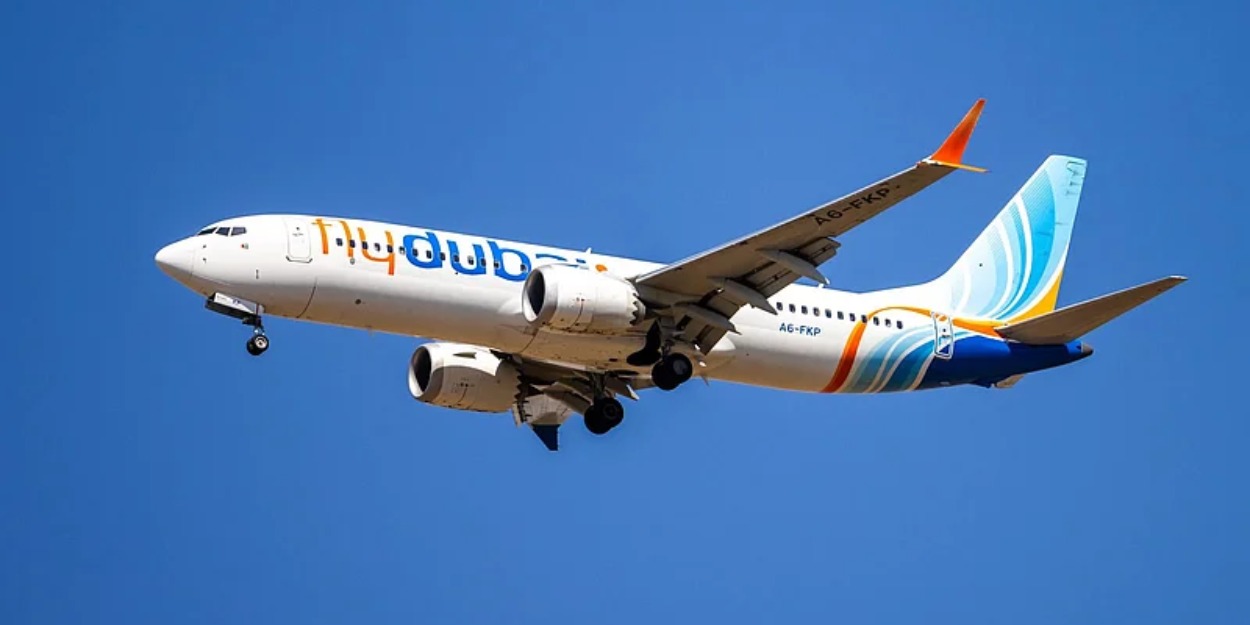
- Flydubai flight FZ1073, a Boeing 737 Max 8 flying Dubai–Tel Aviv on 30 September 2026, was diverted to Tabuk, Saudi Arabia, after the co-pilot allegedly stabbed the captain and apparently tried to crash the aircraft. All 174 people on board survived.
- The captain, Indian national Smit Machchhar, opened the cockpit door despite his wounds, letting passengers and crew subdue the attacker; two off-duty pilots aboard then landed the plane.
- Israeli officials identify the co-pilot as an Omani national — a claim not confirmed by Oman, the UAE or flydubai. Two Israeli security officials say the initial assessment is that he likely acted alone.
- Whether it was terrorism is not established. The UAE has ordered an investigation into any “terrorist activity or purpose” or prior planning; no organisation has claimed responsibility and no public evidence links the case to a group.
- The durable question is the vetting gap: how a pilot from a country with no diplomatic relations with Israel was cleared for a Tel Aviv route that Israel bars such pilots from flying.
On the morning of 30 September 2026, a Boeing 737 Max 8 bound for Tel Aviv from Dubai lost more than 14,000 feet in under 30 seconds over northern Saudi Arabia. It was not a mechanical failure. According to Israeli officials and passengers, the co-pilot had stabbed the captain and was trying to put the aircraft into the ground.
What followed is a case study in the limits of one of aviation’s oldest assumptions. Cockpit doors have been reinforced and locked in flight for two decades precisely to keep attackers out. On FZ1073, the attacker was already inside, holding the access a door cannot revoke. The passengers are alive because the man he stabbed, an Indian captain named Smit Machchhar, opened the door from the inside while bleeding from his wounds.
The claim this piece makes is narrow: the “terror plot” framing that dominated the first hours is narrowing, and the durable story is not the label but the vetting gap it exposed — how a pilot with legitimate access came to be the threat, on a route that is supposed to screen for exactly that.
What happened on FZ1073, in sequence
The verified record is straightforward. Flydubai flight FZ1073, a Boeing 737 Max 8, departed Dubai International Airport at 03:05 GMT (07:05 local) on 30 September, bound for Ben Gurion Airport near Tel Aviv, carrying 174 people — most of them Israeli, along with Indian and Emirati nationals and four US citizens, according to Israel’s foreign ministry and the US State Department. (Sources: The Associated Press, Al Jazeera and Reuters.)
About two and a half hours in, the aircraft transmitted an emergency code, then a code signalling unlawful interference, then an emergency code again, tracking data showed. It descended from roughly 33,000 feet to about 17,000 feet in about a minute — more than 14,000 feet in under 30 seconds, per the flight-tracking site Flightradar24 — before diverting to Tabuk in north-western Saudi Arabia, where it landed safely. Both pilots were taken to hospital. No passengers were reported injured, and a replacement flight carried them on to Israel that night. Flydubai has since suspended flights to and from Israel, and Emirates has suspended its codeshare on the route.
A locked cockpit stops outsiders. It cannot stop the person inside
The reason FZ1073 matters beyond its own facts is structural. Since 11 September 2001, the cockpit has been hardened on a single premise: that the threat comes from the cabin, and the door is the barrier. Reinforced, locked doors work against that threat. They offer nothing against the person seated at the controls, who has the key, the training and the access by design.
That is why the heroism here was also improvised. The captain, wounded, opened the door so others could get in; a passenger, Yaniv Hayun, is credited with restraining the attacker; two off-duty flydubai pilots travelling aboard took the controls and flew the jet to a safe landing. Every element of the recovery depended on people improvising inside a space designed to exclude them. Insider threat is the one category of aviation risk that a locked door cannot answer, and FZ1073 is its clearest demonstration in years.
Figure: TES. Source: Flightradar24 data reported by Reuters and AP; timeline to 1 October 2026.
The vetting gap: an Omani national cleared for a Tel Aviv route
The question that will outlast the headlines is how the co-pilot came to be in that seat. Israeli officials identify him as an Omani national. That nationality is not confirmed by Oman, by the UAE or by flydubai. If it holds, it raises a specific problem: Israel bars foreign airlines from using pilots from countries with which it has no diplomatic relations on the Tel Aviv route — and Oman has none.
Israel’s transport minister, Miri Regev, called the assignment of an Omani pilot to the flight a potential breach and asked the Shin Bet security agency to examine it. A source cited by The Jerusalem Post said the relevant aviation agreement requires pilots on Israel-bound flights to hold passports from countries that recognise Israel. How that clearance was granted, by whom, and whether screening failed or was waived, are now questions in the investigation rather than settled facts. The regional backdrop is the wider tension around the Iran war, examined in our US–Iran war explainer.
The terrorism question, answered plainly
It is not established. That is the accurate answer, and it is worth being precise about why. The UAE’s attorney-general, Hamad Saif Al Shamsi, has ordered an investigation into whether the incident was linked to “any terrorist activity or purpose, or involved prior planning or direction.” That is a mandate to examine the hypothesis, not a finding. A regional official briefed on the probe told AP that “all possible scenarios, from terrorism to mental disorders, are being looked into. Nothing is ruled out for now.”
What officials say divides into two tiers. Israeli political figures have asserted terrorism directly: Defence Minister Israel Katz called it an “attempted jihadist terror attack,” and National Security Minister Itamar Ben Gvir used the term first. Israel’s ambassador to the UN, Danny Danon, said there was “no doubt that it was a terror attack from a radical individual” — while conceding Israel “cannot link it to a terror state or terror organisation.”
Investigators have been more careful. Prime Minister Benjamin Netanyahu has called it “a very serious security incident,” said Israel had no specific advance warning, and described it as “too early to say” whether Iran was involved. He told Fox News the attacker had undergone “Islamist radical indoctrination,” a claim he said was being gathered from personal information and for which no public evidence has been offered. Two Israeli security officials told Reuters that the initial assessment was that the co-pilot likely acted alone, with the investigation ongoing.
Against that, flydubai has called the event an “altercation,” said the reasons and motives “remain unknown,” and warned against premature speculation; it has said the flight recorders will settle what happened. No organisation has claimed responsibility, and no public evidence links the case to a group. The honest summary, then, is a lone attacker, possibly self-radicalised, with the question of planning or direction still open — not a proven plot. (Context on the region’s fault lines: our Iran–Israel relations history.)
India’s stake in Gulf-carrier crew screening
India’s interest here is not incidental. Captain Machchhar is an Indian national with more than 13 years of commercial flying, most of it on the Boeing 737, including more than a decade at SpiceJet before joining flydubai in 2022. India’s embassy in the UAE said he was in good health and recovering; the Ministry of External Affairs confirmed he was safe and receiving care. Prime Minister Narendra Modi and Netanyahu both publicly called him a hero.
The wider stake is structural. Thousands of Indian pilots fly for Gulf carriers on the world’s busiest long-haul networks, and the Dubai–India corridor is among the densest in the world. If the FZ1073 investigation sharpens scrutiny of how Gulf airlines vet crew for sensitive routes, Indian aviation professionals sit on both sides of that review — as the crews affected and as a supply pool the Gulf depends on. (See also our coverage of the India–Israel strategic relationship.)
What to watch
- The flight recorders. Flydubai has said the black boxes will establish what happened; their readout is the single most decisive piece of evidence.
- The UAE and Saudi investigations. The UAE has jurisdiction because the aircraft is registered there; Saudi Arabia holds the suspect and is handling the initial phase. Whether Israel joins the interrogation, as Netanyahu said the UAE agreed, is a test of cooperation.
- The vetting finding. Any conclusion on how an Omani national was cleared for a Tel Aviv route will matter far beyond this flight.
- The weapon question. Reports cite a knife; Netanyahu raised the possibility of a cockpit crash-axe. How any weapon passed security is unresolved.
- Regional temperature. The incident lands weeks before an Israeli election and near the anniversary of 7 October 2023, with the Iran war still live.
Source note. The flight, its descent and its diversion are verified by flight-tracking data reported by Reuters and the Associated Press. Accounts of the stabbing and the attempted crash rest on Israeli officials and passenger testimony; flydubai, the aircraft operator, has described an “altercation” and says the reasons and motives remain unknown. The co-pilot’s nationality, the “Islamist radical indoctrination” claim and the “likely acted alone” assessment are all attributed — to Israeli officials and, for the latter, to two Israeli security officials — and are not confirmed by Oman, the UAE or the airline. No terror group has claimed responsibility. Contested and unverified claims are labelled as such and should not be read as established fact.