News Analysis · Indo-Pacific · US-China-Taiwan
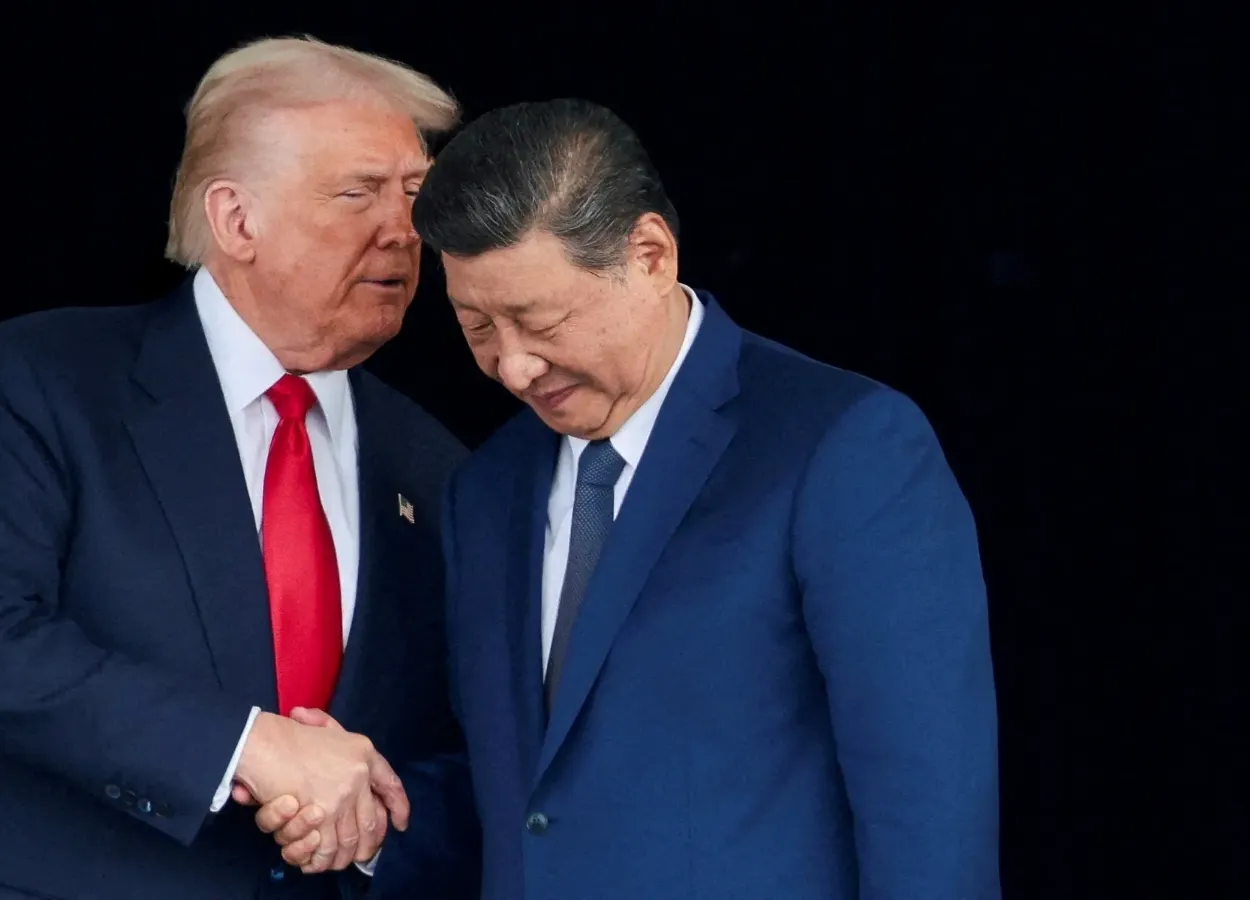
A US president asks his chief strategic rival whether he would like to buy American weapons. That is the scene David Perdue, Washington’s ambassador to China, put before viewers on Sunday, and it sits awkwardly beside almost every rule that has shaped US-China defence ties since 1989. The Trump Xi arms offer surfaced on 27 September 2026, when Perdue told Fox News Sunday that Donald Trump had asked Xi Jinping, at some unspecified point, whether China might want to purchase US arms.
Washington then disowned the idea. A White House official told the New York Times that the United States has no plans to sell arms to China, and the State Department said there is no offer or plan. Perdue’s account and the official line now sit side by side, and neither settles whether Trump ever put the question to Xi. Perhaps it was a serious commercial gambit. Perhaps it was a rhetorical jab that grew in the retelling. Either way, the anecdote matters for a different reason: Perdue used it to explain how Trump handles the most sensitive arms file in Asia, the sales to Taiwan that Beijing has protested for decades, and a record package that is now on hold.
This analysis separates what is on the record from what is inference, and asks what the Trump Xi arms offer says about the price Taiwan’s security may carry in the next round of summits.
What the Trump Xi arms offer claim actually says
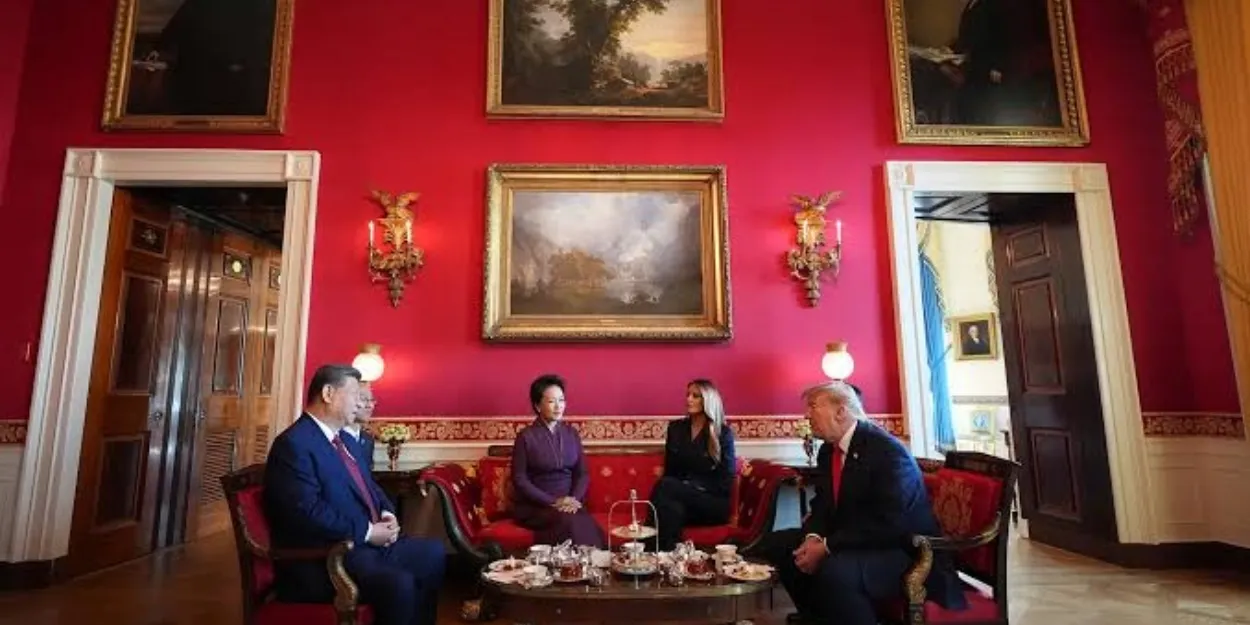
Ambassador David Perdue said on 27 September 2026 that Trump asked Xi whether he would like to buy US weapons, giving no date or setting. A White House official and the State Department then said the United States has no plan or offer to sell arms to China. Beijing did not confirm the remark. The denials address any sale; they do not say whether the question was asked.
According to the Associated Press report, host Shannon Bream had cited concerns from lawmakers in both parties over delayed weapons orders to Taiwan, and asked whether Washington was holding back to appease Xi, who had been at the White House days earlier. Perdue rejected the premise. He argued that Trump is as firm on Taiwan as anyone he has seen, and said the two leaders continue to discuss future sales to the island. Then came the line that travelled: Trump keeps telling Xi that America sells arms around the world, and “He actually asked President Xi, would he like to buy some, at one point.”
Read closely, the sentence does two jobs. It offers a defence, that Taiwan sales are ordinary commerce like sales to anyone else. It also confirms, by implication, that Taiwan arms are a subject of conversation between the two leaders. The second point is the more consequential, and it is the one Beijing left undisputed. Foreign ministry spokesperson Guo Jiakun said only that China strengthens its national defence according to its own needs and is committed to peace and stability.
The denials of the Trump Xi arms offer came quickly. According to AFP, a US official said the government has no plans to sell weapons to China, and Perdue himself said the US position has not changed. The State Department told the New York Times that US law prohibits arms sales to China and that there is “no offer or plan to sell arms to China.” The wording is precise: it rules out a sale, but it does not say whether Trump raised the subject in conversation, a gap that at least one outlet flagged. Perdue has not added a date or detail in the coverage reviewed.
TES classifies the material this way. Verified fact: Perdue made the statement, and Xi’s state visit took place. Official statements: Perdue’s account of Trump’s question, the White House and State Department denial of any offer or plan, and Beijing’s decision not to confirm the remark. TES analytical assessment: everything that follows about meaning and consequence.
Why a US arms sale to China would break decades of policy
The United States has barred weapons sales to China since the June 1989 Tiananmen crackdown, and the State Department reiterated after Perdue’s remarks that US law prohibits them. The Taiwan Relations Act separately commits Washington to supply Taiwan with the means to defend itself. A Trump Xi arms offer taken literally would collide with both, and would put US military technology in the hands of a potential adversary. The Associated Press notes that such a deal would upend generations of policy.
The precedent, oddly, cuts both ways. In the 1980s the two capitals did trade in military hardware. Under the Peace Pearl programme, agreed in 1986, a US contractor was to modernise the avionics of China’s J-8II fighter. The programme was suspended after Tiananmen and never revived. The episode shows that arms commerce between Washington and Beijing is not a logical impossibility. It was once a by-product of a shared front against the Soviet Union, and nothing comparable holds today, when the People’s Liberation Army is the yardstick against which the Pentagon measures its own planning.
So a literal reading of the Trump Xi arms offer is hard to sustain, and Washington’s own statements now say as much. A likelier reading is rhetorical. Trump has a well-documented habit of turning security questions into commercial ones, and an ambassador defending him on live television has reason to lean on a vivid anecdote. That, again, is an assessment and not a finding. The distinction matters because the rhetorical version is still revealing: it treats Taiwan sales as a category of trade rather than a treaty-adjacent commitment.
The $14 billion freeze behind the Trump Xi arms offer
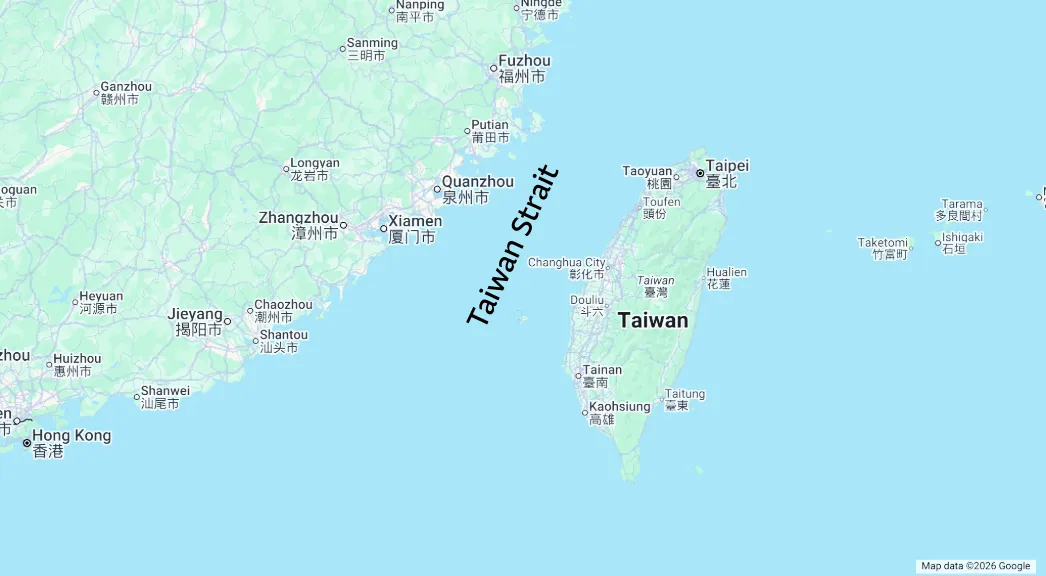
After the May 2026 summit in Beijing, the United States paused a record $14 billion arms package for Taiwan, according to the Associated Press. The package remains pending after Xi’s September visit. Trump has described Taiwan arms sales as a “very good negotiating chip” with China, and lawmakers from both parties have raised concerns about delays to Taiwan’s orders.
The chip remark comes from an earlier AP report, and it frames everything else. If arms sales are a bargaining counter, then the timing of a notification to Congress is itself a diplomatic instrument. TES reported on 25 September that the $14 billion package stayed frozen through Xi’s visit while a trade truce was extended rather than renegotiated. The Trump Xi arms offer adds a data point to that picture, not a contradiction.
Defenders of the administration, and of Perdue’s framing of the Trump Xi arms offer, point to the other side of the ledger. Perdue said Trump has approved more arms for Taiwan than any president since 1979, and AFP notes that Washington approved an $11.1 billion sale in December 2025. Both facts can hold at once: a record approval last December, and a larger package on hold since May.
There is also a historical yardstick. In July 1982 the Reagan administration gave Taipei six assurances, among them that Washington would not consult Beijing before deciding on arms sales to Taiwan. The design was to insulate the sales from Chinese leverage. Perdue’s description of Trump explaining the sales to Xi, and of both leaders continuing to discuss them, sits uneasily with that principle. It does not prove the principle has been abandoned. It does show how far the conversation has drifted from the 1982 formula.
Who gains and who loses from treating arms as commerce
In TES’s assessment, Beijing gains the most from the Trump Xi arms offer framing: it hears Taiwan arms described as negotiable commerce and sees a freeze it has long demanded. Taipei carries the risk of delay. The White House gains flexibility across trade, technology and security files, at some cost to credibility with allies. Congress, largely bipartisan on Taiwan, must test whether the pause is temporary. This is analysis, not reported fact.
| Actor | Likely gain | Likely cost |
|---|---|---|
| Beijing | Arms sales framed as negotiable; a freeze it has pressed for | Little visible, though US regional deployments continue |
| Taipei | Continued rhetorical backing from Washington | Delivery delays; uncertainty over whether its package is a bargaining chip |
| White House | Room to trade across trade, tech and security files | Credibility with Taiwan and Indo-Pacific partners |
| US Congress | A bipartisan platform to demand delivery timelines | The executive controls when formal notifications are sent |
| US defence suppliers | Taiwan’s long-term requirement is unchanged | Contract awards and delivery schedules slip while the package is paused |
What the pause means for defence markets and India
For defence markets, the immediate effect of the Trump Xi arms offer episode is timing, not demand. A paused Foreign Military Sales package delays contract awards and delivery schedules for US suppliers, while Taiwan’s underlying requirement stays the same. The coverage reviewed does not itemise the $14 billion package, so TES does not attribute exposure to specific companies. For India, the episode strengthens the case for strategic autonomy in procurement.
The marker to watch is the formal notification to Congress. Until it arrives, the package sits in a grey zone that suppliers, analysts and Taipei’s planners must all price in. Allies across the Indo-Pacific will read the same signal from a different angle, as evidence of how far a US supply line can be counted on during a summit season. Rare earths belong to the same bargaining frame, a point TES made after the Beijing meeting in its analysis of rare earths, missiles and supply chains.
For New Delhi, the pattern feeds a wider concern. TES has examined how the Washington summit raised questions about a G2 drift and India’s strategic autonomy. An America that treats Taiwan arms as a chip may treat other partners’ requirements the same way, which is an argument for diversified sourcing and for the domestic defence-industrial push already under way in India.
What to watch on the Trump Xi arms offer before the next meetings
Trump said on Truth Social that he will meet Xi in China in November for the APEC summit and again a month later at the G20 in Miami, according to The Hill. AFP places the November meeting in Shenzhen. Those two meetings are the near-term test: any movement on the paused Taiwan package, or any further clarification of the Trump Xi arms offer, will most likely surface around them.
- A clarification on the question itself. Officials have denied any plan to sell arms, but none has addressed whether Trump raised the subject with Xi. A direct answer would settle whether the Trump Xi arms offer was rhetoric or something more.
- A congressional notification. Formal notice of the paused package would end the ambiguity. Continued silence would confirm the freeze is doing diplomatic work.
- Chinese readouts. State media summaries of the APEC meeting will show whether Beijing links Taiwan arms to trade-truce items. The Hill’s report on the meeting schedule is the baseline for dates.
- Legislative language. Bipartisan concern over delayed deliveries could show up in defence authorisation text or letters to the administration.
- Delivery of existing orders. Backlogged Taiwan deliveries are a cleaner signal than rhetoric, because they are hard to spin.
Key takeaways
- The Trump Xi arms offer rests on Perdue’s account. The White House and State Department deny any plan or offer to sell arms to China, Beijing did not confirm it, and no date was given.
- The State Department says US law prohibits arms sales to China, which makes a rhetorical reading likelier than a literal one.
- The consequential element is the confirmation that Taiwan arms are discussed with Xi, which sits uneasily with the 1982 Six Assurances.
- The $14 billion package, paused after the May summit, is the real variable to track.
- The next test comes at APEC in November and the G20 in Miami in December.
In 1986 Washington and Beijing could trade avionics because both feared the same adversary. Forty years on, the ambassador’s anecdote suggests a quite different transaction, in which the weapons in question are Taiwan’s, and the buyer whose approval seems to matter is the one they are meant to deter.
Disclaimer: This analysis is for information and does not constitute investment advice. References to defence suppliers and order timing are general observations about procurement processes and do not recommend buying, selling or holding any security. Readers should consult a registered adviser before making investment decisions.
Frequently asked questions on the Trump Xi arms offer
Was the Trump Xi arms offer a real proposal to sell US weapons to China?
The claim comes from Ambassador David Perdue, who said Trump asked Xi if he would like to buy US arms. Perdue gave no date. A White House official and the State Department said the United States has no offer or plan to sell arms to China, and Beijing did not confirm the remark. Those statements do not address whether the question was asked in conversation.
Is it legal for the United States to sell arms to China?
No. The State Department said after Perdue’s remarks that US law prohibits arms sales to China. The restriction dates to the sanctions that followed the June 1989 Tiananmen crackdown, which is why analysts view a literal offer as improbable.
What is the status of the $14 billion Taiwan arms package?
According to the Associated Press, the United States paused the record package after the May 2026 Trump-Xi summit in Beijing. It remained pending after Xi’s September visit to Washington.
When do Trump and Xi meet next?
Trump said on Truth Social that he will meet Xi in China in November for the APEC summit, and again a month later at the G20 in Miami, according to The Hill. AFP reports the November meeting will be in Shenzhen.