
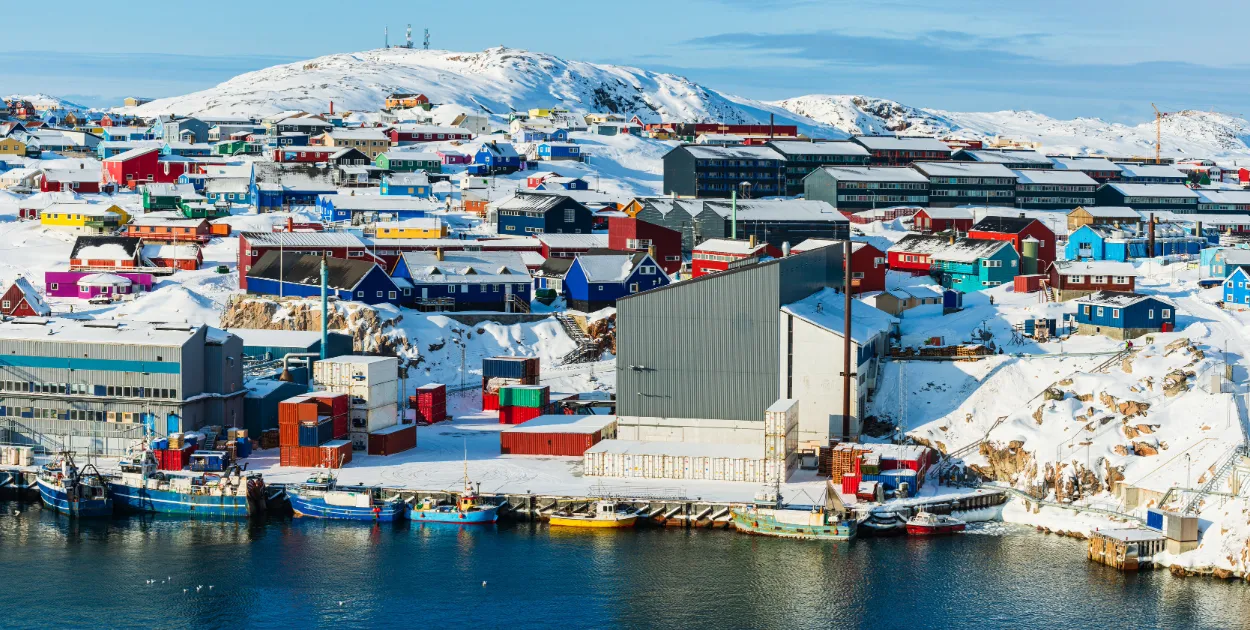
How a Trump post, a signed text and Venezuela’s oil deals show who controls access to Greenland oil reserves, and what India should watch.
Greenland oil reserves, in the strict industry sense of proven volumes, stand at zero, and the island produces no oil. The US Geological Survey (USGS) estimates undiscovered, technically recoverable resources in East Greenland at about 31.4 billion barrels of oil equivalent, which is an estimate and not a stockpile.
That figure sits behind Donald Trump’s 14 October post announcing oil, gas and mineral exploration in “our new and beautiful Greenland.” The agreement he signed with Denmark and Greenland on 22 September gives Washington no exploration rights. The politics around Greenland oil reserves is already at work, and Indian refiners have seen how it works in Venezuela.
What Did Trump Announce on 14 October, and What Backs It Up?
Early on Wednesday, after a campaign event in Wasilla, Alaska, Trump posted on Truth Social that large-scale oil, gas and mineral exploration was getting ready to begin in Greenland. He gave no details and no data on Greenland oil reserves. He added that experts rate the easily available oil there above that of almost any land in the world, and that any future attack on the United States would have to cross Greenland, according to the DW and Associated Press (AP) report of the post.
AP noted that Greenland is a self-governing territory of Denmark and not part of the United States. It linked the timing to rising American energy prices before next month’s midterm elections, which is AP’s reading and not an official explanation. The Danish and Greenlandic leaders had not commented when DW published.
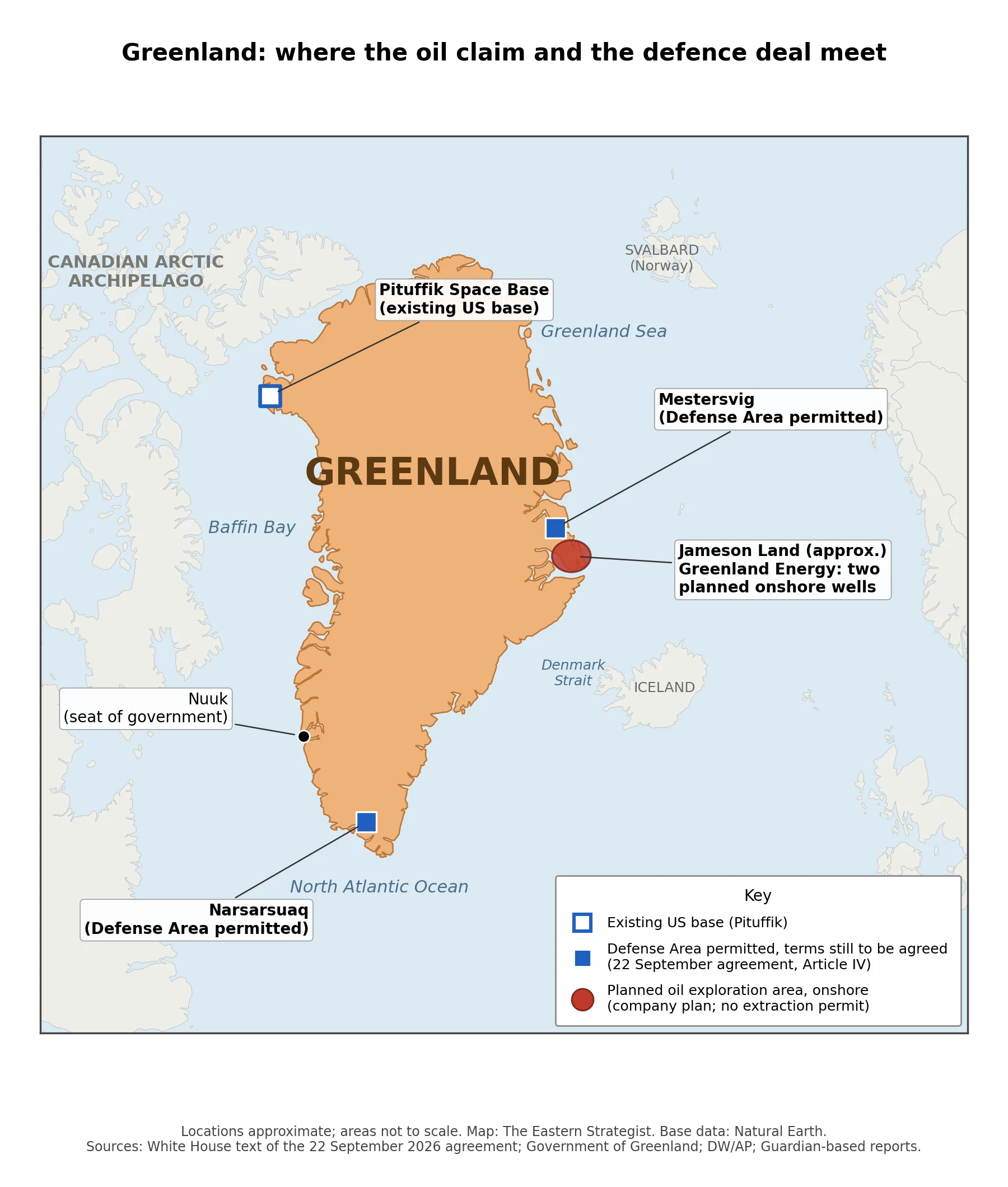
The post followed the agreement signed on 22 September by Trump, Danish Prime Minister Mette Frederiksen and Greenland Prime Minister Jens-Frederik Nielsen. The White House text reaffirms Danish sovereignty and territorial integrity and recognises the Greenlandic people’s right to self-determination. It lets the United States modernise Pituffik Space Base and set up additional Defense Areas at Narsarsuaq and Mestersvig, on terms still to be agreed.
It has no article on oil or gas exploration, and DW and AP report that it grants no special exploration rights. It has not yet taken effect either, since Article XII requires Denmark and Greenland to complete their parliamentary procedures first. TES has examined the security deal’s Atlantic implications separately.
Washington has held basing rights in Greenland without title since the 1951 defence agreement, which the new text amends. The post sounds like ownership. The document describes access.
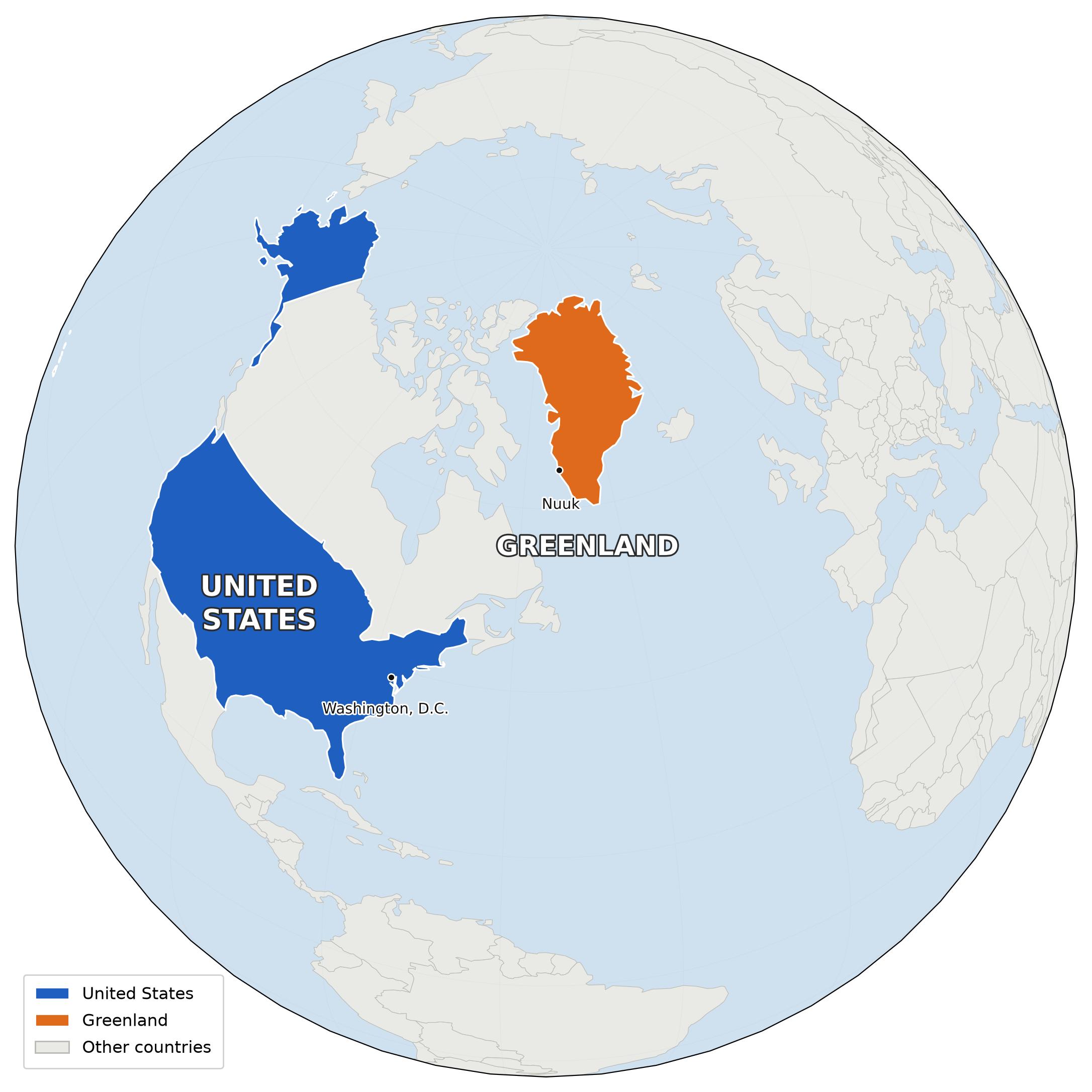
How Big Are Greenland Oil Reserves, and Can Anyone Reach Them?
There are no proven Greenland oil reserves. The best public figures for Greenland oil reserves are USGS assessments of undiscovered resources: about 31.4 billion barrels of oil equivalent in the East Greenland Rift Basins (2007 assessment), and 7.8 billion barrels of oil plus 91.9 trillion cubic feet of gas in the West Greenland–East Canada province (2023), which spans Canadian waters too.
Two caveats travel with those numbers. The USGS counts what could be technically recovered, with no test of cost, and Petroleum News’s summary of the East Greenland work says the volumes assume less than about 500 metres of water and no sea ice. For scale, USGS’s 2025 estimate for US federal onshore lands is 29.4 billion barrels of oil and 391.6 trillion cubic feet of gas, which is not like-for-like but is the same order of magnitude.
The only live project is private. Greenland Energy, a Texas company founded in 2025, plans two exploration wells in Jameson Land, an onshore basin in East Greenland. Its executives have claimed crude worth up to USD 1 trillion, according to reports based on the Guardian’s investigation, and a report on its shareholder update cites potential of up to 13 billion barrels. Those are company claims. The company has booked no Greenland oil reserves and has no production in the area.
The ground itself resists. AP says exploration has stymied companies for decades, with rare earths, oil and gas never progressing beyond the exploratory stage. Greenland’s own 2020 mineral strategy listed two producing mines and described the path to an exploitation licence as longer and more complex than intended. The first drilling wave after the 1973 oil shock produced dry holes in 1976 and 1977, per the Arctic Institute.
Warming changes part of this. Less sea ice widens offshore working windows, and the USGS East Greenland figure already assumes open water, while onshore Jameson Land is governed by cost and remoteness. TES assessment: warming opens access to Greenland oil reserves without fixing the economics of reaching them.
Who Decides in Greenland: Nuuk, Copenhagen or Washington?
Nuuk does, for now, and that decides whether Greenland oil reserves can ever become production. Greenland’s government said on 30 July that Greenland Energy lacked the necessary approvals from its mineral resources authority after drilling materials were brought ashore, and warned that future logistics must be approved in advance.
The industry ministry’s notice said no permit to extract oil exists, the project is in the exploration phase, and preliminary studies and public hearings must come first. Greenland’s mineral authorities told the Danish outlet Danwatch they doubted approvals could be secured by the end of 2026, as reported by Newsweek.
Greenland stopped issuing new oil licences in 2021 over environmental concerns. The British company 80 Mile already held rights in Jameson Land, and corporate filings show Greenland Energy would take a majority stake in return for funding exploration, subject to government approval. Chairman Larry Swets has said the project is unrelated to annexation, and the Guardian reported that the board includes people linked to Trump’s circle.
Under Greenland’s own system, an exploitation licence needs an environmental impact assessment, an approved closure plan with clean-up security, and in some cases a social impact assessment and a benefit agreement with local authorities. A presidential post waives none of it.
The agreement moves each capital differently. Greenland keeps licensing control and gains a contracting preference for Greenlandic firms on Defense Area work under Article IV. Denmark and Europe get reaffirmed sovereignty and, under Article XI, an independent Greenland bound to stay in NATO and assume the agreement’s obligations. The United States gains military access and an investment screen, and no rights over Greenland oil reserves or minerals.
Is the Plan Only About Oil? Minerals and Article X Say No
No. Greenland oil reserves are one of three resource claims in the post, which names minerals as well, and the text’s strongest resource clause concerns control of capital, not barrels. Article X bars states and investors from outside NATO, NATO partners and EU members from holding control, significant influence or sensitive information in “Particularly Sensitive Sectors,” which the text says include the extraction of resources, unless the three governments agree otherwise.
AP says Greenland holds large rare earth deposits, that China dominates supply, and that the Trump administration wants to break that hold, though the minerals are encased in rock and the offshore oil is covered by Arctic ice. The text’s preamble also records US “minerals cooperation” with Greenland. The wider contest is covered in TES’s piece on Greenland and the battle for the High North.
The United States already has a funded alternative. The October 2025 US–Australia Critical Minerals Framework commits USD 1 billion from each government to speed a USD 8.5 billion pipeline of projects, with the Alcoa–Sojitz gallium project and Arafura’s Nolans rare earths project prioritised, according to the Minerals Council of Australia.
The council puts them at about 10 per cent of world gallium supply and about 5 per cent of global rare earths. Greenland had two producing mines in 2020, for anorthosite and rubies, and no rare earth mine.
Venezuela Shows What “Control” Looks Like, and Where It Stops in Greenland
The Greenland post arrives after a larger move in Venezuela, which is the better guide to Washington’s method. After US forces seized Nicolás Maduro in January, US officials said Washington would control Venezuelan oil sales and revenue indefinitely, with proceeds going into accounts controlled by the US government, Energy Secretary Chris Wright said.
On 28 August Trump said the United States had secured majority control of more than 65 billion barrels of Venezuela’s proven reserves through a partnership with private business, roughly a fifth of the total according to AP. He gave no structure.
On 2 September the US Department of Energy announced that Chevron would invest more than USD 7 billion over five years to more than double output to 600,000 barrels a day, and that Eni had signed a 25-year contract for the Junín 5 field. AFP reported that the US government is taking a 35 per cent stake in North American Blue Energy Partners, Venezuela’s second-largest private oil company. Wright said the United States was “not stealing Venezuelan oil,” and interim President Delcy Rodríguez said Venezuela retains its sovereignty.
The cases differ in ways that matter. Venezuela has proven reserves, existing fields, a state company and a government under heavy US pressure; it produces about 1.2 million barrels a day, and Wright projects more than 2 million by the end of the decade. Greenland has estimates of oil and gas, no production, and a government that holds the licences and has just signed a text reaffirming its sovereignty.
TES assessment: the Venezuelan method does not transfer easily, so Greenland oil reserves are likely to matter less to Washington than the island’s position and minerals.
Venezuela and Greenland oil reserves compared
| Venezuela | Greenland | |
|---|---|---|
| Reserves | Proven, the world’s largest (AP) | None proven; USGS estimates only |
| Output | About 1.2 million barrels a day | None |
| Licensing | State company PDVSA; new deals face possible legal challenge (AP) | Greenland’s government and its mineral resources authority |
| US position | Trump claims majority control of 65 billion barrels; 35 per cent stake in one private producer (AFP) | Defence access under the 22 September text; no resource rights |
What Does It Mean for India: Barrels Through US Licences, Minerals Through Article X
India’s exposure to Greenland oil reserves is hypothetical. Its exposure to the same American method in Venezuela is concrete.
Venezuelan crude as a Hormuz hedge
India imported about 88.7 per cent of its crude in 2025-26, according to Petroleum Planning and Analysis Cell (PPAC) data cited in market analyses. The Centre for Research on Energy and Clean Air (CREA) estimated that India incurred about USD 22 billion in additional fossil-fuel import costs between March and August 2026, second only to China among importers, with Brent averaging USD 93 a barrel. TES has covered the Hormuz crisis and its impact on India.
Bloomberg reported in April that India was set to import the most Venezuelan oil in almost six years, with Hormuz typically carrying almost 40 per cent of Indian supplies. Reliance Industries holds a US licence to buy directly from state-owned PDVSA.
Reuters cited PDVSA records showing Reliance took about 63,000 barrels a day in early 2025 before Washington suspended most licences that spring, and reports link lower US tariffs on Indian goods to cuts in Russian crude purchases. The channel diversifies supply away from Hormuz, but its terms are written in Washington, and it has been closed once already.
Critical minerals: where Greenland fits India’s plan
The Press Information Bureau (PIB) says the National Critical Mineral Mission aims to secure supply from domestic and foreign sources. The Geological Survey of India has 1,200 exploration projects to run between 2024-25 and 2030-31, with 195 taken up in the 2024-25 field season, and targets include 26 overseas mines for public sector firms and 24 for private entities.
The Department of Atomic Energy found about 1,11,845 tonnes of in-situ rare earth oxide at Balotra, Rajasthan, and IREL (India) Limited has 6 lakh tonnes a year of processing capacity. Overseas, KABIL has a lithium exploration agreement in Argentina and an MoU with Australia’s Critical Mineral Office. Greenland is not among PIB’s listed overseas initiatives.
India’s 2022 Arctic Policy tells the government to analyse what Arctic ice melt means for shipping routes, energy security and mineral wealth, and Article X now gives that analysis a legal edge. TES reading: an Indian state or private investor seeking control or significant influence in Greenland resource extraction sits outside NATO and the EU and could face screening, depending on how “NATO partner” is read, since the text does not define it.
No Indian government statement addresses this. The near-term Indian stake is small. The precedent for how access is gated is not.
What Should the Global South Read in the Pattern?
This section is TES analysis, and we have not collected government statements from the Global South. The pattern is that access to resources is being set by US leverage: sanctions licences in Venezuela, a security agreement and investment screening in Greenland. Producers see the limits of sovereignty in one case and the strength of a legal moat in the other, which is why Greenland matters as a test of who holds the pen. Importers such as India buy through permissions. Mineral holders may find that alliance membership shapes who may invest.
Bloomberg reported in September that Venezuela was considering whether to leave OPEC. Venezuela nationalised its oil industry in the 1970s, and Greenland’s first wells were drilled in 1976 and 1977. Half a century later, one is attracting US capital under agreements Washington brokered. The other has not yet produced a barrel.
What to Watch Next on Greenland Oil Reserves and the US Deal
Will Greenland approve any Greenland Energy logistics or drilling?
The mineral resources authority decides. Greenland’s government has warned that future logistics need prior approval, and its mineral authorities told Danwatch they doubted approvals could be secured by the end of 2026, as reported by Newsweek.
Will Denmark and Greenland ratify the agreement and settle the Defense Area terms?
Article XII makes entry into force depend on parliamentary procedures in Denmark and Greenland, and the Narsarsuaq and Mestersvig Defense Areas are permitted only on terms still to be agreed.
Will any US text tie Greenland oil reserves or minerals to the security deal?
The 22 September text has no article on resource exploration, and AP says it grants no special exploration rights. A later instrument would change that, so it is the marker to watch.
Will India’s Venezuelan crude licences hold, and will New Delhi address Article X?
Reliance’s US licence to buy directly from PDVSA sat in a licensing channel that Washington suspended once in 2025. No Indian government statement addresses how Article X treats Indian investors in Greenland extraction.
TES assessment: Greenland oil reserves will stay an estimate for years, and the Greenland oil reserves debate will outlast the post. The earlier consequences lie in licence regimes, investment screening and the price of access, and India is more exposed to the Venezuelan version of that story today than to anything under Greenland’s ice.
Source note: US and Greenland government documents, USGS assessments, Indian government (PIB) releases and the US Department of Energy, plus wire and press reporting. Estimates are not reserves; company figures are claims.