
Seven months into the largest oil supply disruption in market history, Washington has declined the one offer on the table to end it: a seven-day Strait of Hormuz reopening. The world’s largest economy is paying record diesel prices; on Saturday its president rejected the deal to relieve them. That contradiction, not the diplomacy itself, is what markets began pricing on Monday morning.
American diesel crossed $200 a barrel this month. On 26 September 2026, the president of the United States turned down the offer to reopen the world’s most important oil chokepoint. That contradiction — not the choreography of the United Nations General Assembly week in New York — is what global oil markets began pricing the moment they opened on Monday. President Donald Trump publicly rejected Iran’s seven-day roadmap for the Strait of Hormuz reopening, a plan Tehran had conveyed through Qatari mediators days earlier. “I rejected their deal,” he told reporters outside the White House. “They want to make a deal where they open the strait immediately because they’re losing so badly.” By Monday morning in Asia, Brent crude was back above $105 a barrel, with intraday quotes touching $107.
What Iran Offered — and What Washington Refused
Iran’s proposal, presented by Foreign Minister Abbas Araghchi at the United Nations General Assembly, offered a Strait of Hormuz reopening within seven days in exchange for four American actions: lifting the naval blockade on Iranian ports, waiving sanctions on Iranian oil sales, releasing an estimated $12 billion in frozen Iranian assets, and observing a ceasefire across every front of the wider war, including Lebanon and Yemen. Araghchi estimated the American steps would take four to five days, the strait would reopen on day six, and negotiations on a final agreement would begin on day seven. The terms were not new — they compressed the memorandum of understanding the two countries signed in Islamabad on 17 June, whose fragile Strait of Hormuz reopening collapsed within weeks when strikes resumed over transit rights through the waterway.
Trump’s rejection arrived in two parts. Publicly, on the White House lawn. Privately, according to unnamed US officials cited by The Wall Street Journal, he has told aides he expects to resume bombing Iranian targets after the mid-term elections on 3 November. There is a gap between the two: Araghchi told NBC’s Meet the Press on Sunday that no formal rejection had yet reached Tehran through the mediators, and Trump himself told Axios in a phone interview that he expects negotiations to resume this week. “They want to make a deal, but it is not the deal that I want to make,” he said. “It is what we would have maybe agreed to a year ago.”
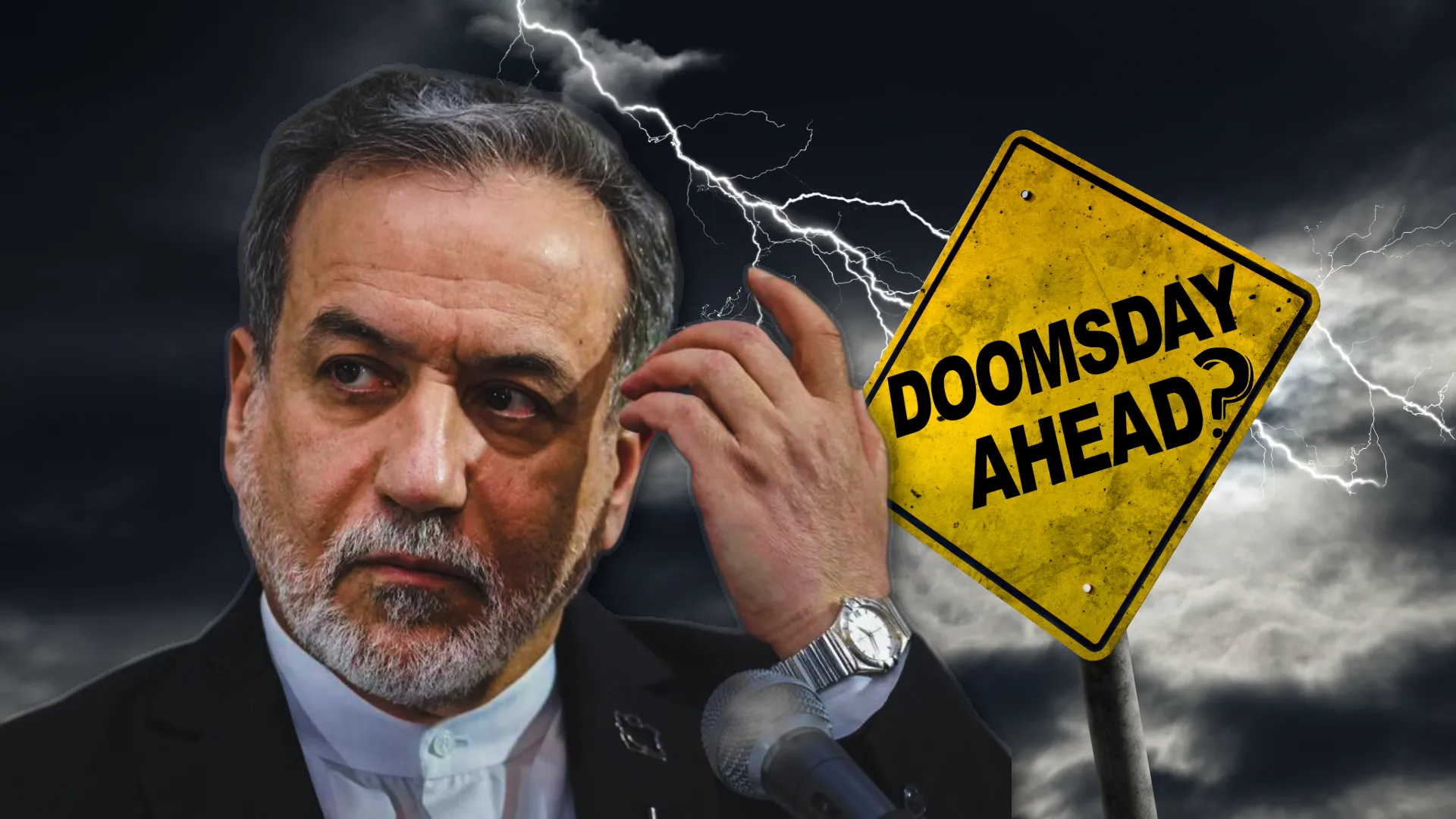
The official American objection was sequencing. “They were asking for everything up front with a promise that they would then talk,” US Ambassador to the United Nations Mike Waltz said on State of the Union, calling the offer “a pretty cynical attempt to put something on the table that they knew was unacceptable.” Araghchi’s response on Meet the Press was direct: “We are fully prepared for the war to be resumed. We stand firm in the face of any new aggression, even if it comes to a doomsday war. At the same time, we stand ready for diplomacy. It is up to President Trump to choose.” He added that Iran had changed its tactics after two previous rounds of fighting, and he was unmoved by the American electoral calendar: “We don’t care about US mid-term elections. We care about our national interests.”
Why Both Sides Believe Time Is on Their Side
The rejection looks less like a rupture than a wager. Both governments have calculated that waiting improves their terms for a Strait of Hormuz reopening, and both are betting on the same date: 3 November. Trump’s position, as analysts quoted by Al Jazeera framed it, is that economic pressure has not yet run its course — his administration has tightened the naval blockade while Treasury Secretary Scott Bessent promised a global campaign against Iran’s financial interests, and new aviation sanctions disrupted Iranian flights only last week. The White House official line is that Washington “is in a very strong position” and “not in a rush.” Tehran’s counter-logic is that Qatar, Saudi Arabia, the United Arab Emirates, global energy markets and ultimately Trump himself have a lower tolerance for prolonged disruption than Iran has for economic punishment — so the price of a Strait of Hormuz reopening rises the closer the midterms get.
The calendar pressures the American side more than the rhetoric admits. The latest NBC News Decision Desk poll found 31 per cent of respondents approving of Trump’s handling of the Iran war and 69 per cent disapproving, with the war looming over the elections as American petrol sits above $4.40 a gallon and diesel near $6.40, figures cited on NBC’s Meet the Press. Iranian President Masoud Pezeshkian told journalists in New York that Tehran wanted a deal before the midterms: “We don’t want it to get to the mid-term elections.” Trump has said the opposite — that a deal comes “right after the election” because Iran is “waiting to see how I do in the mid-term election.” A veteran of the June collapse, Araghchi is openly sceptical of re-engaging an administration that, in his telling, attacked Iran twice during earlier rounds of talks. “But I’m still trying diplomacy,” he said, “because I think we shouldn’t miss any chance for peace.” The choice between the two paths, he insisted, now sits with the White House.
Strait of Hormuz Reopening: What Oil Markets Are Already Pricing
Oil markets stopped pricing a quick Strait of Hormuz reopening weeks ago; they are now pricing the calendar. The International Energy Agency (IEA) has classified the disruption as the largest supply shock in the history of the global oil market — roughly 20 million barrels a day of crude, products and liquefied natural gas normally transit the strait — and its members released 400 million barrels of emergency stocks on 21 March, the largest coordinated release ever organised. Benchmark Brent traded around $105 a barrel at the time of writing of the IEA’s September report, about 45 per cent above pre-war levels; North Sea Dated crude had surged to $113.48 on 9 September. The squeeze is sharpest in products: US diesel crossed $200 a barrel in early September, 94 per cent above pre-war levels. Global inventories have drawn down by 507 million barrels since the war began, an average of 2.8 million barrels a day, and world demand is forecast to fall by 2.5 million barrels a day this year — a rare demand destruction engineered by price, not recession.
The flat price of crude understates what a delayed Strait of Hormuz reopening costs. According to commodity analytics firm Kpler, freight for a supertanker from the Middle East Gulf to China reached $24 a barrel in mid-September, with Gulf of Oman loadings outside the strait at $12 a barrel; freight now accounts for a quarter of the free-on-board crude price from the region, up from around 5 per cent before the war. Very large crude carrier day rates printed a record $647,000 on 28 August. War-risk insurance, which cost 0.25 per cent of hull value before the conflict, now runs at 3 to 10 per cent — meaning a $100 million tanker pays $3 million to $10 million for a single transit that once cost about $250,000. Add freight and insurance together and the Hormuz burden approaches $7 to $8 on every barrel that crosses the strait. There has been partial relief: Middle East exports rebounded to 12.8 million barrels a day in September, the highest since the war began, with Hormuz flows reaching about 7.4 million barrels a day, helped by Saudi Arabia shifting cargoes from Yanbu to Ras Tanura after a Houthi attack on its East-West pipeline.
$140 or $85: the Strait of Hormuz reopening forecast split
Analyst scenarios for what happens next diverge more sharply than at any point in the war, because the disagreement is now about politics rather than barrels — whether the Strait of Hormuz reopening comes through a post-election deal or a post-election bombing campaign.
| Institution | Scenario | Price view | Underlying logic |
|---|---|---|---|
| Rystad Energy | Prolonged stalemate | Brent above $140 | Blockage sustained long enough to tip the global economy into recession |
| Reuters analyst poll | Sustained disruption | Average $134.62; up to $200 | $200 spike if Iran’s Kharg Island export facilities are destroyed |
| Goldman Sachs | Base case | About $85 by year-end | Demand destruction and substitution eventually cap prices |
| US Energy Information Administration | Revised base case | Average $91 in 2026, easing toward $74 in 2027 | Market adapts; Gulf flows normalise only by Q2 2027 |
India’s Bill: Already $22 Billion, and Rising Daily
India has paid more for this war, in relative terms, than almost anyone outside the European Union. An analysis by the Centre for Research on Energy and Clean Air (CREA), published on 26 August, found that fossil fuel importers incurred an additional $330 billion in gross costs in the conflict’s first six months — the EU at $78 billion, China at $35 billion, India at roughly $22 billion, second only to China among the top twenty. India’s net additional cost, after export earnings, was $14.4 billion: 0.38 per cent of GDP, or about 1.4 days of national income. The exposure is structural. India imports over 88 per cent of its crude, and while diversification toward Russia, the US, West Africa and Fujairah has cut the Hormuz share of crude imports to roughly 30 per cent, about 90 per cent of its LPG imports still transit the strait — more than half the household fuel supply directly at risk. Every month without a Strait of Hormuz reopening adds to that bill.
The domestic arithmetic is tightening by the week. India’s crude import bill rose 56.5 per cent year-on-year to $63.4 billion in April–July even though volumes barely moved, and the Indian crude basket has swung from $69 a barrel in February to $157 in March to above $100 this month. Petrol and diesel prices were frozen for 76 days while the government cut excise duty by &8377;10 a litre on 27 March and refiners absorbed the difference; four hikes totalling about &8377;7.5 a litre followed from 15 May. Rating agency ICRA now estimates oil marketing companies are under-recovering about &8377;23 on every litre of diesel and &8377;200 on every domestic cooking gas cylinder — roughly &8377;650 crore a day on diesel alone. The rupee slid 4.9 per cent after the strait closed, to 93 against the dollar, forcing the Reserve Bank of India to spend $46 billion smoothing the decline. All of this lands on the desk of the Monetary Policy Committee when it meets on 7 October, with analysts split between a hold and a hike. The US Energy Information Administration expects Gulf flows to normalise only by the second quarter of 2027 — which means India’s oil shock absorbers, in the phrase of one recent assessment of its inventories and buffers, are exhausting.
Key takeaways
- Trump rejected Iran’s seven-day Strait of Hormuz reopening plan on 26 September, but told Axios he expects talks this week — and The Wall Street Journal reports he expects to resume bombing after the 3 November midterms.
- Both governments are betting the same date: Washington thinks sanctions pressure improves its terms, Tehran thinks Trump’s need for lower oil prices grows after the election.
- Markets price the friction of a delayed Strait of Hormuz reopening, not the headline: Brent about 45 per cent above pre-war levels, US diesel above $200 a barrel, supertanker freight at $24 a barrel and war-risk insurance at up to 40 times pre-war rates.
- India has already paid an additional $22 billion in gross fuel import costs, with oil marketing companies losing about &8377;650 crore a day on diesel alone.
What to Watch: The November Clock
Three signals will decide whether the next six weeks bring a deal or a new bombing campaign. The first is the mediated channel itself: Trump told Axios he expects US negotiators to engage in more talks in the days ahead, and Qatari mediation continues. The second is the post-election window: if the WSJ report is accurate, a rejection at the ballot box on 3 November could trigger the escalation Araghchi has warned against — what he calls a “doomsday war” — while a strong result could accelerate a Strait of Hormuz reopening, since Trump has said he expects a deal “right after the election.” The third is the market’s own leading indicator: freight and war-risk premiums, not crude prices. During the June truce, Brent fell toward $72 while freight stayed elevated — the price celebrated the headline while the shipping bill reported the constraint. If a genuine Strait of Hormuz reopening approaches, those two numbers will converge downward together; if they diverge again, the market is signalling another round of escalation. The rejection, in other words, was the least surprising event of the week. Both sides have decided they get better terms after 3 November — the wager is that the other side’s economy blinks first.
Source transparency note
Verified facts in this article are drawn from NBC News (Meet the Press transcript and report, 27 September 2026), The Wall Street Journal (26 September 2026), Reuters, Al Jazeera, The Hindu, France 24, the International Energy Agency’s Oil Market Report (September 2026), Kpler, Marsh via The National, the Centre for Research on Energy and Clean Air via ET Now, ICRA via India Today, and the Observer Research Foundation. Statements about the intentions of either government that go beyond on-record comments, and the reading of freight and war-risk premiums as leading indicators, are TES Analytical Assessment and are labelled as such in context.
Investment disclaimer: This article discusses commodity price movements and the financial position of publicly listed oil marketing and shipping companies for journalistic purposes only. It is not investment advice, and The Eastern Strategist does not recommend any transaction in any security, commodity or currency. Readers should consult a registered financial advisor before acting on any information here.
Frequently Asked Questions
What was Iran’s seven-day plan for the Strait of Hormuz reopening?
Iran offered, through Qatari mediators at the UN General Assembly, a seven-day Strait of Hormuz reopening if the US lifted its naval blockade, waived oil sanctions, released about $12 billion in frozen assets and observed a region-wide ceasefire including Lebanon and Yemen, with nuclear negotiations resuming on day seven.
Why did Trump reject the Iran peace proposal?
Trump said Iran was “losing so badly” and wanted a Strait of Hormuz reopening without conceding anything. US officials, via The Wall Street Journal, said he is sceptical Tehran will meet his demands and expects to resume bombing after the 3 November mid-term elections. Ambassador Mike Waltz said Iran was “asking for everything up front.” The full interview is documented by NBC News.
What does the rejection mean for the Strait of Hormuz reopening and oil prices?
Brent returned above $105 a barrel on Monday 28 September after the rejection. Analyst forecasts diverge sharply: Rystad Energy sees Brent above $140 in a prolonged stalemate, while Goldman Sachs holds a base case of about $85 by year-end. The US Energy Information Administration does not expect Gulf flows to normalise before Q2 2027.
How has the Iran war affected India?
India paid about $22 billion in additional gross fuel import costs in the conflict’s first six months, its import bill rose 56.5 per cent year-on-year to $63.4 billion through July, and oil marketing companies are under-recovering an estimated &8377;650 crore a day on diesel. The rupee has slid to 93 against the dollar and the RBI meets on monetary policy on 7 October.
Most Read — The Hormuz File
Seven months of coverage on the chokepoint at the centre of the war, from the first closure to the rejected reopening.

1 thought on “Strait of Hormuz Reopening Rejected: Oil’s November Gamble”