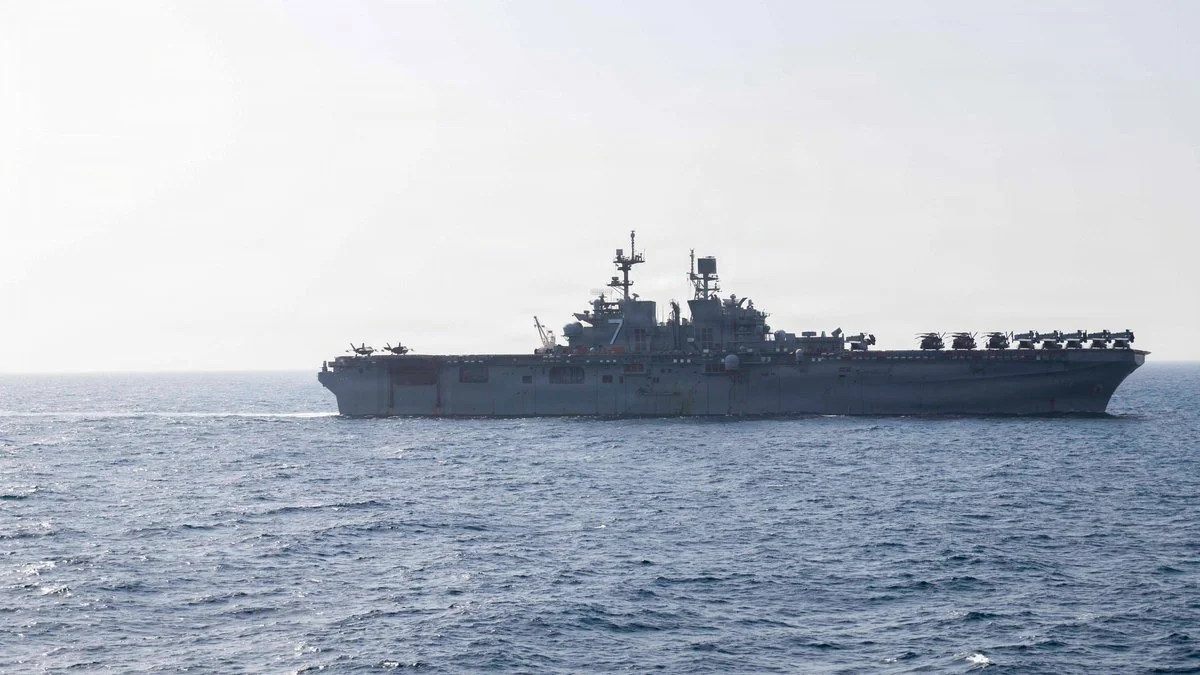
As Indian markets open this week, every investor is watching the Iran War Impact on the Indian Stock Market as the spotlight remains firmly on the escalating standoff between the United States and Iran. With fresh reports of U.S. forces intercepting Iranian attack drones over the Strait of Hormuz and continued military exchanges in the Gulf—including recent missile activity near Bahrain and Kuwait—the conflict has moved past the “short-term shock” phase into a period of prolonged, high-stakes volatility.
For Dalal Street, this is no longer merely a geopolitical headline; it is a structural economic headwind. The central question for investors is whether the fragile balance in global energy markets can hold as the “frozen stalemate” in the Strait is tested by renewed brinkmanship.
The Strait of Hormuz: A Bottleneck Under Siege
The Strait of Hormuz is currently the single most critical variable for global energy security. Recent clashes, including the U.S. interception of Iranian drones threatening maritime traffic, underscore how quickly this bottleneck can shift from a strategic stalemate to an active theatre of escalation.
While military planners focus on deterrence, traders in Mumbai are tracking shipping insurance premiums and tanker flow data. Any sustained closure or severe disruption here acts as an immediate tax on the global economy, directly impacting India’s import-heavy energy architecture.
Iran War Impact on Indian Stock Market and The Crude Oil Barometer
The link between the Iran conflict and Indian equities remains concentrated in crude oil. Brent crude has maintained an elevated range—often hovering around the $90–$100 mark—reflecting a market that is pricing in persistent tension rather than an immediate catastrophe.
However, the margin for error is shrinking. As emergency global buffers and strategic reserves are gradually depleted, the market’s “temporary” resistance to oil price spikes is weakening. For Indian investors, this elevated price environment is the primary driver of inflationary pressure, impacting corporate margins across:
- High-Impact Sectors: Airlines, logistics, paint manufacturers, and oil marketing companies.
- Cost-Push Inflation: A direct threat to manufacturing expenses and consumer demand.
Market Dynamics: Rotation over Decline
Historically, geopolitical crises do not always trigger broad-based market collapses; instead, they accelerate sector rotation. Investors should prepare for a landscape where performance is increasingly decoupled from broad indices:
- Potential Defensive/Strategic Plays: Defence manufacturers (benefiting from sustained demand for regional security upgrades) and select energy exploration firms.
- High-Risk Pressure Points: Fuel-intensive industries and consumer-discretionary stocks that are highly sensitive to retail inflation.
Critical Indicators for the Week Ahead
Rather than reacting to every headline, monitor these three structural signals:
- Strait of Hormuz Integrity: Look for reports on the safe passage of commercial tankers. Any escalation in drone or missile activity near the Strait is the most immediate trigger for a market “risk-off” move.
- Oil Price Trajectory: Watch for sustained breaches of the $100/bbl resistance level, which would signal that the market is beginning to price in a more severe supply-side failure.
- Diplomatic Momentum: While “Iran ceasefire” remains a top search, focus on the substance of talks. Current diplomatic efforts are struggling to bridge vastly different expectations between Washington and Tehran, making a near-term breakthrough unlikely.
For investors tracking the Iran War Impact on Indian Stock Market, the key challenge is separating emotional reactions from measurable risks. While headlines surrounding military strikes, drone attacks and diplomatic standoffs can trigger short-term volatility, the market’s long-term direction will depend on whether the conflict disrupts global energy flows. Rising oil prices, uncertainty in the Strait of Hormuz, and concerns over inflation remain far more significant than individual battlefield developments. As searches for Iran war news, US-Iran latest news, and Iran ceasefire continue to surge, markets are increasingly focused on economic consequences rather than military outcomes alone.
The Bottom Line
Dalal Street’s current risk environment is being dictated thousands of kilometers away. As the standoff evolves, investors must differentiate between “noise” (tactical skirmishes) and “signal” (fundamental changes to energy supply routes or trade sanctions).
The market is currently betting on the conflict remaining contained, but the ongoing “brinkmanship” makes this a high-beta environment. This week, the most successful investors will be those who prioritize hedging energy-sensitive portfolios over chasing sentiment-driven rallies.