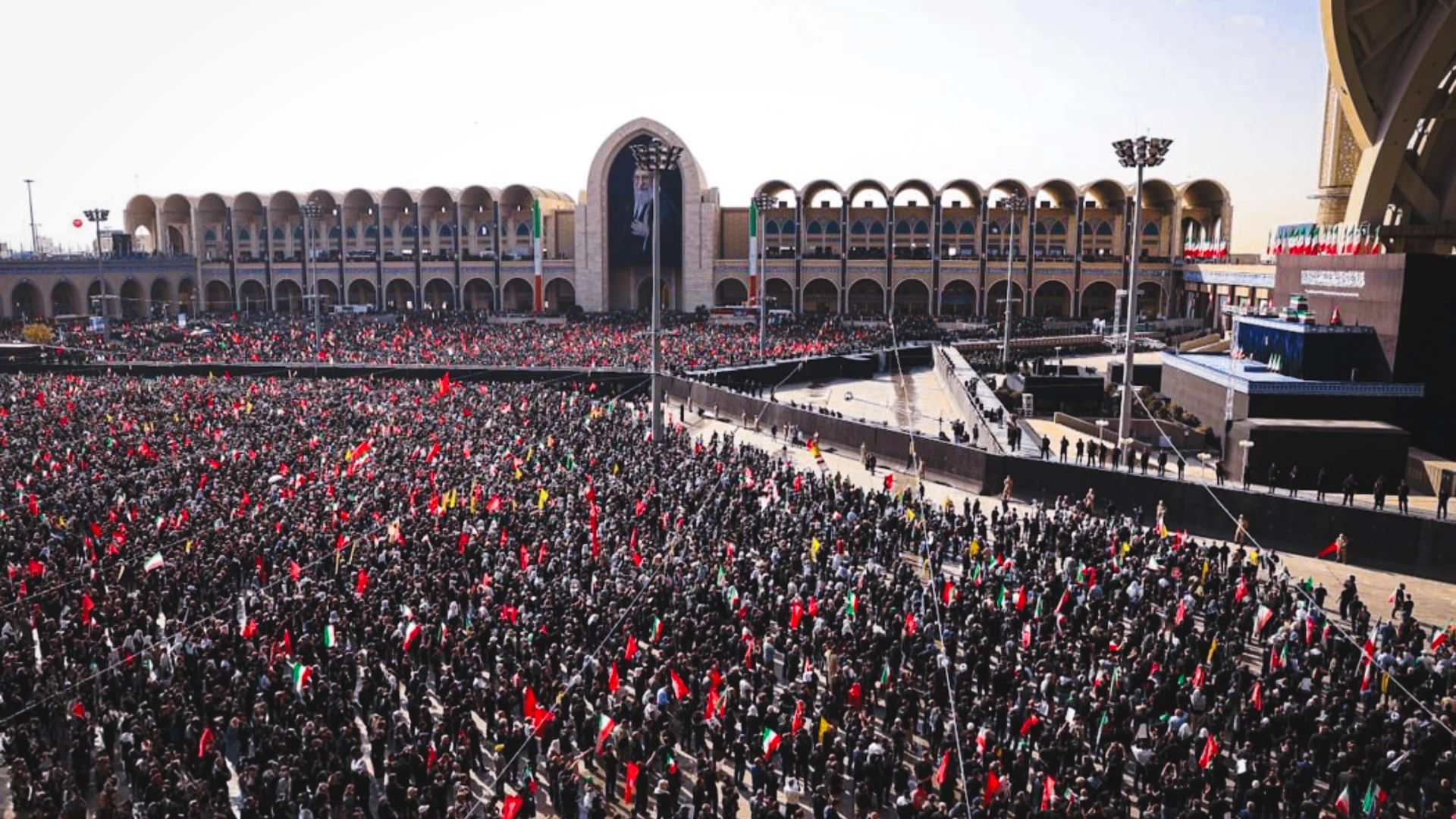
Tehran, 04 July: Tehran has become the centre of global attention as Iran begins the state funeral of former Supreme Leader Ayatollah Ali Khamenei, who was killed during the February 2026 conflict involving the United States and Israel. With vast crowds gathering across the Iranian capital and foreign delegations arriving from around the world, the Khamenei funeral has evolved into far more than a national mourning ceremony—it has become a carefully watched geopolitical event.
Iranian state media has described the funeral as one of the largest public gatherings in the country’s recent history, presenting it as a demonstration of national unity and institutional continuity. While independent verification of crowd estimates remains difficult, the scale of participation reflects the political and symbolic significance attached to the occasion.
For international observers, however, the most important developments extend beyond the funeral itself. The composition of foreign delegations, the messaging from Tehran and the unfolding leadership transition together offer valuable insights into how the Islamic Republic intends to navigate the post-Khamenei era.
A Defining Legacy
Ayatollah Ali Khamenei led Iran for nearly four decades after succeeding Ayatollah Ruhollah Khomeini in 1989. During his tenure, the Office of the Supreme Leader became the country’s principal centre of political authority, overseeing strategic decision-making across the military, judiciary and state institutions.
Several defining characteristics shaped his leadership:
- Consolidation of authority around the Supreme Leader.
- Expansion of the Islamic Revolutionary Guard Corps (IRGC) as a dominant military, political and economic institution.
- Continued investment in missile capabilities and strategic deterrence.
- Development of a regional network of allied governments and non-state actors commonly referred to as the “Axis of Resistance.”
Whether regarded as a guardian of Iran’s revolutionary system or a polarising regional figure, Khamenei’s influence fundamentally shaped the geopolitics of West Asia for more than three decades.
More Than a State Funeral
The Khamenei funeral is also being presented by Iranian authorities as a demonstration of political continuity.
The ceremonies follow the first ten days of Muharram, one of the most significant periods in Shia Islam commemorating the martyrdom of Imam Hussein. Many analysts believe the timing reinforces Tehran’s effort to frame Khamenei’s death within a broader narrative of sacrifice, resilience and resistance.
This symbolism is intended not only for domestic audiences but also for Iran’s regional partners and allied movements across West Asia.
Who Came to Tehran—and What Their Delegations Signal
One of the most closely watched aspects of Ayatollah Ali Khamenei’s funeral has been the composition of foreign delegations. While the ceremony is rooted in religious observance and national mourning, the level of representation chosen by individual countries offers insight into their diplomatic priorities.
The farewell ceremony in Tehran brought together Iran’s top political and military leadership, including President Masoud Pezeshkian, Parliament Speaker Mohammad Baqer Qalibaf, Foreign Minister Abbas Araghchi, Chief Justice Gholam-Hossein Mohseni Ejei, senior military commander Mohsen Rezaee, and Hassan Khomeini, the grandson of the Islamic Republic’s founder, Ayatollah Ruhollah Khomeini. Their joint appearance projected an image of institutional continuity as Iran enters a new political chapter.
Pakistan: Highest-Level Political Support
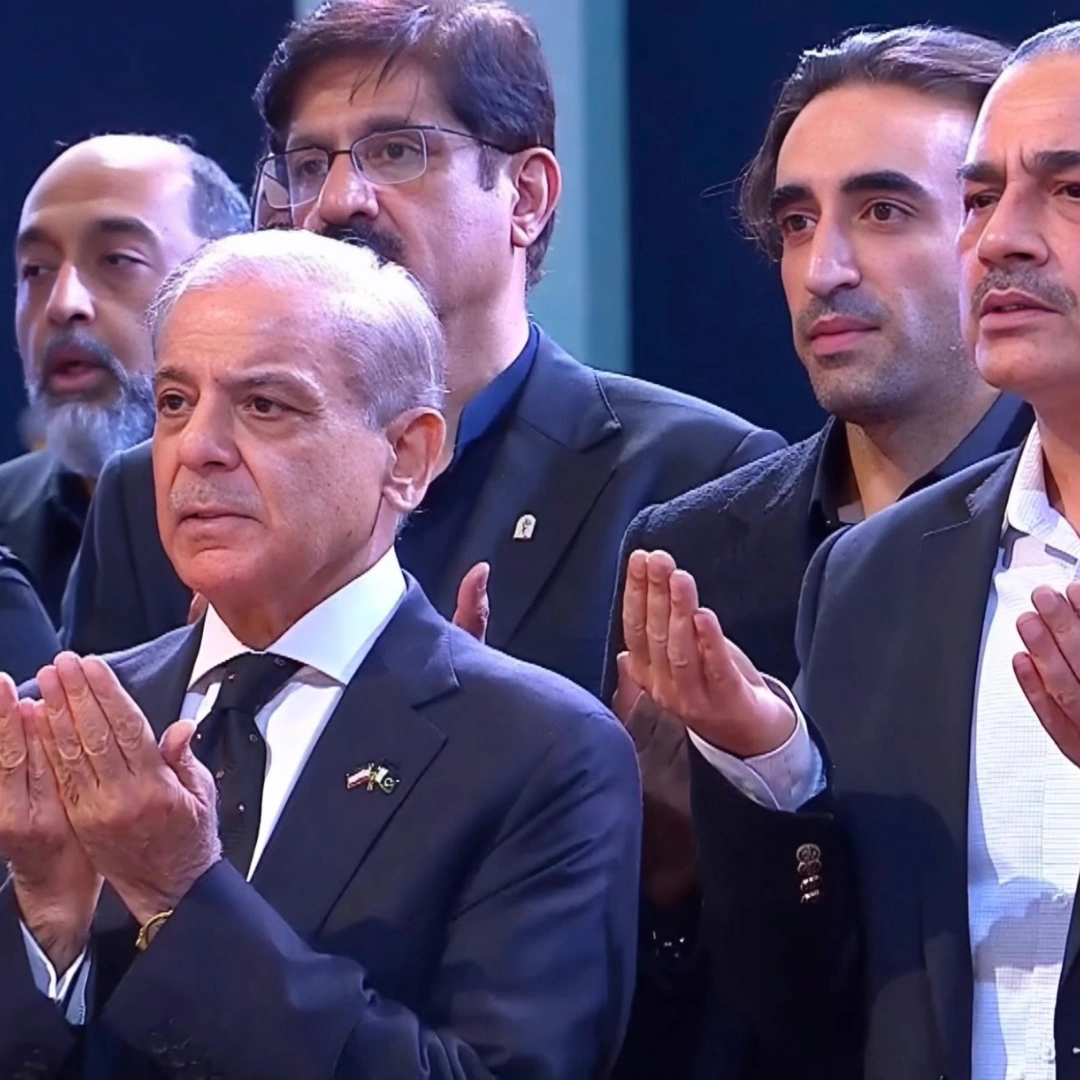
Pakistan dispatched one of the highest-level foreign delegations to Tehran, led by Prime Minister Shehbaz Sharif and accompanied by Field Marshal Asim Munir, Deputy Prime Minister and Foreign Minister Ishaq Dar, National Assembly Speaker Ayaz Sadiq, PPP Chairman Bilawal Bhutto Zardari, Information Minister Attaullah Tarar, and Sindh Chief Minister Murad Ali Shah.Before departing, Pakistan’s Prime Minister’s Office said Sharif would convey the country’s “heartfelt condolences” and reaffirm Pakistan’s complete solidarity with the brotherly Iranian nation.
The decision to send both the civilian and military leadership reflects Islamabad’s desire to demonstrate strong political support for Tehran. Given the shared border, regional security concerns and Pakistan’s recent diplomatic engagement in facilitating dialogue between Iran and the United States, the scale of the delegation underscores the strategic importance Islamabad attaches to stability in Iran.
Russia: A Strategic Partnership Reaffirmed
Russia was represented by Dmitry Medvedev, Deputy Chairman of the Russian Security Council and former President, who attended the ceremony as President Vladimir Putin’s special envoy. During his visit, Medvedev paid his respects before Khamenei’s coffin and met President Masoud Pezeshkian and Foreign Minister Abbas Araghchi.
Rather than attending personally, President Putin chose to send one of Russia’s most senior security figures, signalling continued strategic support while preserving diplomatic flexibility. Moscow and Tehran have expanded cooperation in defence, energy and regional security in recent years, and the funeral provided an opportunity to reaffirm that partnership during Iran’s leadership transition.
India: Strategic Balance
India’s delegation comprised Bihar Governor Syed Ata Hasnain and Minister of State for External Affairs Pabitra Margherita, accompanied by officials from the Ministry of External Affairs. New Delhi said the high-level representation reflected the longstanding civilisational ties and people-to-people connections between India and Iran, which continue to underpin bilateral political and economic engagement.
The composition of India’s delegation reflects its longstanding diplomatic balancing act. While projects such as Chabahar Port and the International North-South Transport Corridor (INSTC) remain central to India’s connectivity strategy, New Delhi has also deepened strategic partnerships with the United States and Israel. By sending senior representatives rather than its top political leadership, India maintained engagement with Tehran while preserving flexibility across its wider foreign policy objectives.
China: Consistent but Calibrated
China sent He Wei, Vice Chairman of the Standing Committee of the National People’s Congress, to represent Beijing at the funeral. Although President Xi Jinping did not attend, Beijing’s decision to dispatch a senior national leader highlights the importance it continues to place on its strategic relationship with Iran, particularly in the areas of energy security, regional connectivity and the broader vision of a multipolar international order.
Why the Delegations Matter
Taken together, the diplomatic representation in Tehran reveals a common pattern. None of the major powers chose to send their head of state or government—except Pakistan, which opted for its Prime Minister alongside the country’s military chief. Russia, China and India all selected senior representatives capable of conveying political respect without elevating the occasion into a summit-level engagement.
That distinction is significant. It suggests broad international recognition of Iran’s importance as a regional power while also reflecting each country’s effort to calibrate its diplomatic messaging amid a fragile security environment. As Iran enters the post-Khamenei era, these carefully chosen delegations offer an early indication of how key regional and global actors intend to engage with its new leadership.
Iran’s Leadership Transition Begins
Beyond the ceremonies, attention is increasingly turning towards Iran’s political future.
Under Iran’s constitutional framework, the Assembly of Experts is responsible for selecting the Supreme Leader. Regardless of the eventual institutional process, the coming months are expected to be dominated by efforts to ensure political stability and preserve continuity across Iran’s governing institutions.
Observers have also noted the limited public visibility of Mojtaba Khamenei during the opening stages of the funeral, fuelling international discussion about how the leadership transition may unfold.
Regional Tensions Remain High
The Khamenei funeral is taking place against a fragile regional security backdrop.
Although the February conflict has subsided, tensions between Iran, Israel and Iran-aligned groups remain elevated. Diplomatic efforts continue, but governments across the region remain alert to the possibility that any major military incident could rapidly alter the strategic environment.
For neighbouring states and global powers alike, maintaining stability during Iran’s leadership transition has become an important diplomatic priority.
What It Means for West Asia
The funeral of Ayatollah Ali Khamenei represents more than the end of an individual political career.
It marks the beginning of a new chapter for Iran at a time when West Asia continues to experience shifting alliances, persistent security challenges and growing competition among regional and global powers.
The carefully calibrated diplomatic representation in Tehran suggests that many countries are seeking to preserve engagement with Iran while avoiding actions that could deepen regional instability.
How Iran’s next leadership chooses to balance domestic consolidation, regional strategy and international diplomacy will shape the geopolitical landscape of West Asia for years to come.
The images emerging from Tehran are not simply those of a nation mourning its longest-serving leader. They also reveal a carefully choreographed display of political continuity, diplomatic signalling and strategic messaging.
Whether the Khamenei funeral ultimately marks a seamless transfer of authority or the beginning of a more uncertain chapter will become clearer in the months ahead. For now, the ceremonies in Tehran have become the first major test of Iran’s post-Khamenei political order—and a reminder that leadership transitions in West Asia often carry consequences far beyond national borders.