
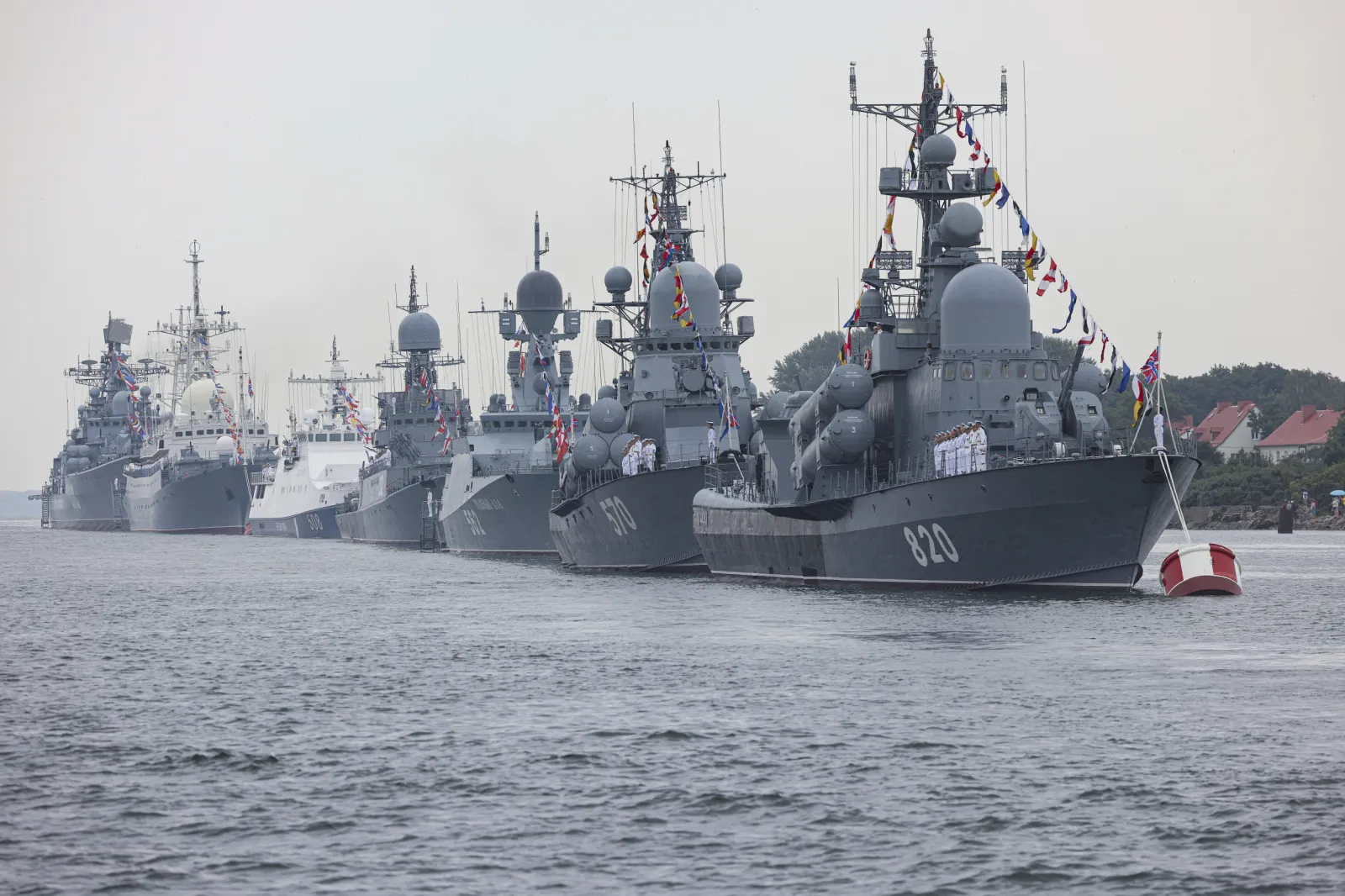
In the closing days of September 2026, Russia did something it has not done since the Cold War ended: it put a nuclear threat against NATO in writing, routed through formal diplomatic channels, and then had the Kremlin publicly endorse it. The object of the warning is Kaliningrad — a heavily fortified Russian exclave wedged between Poland and Lithuania that Moscow has now declared, on paper, it is prepared to defend with atomic weapons.
The delivery mechanism was a document classified as a “non-paper” — diplomatic jargon for an informal communication that carries no treaty obligation but considerable signal value. Seen by Reuters, which reported its contents on 30 September, the text accuses the alliance of pursuing a “dangerous and reckless course” that entails “high risks of the outbreak of a direct armed conflict.” And then comes the sentence that has European defence ministries reading it twice: any confrontation, the document warns, could include “Russian strikes against decision-making centres in the alliance’s member states right from the outset of the conflict.”
Key Takeaways
- The warning is in writing and it is explicit. Russia’s non-paper to NATO says Moscow would use “the entire arsenal of forces and capabilities at its disposal, including nuclear weapons” to defend its territory if alliance members try to isolate the Kaliningrad Region from the rest of Russia.
- There is no NATO blockade plan. No alliance member has announced any move to seal off the exclave. The Russian statements were triggered by British media coverage, including a Sky News docudrama that war-gamed operations against the region.
- The guardrails are thinner than at any point since the Cold War. New START has lapsed, Lithuania is voting to delete its constitutional ban on nuclear weapons, and Danish intelligence assesses Moscow could launch a limited attack on a NATO state within months.
- The real risk is miscalculation, not intent. Both sides currently dismiss the other’s red lines as theatre — which is precisely the condition under which escalation ladders get climbed by accident.
What the Kaliningrad Non-Paper Actually Says
The document’s operative sentence reads: “Russia will be ready to use the entire arsenal of forces and capabilities at its disposal, including nuclear weapons, in order to defend its territory should NATO countries undertake any attempt aimed at isolating the Kaliningrad Region from the rest of the country.”
Two features distinguish this from the nuclear bluster that has become background noise since 2022. First, the channel. Threats of this kind have usually arrived via Telegram posts from Dmitry Medvedev or evening television panels in Moscow. This one arrived at NATO’s International Secretariat through the Russian embassy in Belgium — the mission that handles Moscow’s formal contacts with the alliance — and was reinforced within two days by coordinated statements from Russian embassies in London and Dublin. Second, the specificity. A threat to strike “decision-making centres” — alliance capitals, command nodes, the machinery of collective decision — “from the outset” is a description of pre-emptive escalation doctrine, not deterrence boilerplate.
NATO has confirmed receipt and replied in kind. “NATO is a defensive Alliance and none of our activities or exercises pose a risk to any part of Russia,” spokesperson Allison Hart said, adding that the alliance “strongly denounces the threat of force, including any irresponsible nuclear rhetoric” and urging Moscow to end its war in Ukraine. The private assessments cut both ways. One senior European defence official told Reuters this was “the first time since the Cold War that Russia is threatening us like this. So this is serious.” A NATO diplomat called the letter “only another Russian attempt to intimidate Europeans.”
Three Embassies, One Script
The non-paper did not travel alone. On 28 September, the Russian embassy in Belgium warned that the alliance’s “reckless and irresponsible approach sharply increases the risks of a direct military confrontation,” according to Russia’s state news agency TASS. On 29 September, the embassies in London and Dublin followed within hours. London responded to British media coverage with a statement that “any British or NATO military action against Russian territory would be met with a response using all means at Russia’s disposal, including nuclear weapons.” Dublin went furthest, warning of “pre-emptive strikes on decision-making centres in alliance countries at an early stage of the conflict.”
Dmitry Peskov, the Kremlin’s spokesperson, then confirmed the campaign was deliberate. Russian diplomats, he told reporters, were “reminding hotheads in Europe” of Russia’s policy documents — a reference to the nuclear doctrine President Vladimir Putin revised in November 2024, which permits nuclear use in response to a conventional attack that threatens Russia’s sovereignty or territorial integrity. The published doctrine, notably, names neither Kaliningrad nor blockades; the linkage is Moscow’s improvisation.
What Actually Triggered the Warning
Here is the detail that reframes the entire episode: no NATO government has proposed blockading Kaliningrad. Not one. The Russian embassy in London explicitly cited an article in The i Paper and a Sky News docudrama, The Wargame, which traced a hypothetical British response to a Russian attack — including, in one scenario, operations against the exclave. A television drama, in other words, is now a stated casus belli in Russian diplomatic correspondence.
The embassy in Dublin went further, claiming to possess unspecified “information” that NATO was preparing an air and sea blockade of Kaliningrad — evidence it did not provide, as The Kyiv Independent reported. This matters because the actual pattern runs in the opposite direction. European governments have spent the past year attributing a campaign of sabotage, arson, drone incursions and infrastructure attacks to Moscow; Russia denies all of it, while rejecting Western assessments that it is preparing for a possible attack on a NATO country. Both sides describe the other as the aggressor-in-waiting. Both cannot be right, and the uncomfortable truth is that neither side’s public account can be fully verified from the outside.
What is verifiable is the surrounding pressure. On 18 August, US-led allied aircraft flew a large exercise over Poland and the Baltic area, including flights close to the exclave, which Germany’s DPA news agency reported was intended to demonstrate the alliance’s ability to gain control around Kaliningrad in the event of Russian aggression. Moscow reads such rehearsals the way Brussels reads sabotage — as preparation.
Kaliningrad: The Exclave That Holds the Baltic Hostage
Geography explains why this particular piece of territory can move nuclear threat indices. Kaliningrad lies roughly 360 kilometres from the Russian mainland, separated from it by Lithuania — and, by land, reachable only through the Suwałki Gap, a corridor about 65 kilometres wide between Poland and Belarus that connects the Baltic states to the rest of NATO. Since Finland and Sweden joined the alliance, every other country bordering the Baltic Sea is a NATO member. Russians call the resulting geometry what it is: encirclement. NATO planners call the sea a “NATO lake” and the exclave a problem to be contained.
The oblast is Moscow’s most valuable Baltic asset and its most vulnerable position simultaneously. It hosts the headquarters of the Baltic Fleet and Russia’s only ice-free port on that sea, along with nuclear-capable Iskander-M short-range ballistic missiles with a reach of roughly 500 kilometres — putting Warsaw, Vilnius and most of Poland within its shadow. Roughly a million people live there, supplied by sea and by transit through Lithuania. In June 2022, when Vilnius halted the rail movement of EU-sanctioned goods to the region, Moscow immediately branded it a “blockade” and threatened retaliation before the EU clarified transit rules and the dispute eased. The precedent is the point: in Russian usage, “blockade” is a word with military consequences attached, and the 2026 warnings are that precedent with nuclear amplification.
For NATO, the worry runs in the mirror direction. The alliance’s real fear is not that Kaliningrad falls, but that it is used — as an anti-access bubble that closes the Baltic to allied navies, and as the western jaw of a pincer that, with Belarus, could pinch the Suwałki Gap and cut the Baltic states off from reinforcement. Every escalation scenario in the region passes through that 65-kilometre corridor.
The Guardrails Are Gone
What turns a rhetorical exchange into a structural crisis is that the mechanisms that once managed such exchanges have quietly disappeared. New START, the last US-Russia strategic arms treaty, lapsed in February 2026 — for the first time in half a century, there is no negotiated ceiling on the world’s two largest nuclear arsenals. Russia’s draft budget raises 2027 defence spending by 27 per cent to 17.1 trillion roubles — about $202 billion, its highest since the war began — even as NATO Secretary General Mark Rutte says Russia is losing more than 43,000 troops killed or seriously wounded each month in Ukraine.
Layered on top are two clocks now ticking in the Baltic. Lithuania’s parliament voted 99–13 at first reading on 22 September to delete the country’s constitutional ban on nuclear weapons, with two further votes due on 6 October and 12 January — a debate that followed Medvedev’s remark that Lithuania would “disappear from the map of the world” if it lifted the ban, and Peskov’s warning that any state hosting nuclear weapons aimed at Russia would itself enter the crosshairs. And Denmark’s defence intelligence service assessed last week that Moscow could carry out a limited attack on one or more NATO border states within months — a judgement echoing a Wall Street Journal report that Washington believes the Kremlin could attempt a small-scale land grab or dramatically intensify its hybrid campaign this autumn.
Nikolai Sokov, a Vienna-based nuclear analyst and former Russian diplomat, offers the read that best captures the moment: Russia, he told Reuters, expects the West to move toward a Baltic blockade — “just below the level of war in European calculation, but for them this will be open war. I see a risk of mutual miscalculation.” That is the honest summary. The danger is not that either side wants a war over Kaliningrad. It is that each has convinced itself the other is bluffing, while both keep adding chips.
Rutte’s Reply: Calm, Carry On, Arm
NATO’s answer, delivered by Secretary General Rutte at the Euronews Defence & Space Summit in Brussels, was studied composure. “Everybody knows that he can never win against NATO. I don’t take this seriously,” Rutte said of the warning, while declining to confirm the letter’s contents. His prescription was threefold: “calm,” “carry on” with defence investment, and keep supporting Ukraine — because the nuclear noise, in his reading, is Moscow’s attempt to divide the alliance and distract from a war going badly for the Kremlin.
It is the correct public posture and an incomplete one. Rutte himself has separately described Article 5 as “deliberately ambiguous” — “we will never exactly tell anyone when Article 5 is exactly triggered,” he said at a Chicago Council event in Iowa on 22 September — and warned a day before the summit that the alliance’s responses to Russian grey-zone attacks would not always be “tit-for-tat” or even visible. Deterrence that is deliberately ambiguous, however, is a coin with two faces: it complicates an adversary’s planning and it complicates your own allies’ expectations. The same ambiguity that keeps Moscow guessing keeps Warsaw and Vilnius asking what, exactly, triggers the alliance’s red lines — and whether everyone in Brussels draws them in the same place.
What This Means for India
For New Delhi, the Kaliningrad crisis is systemic rather than local — and one strand of it is direct. A substantial share of the discounted Russian crude India refines loads at Baltic ports such as Primorsk and Ust-Luga, and must pass the corridor this standoff now shadows. NATO is already squeezing Russia’s shadow fleet on that sea; an actual escalation around Kaliningrad would put Indian energy imports, freight rates and insurance premia in the blast radius. Beyond energy, the crisis erodes the informal rules of the nuclear age — demonstrated coercion against a conventionally superior alliance, with no arms-control framework left to absorb the shock, in the world’s most nuclearised neighbourhood. India’s two nuclear-armed neighbours are watching what nuclear threats cost and what they buy. And it accelerates the Russia-China alignment and European rearmament that will compete for the very supply chains — propulsion, munitions, components — on which India’s own indigenisation drive depends.
India’s own position has been consistent: strategic autonomy means talking to both Brussels and Moscow, and treating escalation — nuclear signalling included — as the threat, not an instrument. That stance is about to be tested again: the Lithuania vote on 6 October, Danish intelligence’s “months” window, and the absence of any arms-control channel between Washington and Moscow together form one of the least forgiving environments for great-power miscalculation in decades.
Frequently Asked Questions
Did Russia formally threaten NATO with nuclear weapons over Kaliningrad?
Yes. A Russian diplomatic document classed as a “non-paper,” seen by Reuters, states Russia would use “the entire arsenal of forces and capabilities at its disposal, including nuclear weapons” if NATO countries attempted to isolate the Kaliningrad Region from the rest of Russia. The Kremlin publicly endorsed the warning, with spokesperson Dmitry Peskov calling it a reminder to “hotheads in Europe.”
Is NATO actually planning to blockade Kaliningrad?
No NATO member government has announced any such plan. The Russian statements were prompted by British media coverage — an article in The i Paper and a Sky News docudrama war-gaming operations against the exclave. Russia’s claim to possess “information” about a planned air and sea blockade was offered without evidence.
Why is Kaliningrad so strategically important?
Kaliningrad is Russia’s only ice-free Baltic port and hosts the Baltic Fleet’s headquarters and nuclear-capable Iskander-M missiles with a range of about 500 kilometres. It sits between NATO members Poland and Lithuania, near the Suwałki Gap — the 65-kilometre corridor connecting the Baltic states to the rest of the alliance.
How did NATO respond to the nuclear warning?
NATO confirmed receiving the non-paper and sent a written reply stating it is a defensive alliance whose exercises pose no risk to Russia, while condemning what spokesperson Allison Hart called “irresponsible nuclear rhetoric.” Secretary General Mark Rutte dismissed the threat, saying Putin “can never win against NATO.”
Source Transparency Note
Verified facts — the existence and text of the non-paper, the embassy statements of 28 and 29 September 2026, NATO’s written response, Peskov’s and Rutte’s remarks, Lithuania’s parliamentary vote, and Russia’s 2027 budget figures — are drawn from Reuters reporting, NATO’s published transcript, TASS, Euronews, and other named outlets cited in-text. Editorial analysis — including judgements about escalation risk, the significance of the diplomatic channel, and implications for India — is The Eastern Strategist’s own assessment and is labelled as such by context. Russia’s claim that NATO is preparing a blockade remains unverified; no evidence has been offered and no alliance member has proposed one.
Sources: Reuters; NATO; TASS; Euronews; The Kyiv Independent; bne IntelliNews; Newsweek; Anadolu Agency; The Hindu. Reporting of 28–30 September 2026 (Russian statements dated 28–29 September).