Two Submarine Orders Await Cabinet Nod, and Neither Boat Sails Before 2032
Additional Scorpene submarines and Project 75(I) would give the Navy up to nine new conventional boats. On reported contract terms, the first of them arrives six to seven years after signature.
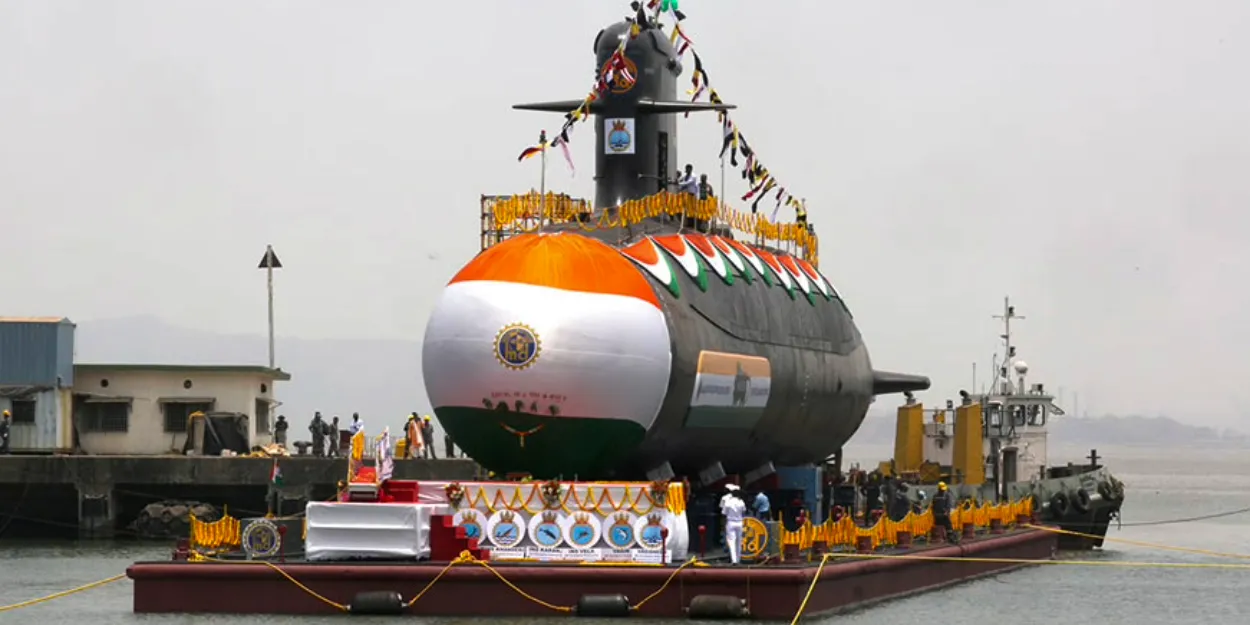
The Ministry of Defence has up to nine new conventional submarines waiting for a decision, and the earliest of them is unlikely to reach the Navy before 2032. Defence Secretary Rajesh Kumar Singh told ANI on 1 October that Project-75(I), six boats worth over ₹80,000 crore, was “pending a final decision by the competent authority”. The proposal for additional Scorpene submarines at Mazagon Dock, he said, is less advanced but under consideration.
The older boats are leaving first. The Navy decommissioned INS Sindhughosh, lead boat of the Russian-origin Kilo class, on 19 December 2025, and the Kilo and Shishumar classes are between 25 and 40 years old by defence-press estimates. The Navy does not publish its submarine count; open-source tallies put the conventional fleet near 16 boats. The thirty-year plan cleared by the Cabinet Committee on Security on 12 July 1999 had set the target at 24.
Pakistan’s first Chinese-built Hangor-class boat entered service on 30 April 2026. That date frames the choice now in front of New Delhi.
- 6 boats Project 75(I), MDL with TKMS: over ₹80,000 crore (Defence Secretary, 1 October 2026)
- 3 boats Additional Scorpene submarines at MDL: about ₹33,000 crore (Hindustan Times); count reported as two in one official remark
- ~2033 First Project 75(I) boat, about seven years after a signature this winter (reported terms)
- Mid-2027 First refit fit of DRDO’s indigenous AIP, per the Defence Secretary
- 8 boats Pakistan’s Hangor-class order; first commissioned 30 April 2026
Why Additional Scorpene Submarines Are Back on the Table
The idea is not new. The Navy first sought three more boats in July 2023, and the file has moved in fits since, held back while planners put Project 75(I) first. The Hindustan Times account links the revival to continuing delays in Project 75(I).
What the additional Scorpene submarines would carry
The Hindustan Times account lists NATO-standard torpedoes and submarine-launched SCALP cruise missiles, with a reported range of about 800 km. The boats would enter service with lead-acid batteries, with a design margin for lithium-ion later. The Ministry has not confirmed these specifications. Nor is the count settled: the Defence Secretary spoke of two additional Scorpenes in one passage of his interview, while ANI’s summary says three. MDL’s earlier bid covered three. The reports reviewed do not say whether the additional Scorpene submarines would take DRDO’s AIP at build or at a later refit.
Project 75(I) Adds Fuel-Cell Endurance, but the First Boat Sails Around 2033
Reported terms give the boats roughly three weeks of submerged endurance, with indigenous content starting at 45 per cent on the first hull and rising towards 60 per cent. The same reporting places the first delivery about seven years after signature. A contract signed this winter therefore puts the lead boat near 2033. Cost negotiations were reported concluded in February 2026, and TES’s review of the Navy’s 2026 induction year traced how the signing date has moved since.
The case for additional Scorpene submarines rests partly on that wait. MDL’s earlier techno-commercial bid, reported in 2024, promised delivery within six years of contract. On that term, a signature in 2027 yields a first boat around 2033. By TES’s arithmetic, not an official schedule, the two programmes would put their first new hulls in the water within about a year of each other.
| File | Boats | Reported value | Status, 14 October 2026 | First boat |
|---|---|---|---|---|
| Project 75(I), MDL with TKMS | 6 | Over ₹80,000 crore (Defence Secretary) | Submitted; pending decision by competent authority | About 2033 to 2034 (reported, seven years after signature) |
| Additional Scorpene submarines, MDL with Naval Group | 3 reported; 2 in one official remark | About ₹33,000 crore (Hindustan Times) | Awaiting CCS consideration | About 2033 (MDL’s six-year bid term; TES calculation) |
| DRDO indigenous AIP, Kalvari-class refit | 1 boat first | Not stated | Fit planned at a refit around mid-2027 | Mid-2027 (Defence Secretary) |
Sources: Defence Secretary’s remarks to ANI, 1 October 2026; Hindustan Times, 13 October 2026; MDL bid as reported in 2024. Delivery dates assume signature by early 2027.
Can MDL Build Both Without Repeating the Kalvari Delays?
The Kalvari line is the case for caution and for confidence. India signed the Scorpene contracts on 6 October 2005. The first boat was commissioned on 14 December 2017. The sixth, INS Vaghsheer, followed on 15 January 2025, almost twenty years after signature. A repeat order for additional Scorpene submarines would not need to relive the learning curve of that first batch, though no official schedule for the follow-on has been published.
One dependency sits outside the yard. The Ministry’s annual report notes that HY-80 and HY-100 steel, the grades used for submarine pressure hulls, are presently imported from France, and that the state-owned MIDHANI has indigenised both. Each new boat will test that supply line as much as it tests MDL’s workforce. TES’s analysis of the Navy’s record commissioning cycle shows how far MDL’s surface-ship delivery has already improved, and the submarine hall has to follow.
How Pakistan’s Hangor Deliveries Change the Arithmetic Before 2032
The Pakistan Navy says the Hangors will deter aggression and protect sea lanes across the Arabian Sea and the wider Indian Ocean. That is Pakistan’s own description, and its press release gives no specifics of the boats’ weapons or sensors. For Indian planners the practical point is sequencing. Pakistan’s AIP boats are reported to arrive between 2026 and 2028, while India’s first indigenous AIP fit is scheduled for a refit around mid-2027 and its first new-build AIP boat for the early 2030s.
The Defence Secretary’s answer on propulsion is indigenous. He said DRDO’s AIP system would go into one Indian submarine at a refit towards the middle of next year, and that the fit would then extend to Scorpene-class boats as they come in for refit. The Ministry’s annual report records that manufacture of the submarine-qualified liquid oxygen module is complete and that work on the main components of the AIP energy module is in progress.
What Bridges the Gap Until the New Boats Arrive
On the hunting side, the Navy commissioned INS Mangrol at Naval Dockyard Mumbai on 12 October. She is the third of eight Mahe-class anti-submarine shallow water craft being built by Cochin Shipyard under a contract signed on 30 April 2019, long before the first Hangor was launched. At about 900 tonnes, with water-jet propulsion, she guards coastal approaches. For the aerial layer of the same mission, see TES’s explainer on how the Drishti-10 hunts submarines.
None of this replaces a hull, and none of it reduces the need for the additional Scorpene submarines or Project 75(I). It does keep the existing boats credible while the contracts run their course, and it builds the indigenous combat and propulsion base that the follow-on orders will draw on. The sequence the Navy can control is refit timing; the sequence it cannot is the Cabinet’s.
What the Two Orders Mean for Mazagon Dock Investors
Timing counts for more than headline value. A first delivery seven years after signature means revenue recognition is back-ended, so a CCS decision is an announcement event, not an earnings event. On the company’s own earlier indication, as reported, Project 75(I) alone would lift the order book past ₹1 lakh crore. The additional Scorpene submarines, at about ₹33,000 crore if approved, would sit on top of that. TES’s earlier piece on why the stock has not yet moved on Project 75(I) sets out the valuation side in more detail.
What to Watch
No, as of 14 October 2026. The Hindustan Times reported that the proposal, estimated at about ₹33,000 crore, awaits CCS consideration. The Defence Secretary described it on 1 October as under consideration and less advanced than Project 75(I).
Reports say three, and MDL’s earlier bid covered three. One remark by the Defence Secretary referred to two, so the final number is not settled until a contract is signed.
Reported terms put it around 2033, about seven years after the contract is signed. The contract has not yet been cleared in New Delhi.
The Takeaway
Three dates will show whether India closes the interval in time. The first is the decision on Project 75(I), the more advanced file by the Defence Secretary’s own account. The second is the contract for the additional Scorpene submarines, which fixes the count at two or three and starts MDL’s six-year clock. The third is the mid-2027 refit in which DRDO’s AIP goes into a Kalvari-class boat for the first time.
The 1999 plan set a target of 24 boats by 2030 and commissioned its first boat only in December 2017. A navy that bridges 2027 to 2033 with refitted hulls, an indigenous AIP and a growing shallow-water hunter fleet can hold the line, and the decisions now before the Cabinet Committee on Security determine how long it has to. Pakistan’s first Hangor carries the name of the submarine that sank INS Khukri in 1971. India’s answer will be judged by the day its first new hull is commissioned at Mazagon Dock, and every quarter the file sits adds a quarter to that date.
Source note: Defence Secretary’s remarks to ANI (1 October 2026); Ministry of Defence Annual Report 2025-26; Pakistan Navy and Indian Navy statements; MDL results; Hindustan Times. Follow-on specifications are as reported, and delivery dates are TES’s calculation.