
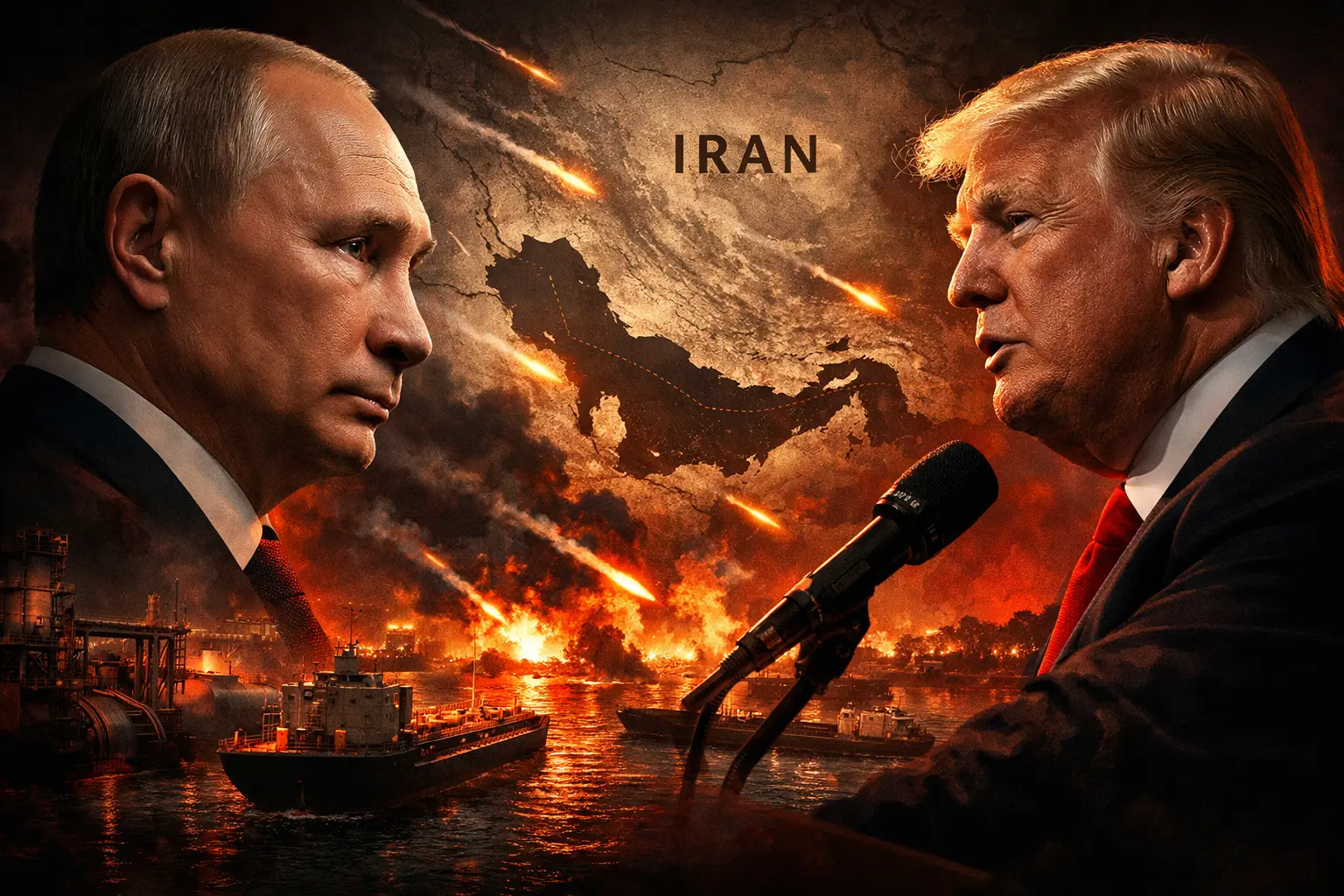
Fourteen months ago, Washington told India that buying Russian oil financed a war, and raised tariffs on Indian goods to 50 per cent. On 9 October 2026, the same administration licensed Russian diesel for the world market. The Russian diesel licence India must now read is no aberration. It is the latest in a run of American waivers this year, and it confirms what New Delhi has said since 2022: energy policy cannot hang on another capital’s shifting priorities.
President Donald Trump announced that Russia would supply more than 300,000 tons of diesel at once, another 500,000 tons in November and one million tons soon after, with a further three million tons depending on the state of Russian refineries. The US Treasury said its sanctions office was issuing a temporary general licence for Russian diesel. The Kremlin’s own statement confirmed only that Russia is ready to supply oil and oil products to world markets. As reported, it named no volumes.
The Russian Diesel Licence Follows Earlier US Waivers on Russian Oil From March
The October licence is not the first (see also TES’s earlier coverage of India’s Russian-oil tariff and its refiners). The US Treasury’s Office of Foreign Assets Control (OFAC) issued General License 134 on 12 March 2026, authorising the delivery and sale of Russian crude oil and petroleum products already loaded on vessels. It reissued the licence on 19 March and again on 17 April. The Russian diesel licence extends the same direction of travel.
The stated reason is supply and price. Treasury Secretary Scott Bessent has cited the need to stabilise energy supplies in developing countries as a reason for extending such licences. Diesel has risen about 70 per cent since the war with Iran began, and it is a live issue before the US midterm elections in November (see TES on crude oil prices and the US-Iran conflict’s impact on India). In TES’s assessment, price politics is the thread that joins these decisions.
The US Record on Russian Oil, in Order
| Date | US action | Instrument |
|---|---|---|
| 6 August 2025 | Extra 25% tariff on Indian goods over Russian oil purchases; 50% in total from 27 August | Executive order |
| October 2025 | Sanctions on Russia’s two largest oil companies | US Treasury |
| 7 February 2026 | Extra tariff on India removed; the order records India’s commitment to stop importing Russian oil | Executive order |
| 12 March 2026 | Licence for Russian oil already at sea; reissued 19 March and 17 April | OFAC |
| 18 September 2026 | Sanctioning Russia and Iran Act: tariffs of up to 100% on the top five buyers, with waivers | Law |
| 9 October 2026 | Temporary general licence for Russian diesel | OFAC / Treasury |
Six US Acts in Fourteen Months, One Indian Position
The Russian diesel licence India reads today is the sixth entry in that table. India’s stated position has not moved (see TES’s coverage of India’s stance on Russia and Iran sanctions). The Ministry of External Affairs has said that procurement is guided by the interests of Indian consumers, national interest and market conditions, and that India seeks to diversify its supplies. The American acts in the table pull in different directions: a tariff, a sanction, a removal, a waiver, a law, another waiver.
A standard that applies a tariff in August, a licence in March and a threat in September is a bargaining stance. Washington is entitled to bargain. It cannot also present the bargain as a rule against which India’s choices are judged.
Senator Lindsey Graham, whose name the new law carries, said in January that his bill would give the President leverage over countries such as China, India and Brazil. Leverage is an honest word. It describes a negotiation, and negotiations tend to change when the price at the pump changes.
The Sanctions Law Keeps the Pressure on India, Whatever the Russian Diesel Licence Says
The Lindsey O. Graham Sanctioning Russia and Iran Act of 2026 was signed on 18 September. It authorises tariffs of up to 100 per cent on goods from the top five buyers of Russian oil and gas, takes effect within 30 days, and leaves the President wide discretion, including waivers. India is among the largest buyers. TES has also covered the 100 per cent tariff threat on Russian oil buyers. The diesel licence offers no comfort here, because discretion cuts both ways. A waiver granted on a Friday can be withdrawn on a Monday.
Three practical conclusions follow. India should keep its crude sourcing diversified and avoid written exclusivity. It should keep strengthening refining capacity and strategic reserves. And any commitment that a US order attributes to India, such as the one recorded in February, should be matched by New Delhi’s own public account of what it agreed.
What the Russian Diesel Licence Means for Indian Refiners
India is a net exporter of diesel. In TES’s assessment, more Russian diesel on the world market could narrow export margins for Indian refiners, though the size of the effect depends on how much Russia can actually ship. Its refineries are damaged, and Trump’s own wording makes the later volumes conditional on their state.
For Ukraine, the Russian Diesel Licence Cuts Across Its Strongest Lever
Ukraine’s strikes on Russian refineries led Moscow to ban diesel exports in July. Trump publicly urged Volodymyr Zelensky on 13 September to stop hitting diesel infrastructure, and said on 27 September that he had urged him again. A Ukrainian official said Kyiv would stop only in return for a reciprocal energy truce. Kyiv’s military claims 43 per cent of Russian refining capacity was offline in July, a figure that awaits independent confirmation.
India need not take a side in the war to see the logic. The Russian diesel licence relieves pressure on Russia’s fuel supply at the point where Ukraine had leverage, days after Washington signed a sanctions law and approved its largest arms deal with Kyiv since Trump took office. That is a mixed message, and Kyiv has reason to read it as one.
The Strongest Case Against This View
Critics, including US legislators and officials, argue that discounted Russian purchases by India and others raised Moscow’s revenue and sustained the war, and that neutrality has costs. Washington presents its licences as temporary measures to stabilise supply. Lower diesel prices would also help developing economies, India’s among them.
Both sides of this argument can be partly right. What India should take from the Russian diesel licence is not vindication but method. A country that sets its energy compass at home can explain every turn it takes. A country that borrows its compass from abroad must keep re-reading it.
Source note: US Treasury (OFAC) licences and statements, US executive orders and law, Senator Graham’s statement, the Ministry of External Affairs’ statements and agency reporting on the 9 October announcement.